
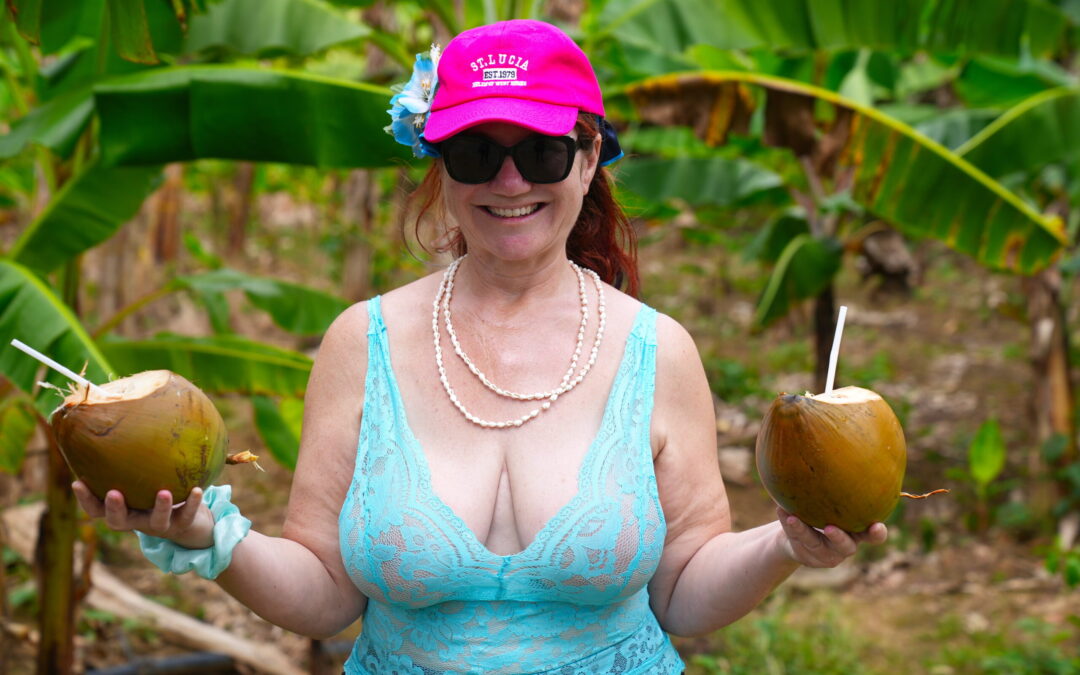
We continue our exploration of St. Lucia!
Agrotourism Experience, Inc.
Today we are visiting Agrotourism Experience, Inc. which, unfortunately does not have a website. They do have an entry on TripAdvisor.com. As of this writing, the company is called, on TripAdvisor.com, “758 Farm Tours”.
“A vibrant scene of an agrotourism experience at Tropical Healthy Harvest. In the foreground, visitors of diverse backgrounds engage in hands-on farming activities, such as picking ripe tomatoes and harvesting herbs. A local farmer, wearing a straw hat and a friendly smile, shares tips on organic farming practices with the visitors. In the background, lush green fields stretch out under a bright blue sky, dotted with colorful wildflowers. A rustic wooden barn, adorned with hanging plants and a sign that reads “Welcome to Tropical Healthy Harvest,” can be seen to the side. Nearby, a cozy outdoor dining area is set up with wooden tables, showcasing a delicious array of freshly prepared Creole dishes, inviting guests to savor local flavors after their farming activities. The overall atmosphere is lively and inviting, capturing the essence of sustainable agriculture and cultural immersion”
Yes, the TripAdvisor.com entry does not have a period at the end of the final sentence; I left it that way.
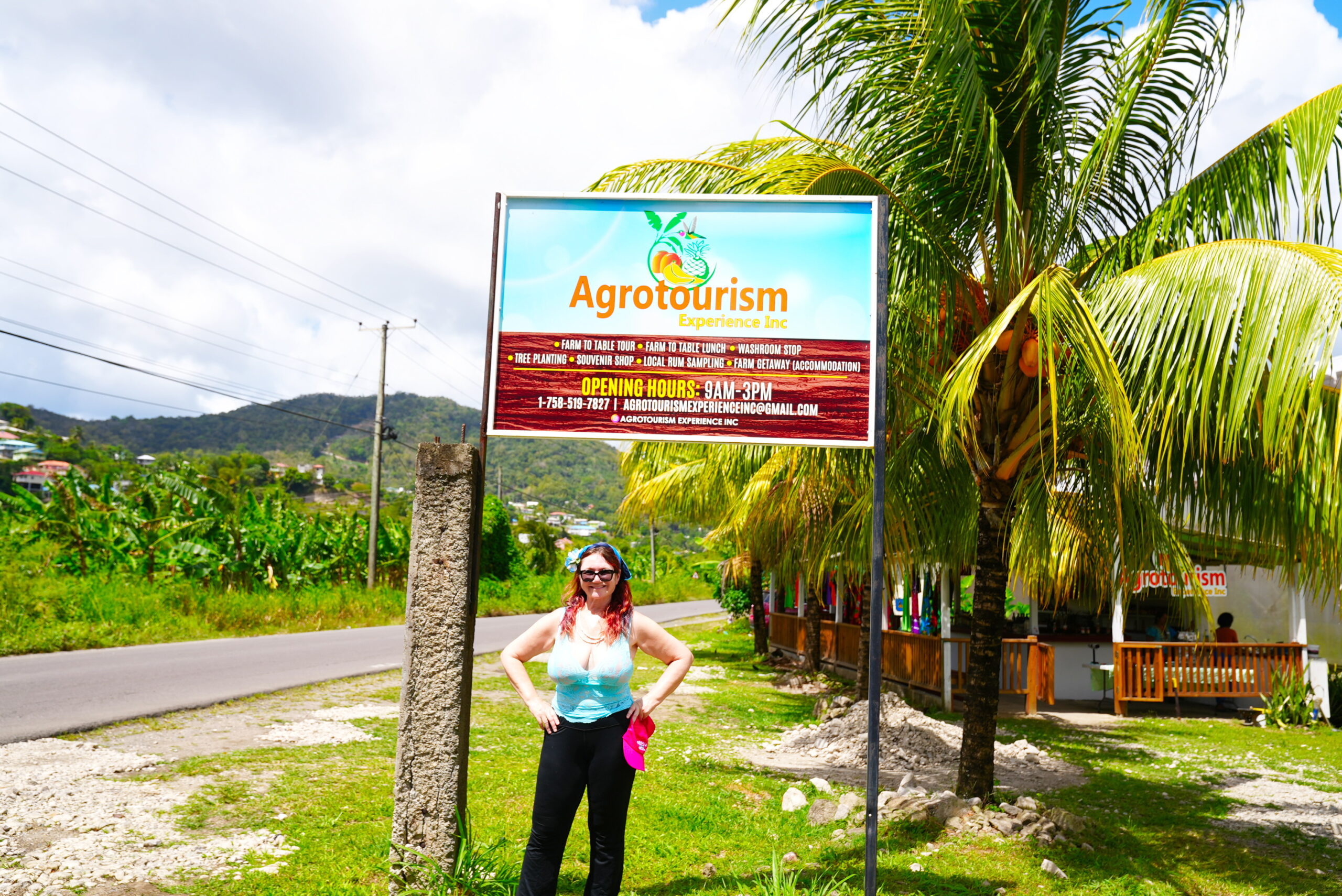
Tourism for agros!
The word “Agro” is borrowed from Greek, combining form from agrós “field, plot of land, countryside”. The word “tourism” means “the practice of traveling for recreation.” So, Agrotourism means…something.
The company manages five acres of land. They used to have more, but, you know, the Great Covid Panic screwed everyone over, so….
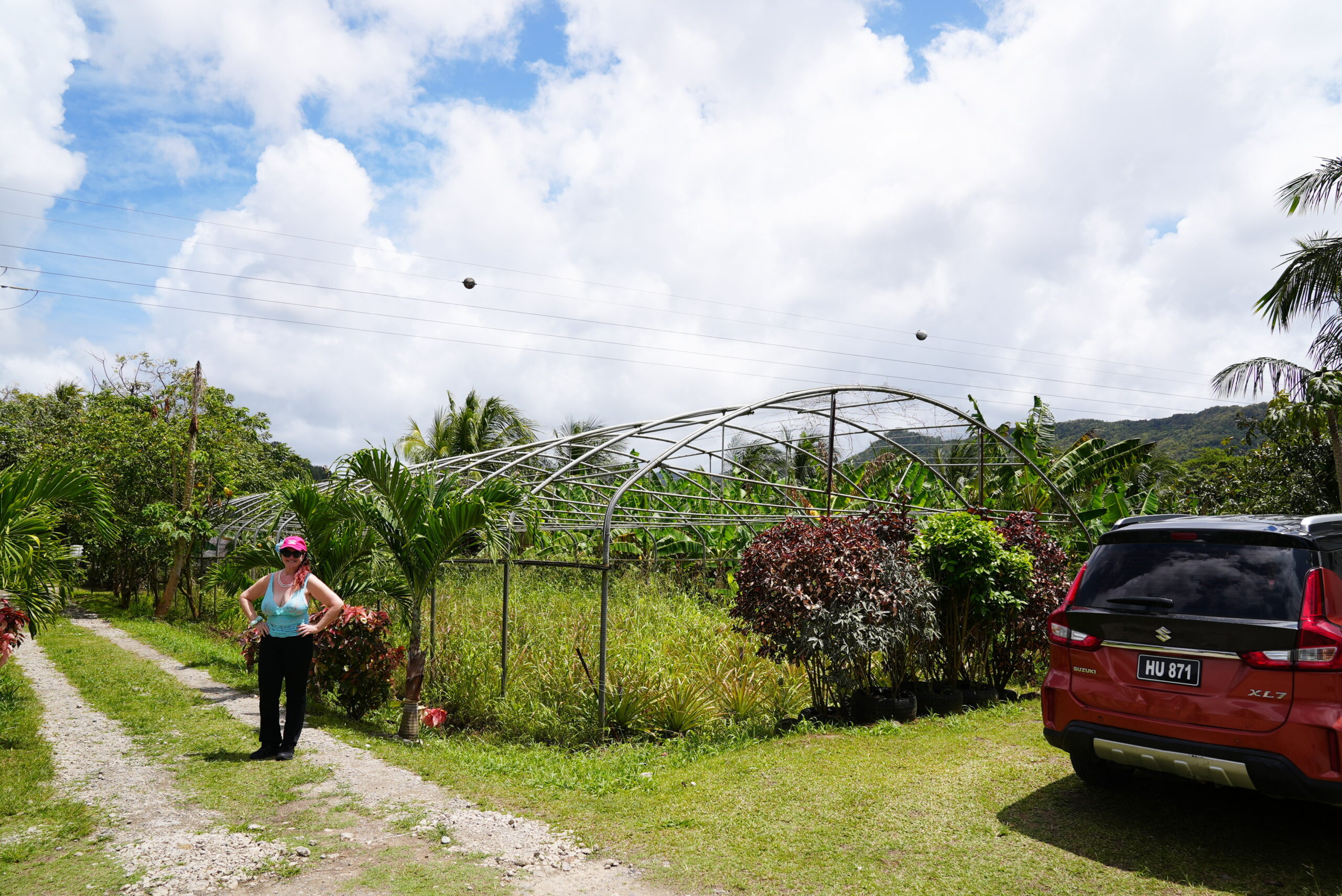
This is the back end of the car we are renting.
As usual, we are the only people on this tour (a tour bus full of cruise ship tourists just left). The grounds are covered with many types of plants.
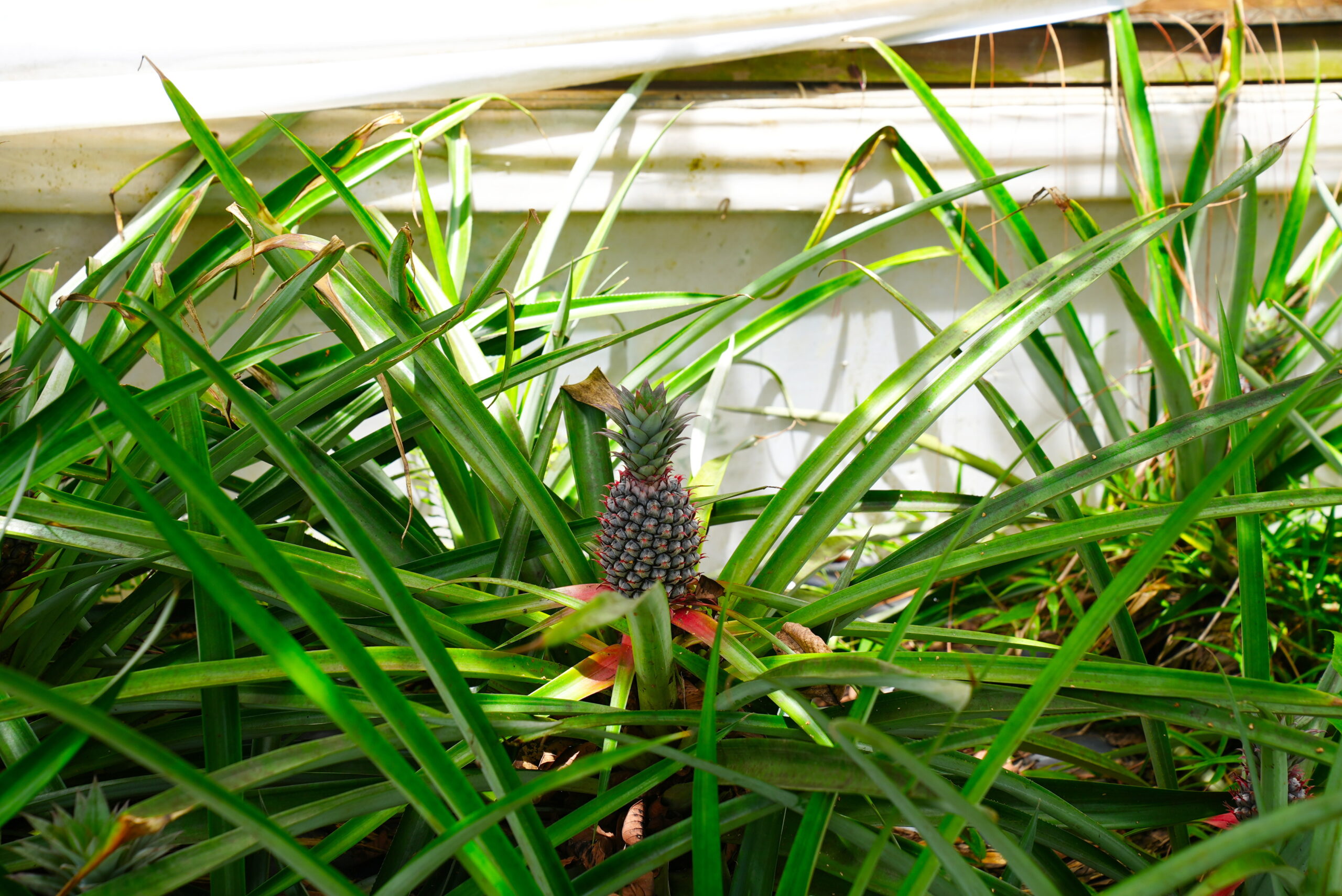
Neither pine, nor apple.
The pineapple (Ananas comosus) is a tropical plant with an edible fruit; it is the most economically significant plant in the family Bromeliaceae. The pineapple is indigenous to South America, where it has been cultivated for many centuries. The introduction of the pineapple plant to Europe in the 17th century made it a significant cultural icon of luxury. Since the 1820s, pineapple has been commercially grown in greenhouses and many tropical plantations. Pineapples grow as a small shrub; the individual flowers of the unpollinated plant fuse to form a multiple fruit. The plant normally propagates from the offset produced at the top of the fruit or from a side shoot, and typically matures within a year.
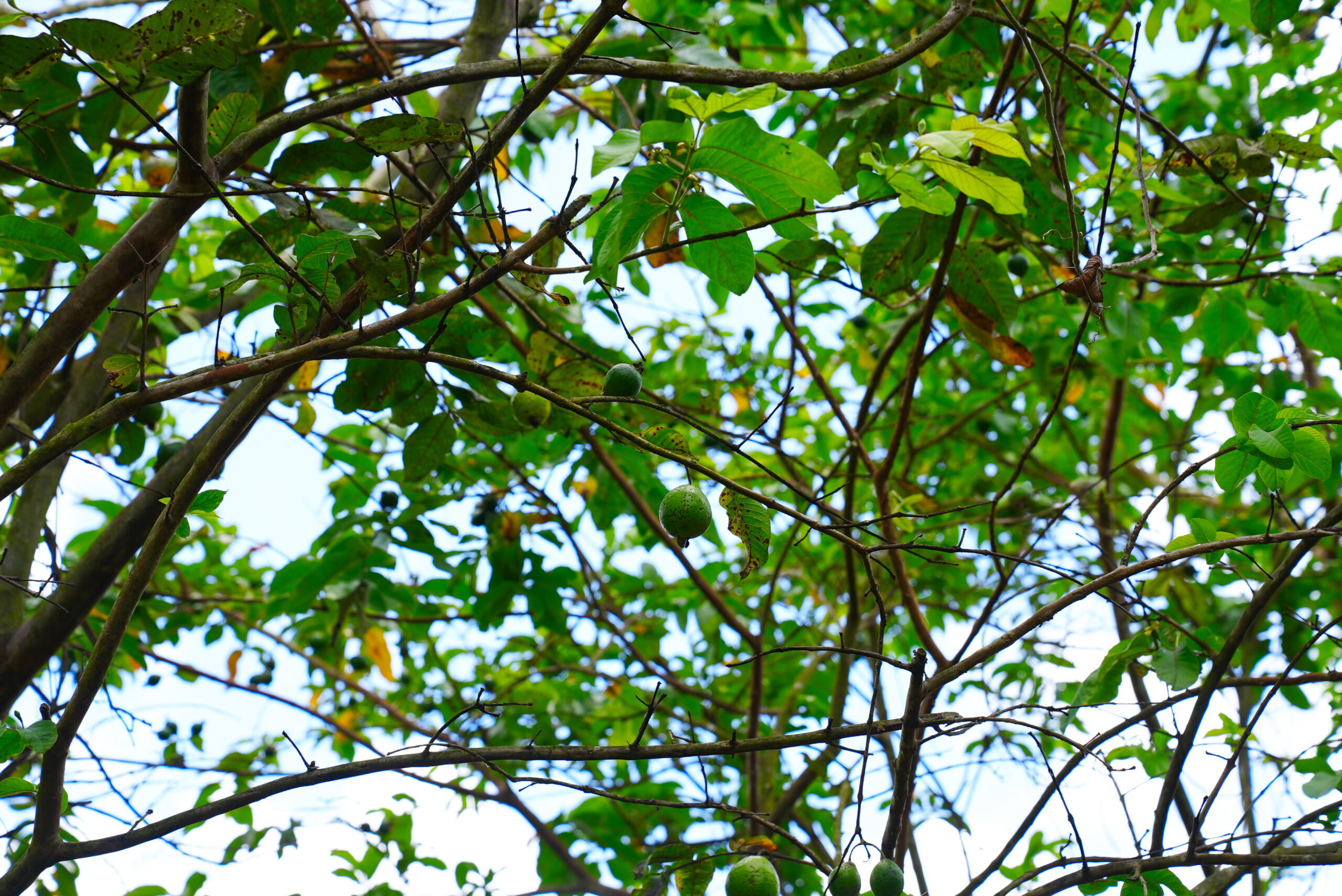
Nope, not a lime.
The lemon (Citrus limon) is a species of small evergreen tree in the Citrus genus of the flowering plant family Rutaceae. The lemon is a hybrid of the citron and the bitter orange. Its origins are uncertain, but some evidence suggests lemons originated during the 1st millennium BC in what is now northeastern India. The yellow fruit of the lemon tree is used throughout the world, primarily for its juice. The pulp and rind are used in cooking and baking. The juice of the lemon is about 5–6% citric acid, giving it a sour taste.
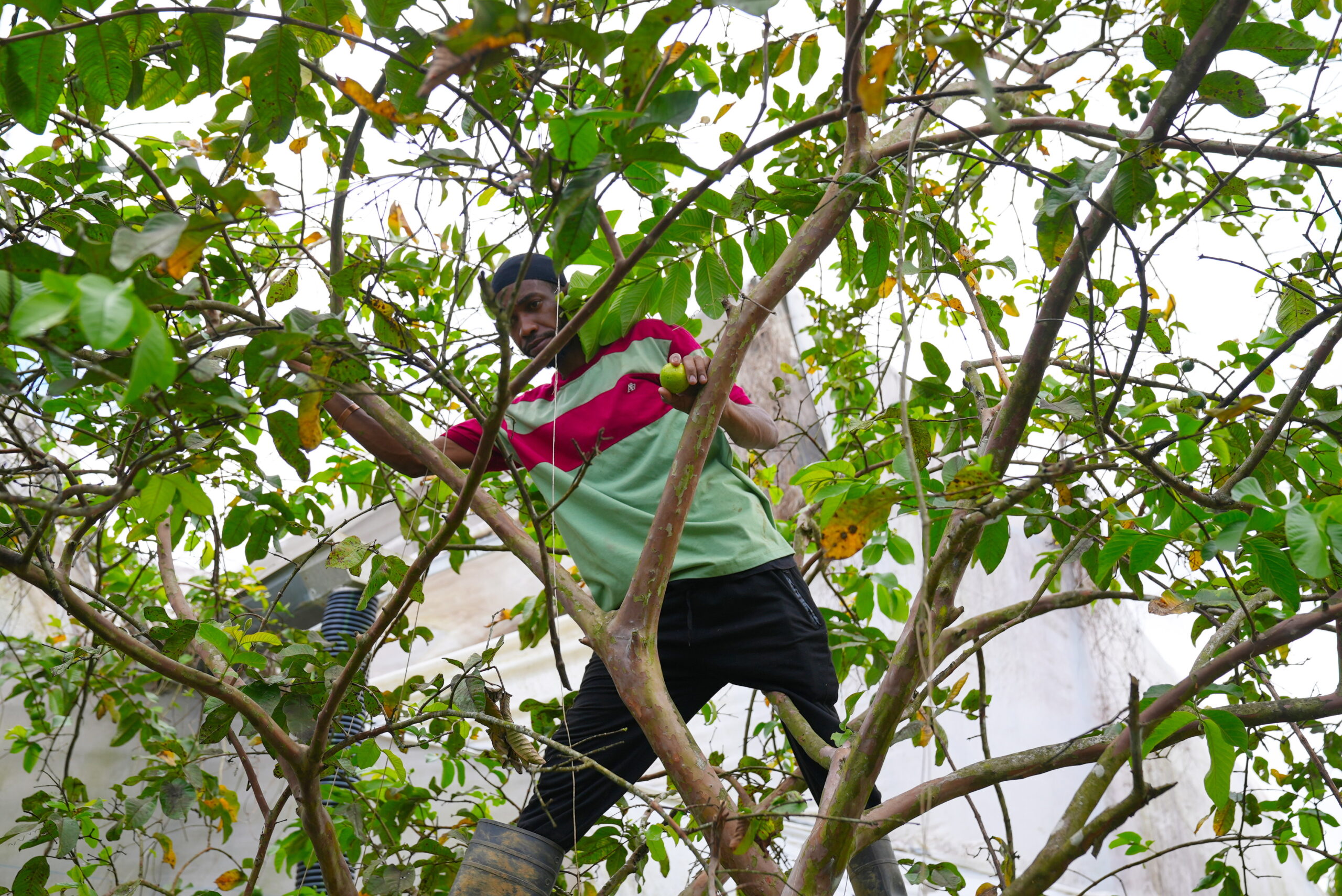
This guy does everything around here.
Since this is an agrotour, we must have fresh lemons for ourselves, right? So, the handy handyman climbs a tree to get a few for us.
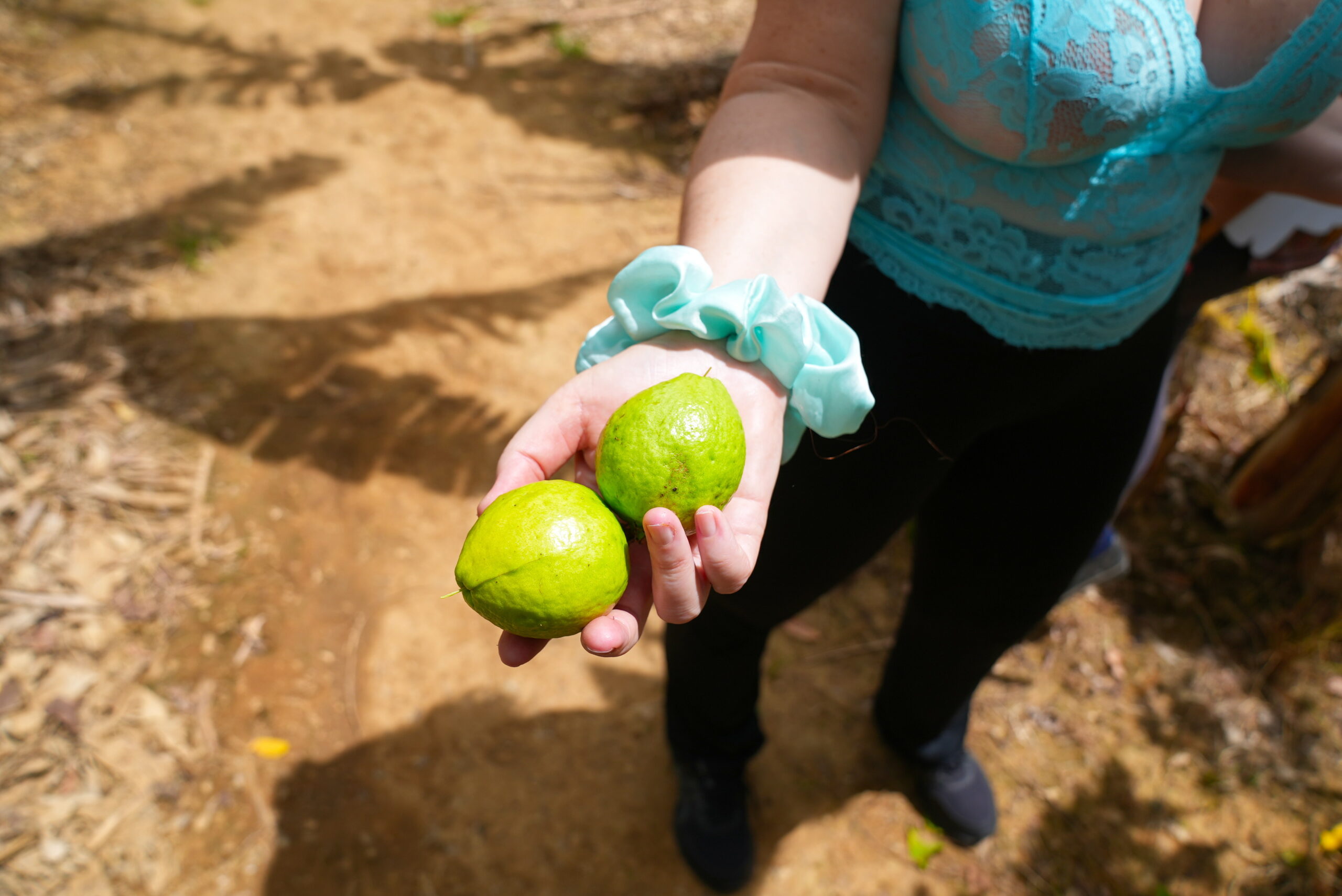
It’s like holding a guy’s balls, minus the sack.
Now you can see that they are, indeed, lemons.
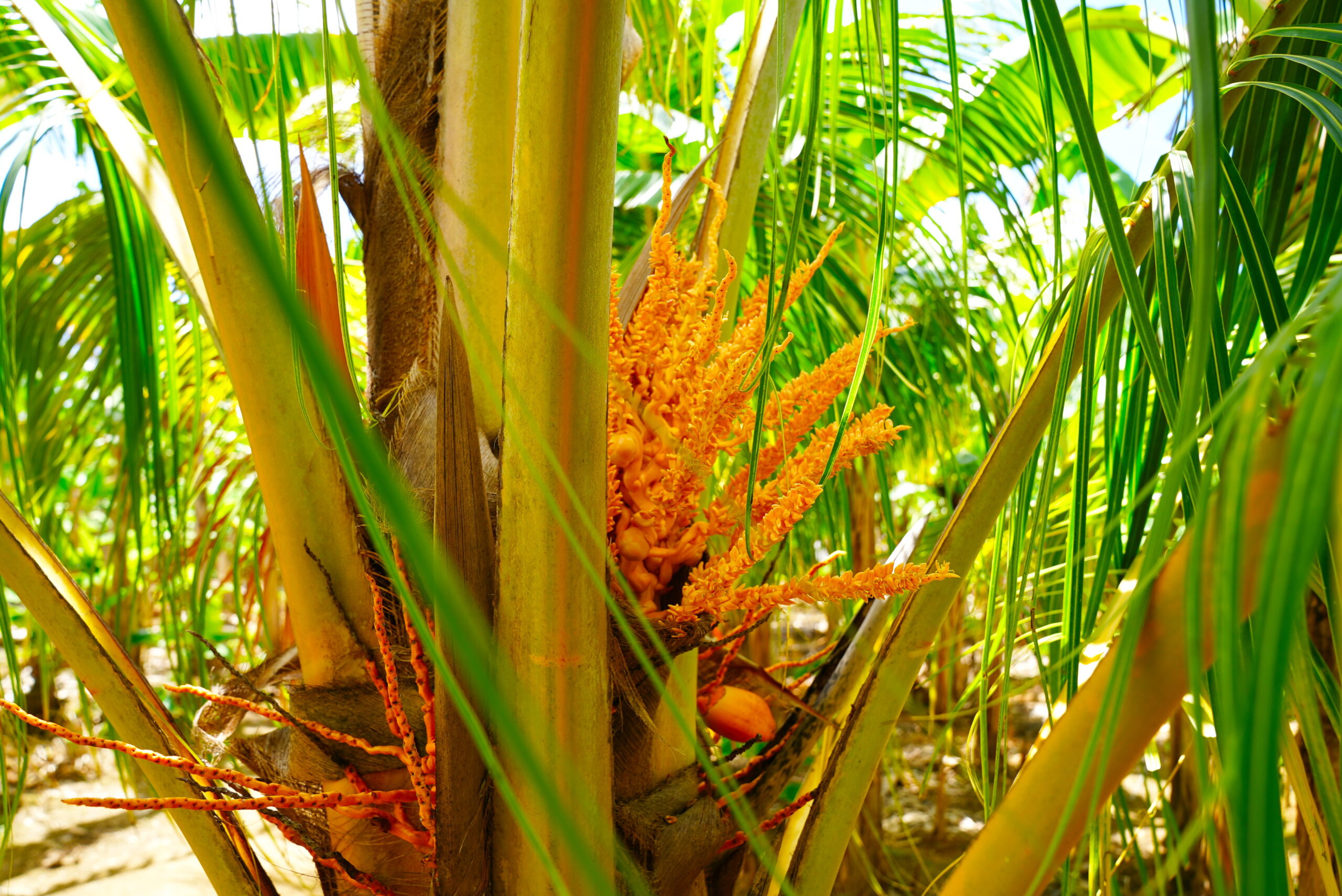
Yes, some plants are bright orange.
We have no idea what this is. We suspect it might be a parasite, but…wrong! It’s the flowering part of a coconut (Cocos nucifera).
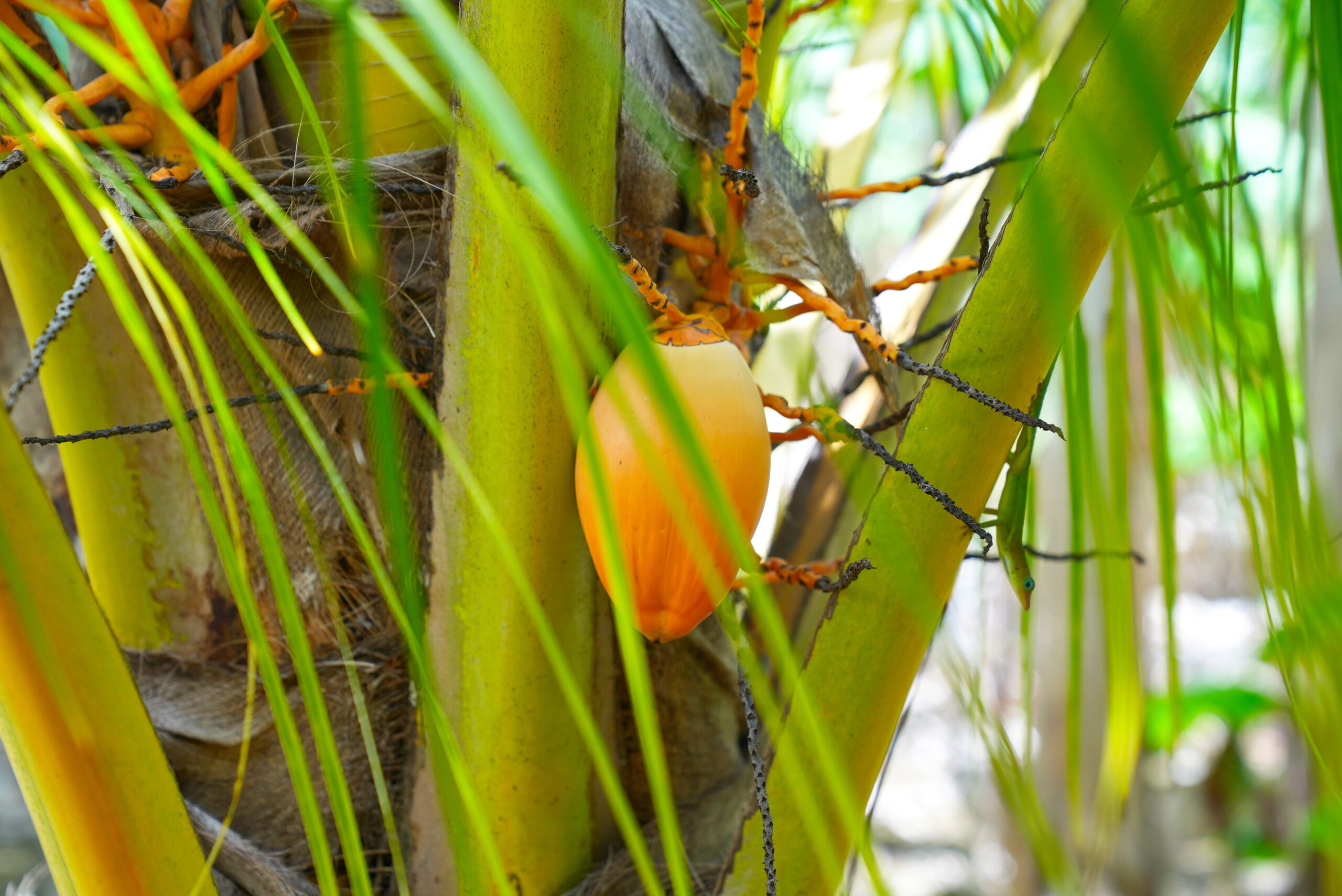
Awwww, it’s just a little baby…
And this is a young coconut, all bright and orangy.
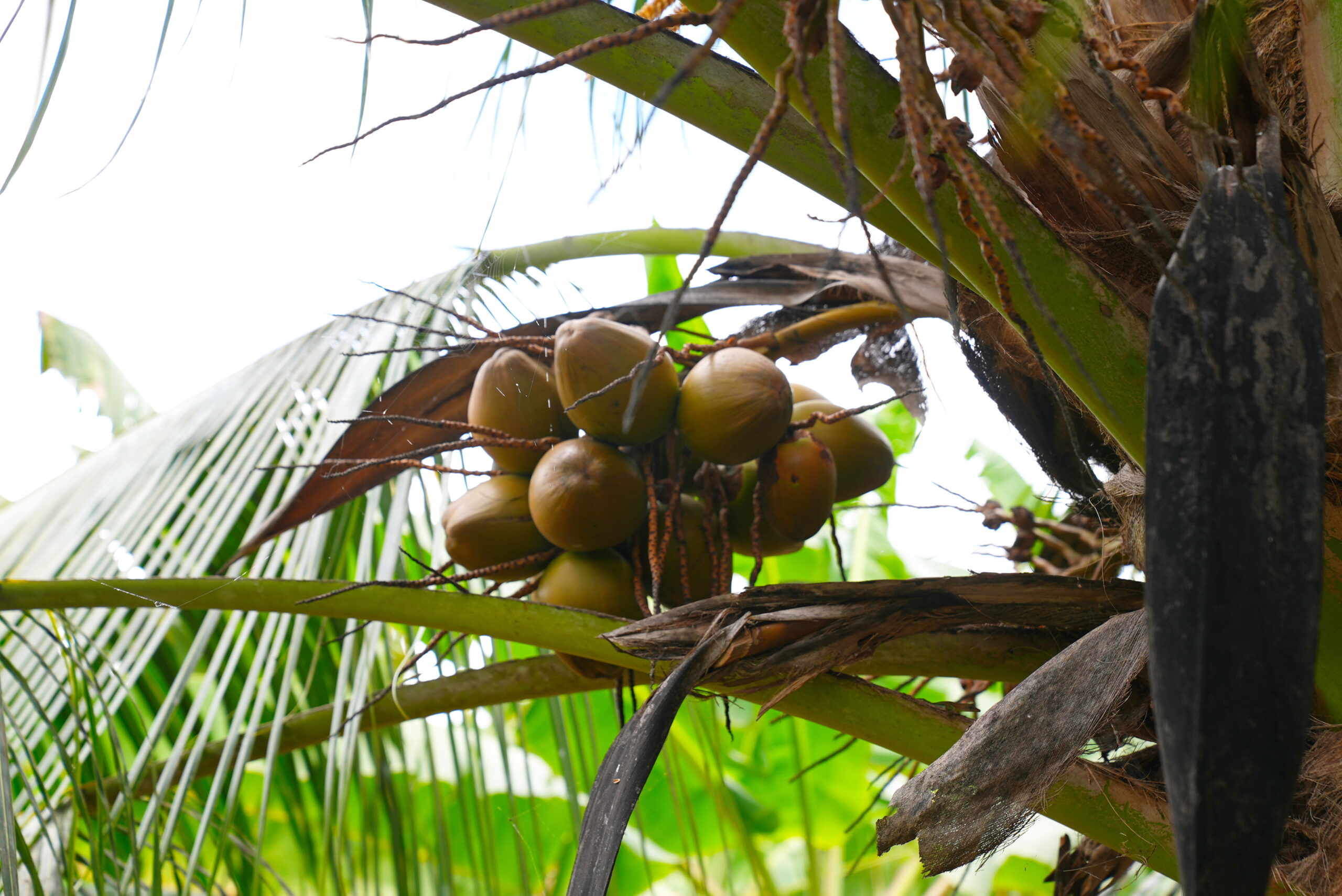
All grown up.
Now you can see that these are domesticated coconuts, not the brown, husky kind you typically see in stores and in movies.
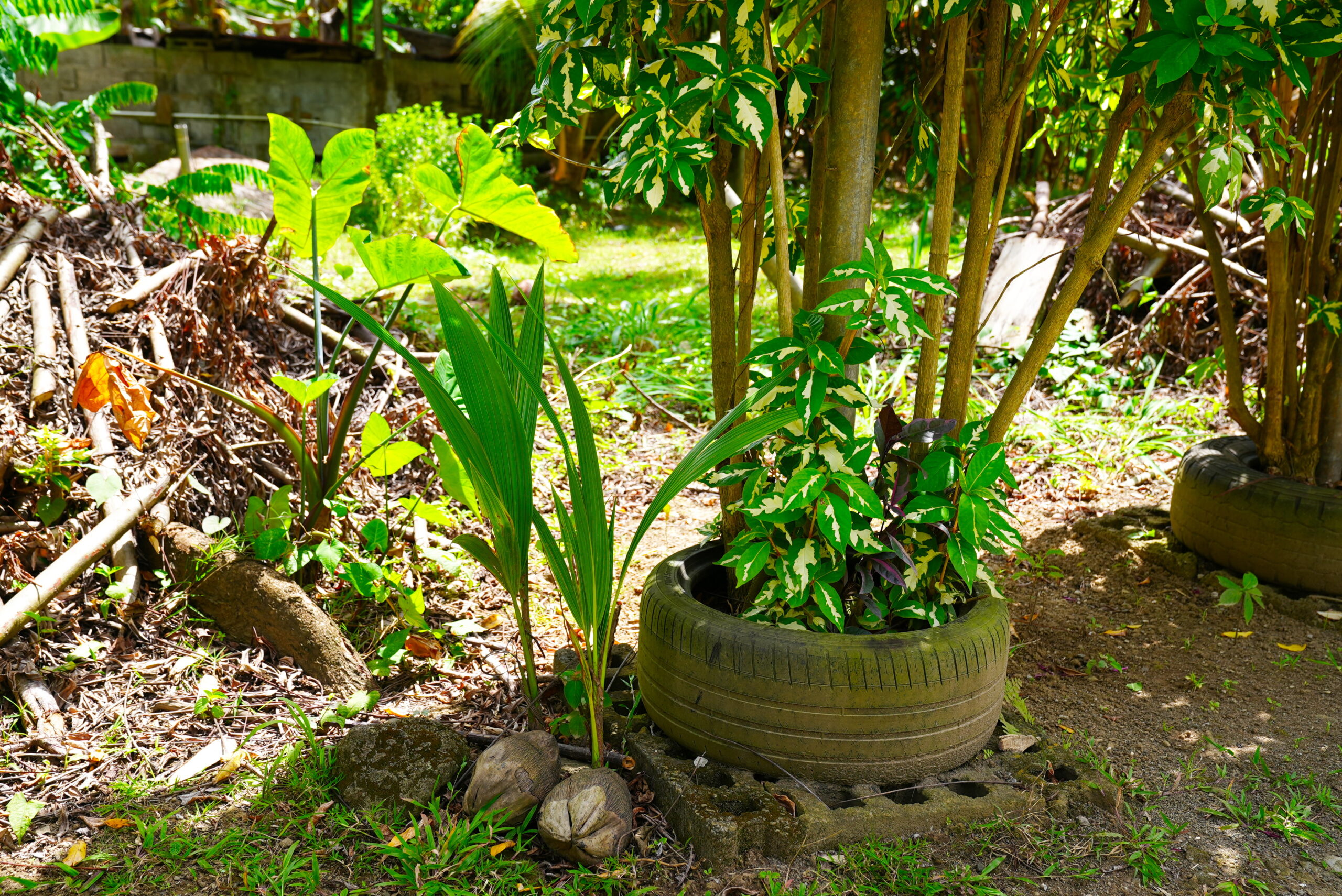
Old nuts making young nuts.
However, if you allow these coconuts to get older, they will resemble the traditional nuts.
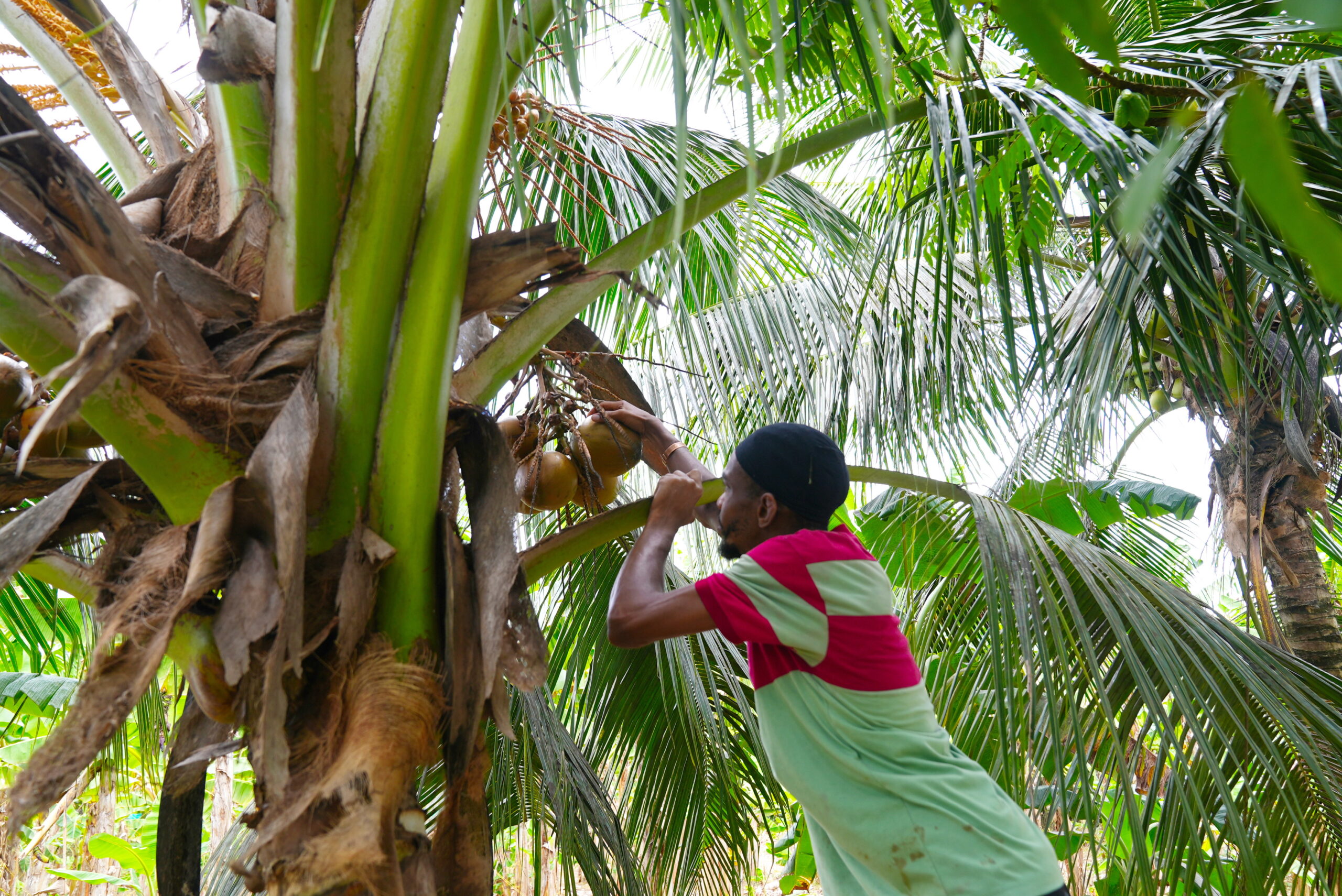
Dude, I can see your nuts.
Of course, we must have a nut for ourselves, so our friend obliges and harvests them.
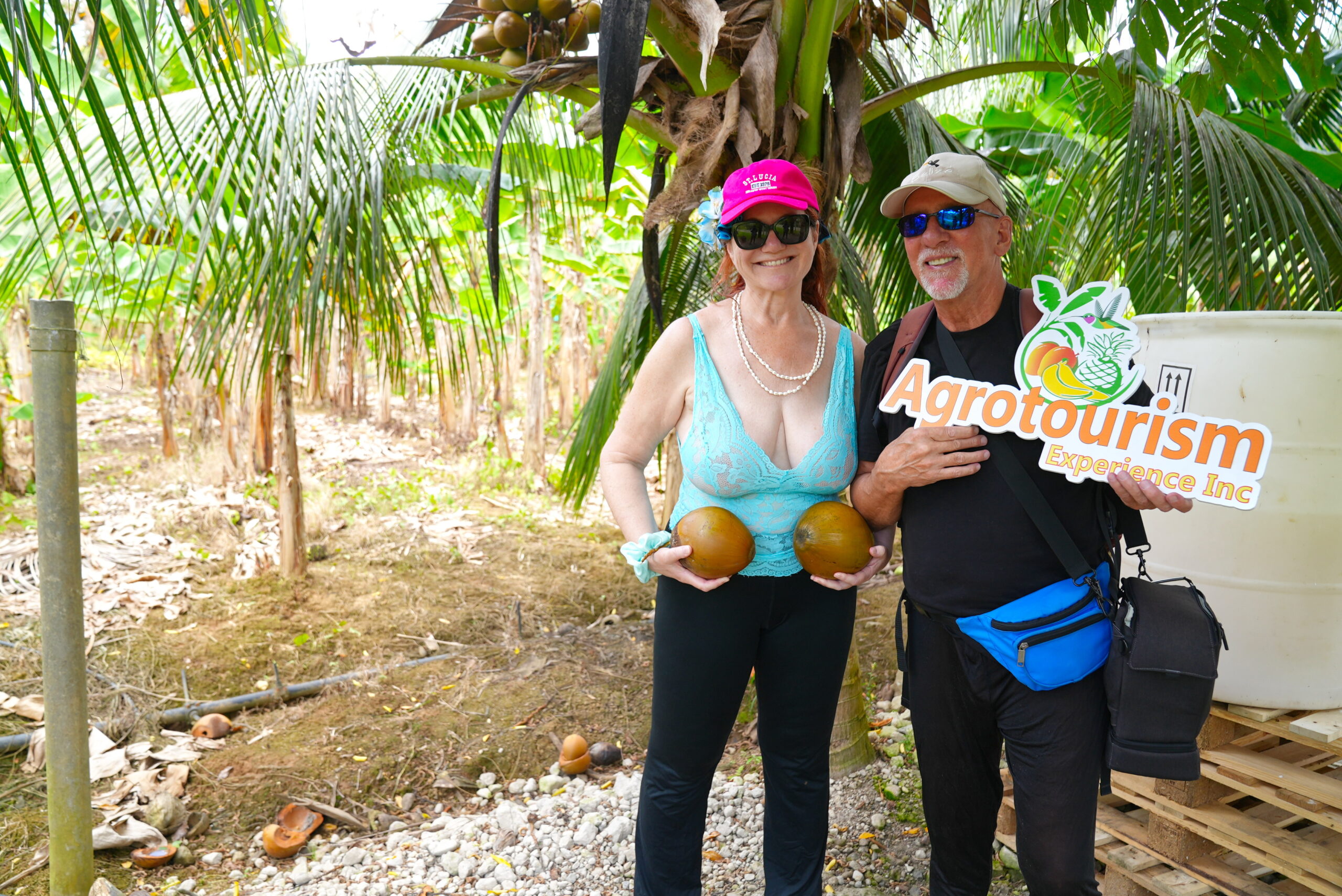
Promoting Agrotourism.
They ask us to pose with their nuts, and we do.
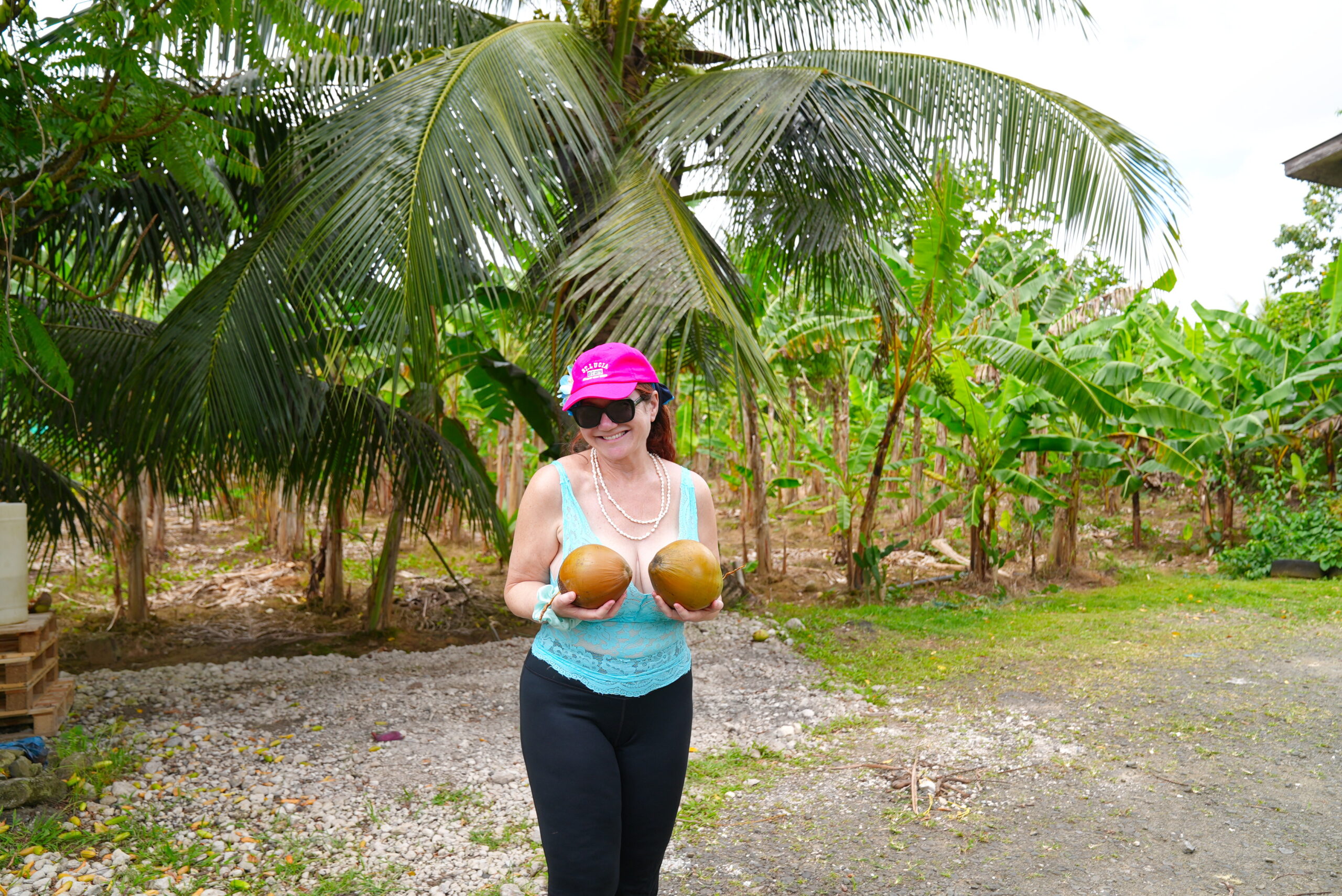
You were waiting for this shot, weren’t you…
In real life, no woman ever used half a coconut as a bra.
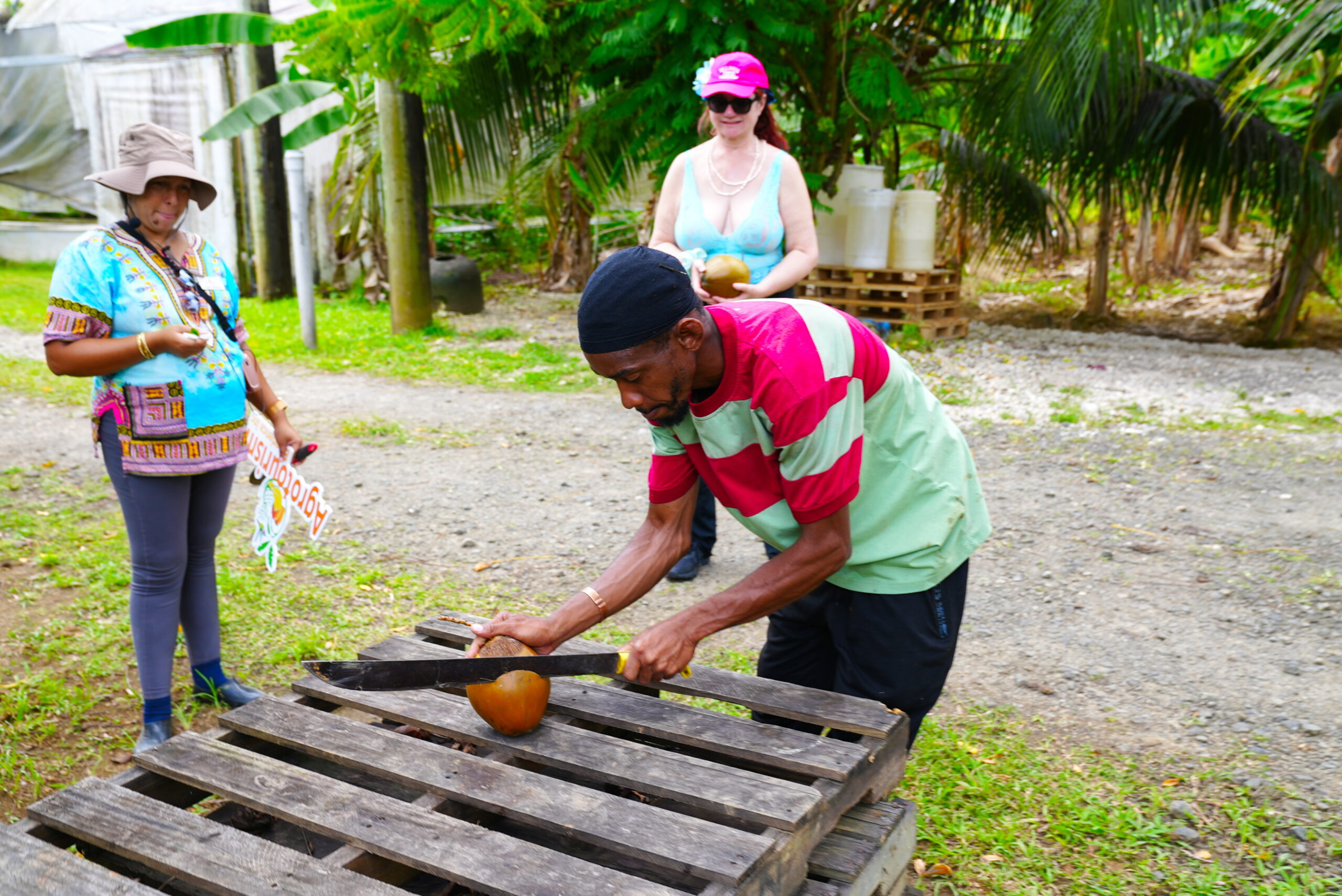
His nickname is still “ten fingers”, so you know he’s good.
We get to drink milk directly from the source, so our friend starts whacking away on the coconut.
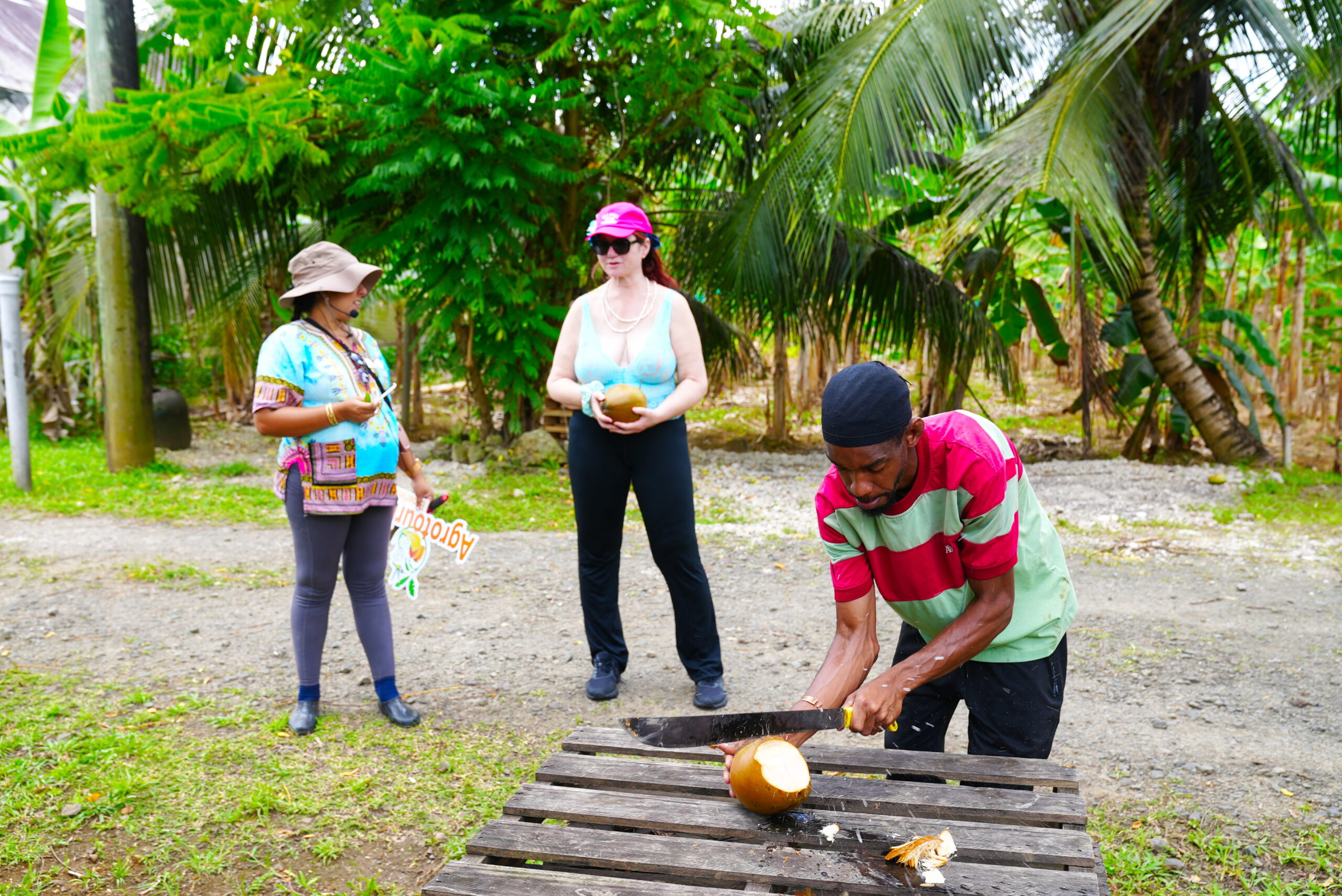
Premature ejacu-coco-lation.
Yes, it can get a bit mess when playing with someone’s nuts.
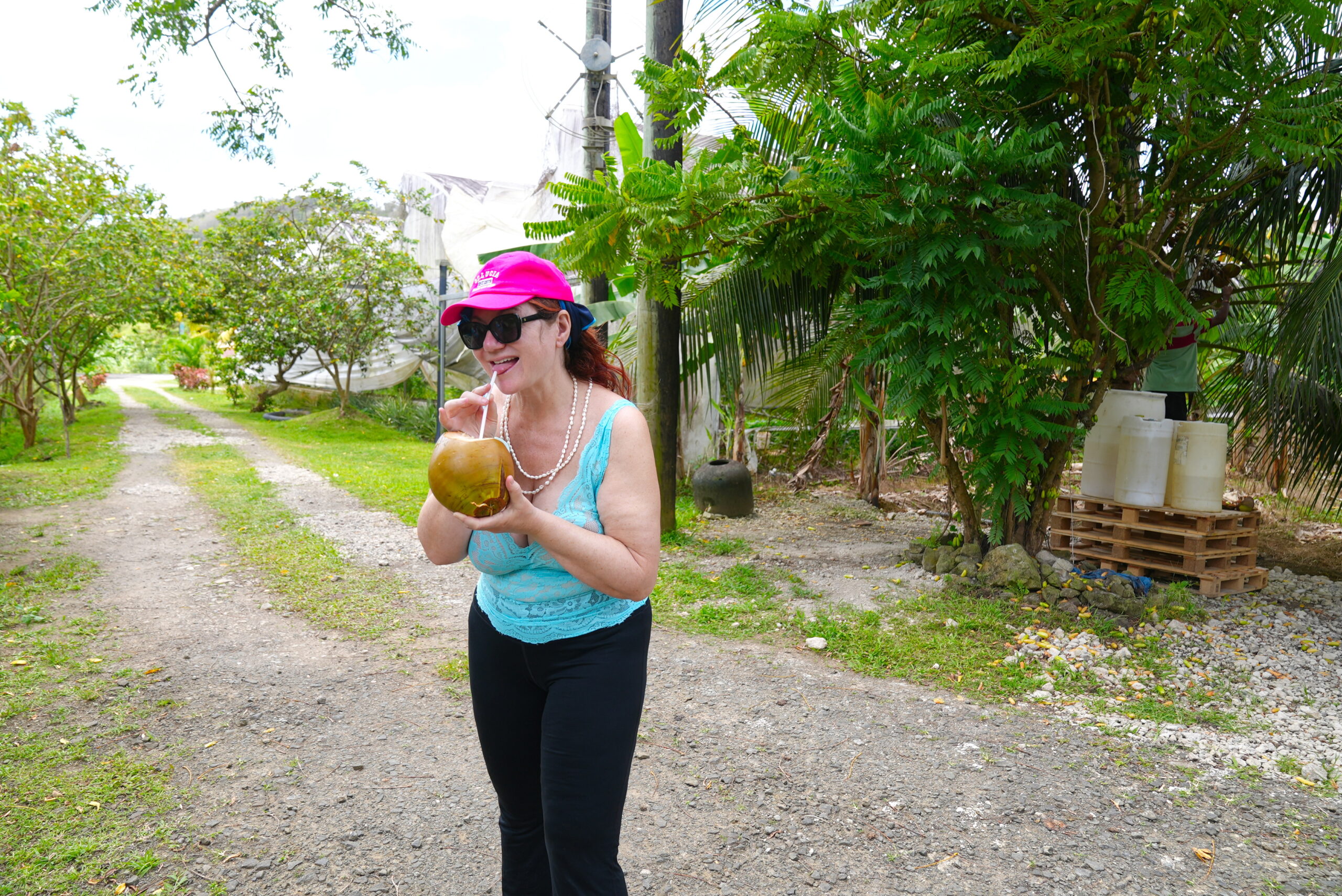
Yum.
There is a lot of milk in the nuts, and the nuts are pretty heavy, and we return them to the forest before we finish all the liquid. Circle of life and all that…
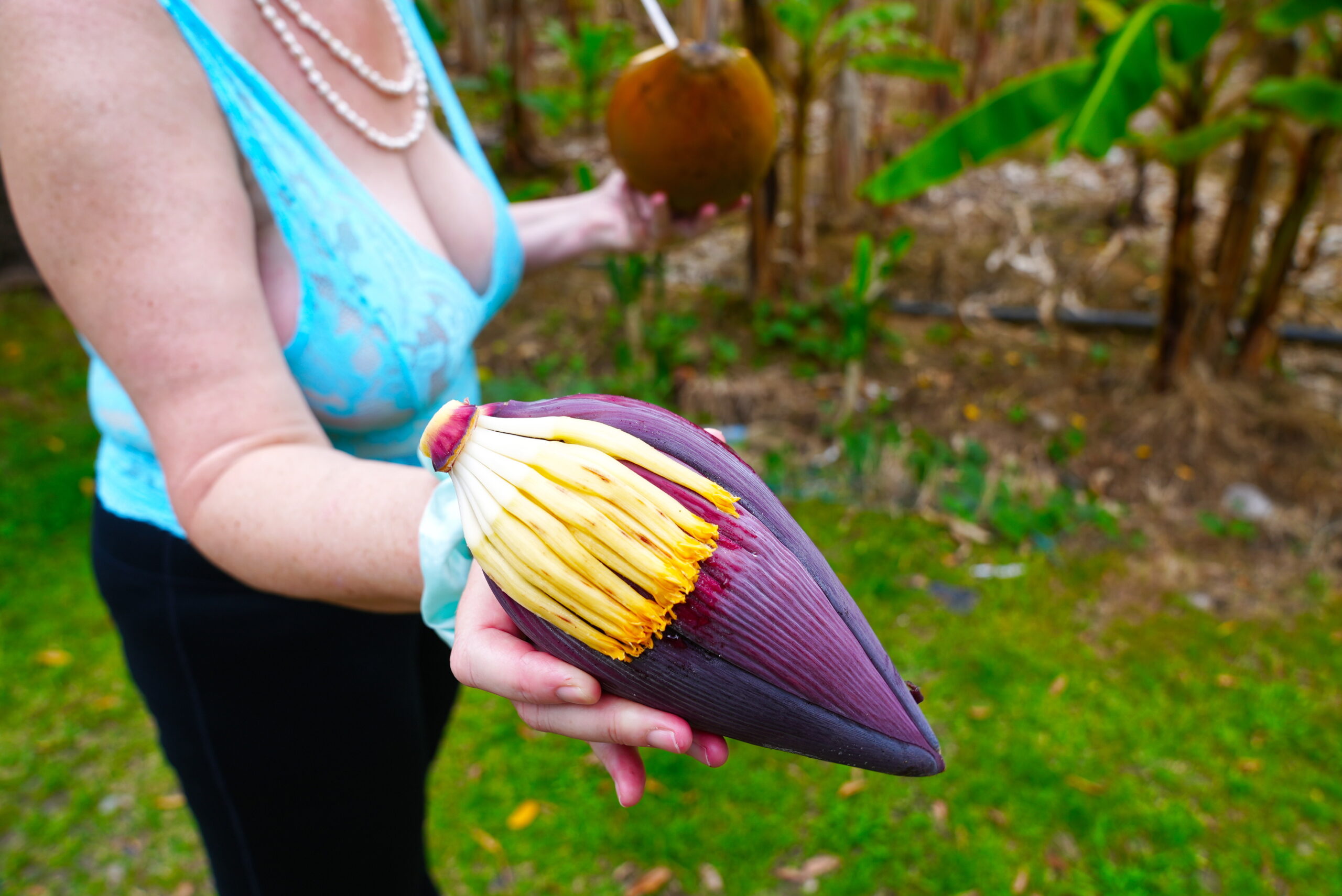
Yet another mystery fruit.
This little baby is a little baby banana.
There are about 110 different types of bananas. In popular culture and commerce, “banana” usually refers to the soft and sweet kind, also known as dessert bananas. Other kinds, or cultivars, of bananas have a firmer, starchier fruit. Those are usually called plantains. Plantains are mostly used for cooking or fiber. Other than being used as food, beer can be made by fermenting the juice of certain cultivars in Africa, known as beer bananas. The ash of bananas can be used to make soap. In Asia, bananas are often planted to provide shade to plants that like shade, for example coffee, cocoa, nutmeg or black pepper. Because of this, banana plants can often be found in plantations of other crops.
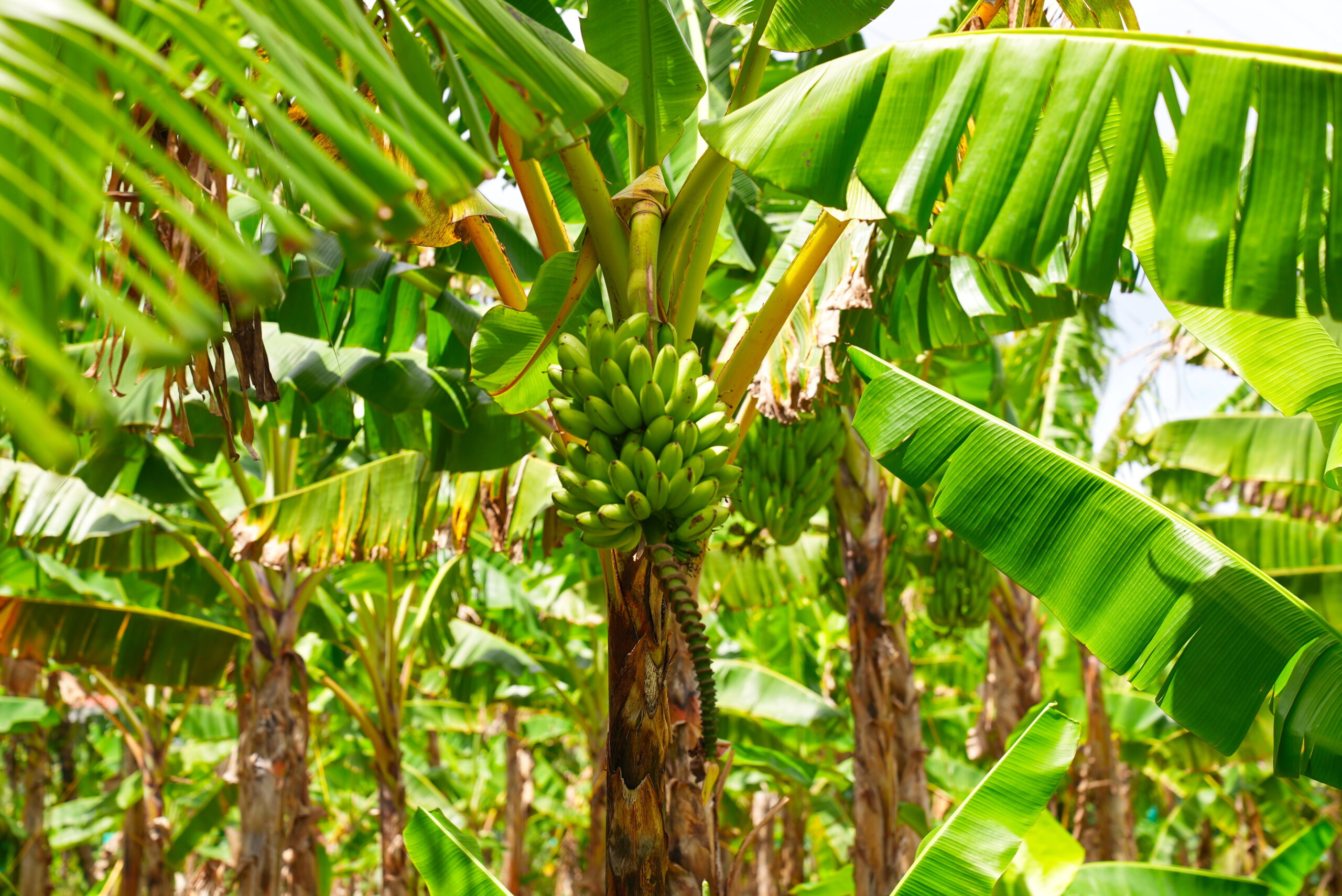
Bananas have a tail.
The banana plant is the largest herbaceous flowering plant. Banana plants are often mistaken for trees. Bananas have a false stem (called pseudostem), which is made by the lower part of the leaves. This pseudostem can grow to be two to eight meters tall. Each pseudostem grows from a corm. A pseudostem is able to produce a single bunch of bananas. After fruiting, the pseudostem dies and is replaced. When most bananas are ripe, they turn yellow or, sometimes, red. Unripe bananas are green in color.
The banana fruits grow from a banana fruit in hanging clusters, also called a bunch or banana stem. The fruits grow in rows called tiers or hands. There can be as many as twenty fruits to a hand, and as many as twenty tiers in a bunch.
Each banana (or finger) has a protective outer layer (called peel or skin). There is a fleshy part inside that readily splits into three segments. It may be the only tri-segmented fruit in the world. Both the skin and inner part can be eaten. Western cultures generally eat the inside raw and throw away the skin. Some Asian cultures eat both the skin and the inside cooked. Each fruit has many strings that run between the skin and the inner part.
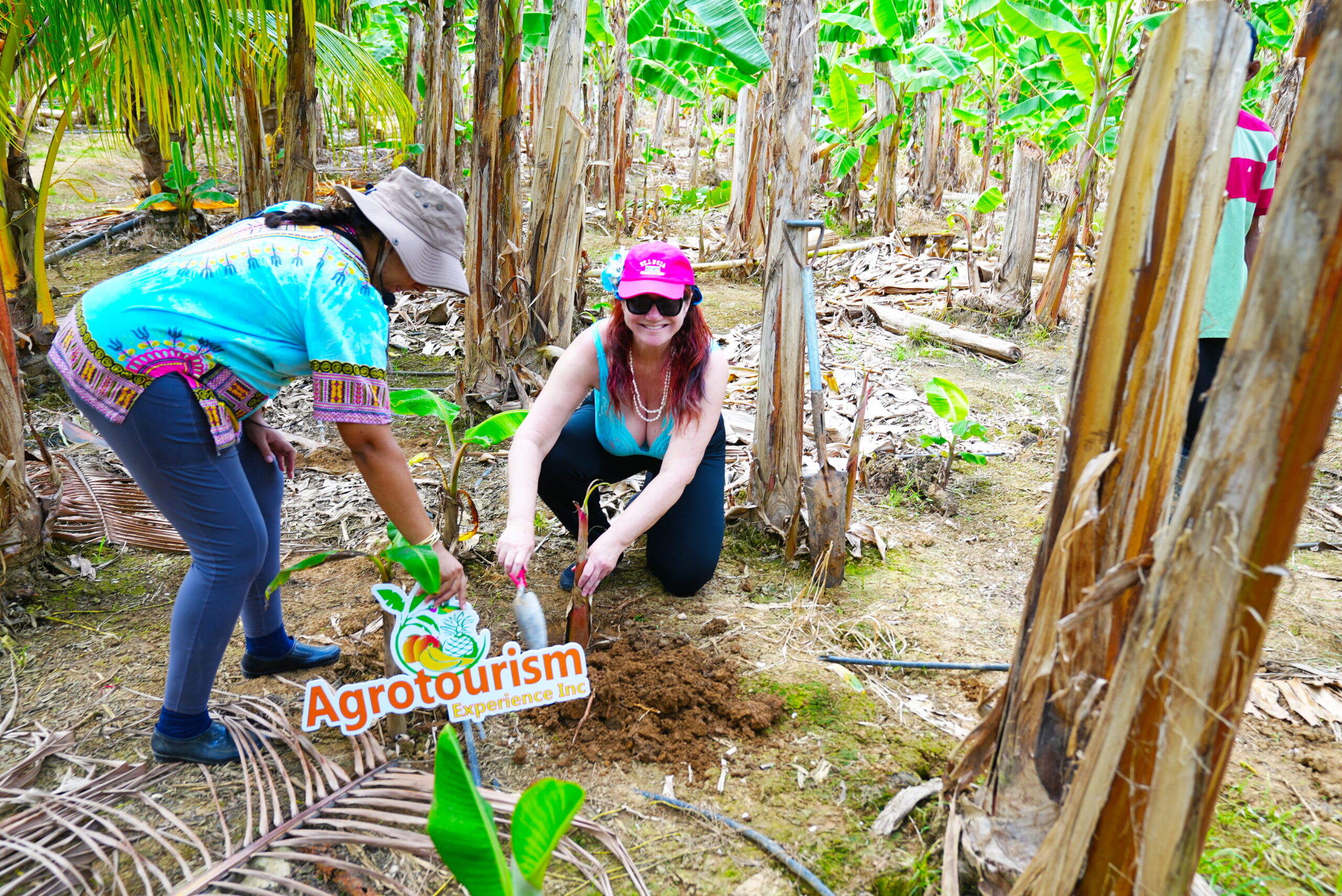
Doing our part to save the planet.
Since this is a hands-on experience, we get to plant a banana tree. And, we get to promote the company that is providing this service. Win-win.
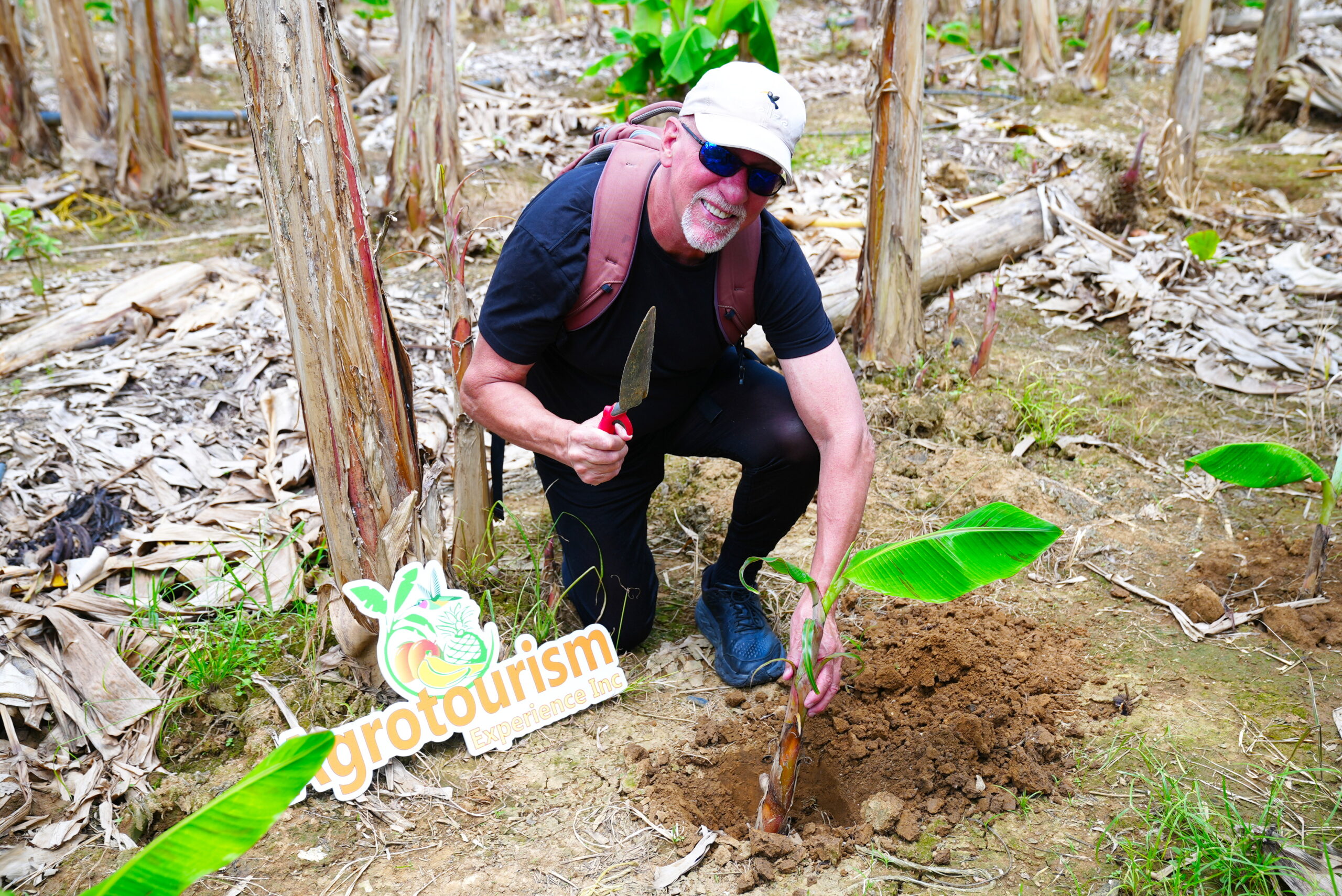
The soil here is very sandy.
Notice all the dead and dying plants in the background…
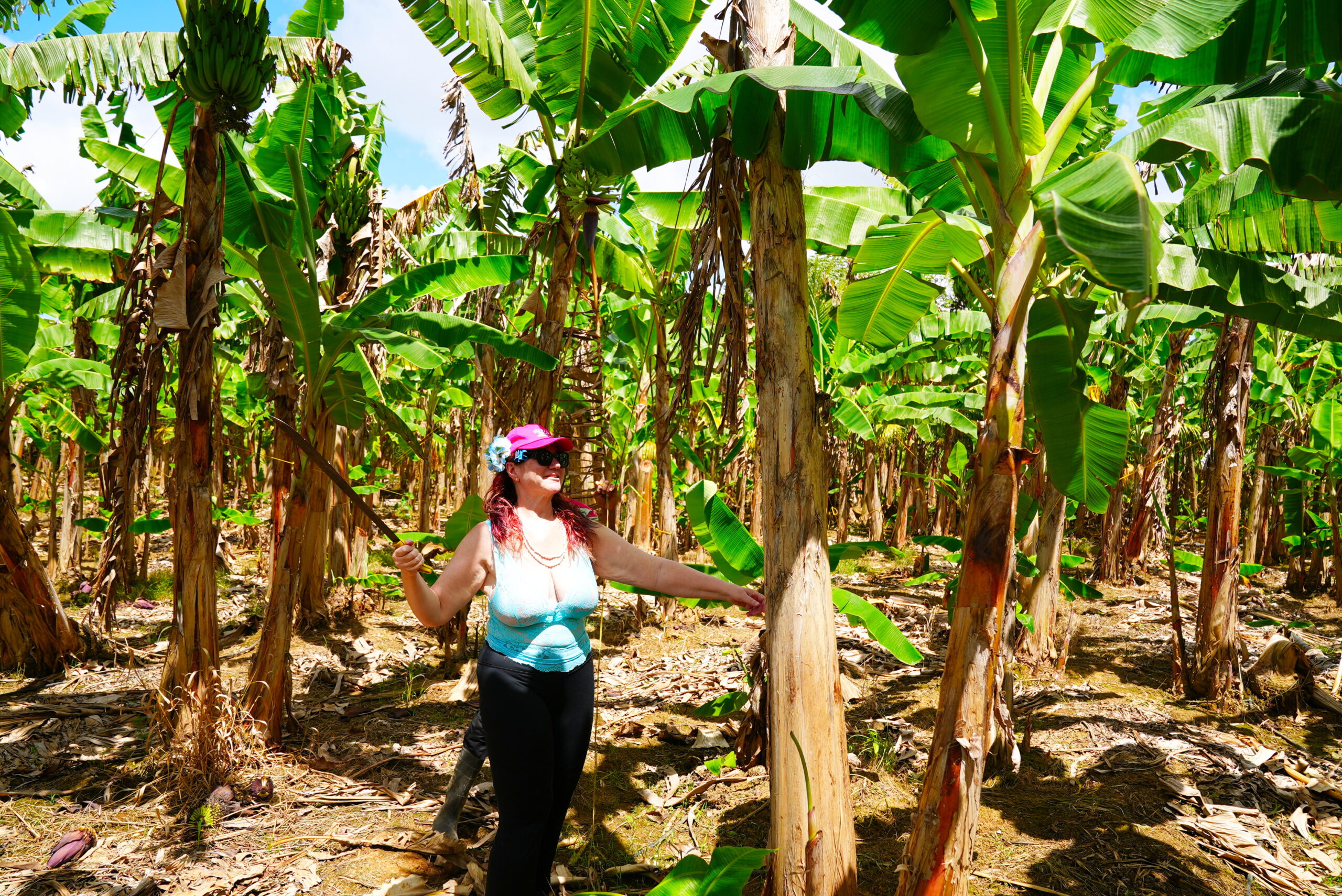
I hope she doesn’t half herself with the machete.
The banana plant produces only one bunch of banana fruits before it is chopped down and returned to the soil. Ashes to ashes, dust to dust, and all that. That happens to Decapodians, if I recall correctly.
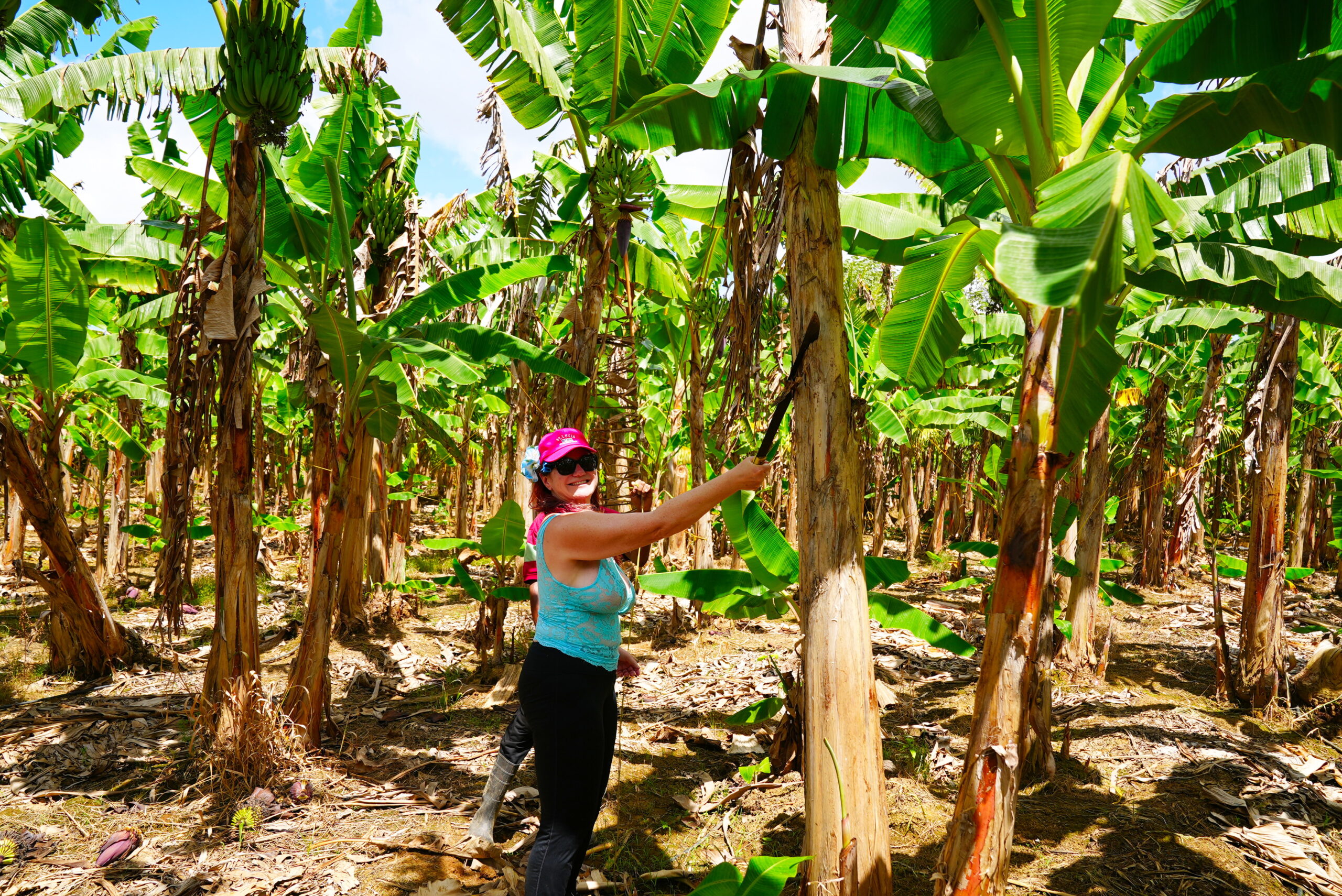
Hi-ya!
This is the first banana plant I have ever cut down and, surprisingly, the first time I have used a machete. Still, I pose for the camera as if I know what I am doing.
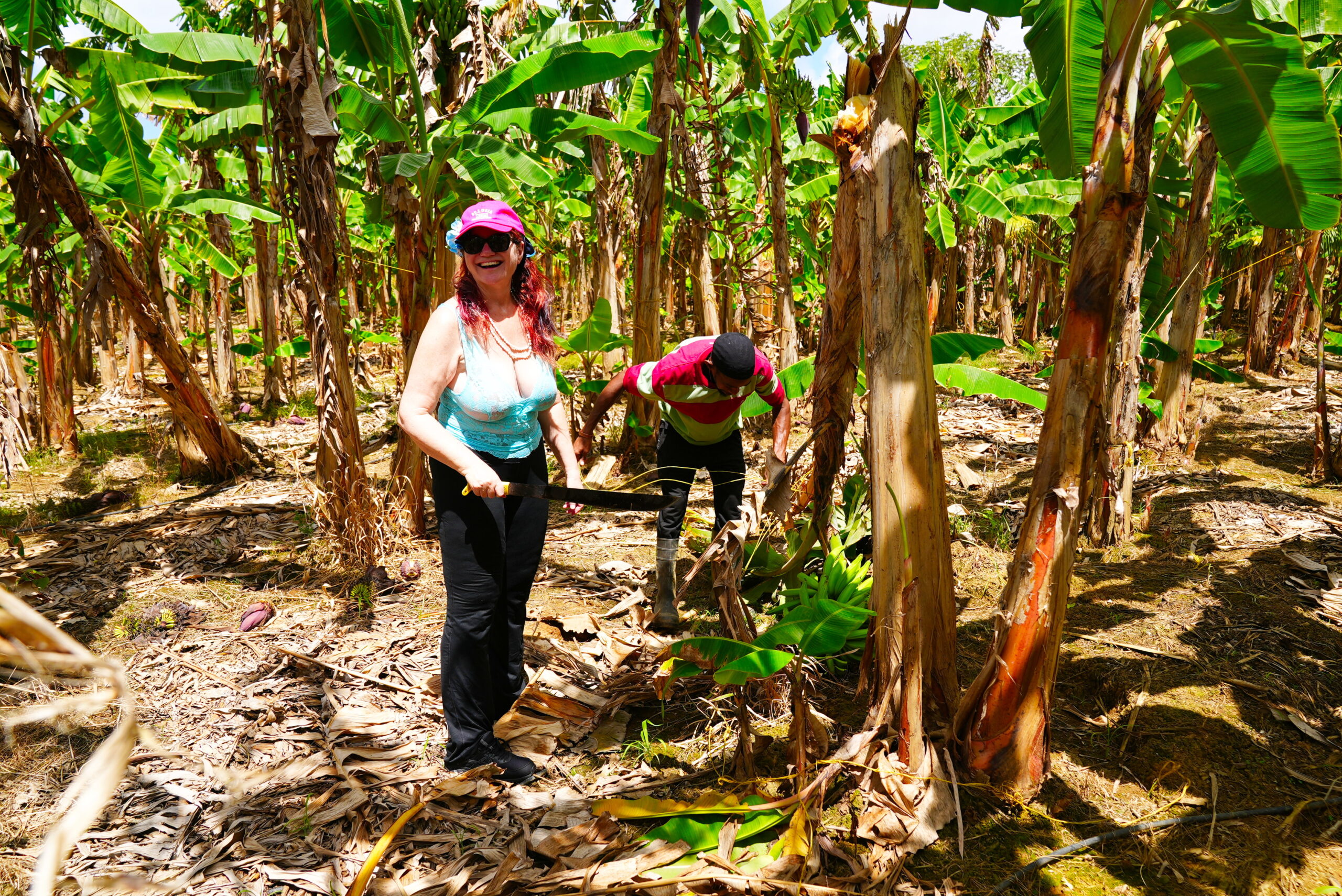
Timberrrrrrr
Okay, if you look closely in the photograph above this one, our friend is pulling on the banana plant with a rope so, after a couple more chops, my work is done!
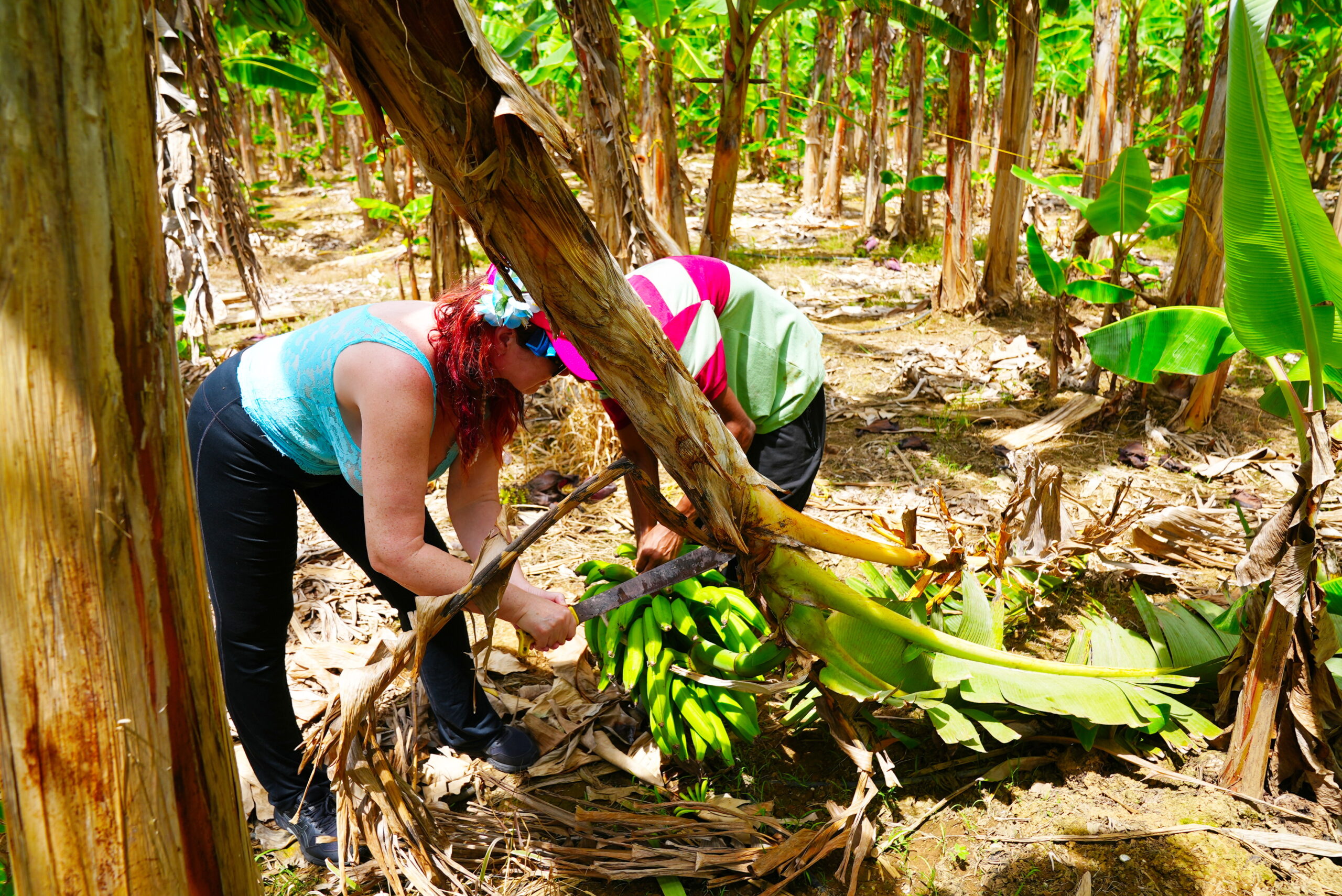
I’m a girl with a machete and I’m not afraid to use it.
I do my best to help and not hurt anyone.
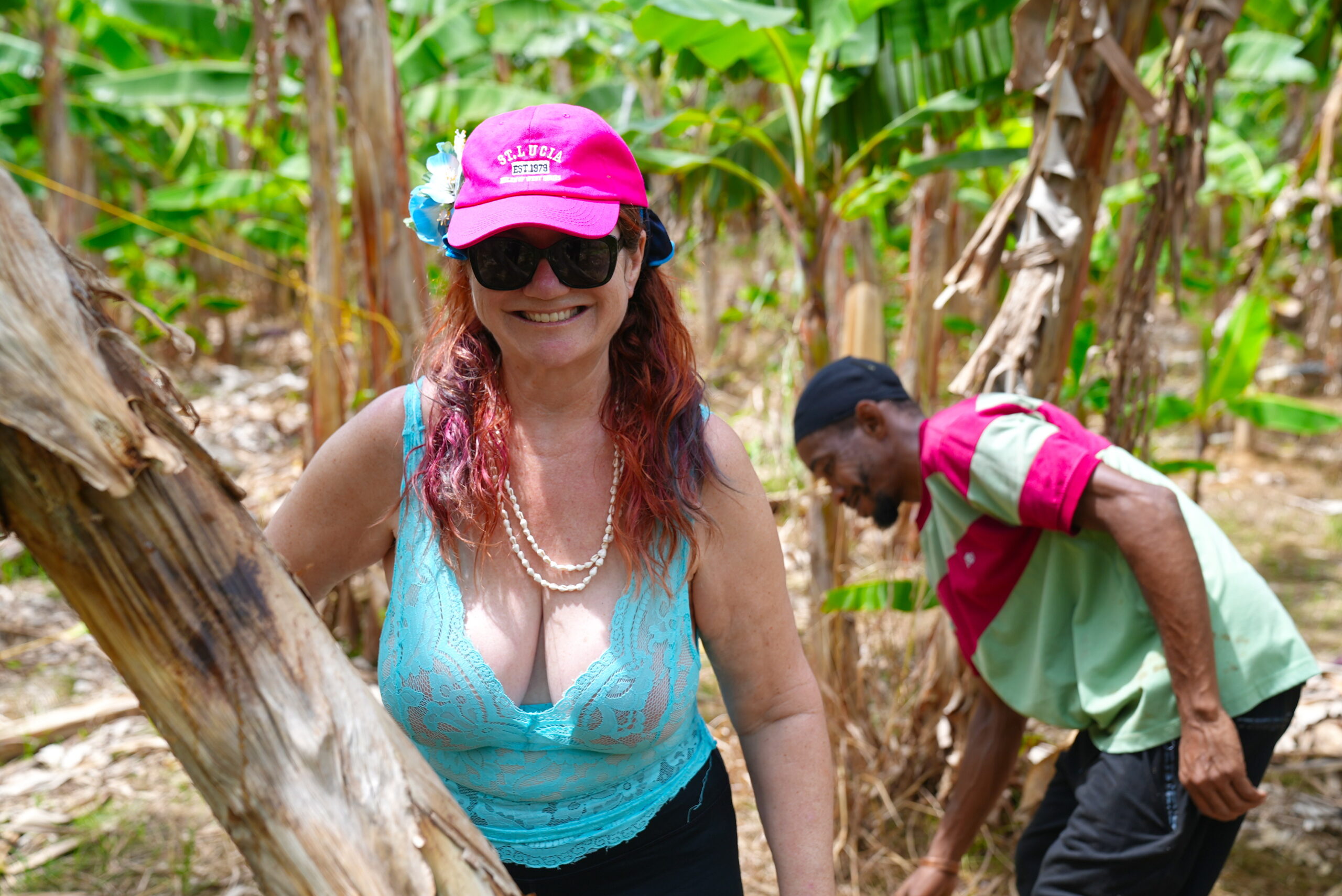
A job well done.
Success! I chopped down the plant, helped remove the bunch, and our friend kept his nickname.
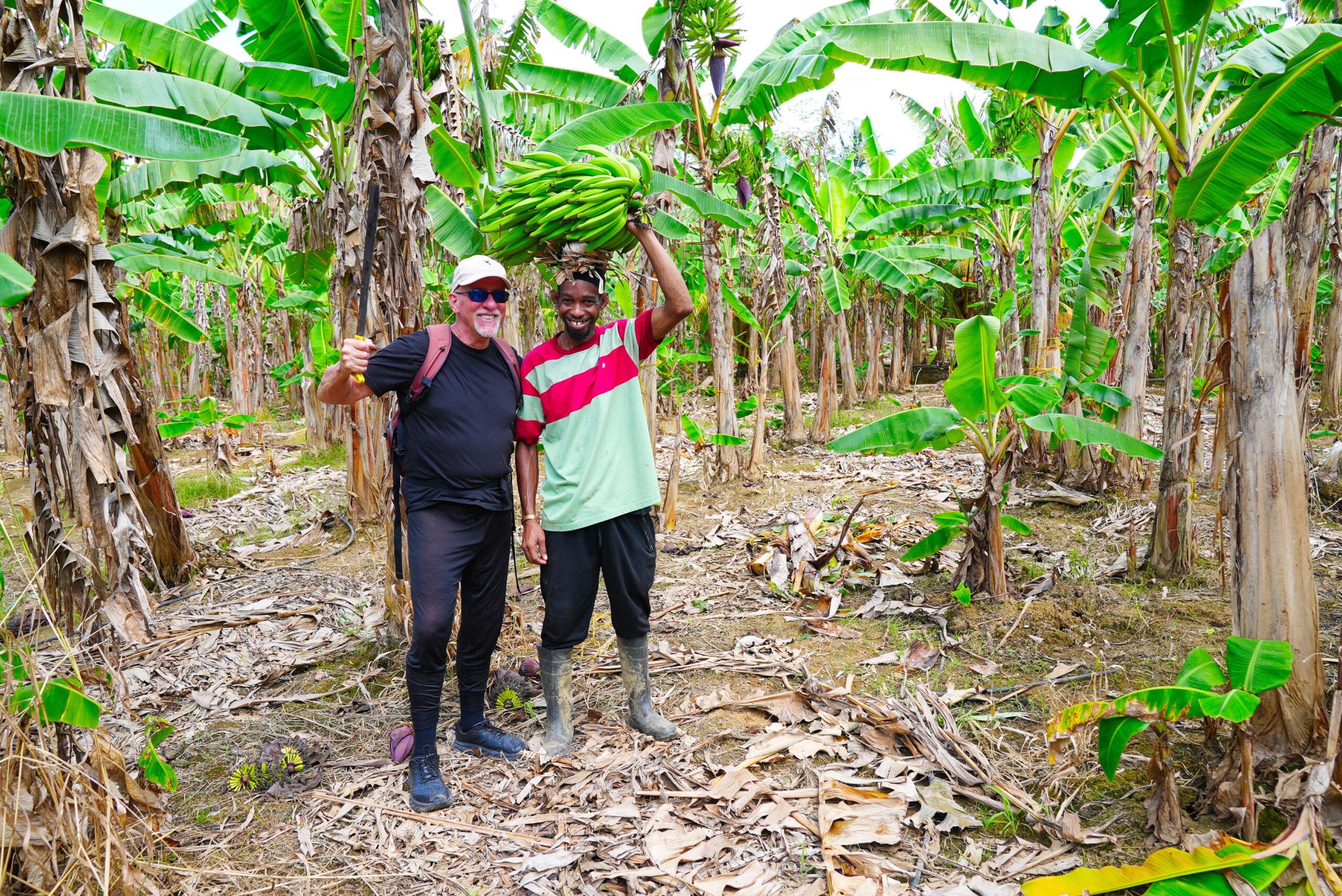
Smiles.
Our friend puts protective banana leaves on his head, then we help him lift the (heavy) bunch so he can carry it. He smiles often; this is just the first time we managed to catch it on camera.
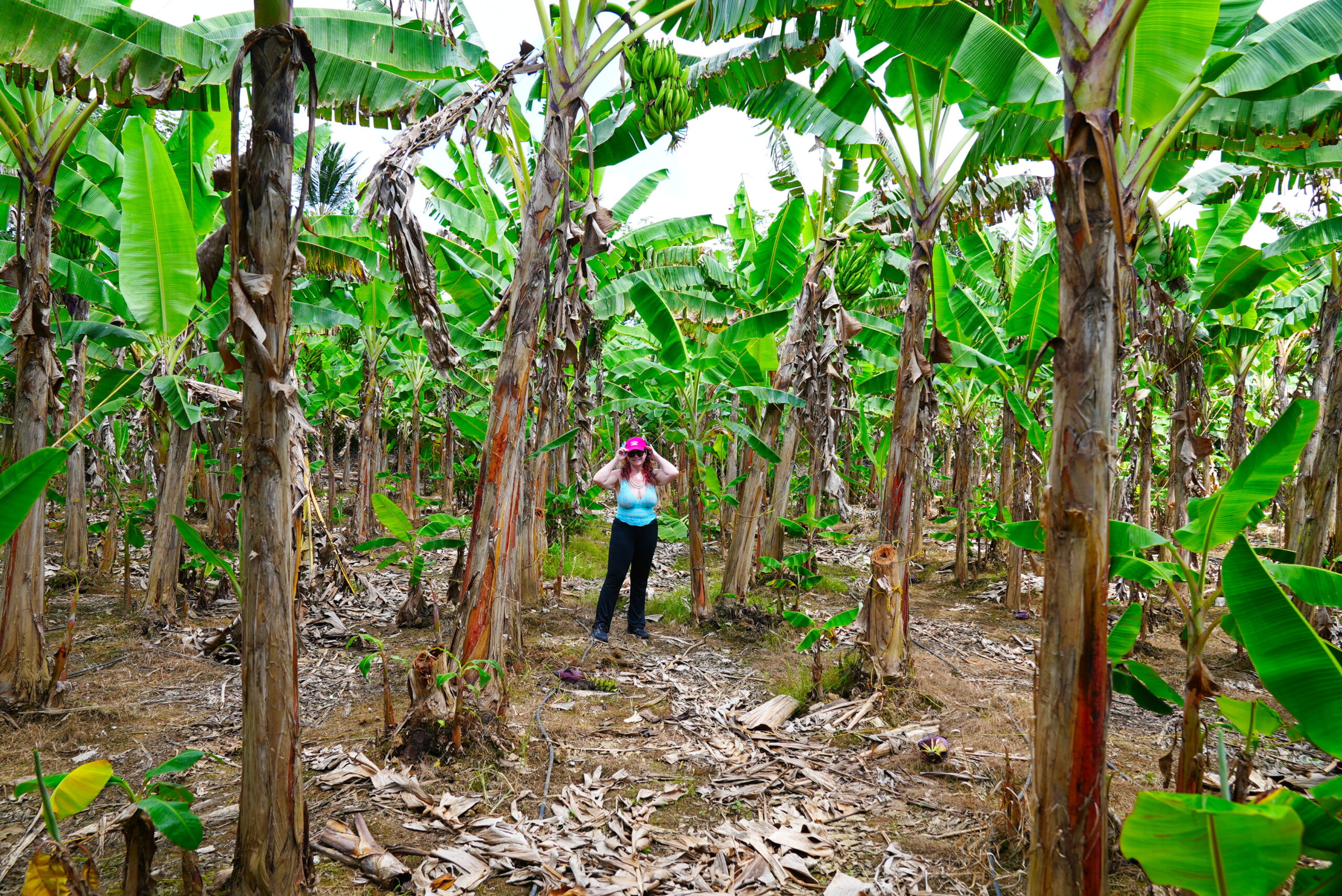
Alone in the jungle.
We ask if we can walk through the banana forest by ourselves for a while, and they allow it. It is very serene here.
Plus, it’s the first banana forest we have ever been in, so that’s cool.
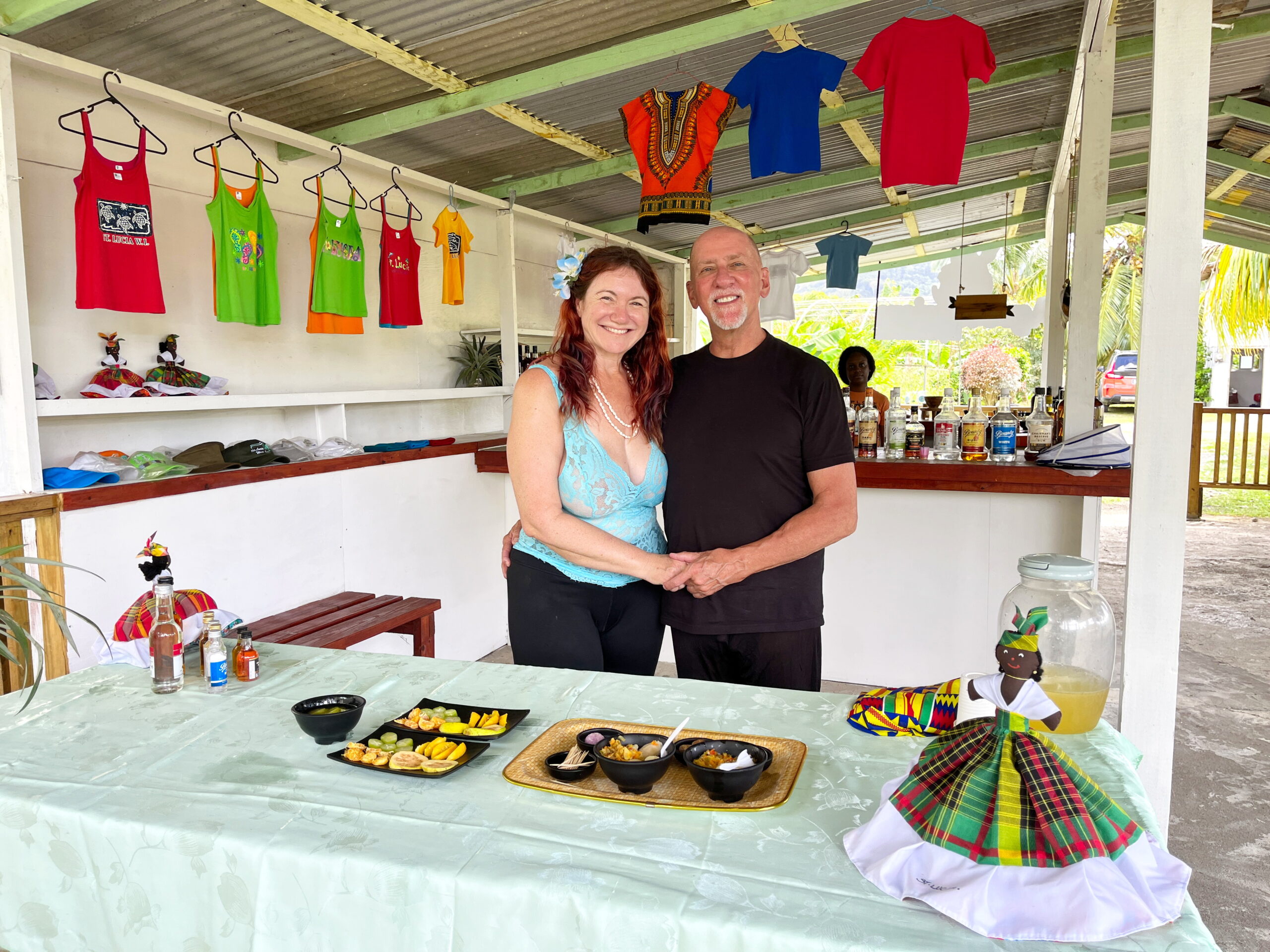
Smilin’ in St. Lucia.
Then we head back to the welcome center to taste the local cuisine. So, besides the tour, we are served lunch. Nice.
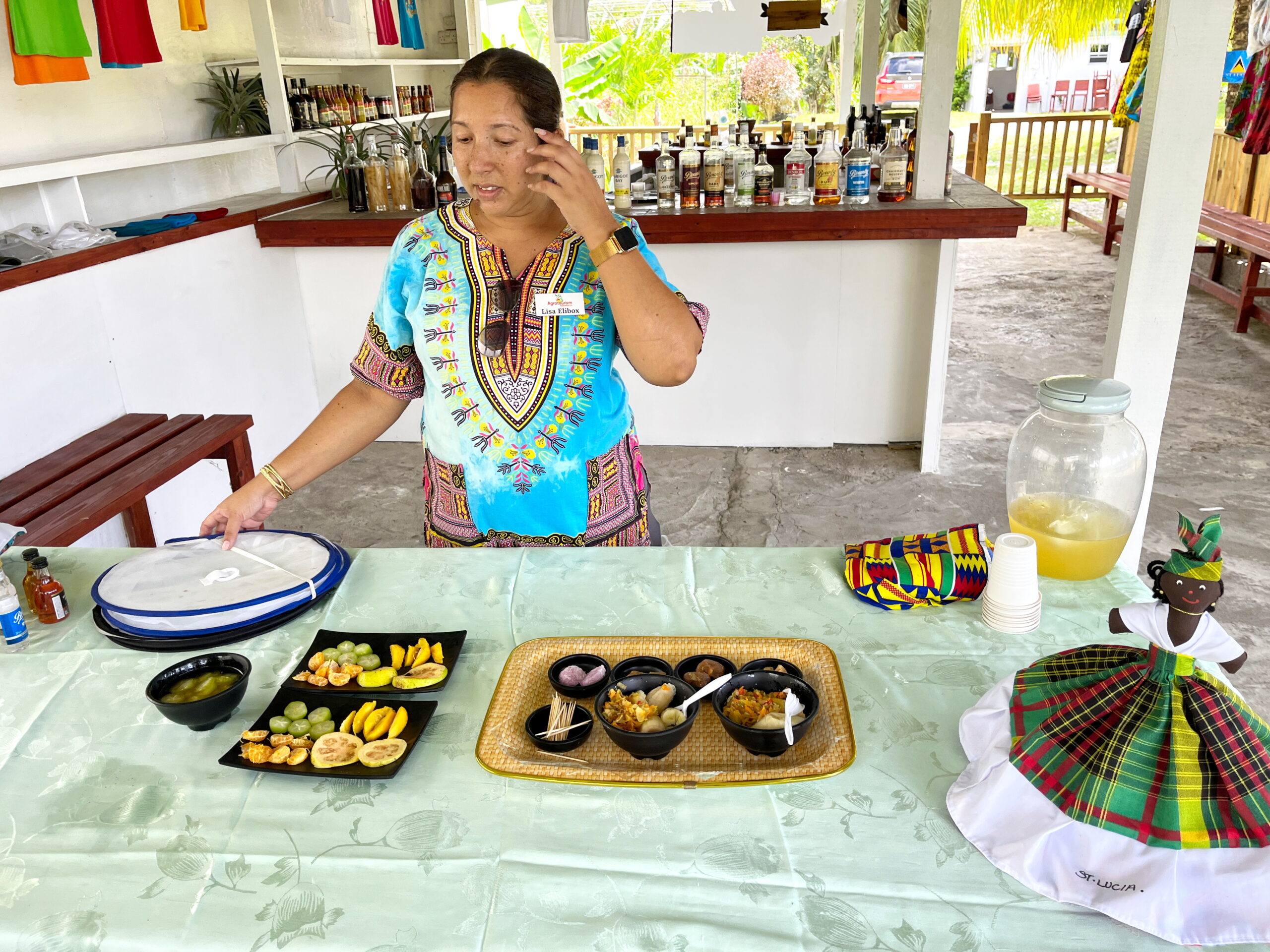
Time to eat.
Our guide, Lisa Elibox, explains that the food is all grown locally on the island (except the fish, which are grown locally in the ocean).
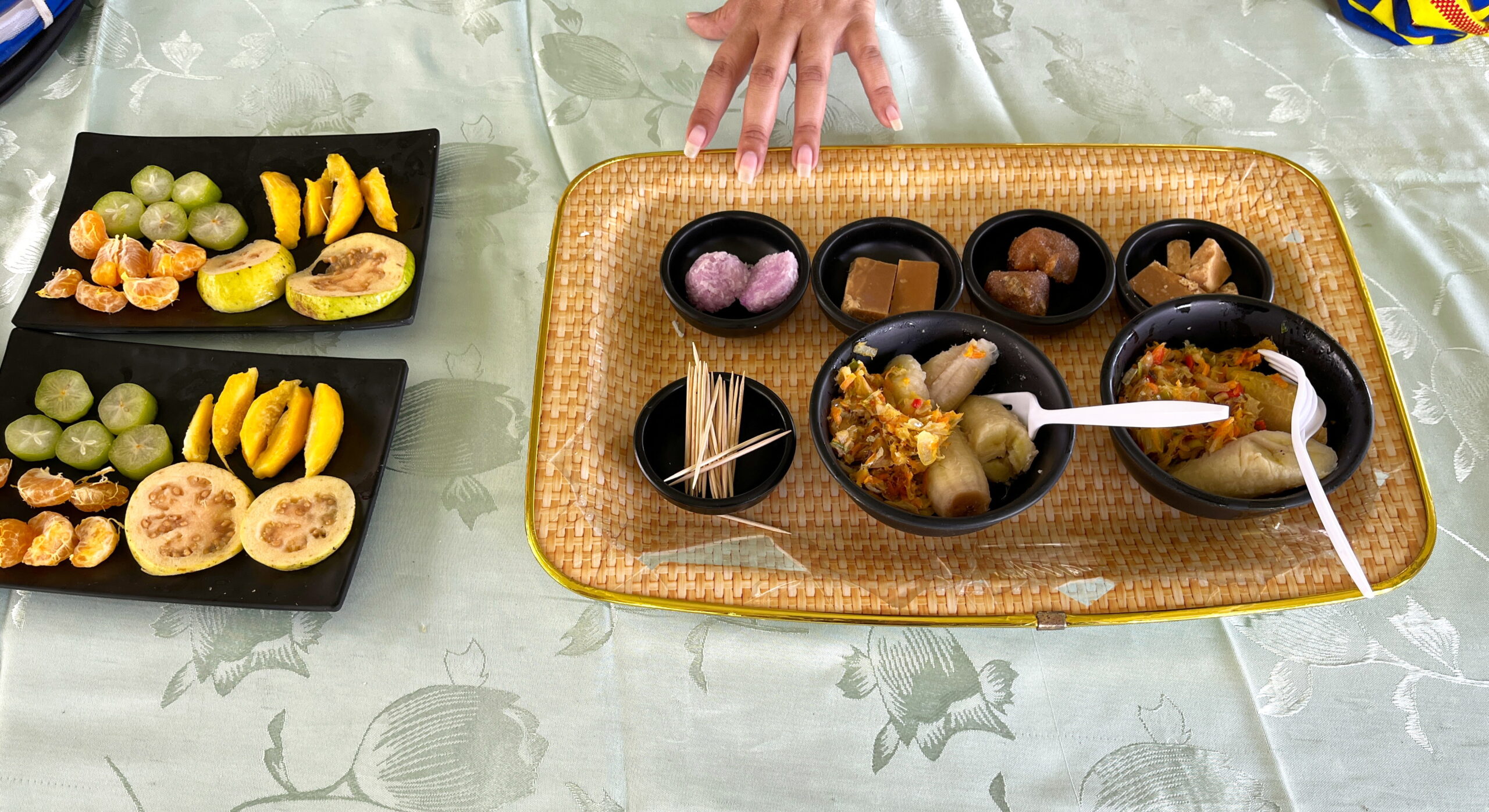
Extreme close-up!
Miss Elibox explains what each food is, and a suggested sequence of imbibing.
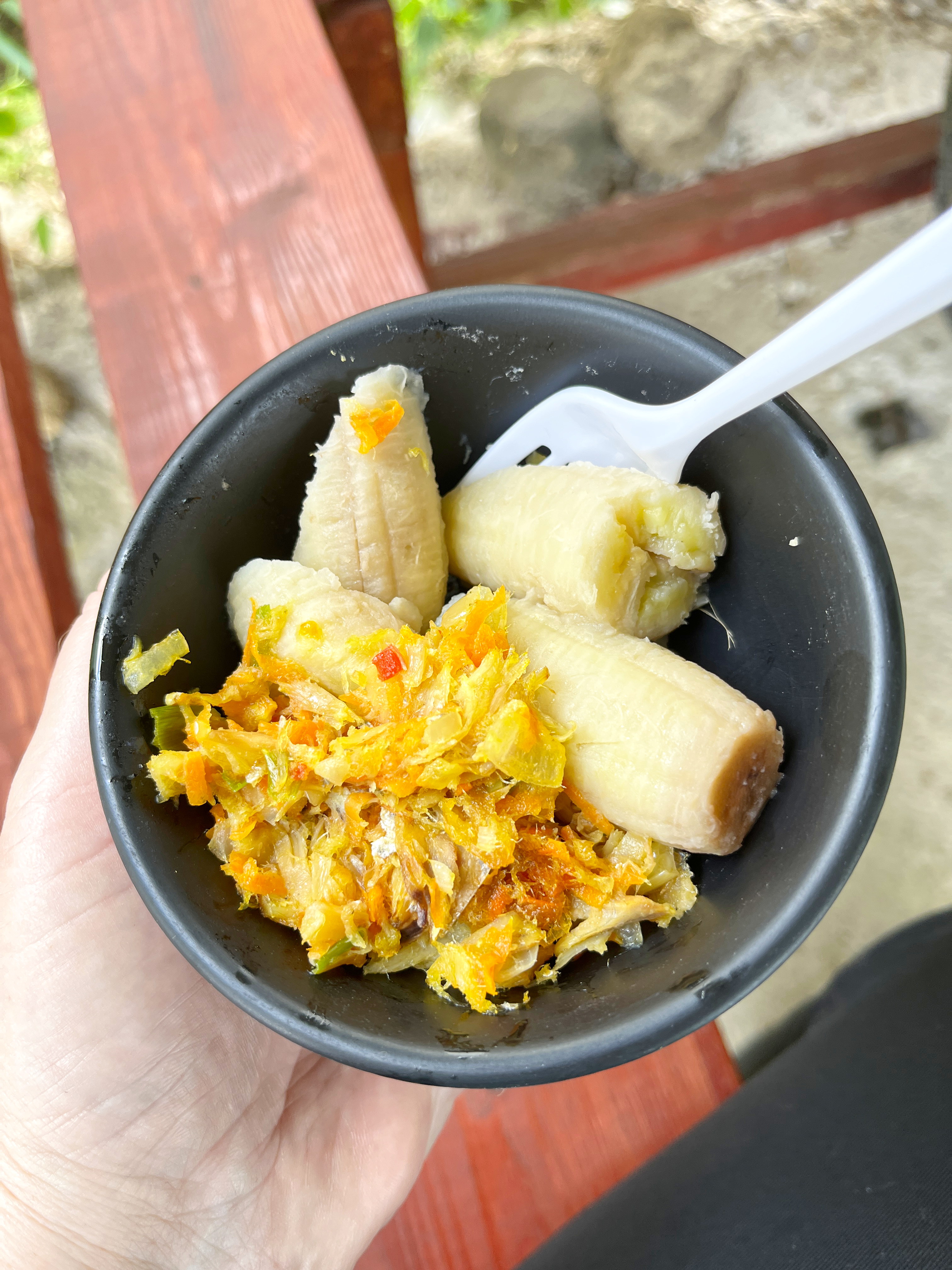
Bananas are the potatoes of St. Lucia.
Less-than-ripe bananas and plantains are boiled to make them more palatable. This dish also include fish. It’s yummy!
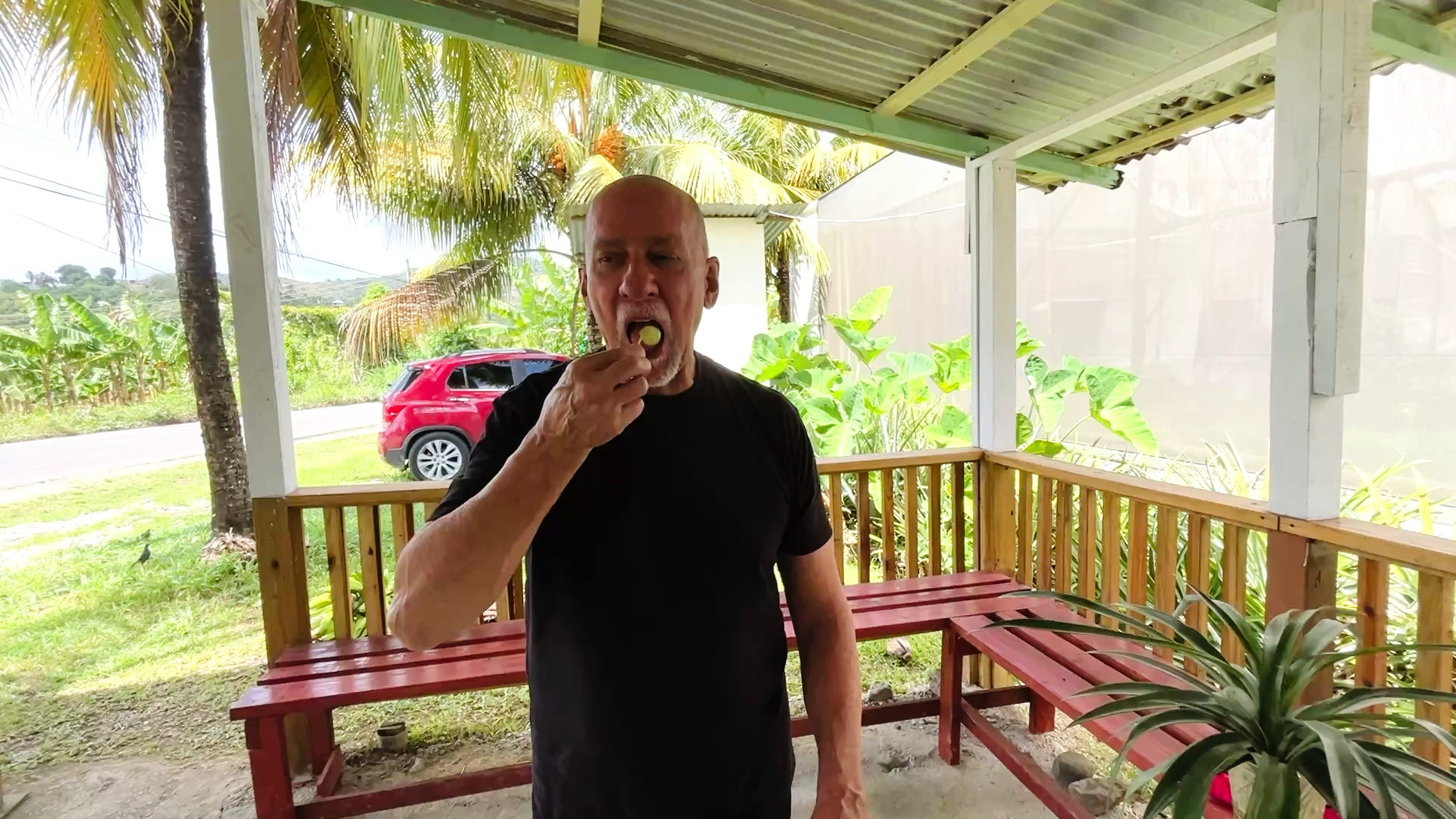
Sourpuss.
Some of the fruit is remarkably sour.
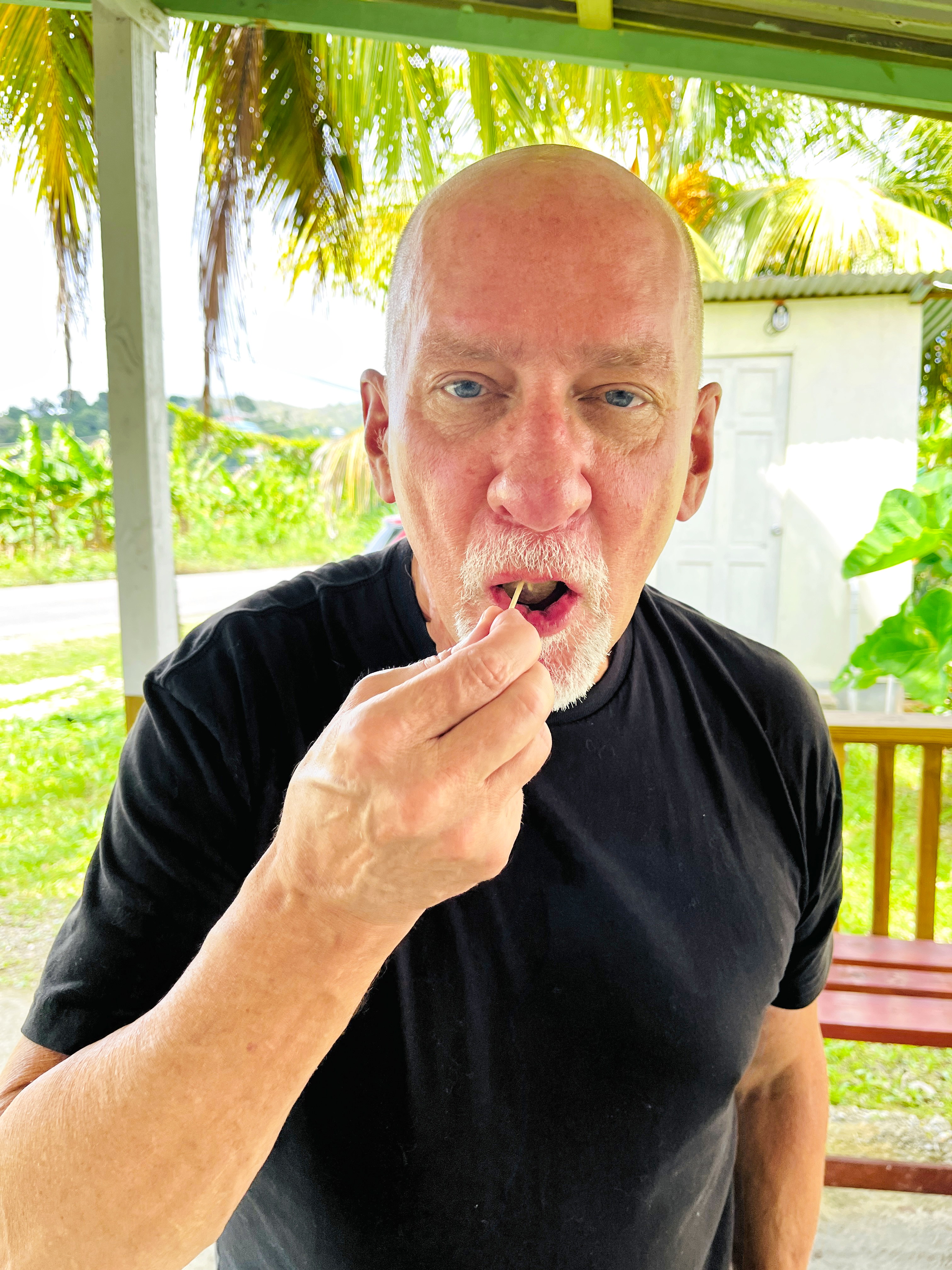
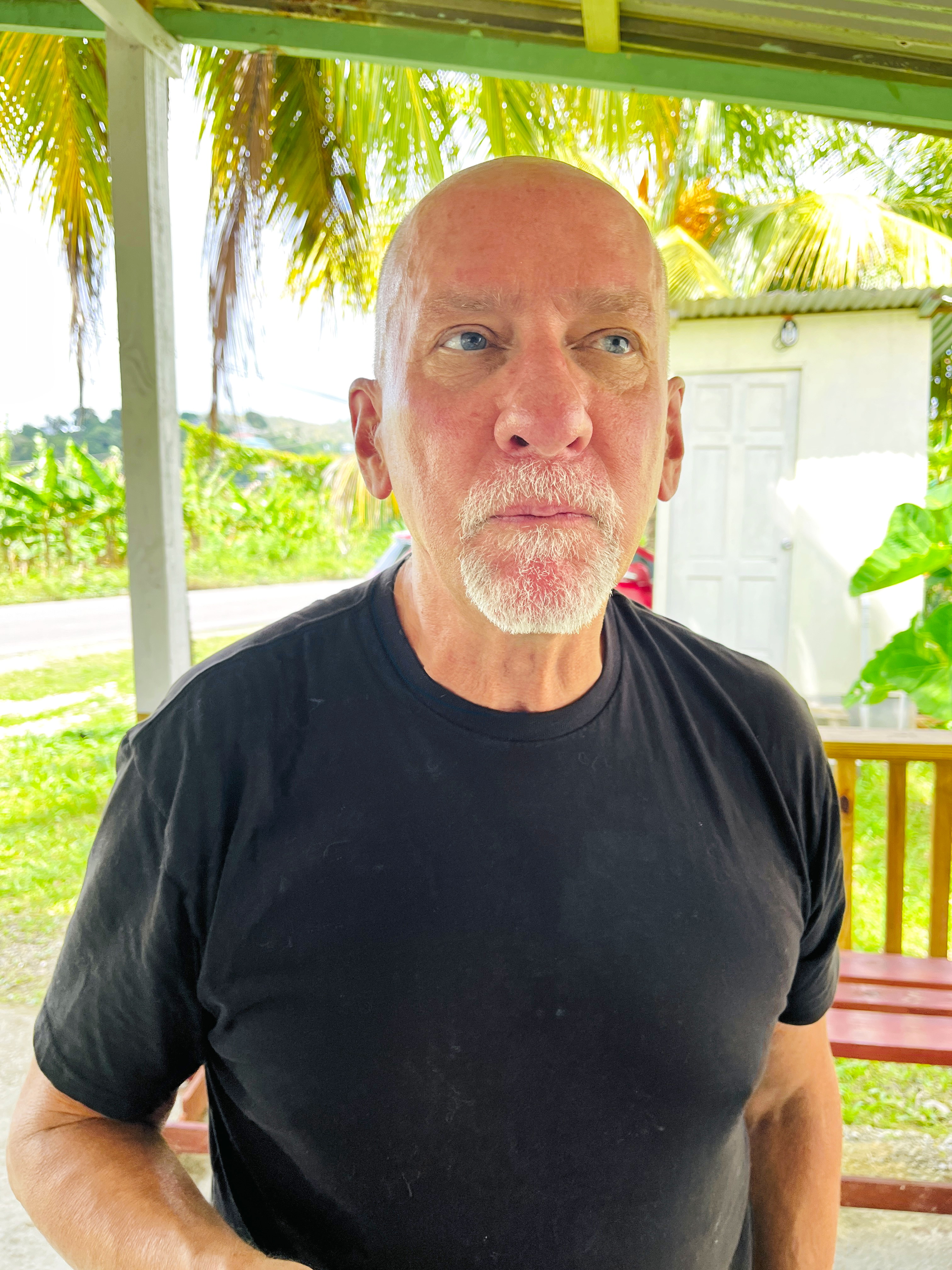
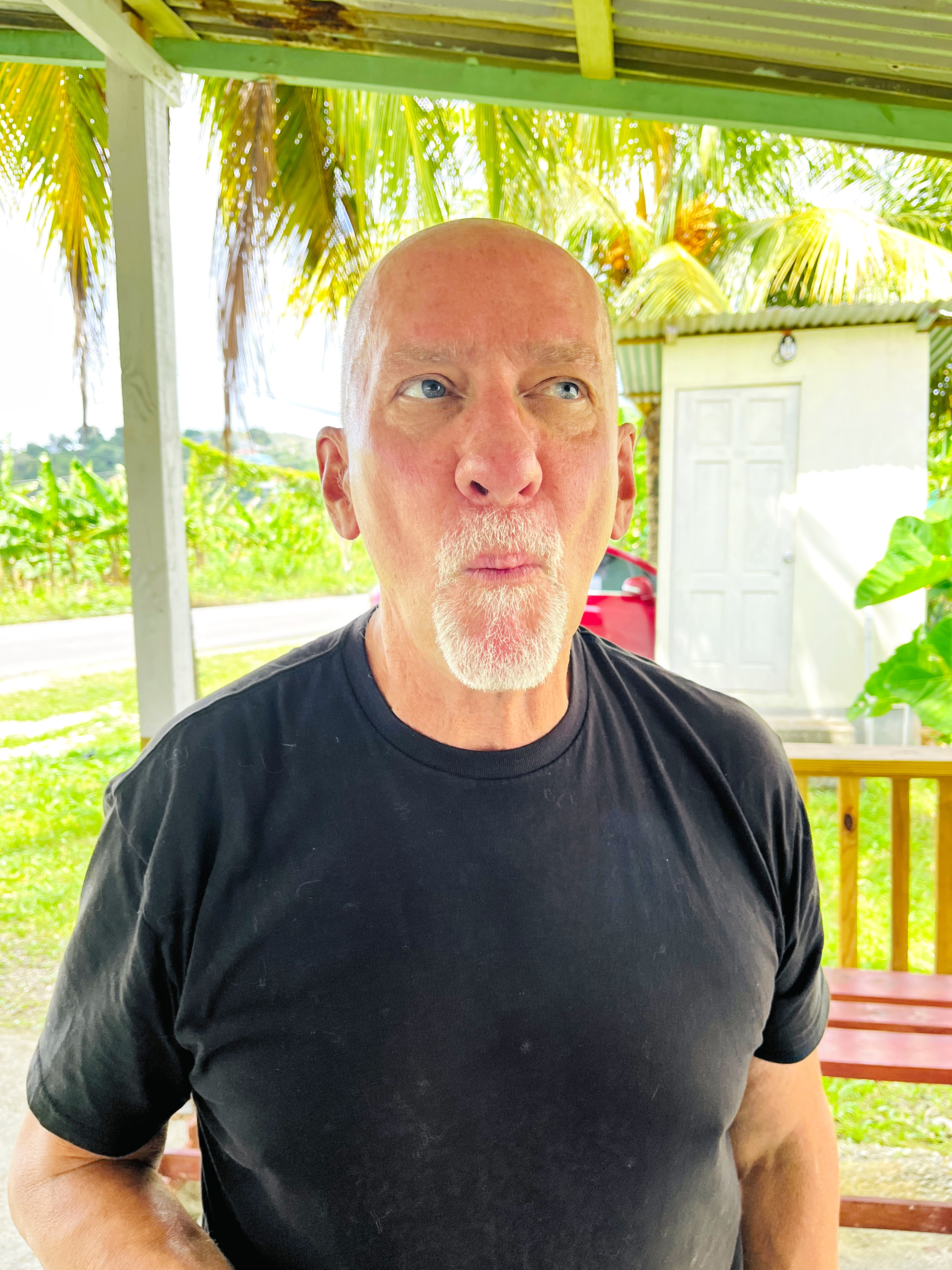
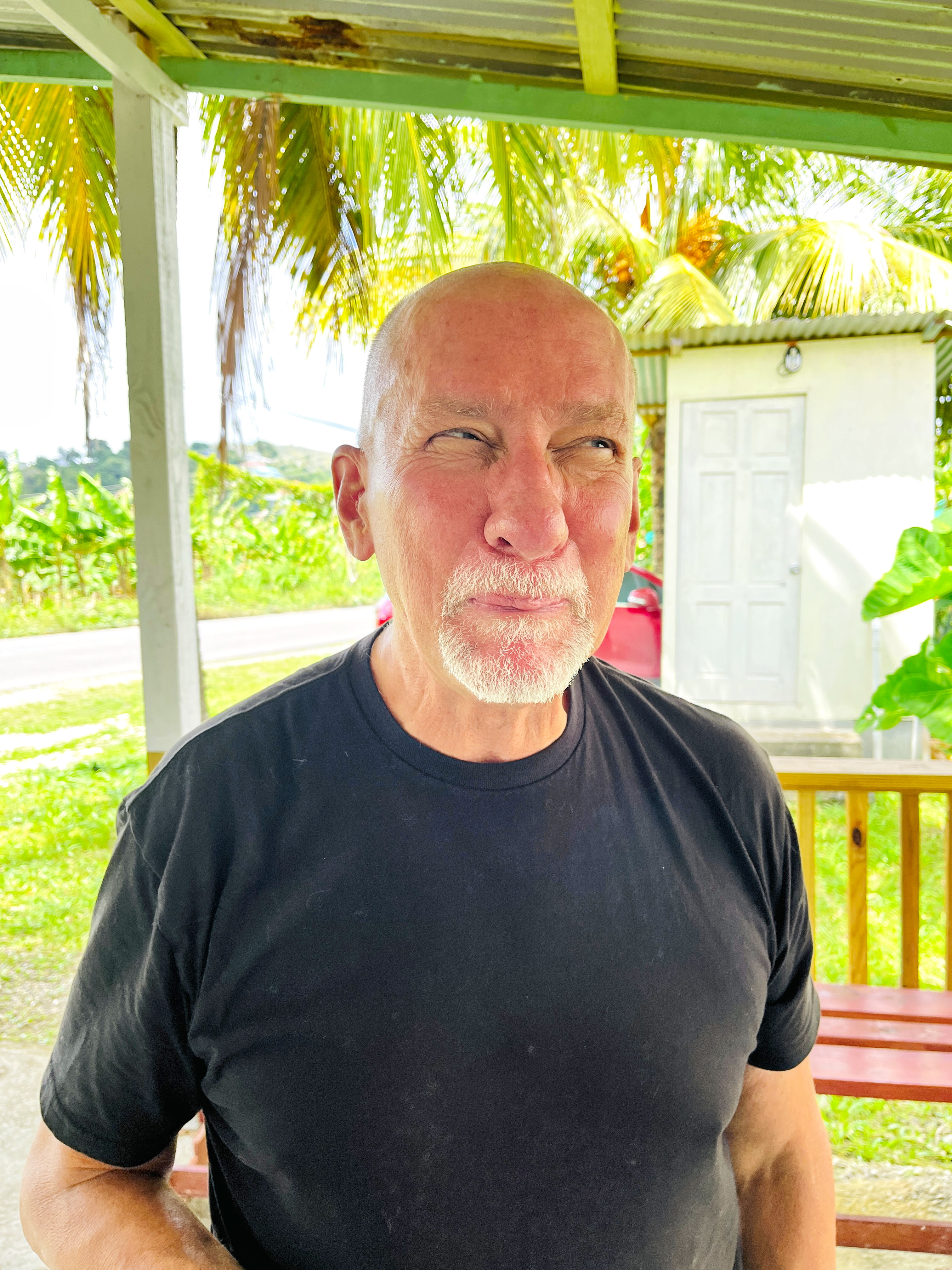
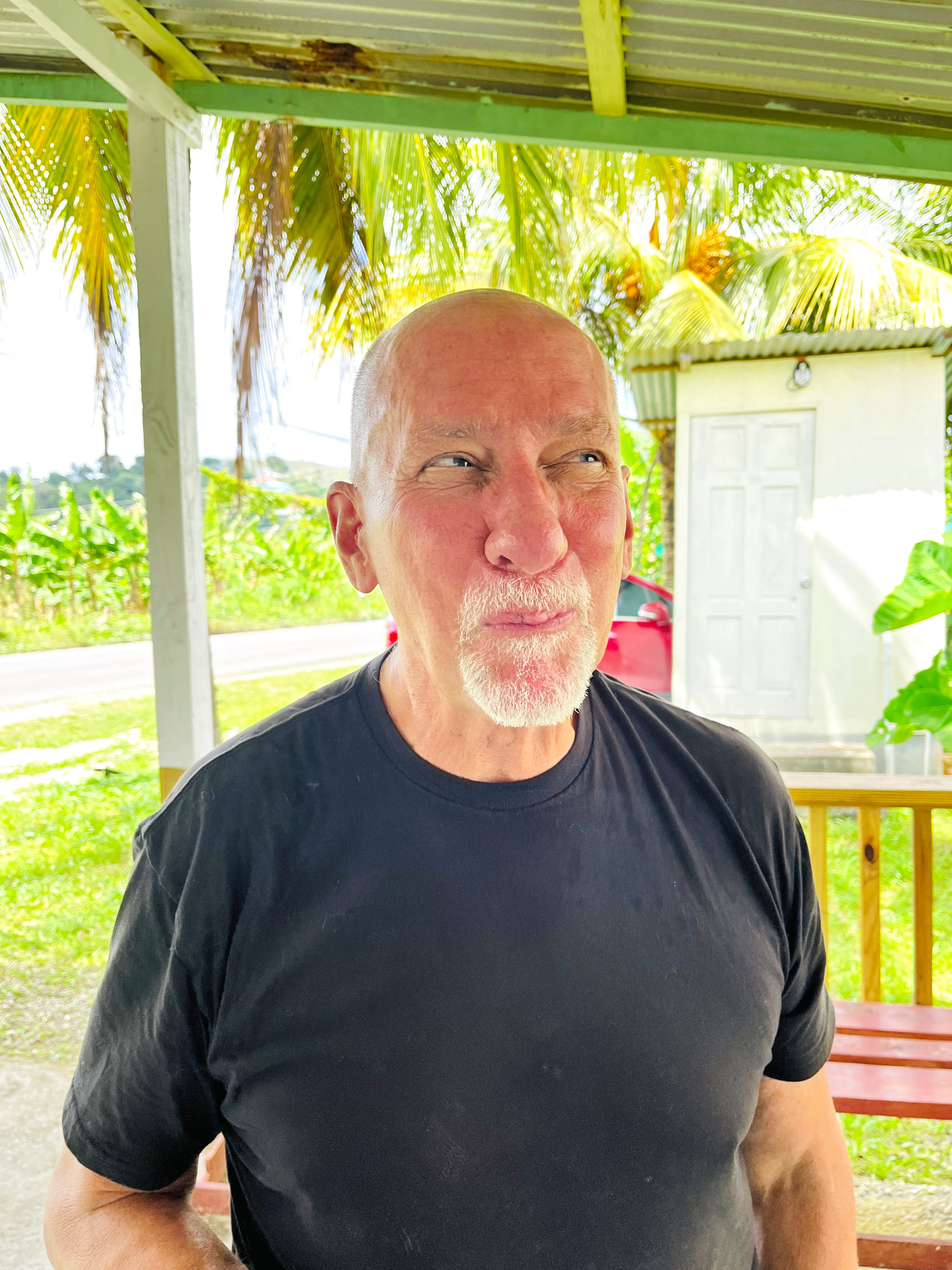
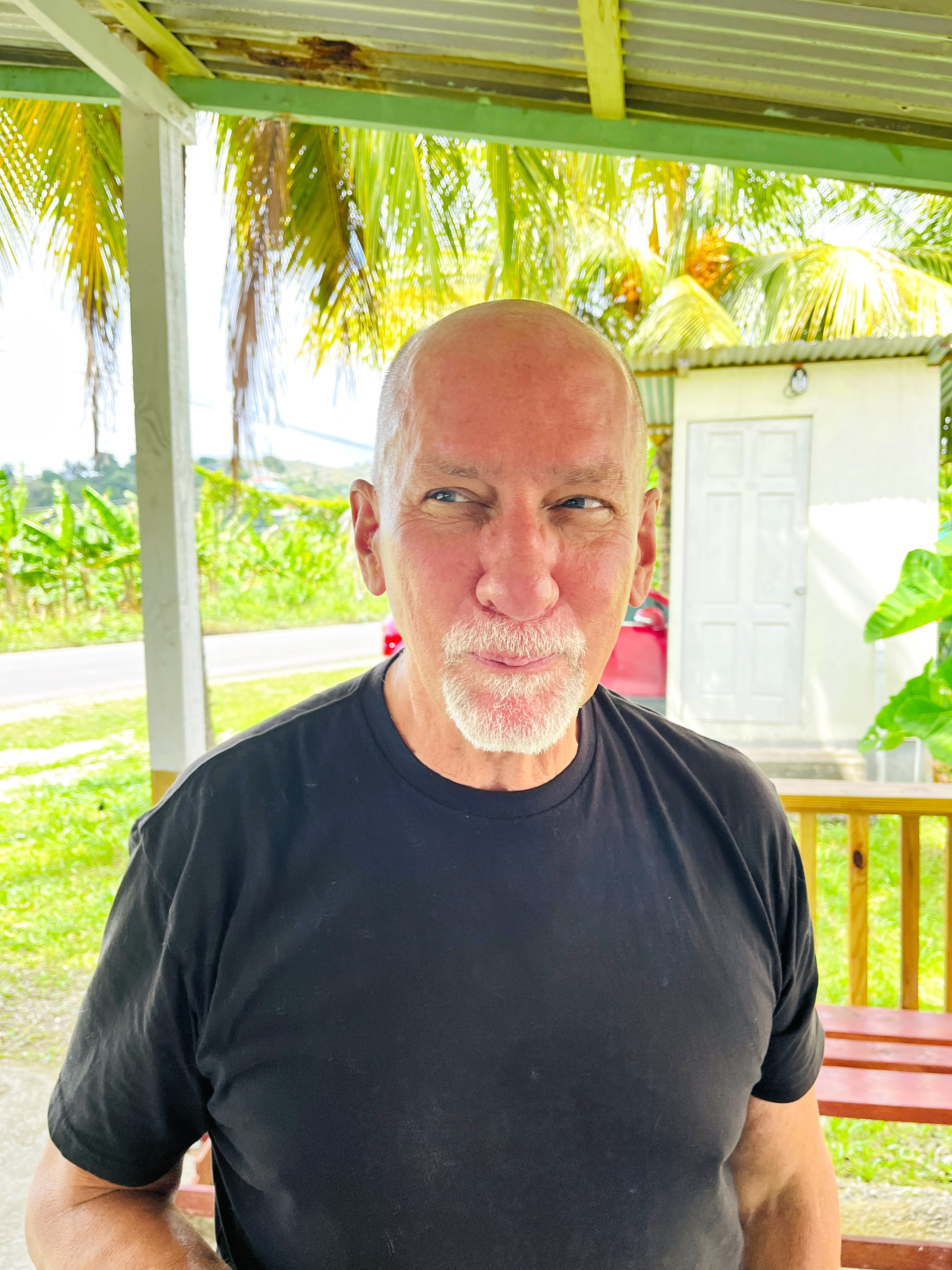
Yeah, it’s pretty intense…
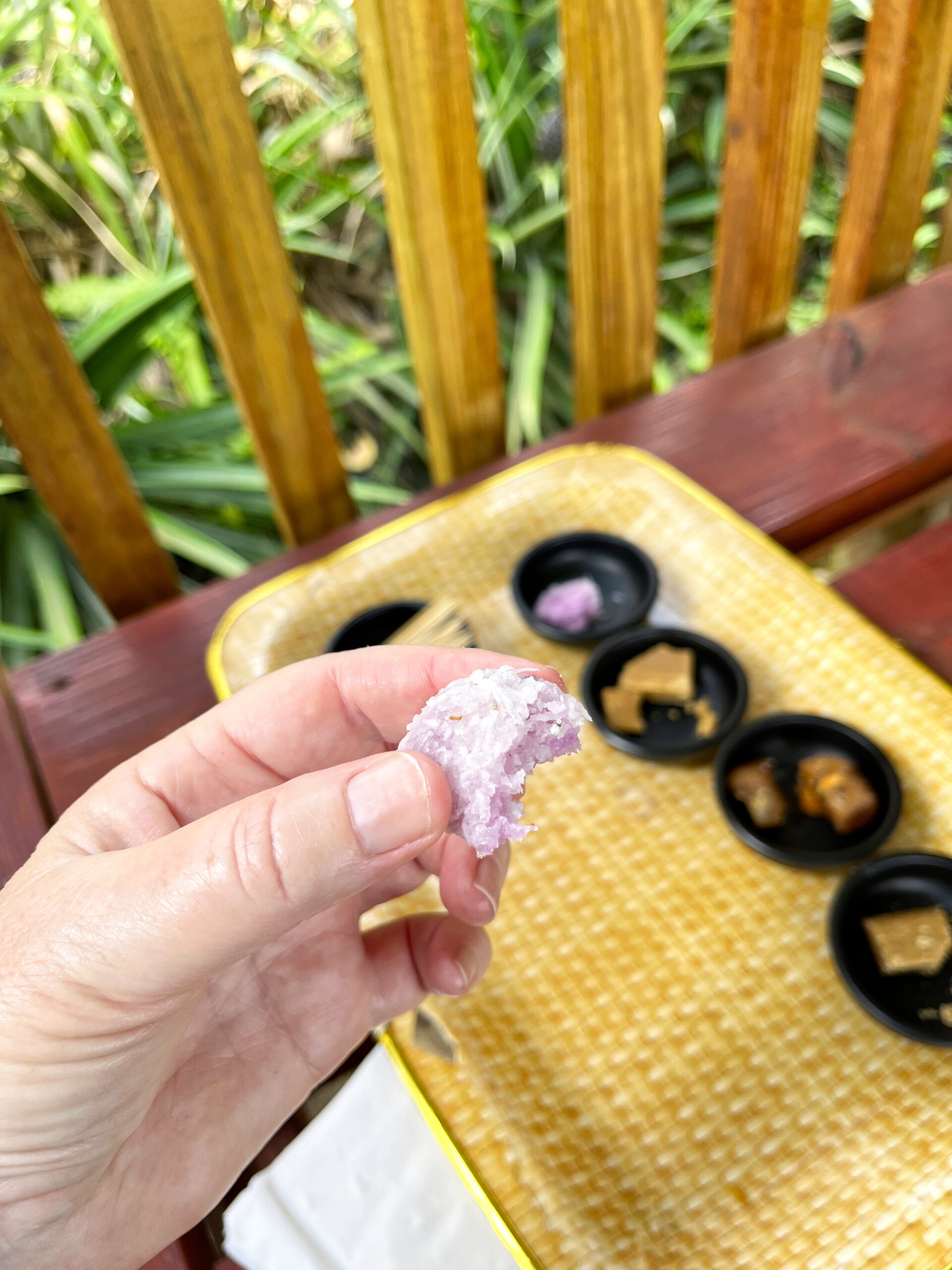
Sweetness.
Given the abundance of sugar cane on St. Lucia, it’s no surprise that some of the treats are sweet.
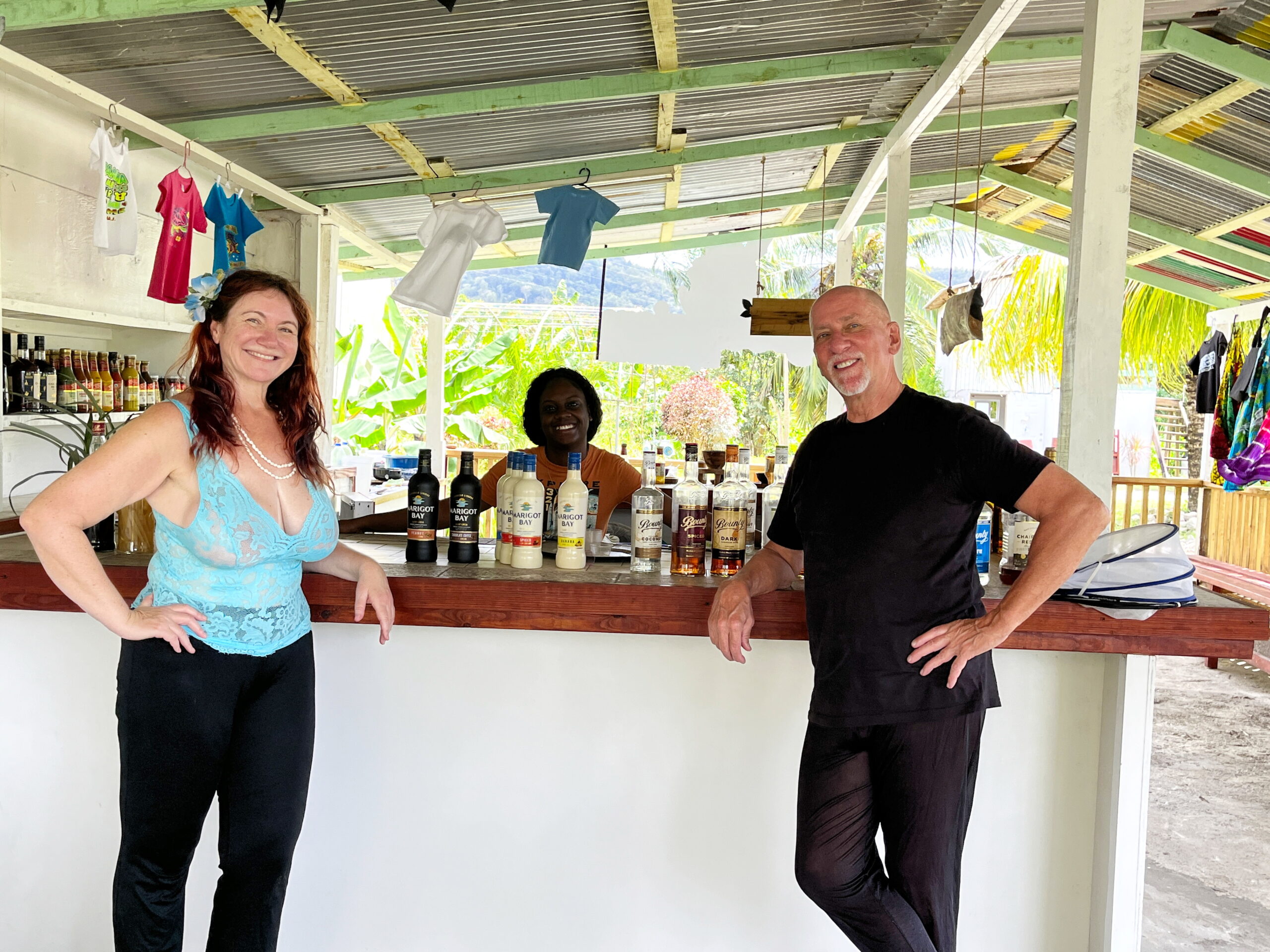
More rum tasting.
They serve peanut-flavored rum. If you sip it very lightly, it tastes like peanut butter cookies. Yum.
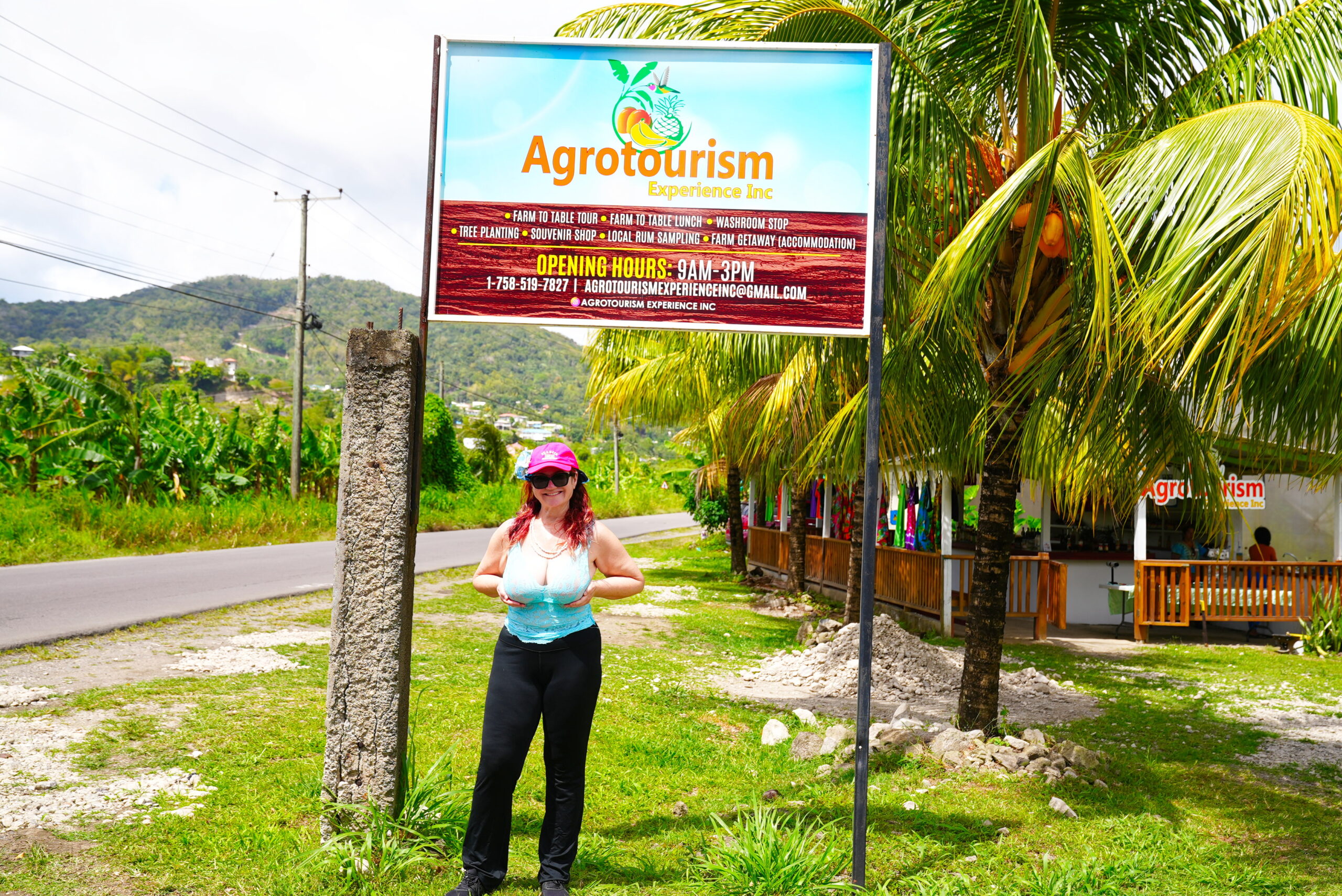
All good things…
So ends our tour, where we learned about pineapples, lemons, bananas, and coconuts. 🙂
Howelton Estate Chocolate Workshop
We have the opportunity to attend the Howelton Estate Chocolate Workshop so, let’s go!
Well, first we need to make reservations. There is an online form, but it doesn’t work. So, we call them, but no one answers. We leave a message, but no one calls back. But, island life, right? So, we drive there to see what we can figure out.
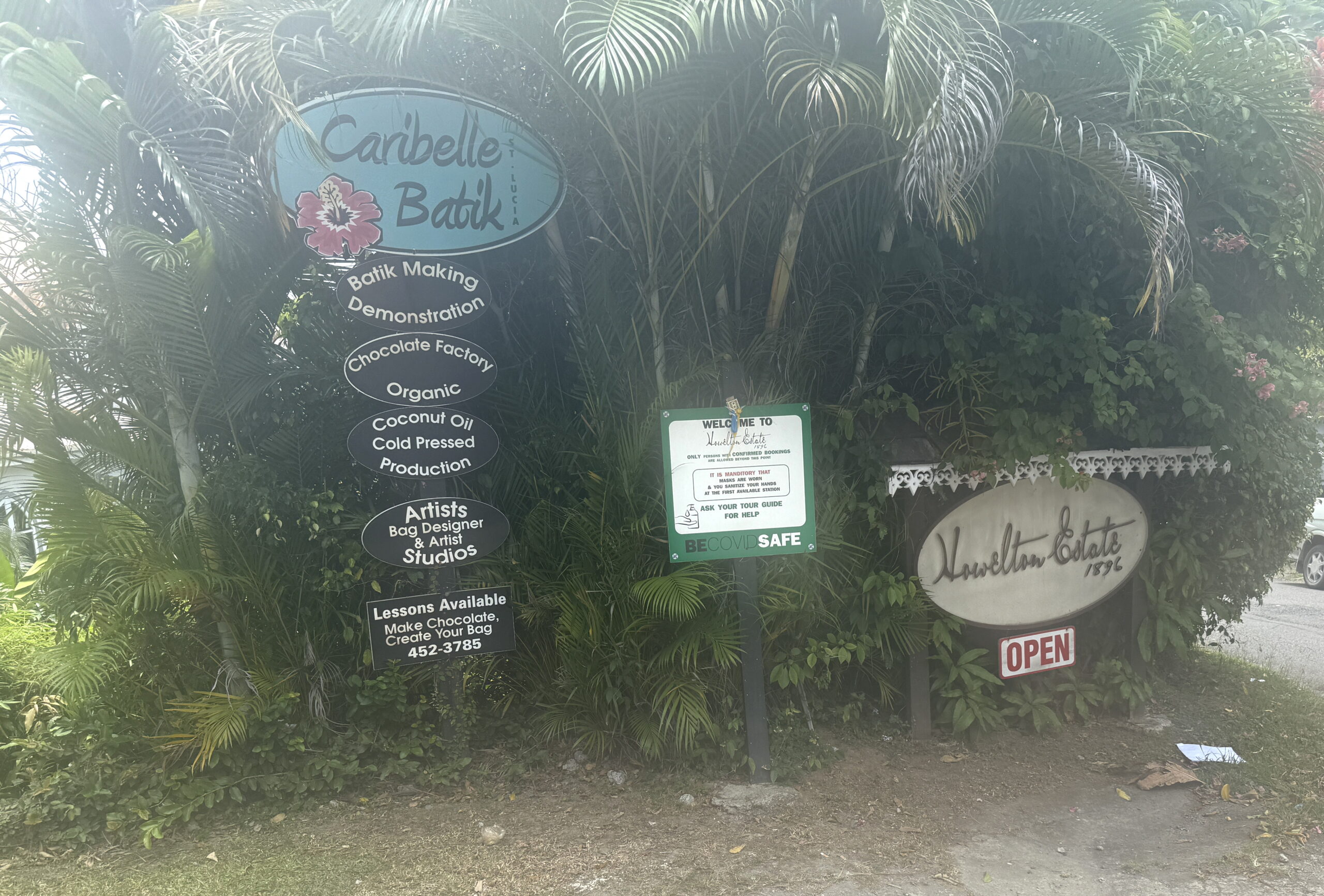
We found it!
The roads are, well, not so good here, and the car’s navigator seems confused, but we finally find the place.
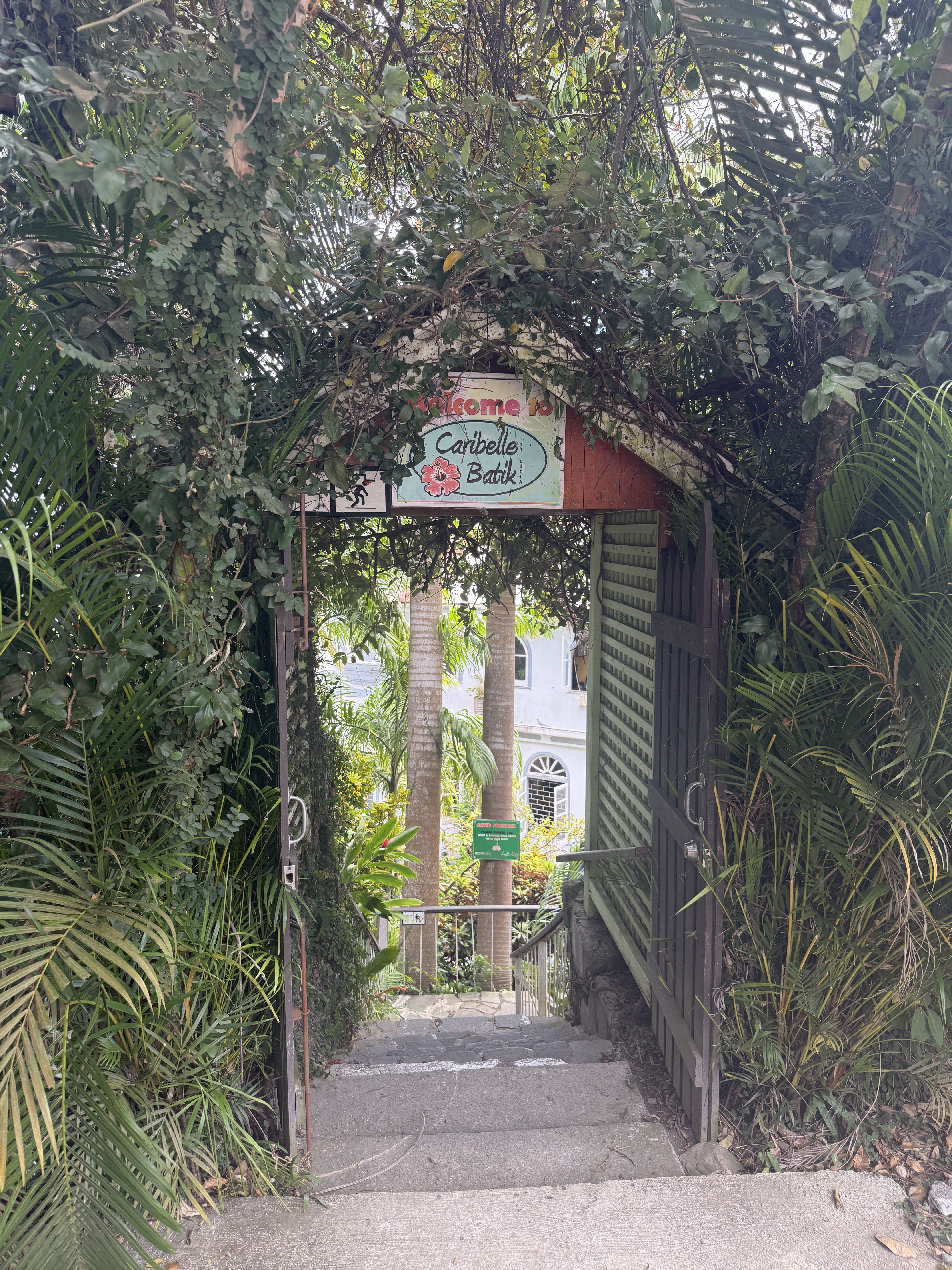
This looks inviting.
We have never seen the word “batik” before, and have to look it up.
Batik is a dyeing technique using wax resist. The term is also used to describe patterned textiles created with that technique. Batik is made by drawing or stamping wax on a cloth to prevent color absorption during the dyeing process. This creates a patterned negative when the wax is removed from the dyed cloth.
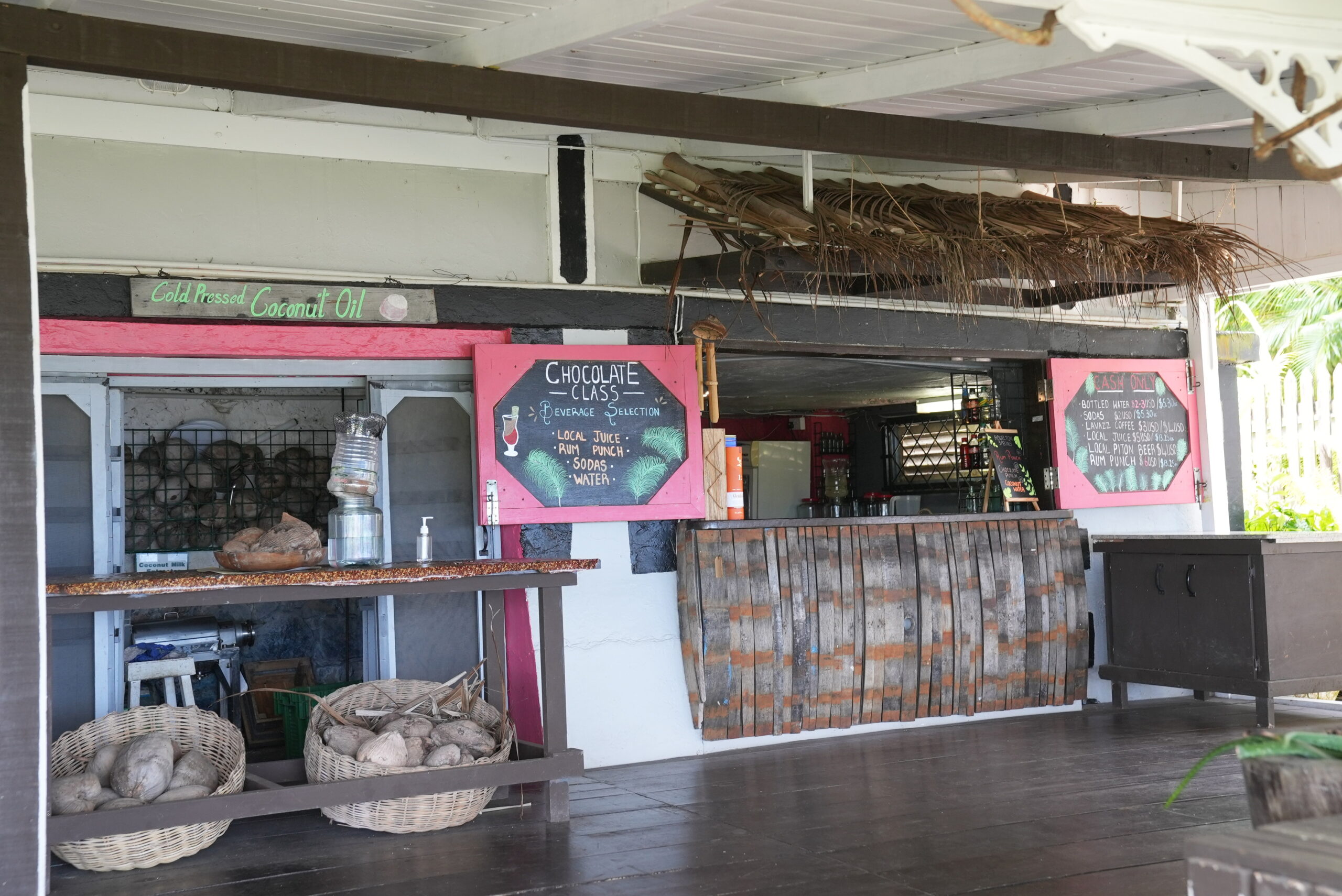
Where is everyone?
At the front of a building is a tourist shop, meaning it sells the same mass-produced trinkets that are sold in the marketplace near where the cruise ships dock. There are five employees in the shop, doing nothing. We state that we would like a chocolate class, and they say that we must reserve a class online. We explain that the website does not work, and no one answers their phones. They do not care. They talk among themselves and ignore us. So, we walk around the grounds and take photographs.
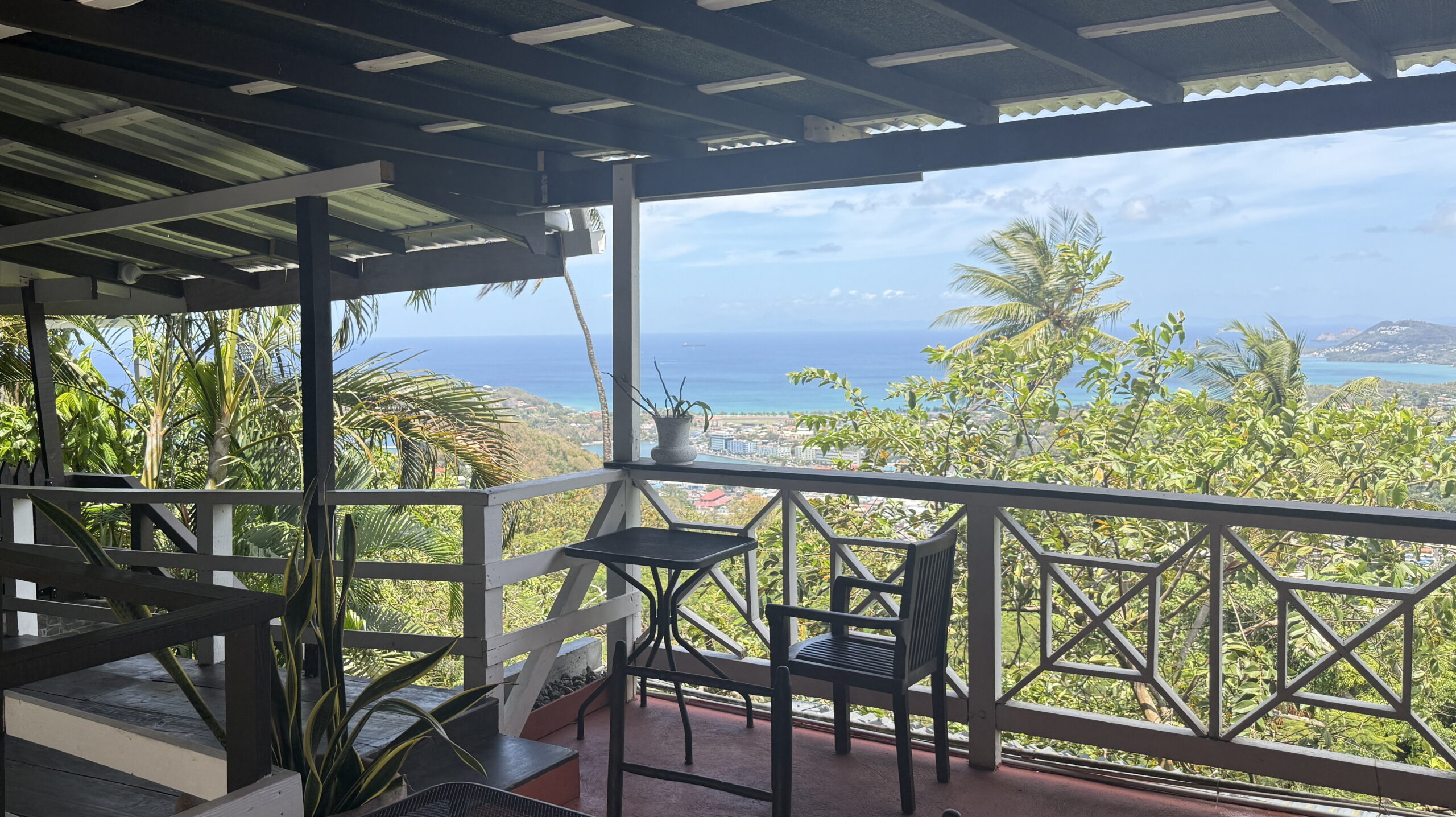
A room with a view.
Well, I guess it was worth it to drive here, just for the view.
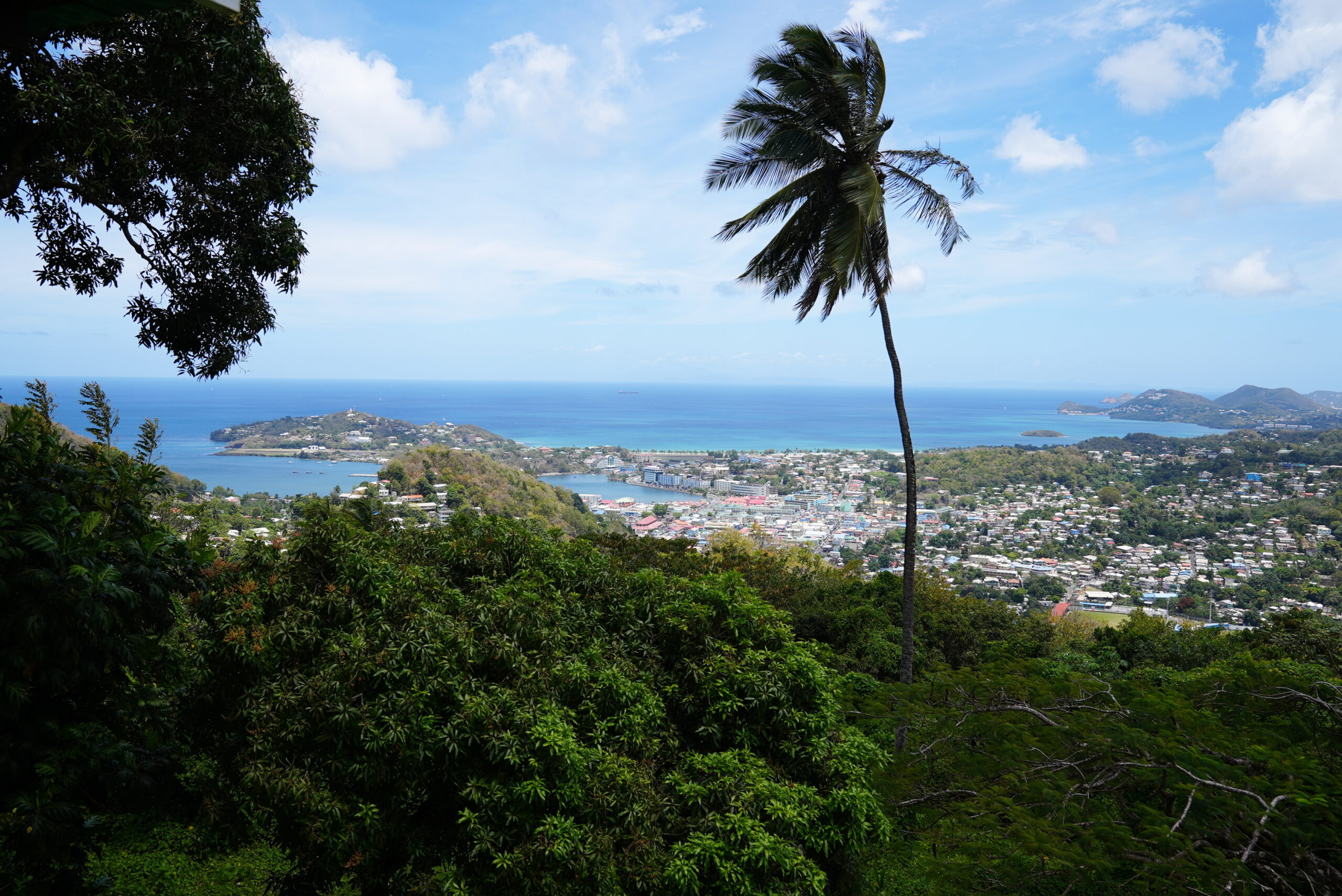
A slightly different view.
I think, if I were employed here (I can’t say “work here”, because no one is working), I would spend all my time outside.
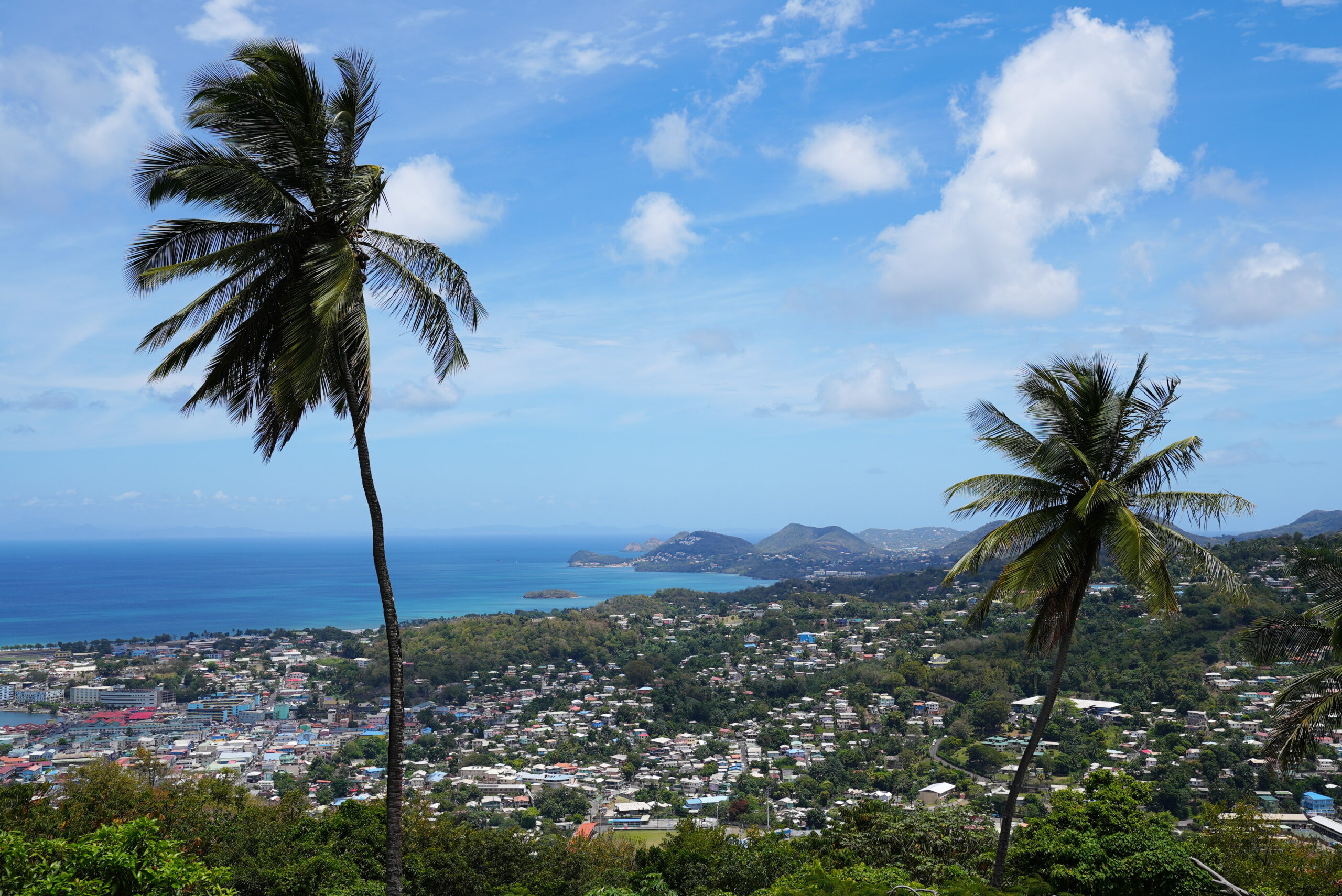
And yet another view.
This is a good reminder that you don’t need to live by the beach to enjoy island living.
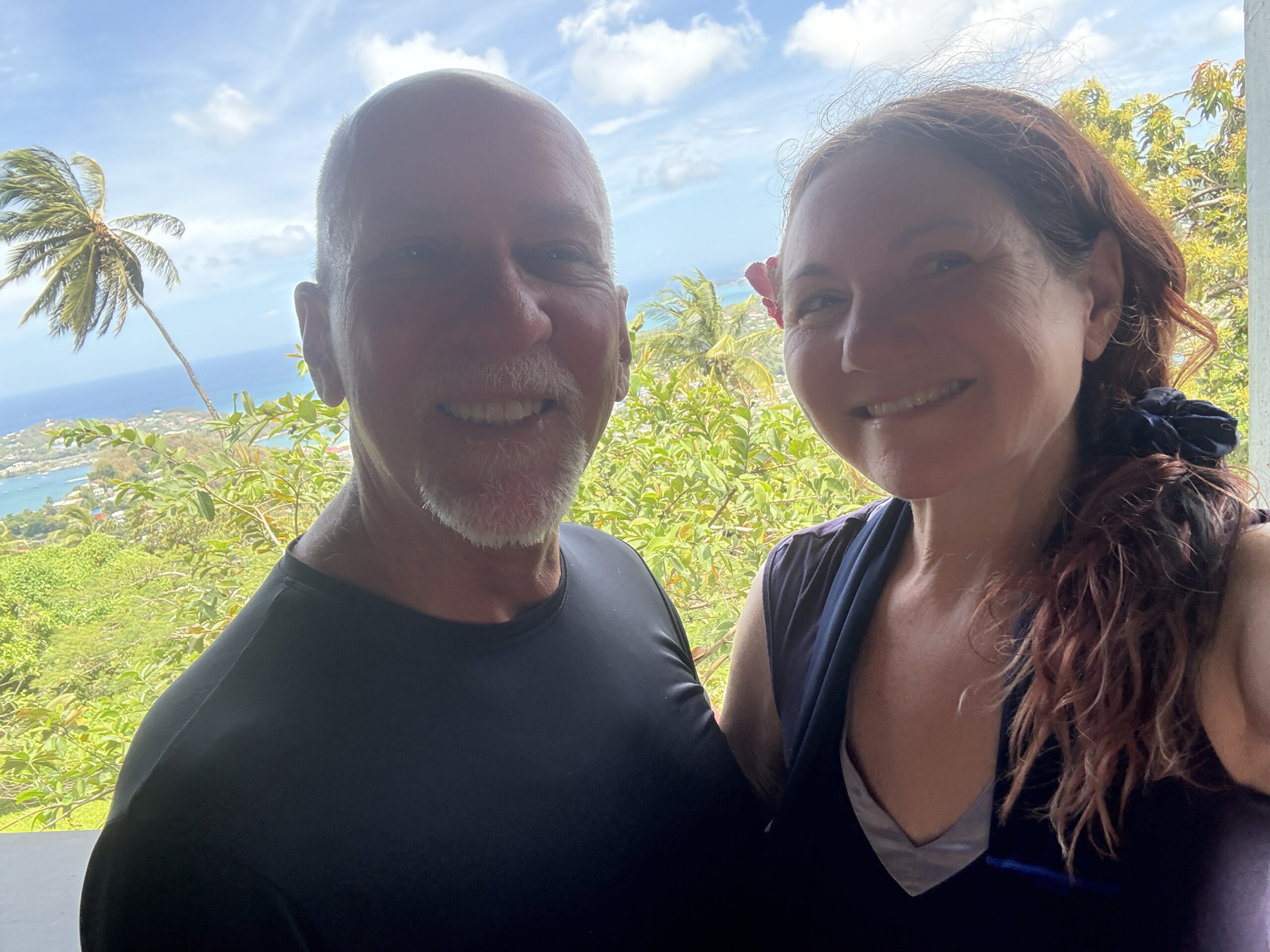
Selfie time!
And, lastly before we leave, a selfie because, why not?
Sandals Resort Beach
When we booked our Airbnb, we saw that there were many restaurants within walking distance. Yeah! So, on the second day here, we hike down to the beach to check them out.
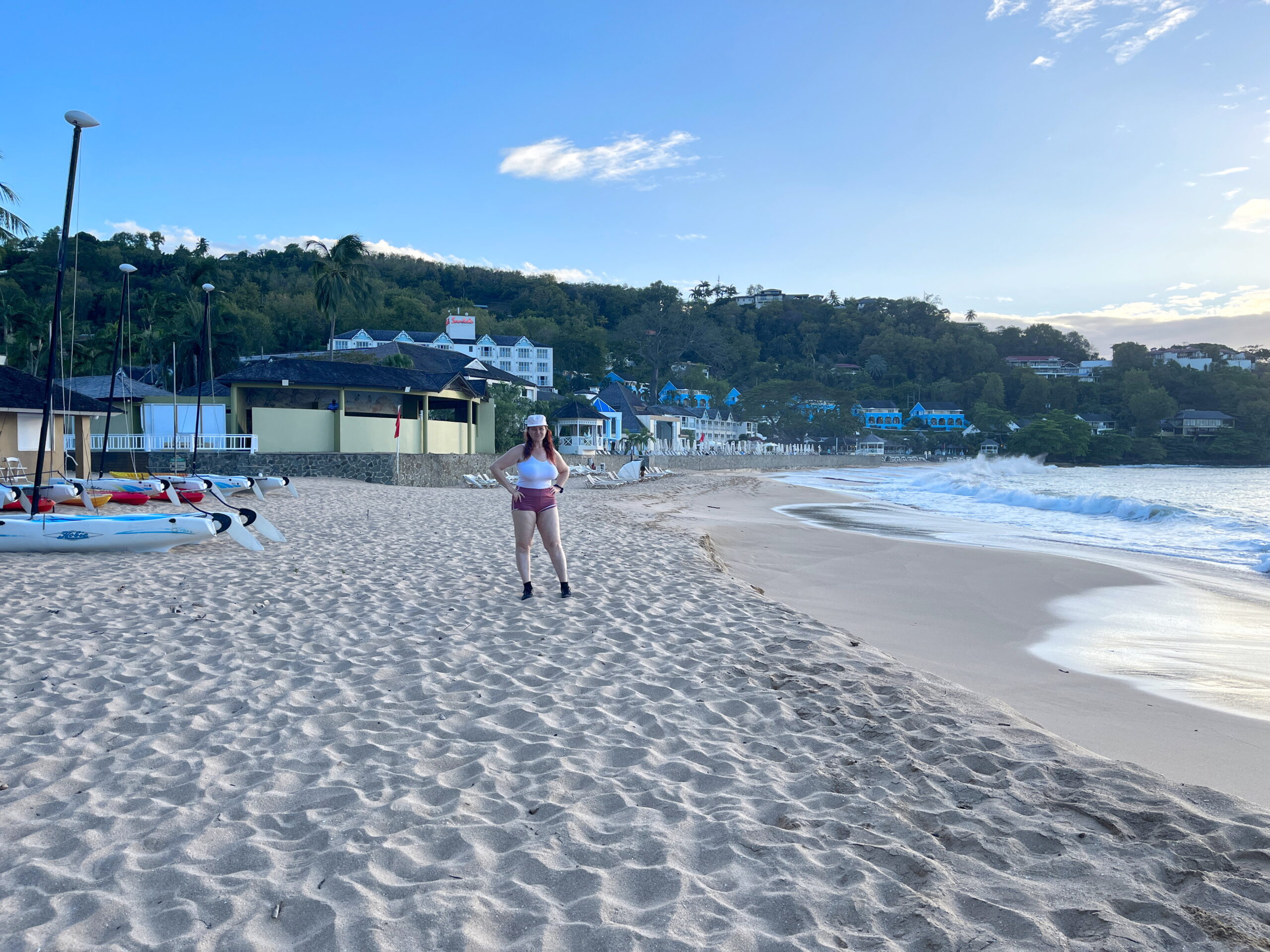
The beach!
The first thing we notice is that the beach is empty. Where are the people?
Uh, oh. Every building you see in the photograph is part of Sandals Resort.
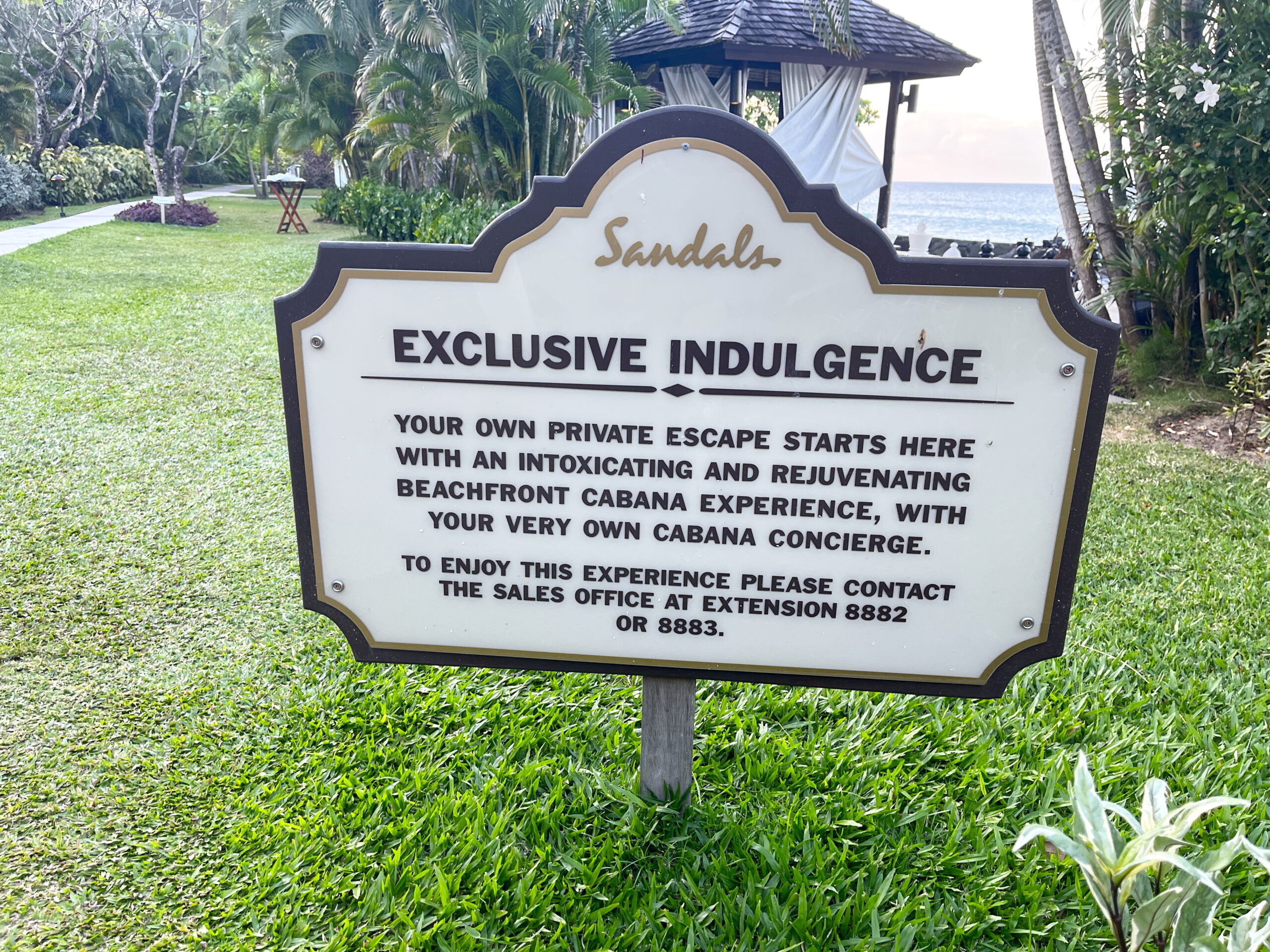
Well, poop.
There is nothing wrong with Sandals Resort. But, the restaurants are available ONLY to folks staying at the resort.
Still, that won’t dampen our spirit. We can still enjoy the clean, quiet beach. So, the next day we go for a pleasant walk on the beach.
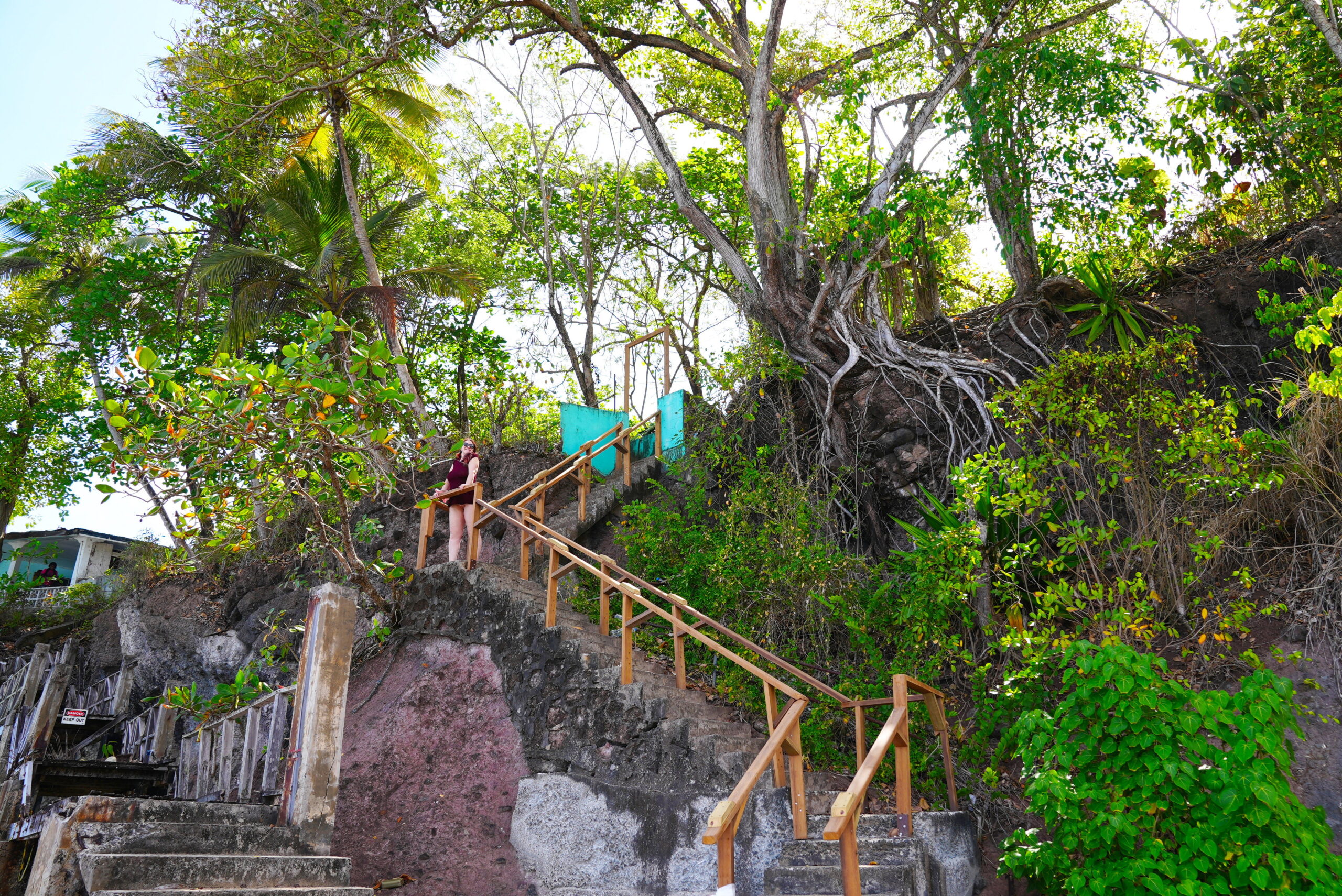
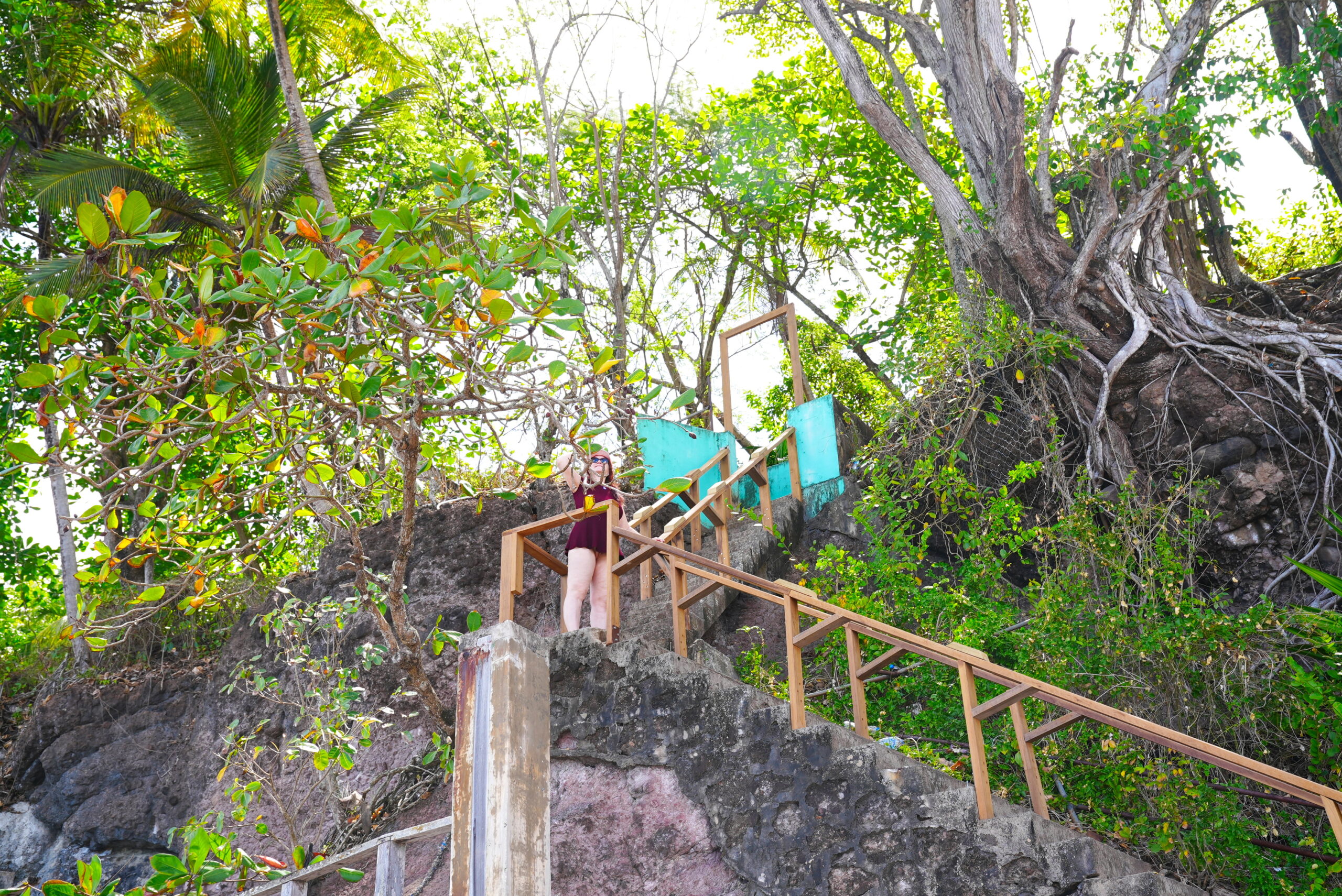
That looks kinda scary.
No matter what you build on the shore, the ocean eventually erodes it away. So the owner of the Airbnb built a (somewhat) new set of railings on the old concrete stairs.
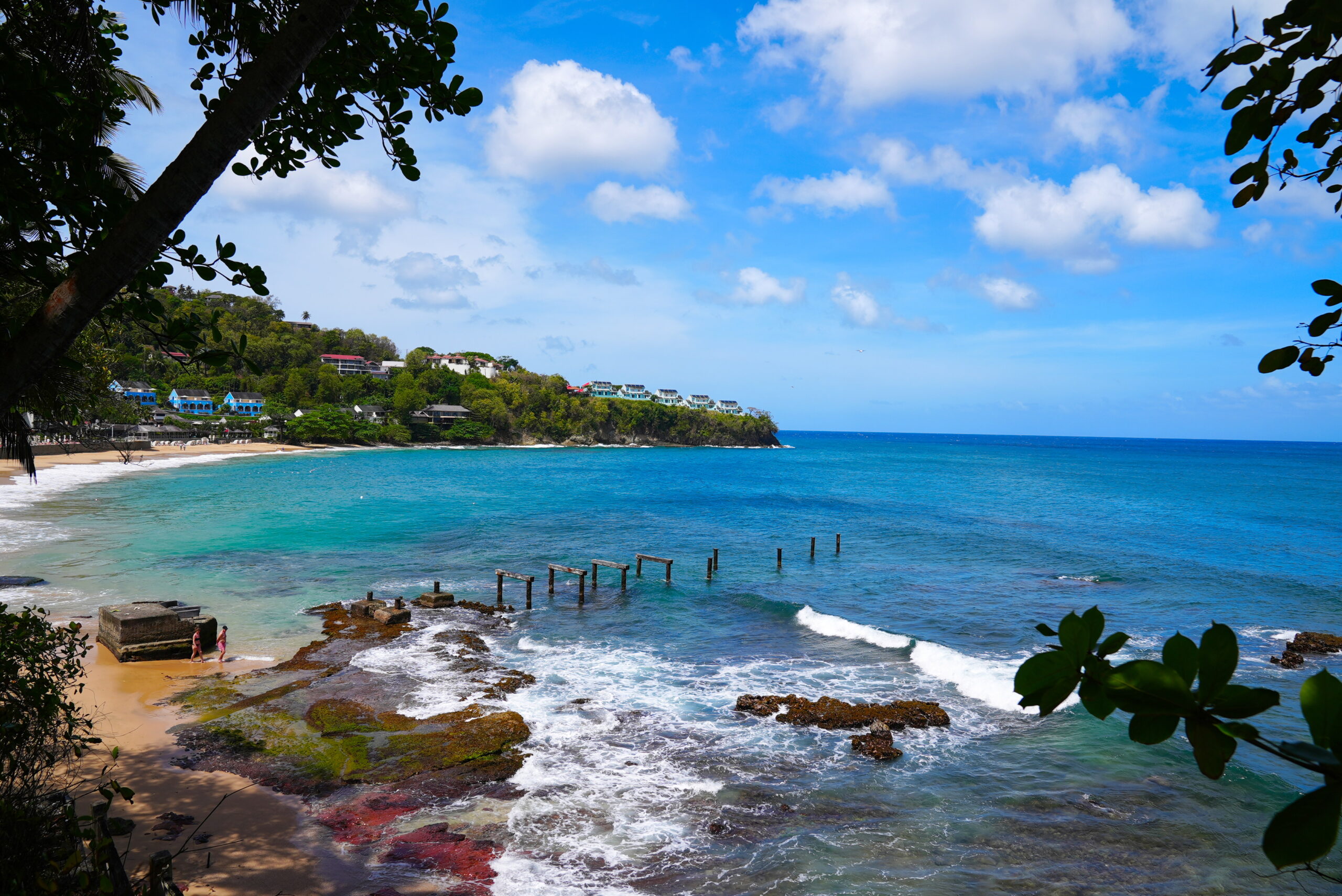
Something was here once…
It’s not pristine, but, in some ways, it’s better. A gentle reminder that something wonderful was once here, and something wonderful will be here again.
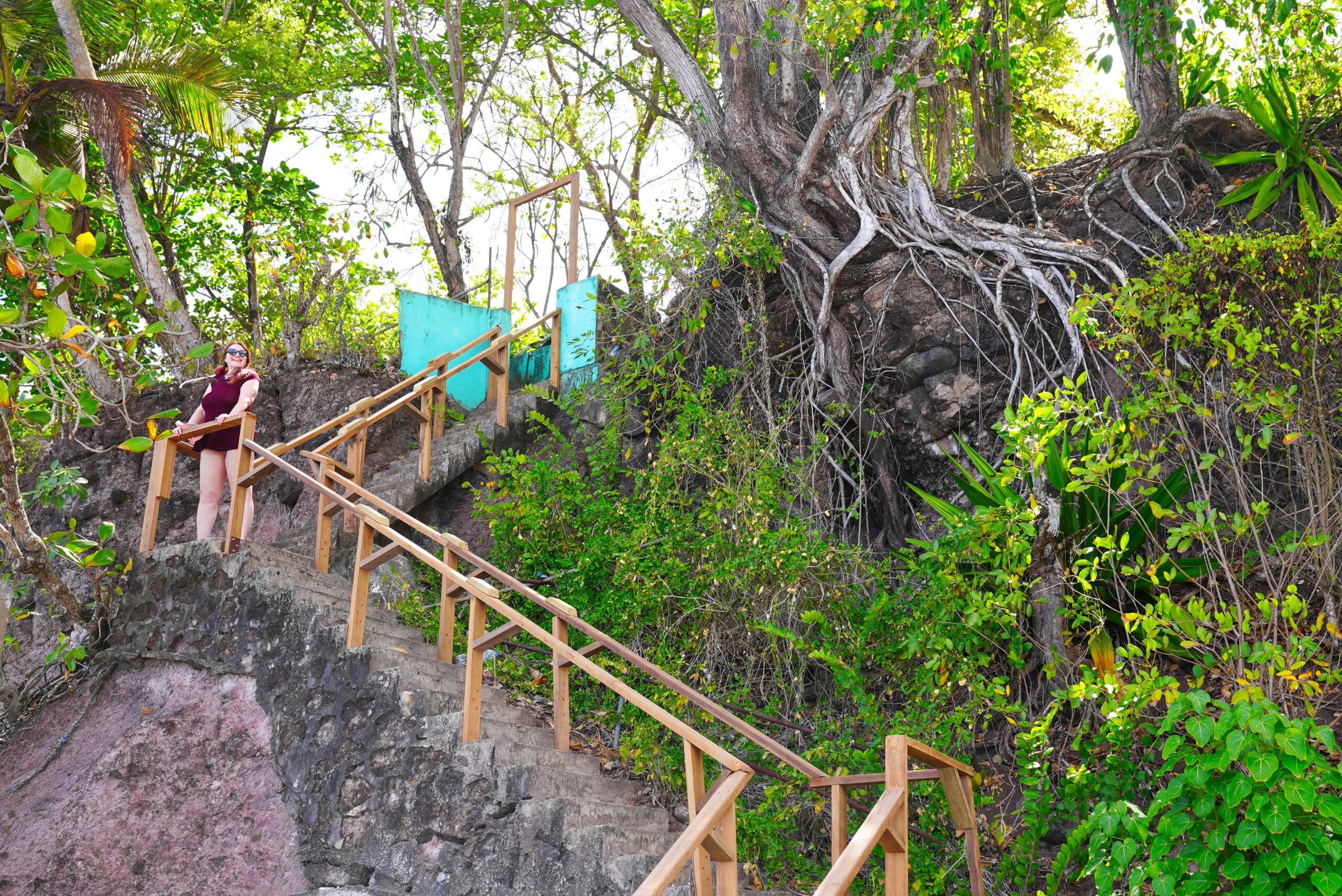
What a view!
I stand here for a while, taking in the view.
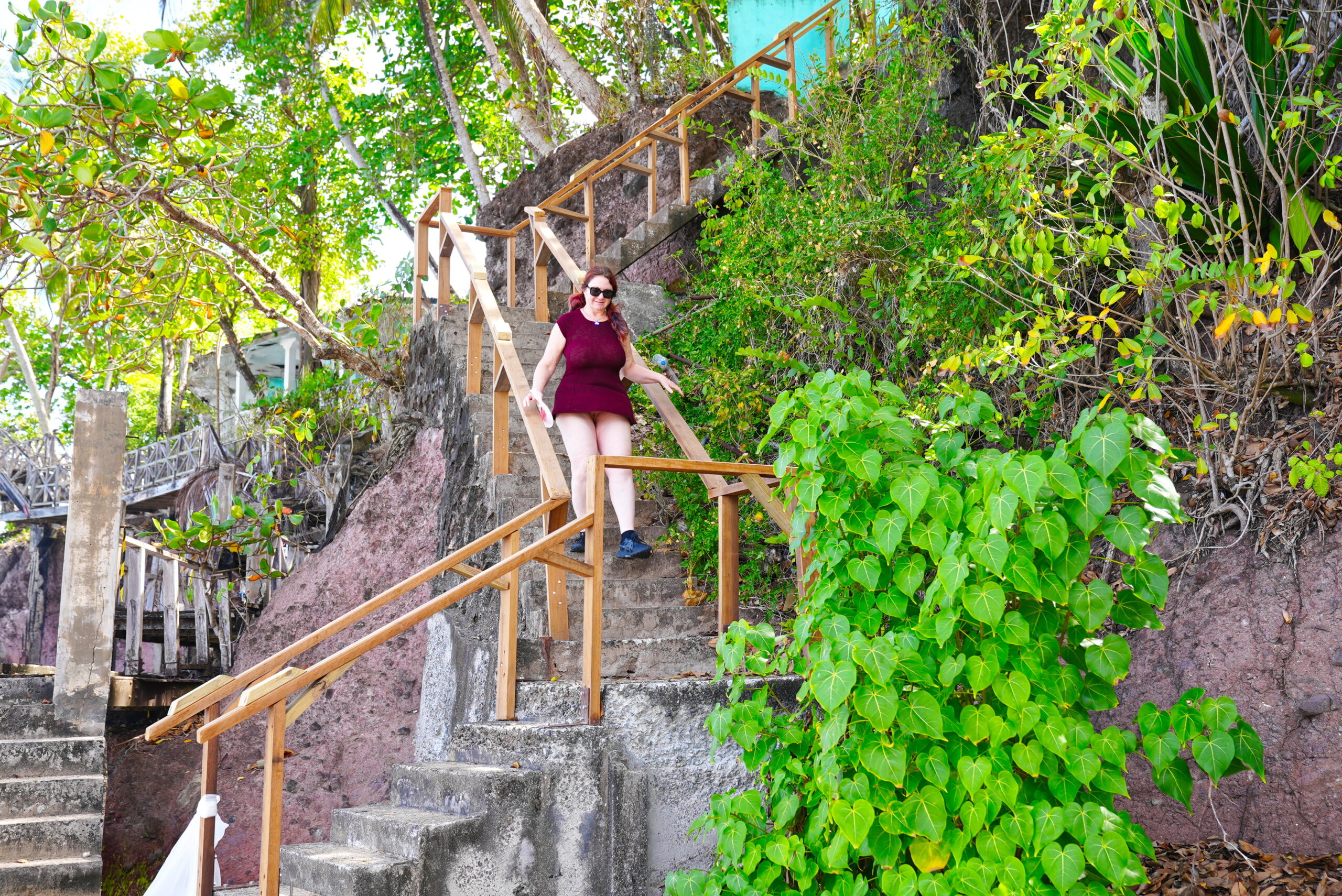
Not the easiest stairs to climb down.
Each step is just a bit too narrow for feet, and some of them are slippery. So I use the railing, and walk carefully.
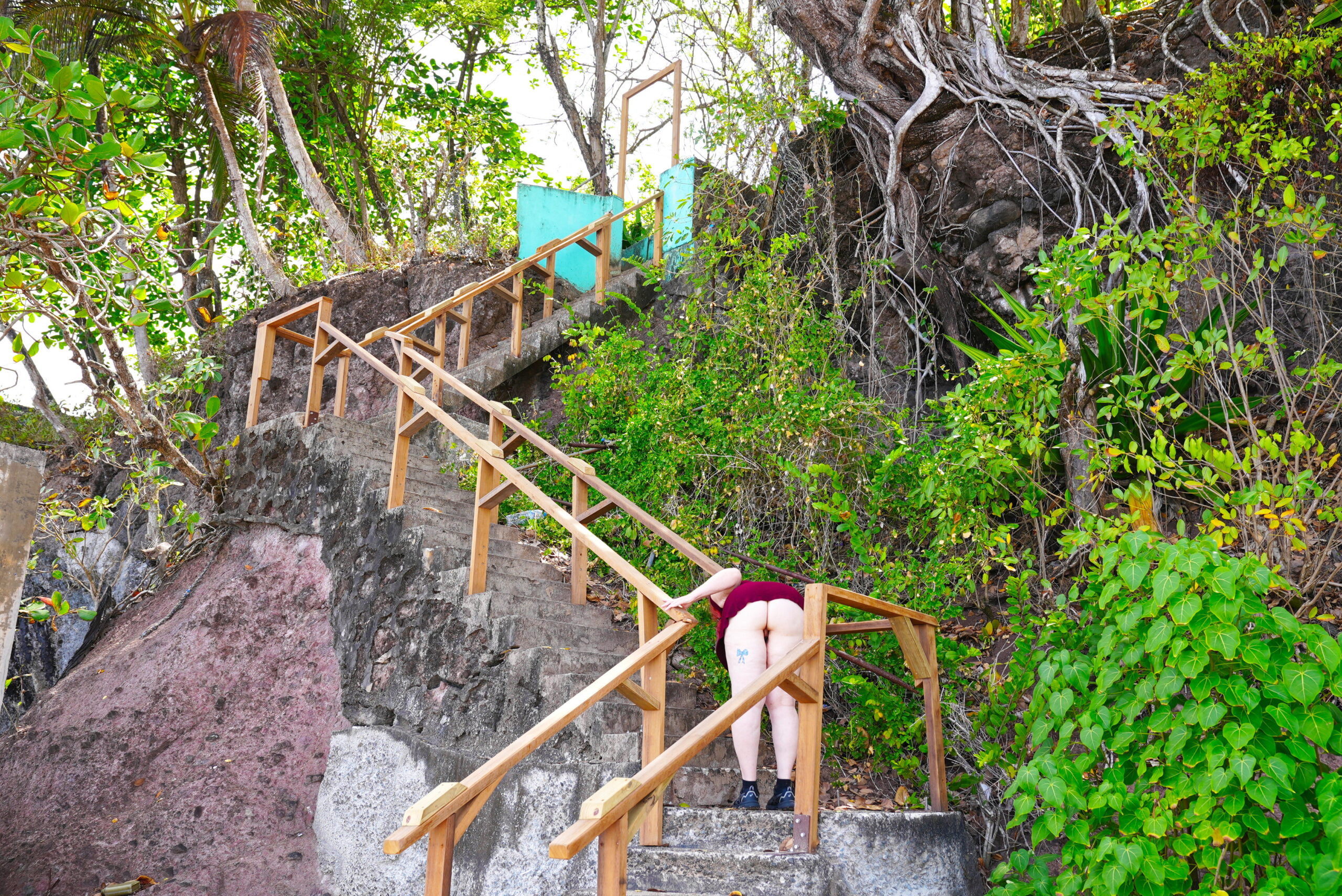
A treasure hunt!
We are told that this beach is a good place to look for clams.
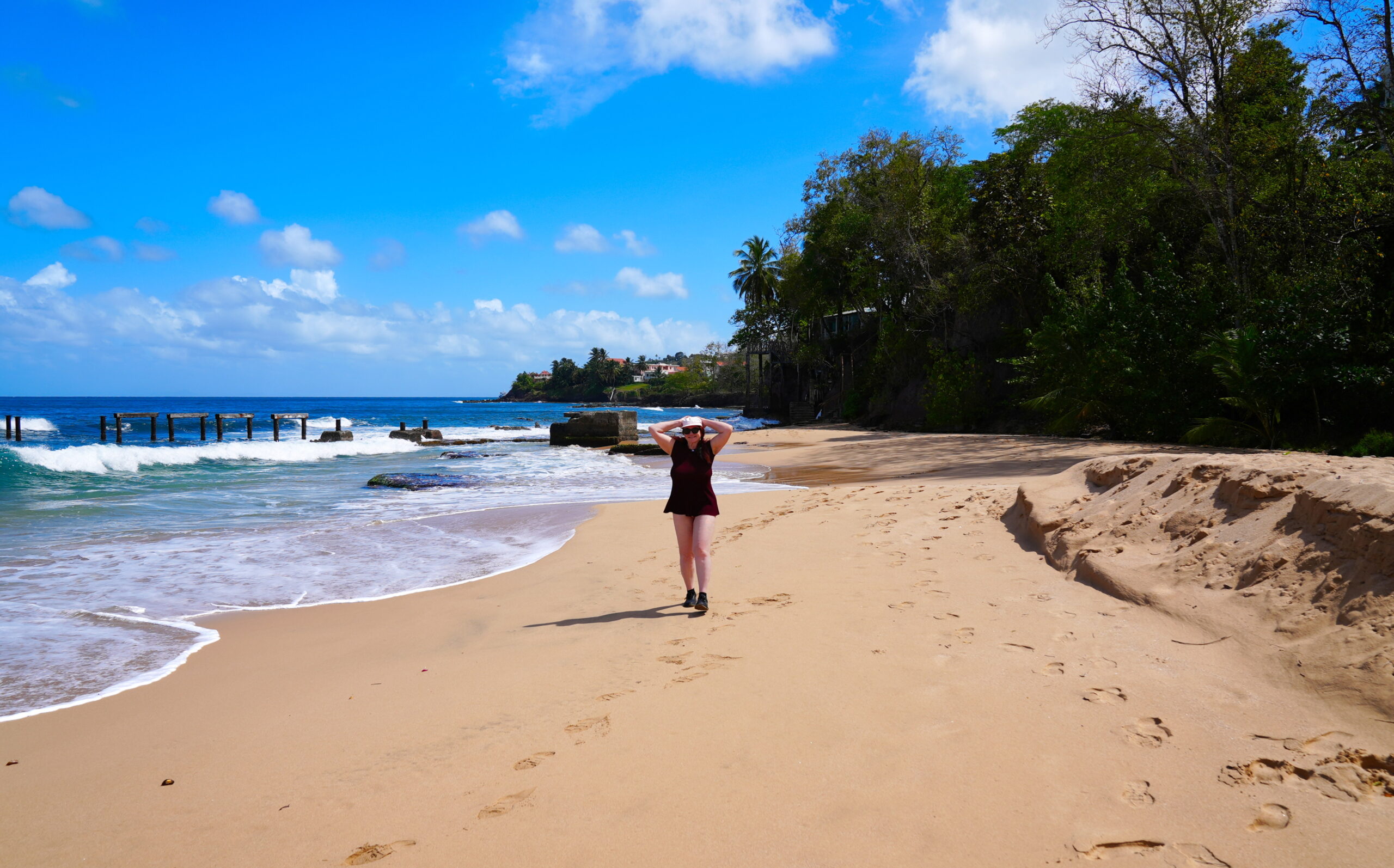
Alone on the sand.
The tide smooths the sand every day, so you can see that there are few people who walk this beach, even given the hundreds of guests staying at Sandals Resort.
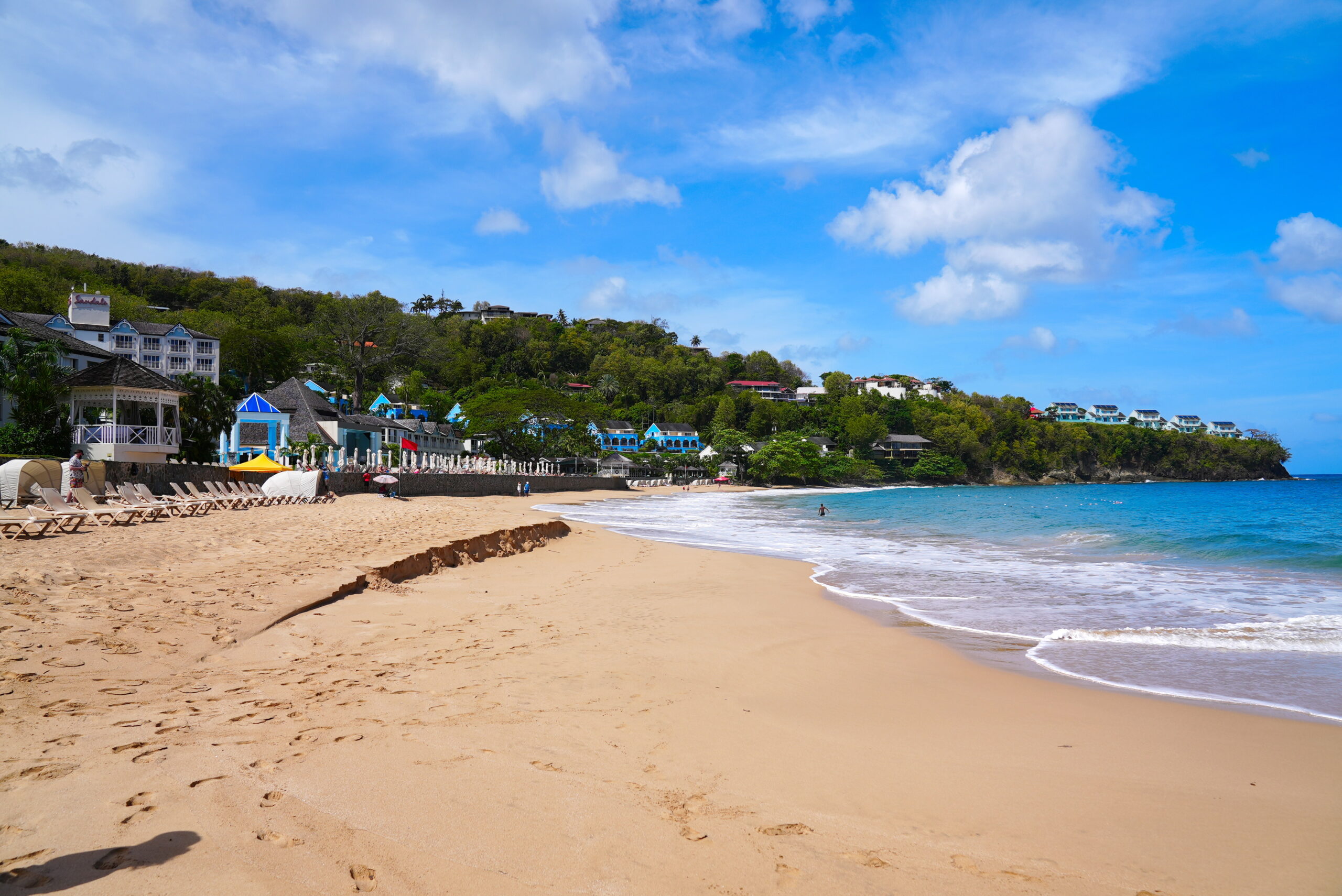
Again: Where is everyone?
See that lone swimmer? He is an employee of the resort. His job is to find floating debris, usually palm tree branches, and get them out of the water so as to not inconvenience the guests.
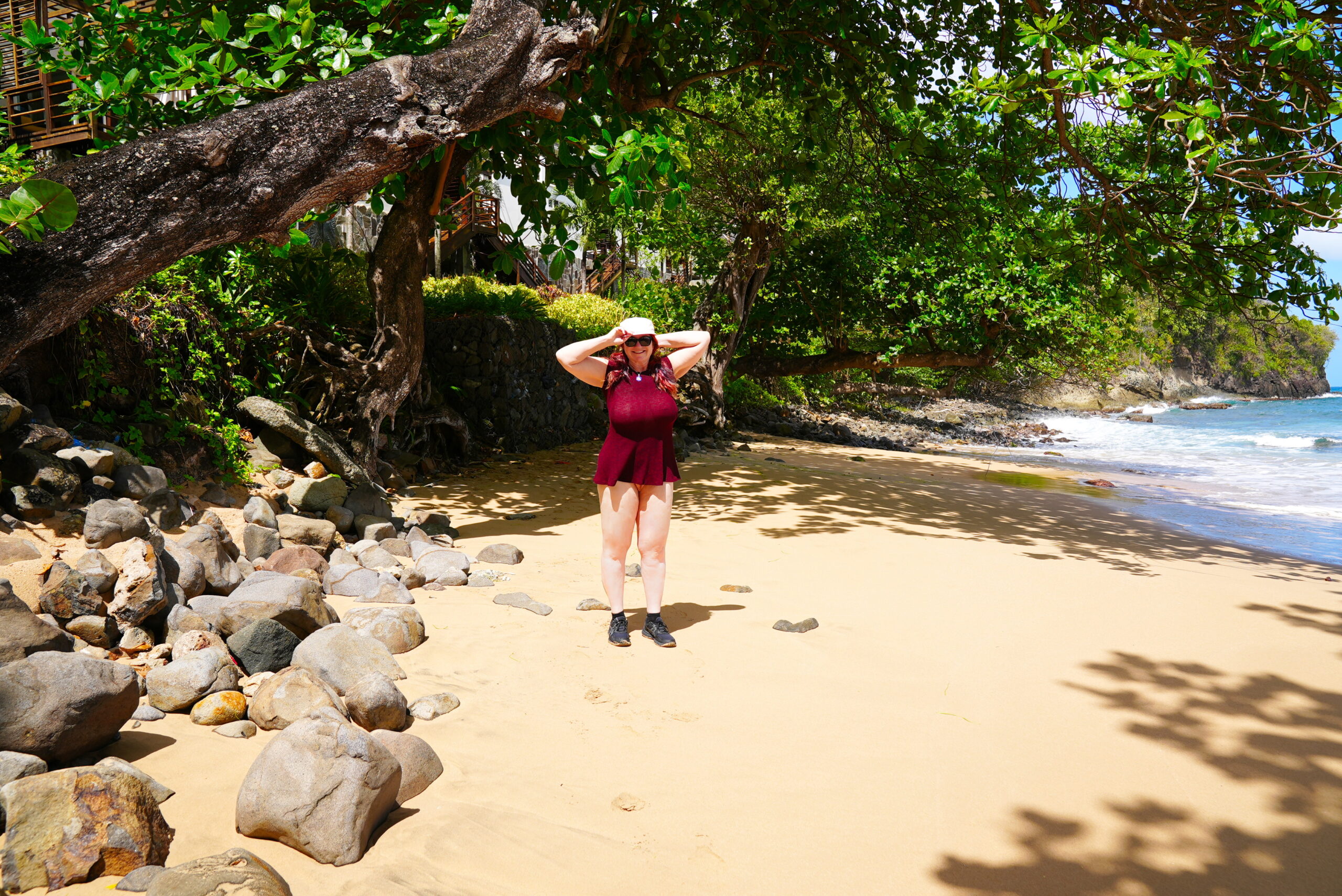
The end of the beach.
We have a pleasant walk all the way to the end of the beach. Except for a few locals trying to sell us excursions, we see almost no one.
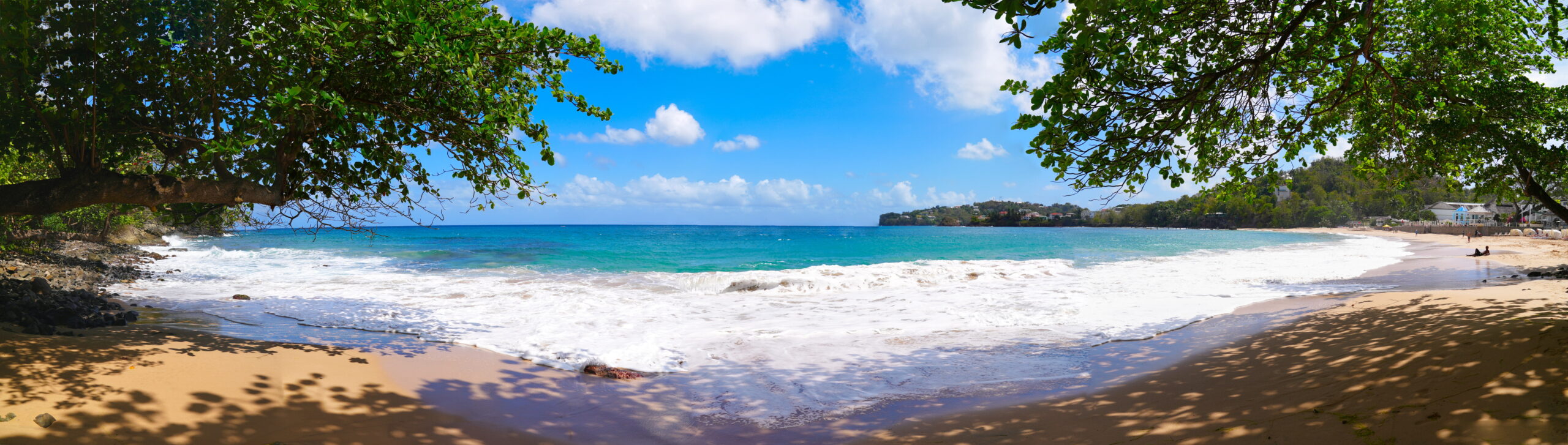
Another great view.
This photograph is warped a bit by the software that created the panorama, but you can see how lovely it is here.
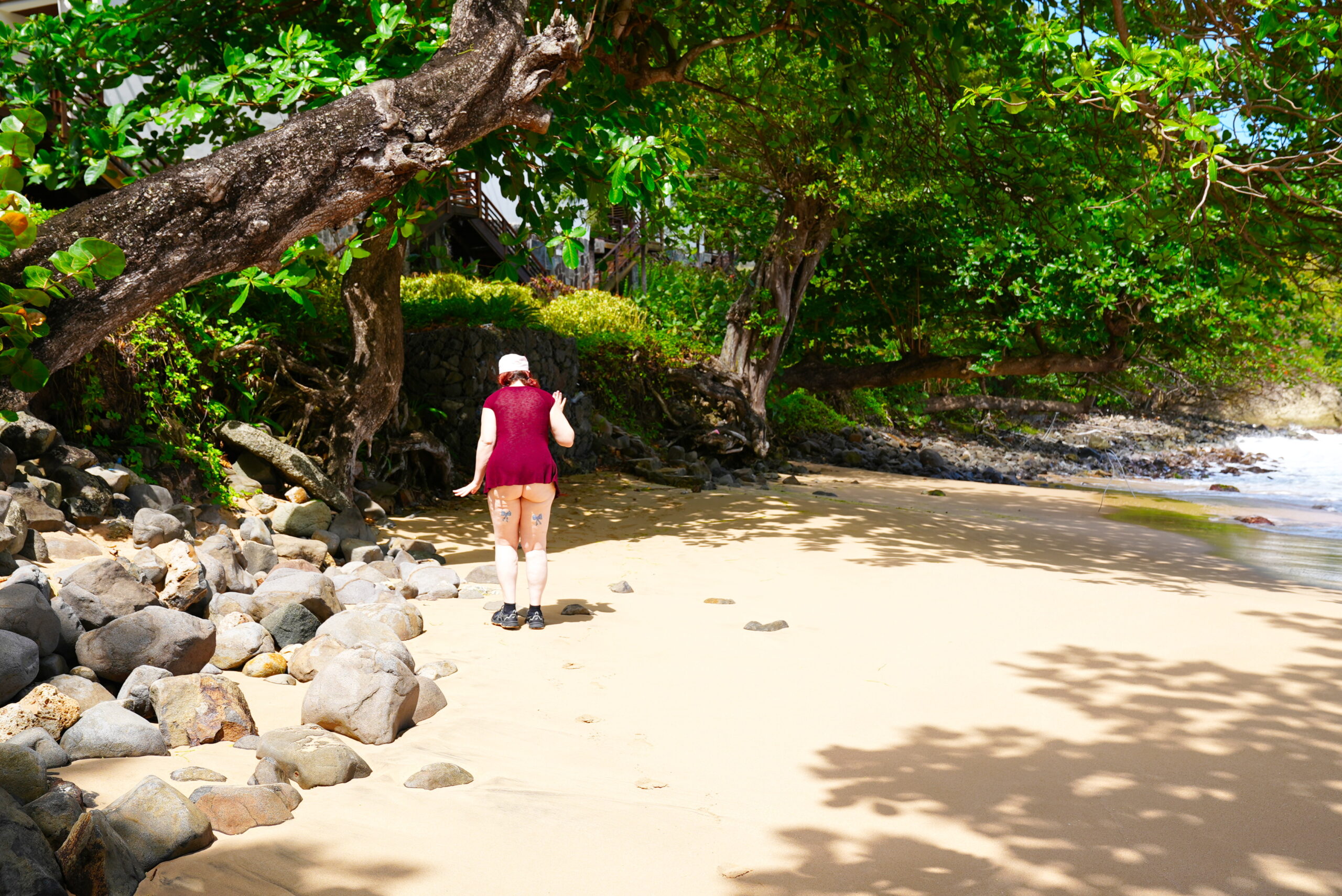
Oh, yeah. I’m on a treasure hunt.
I remember that this is supposed to be a good place to look for clams.
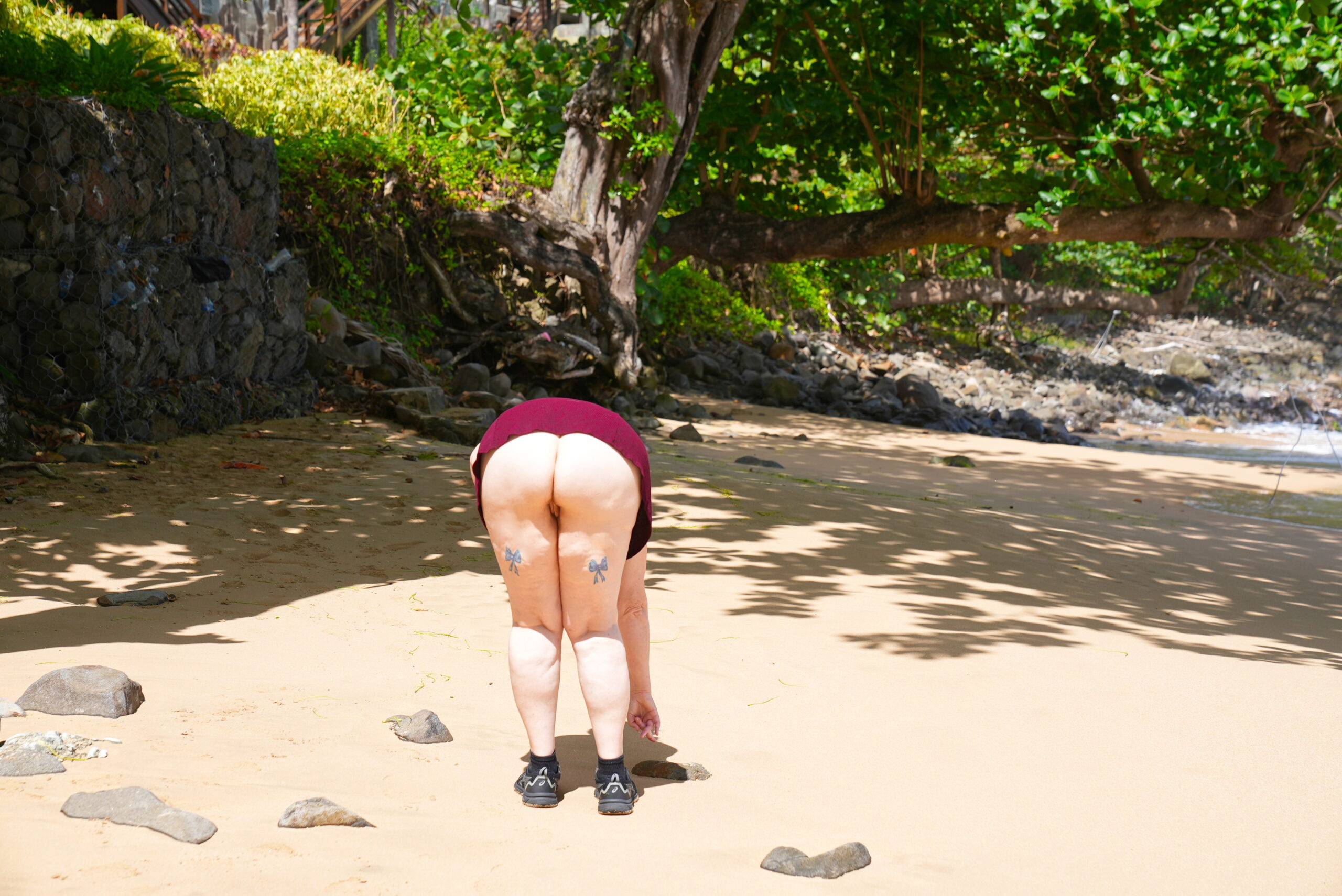
Success!
Yup, no doubt about it. That’s a clam!!
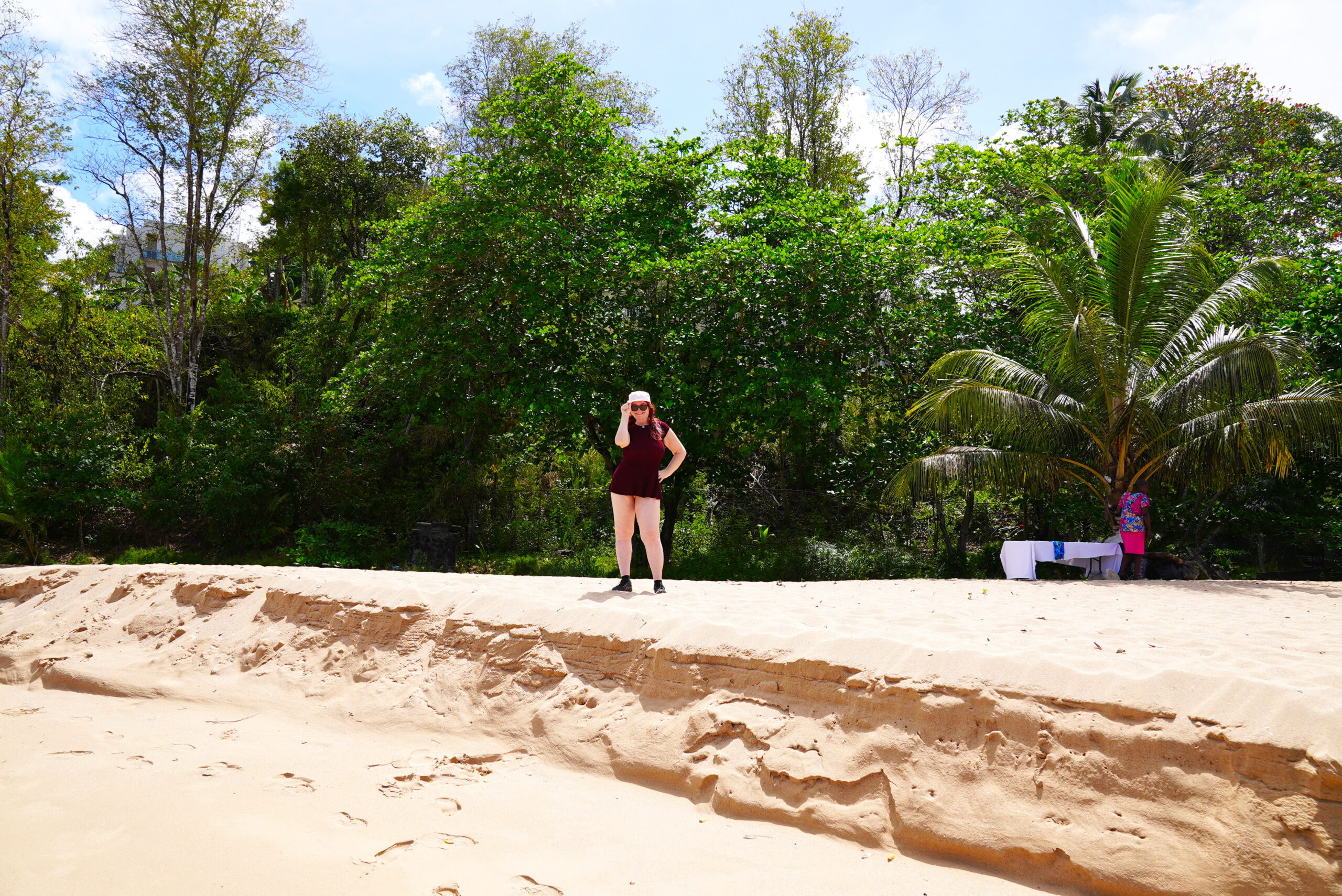
Lots and lots of sand.
We walk back and find this nice sandy embankment. I wonder if there are any clams here….
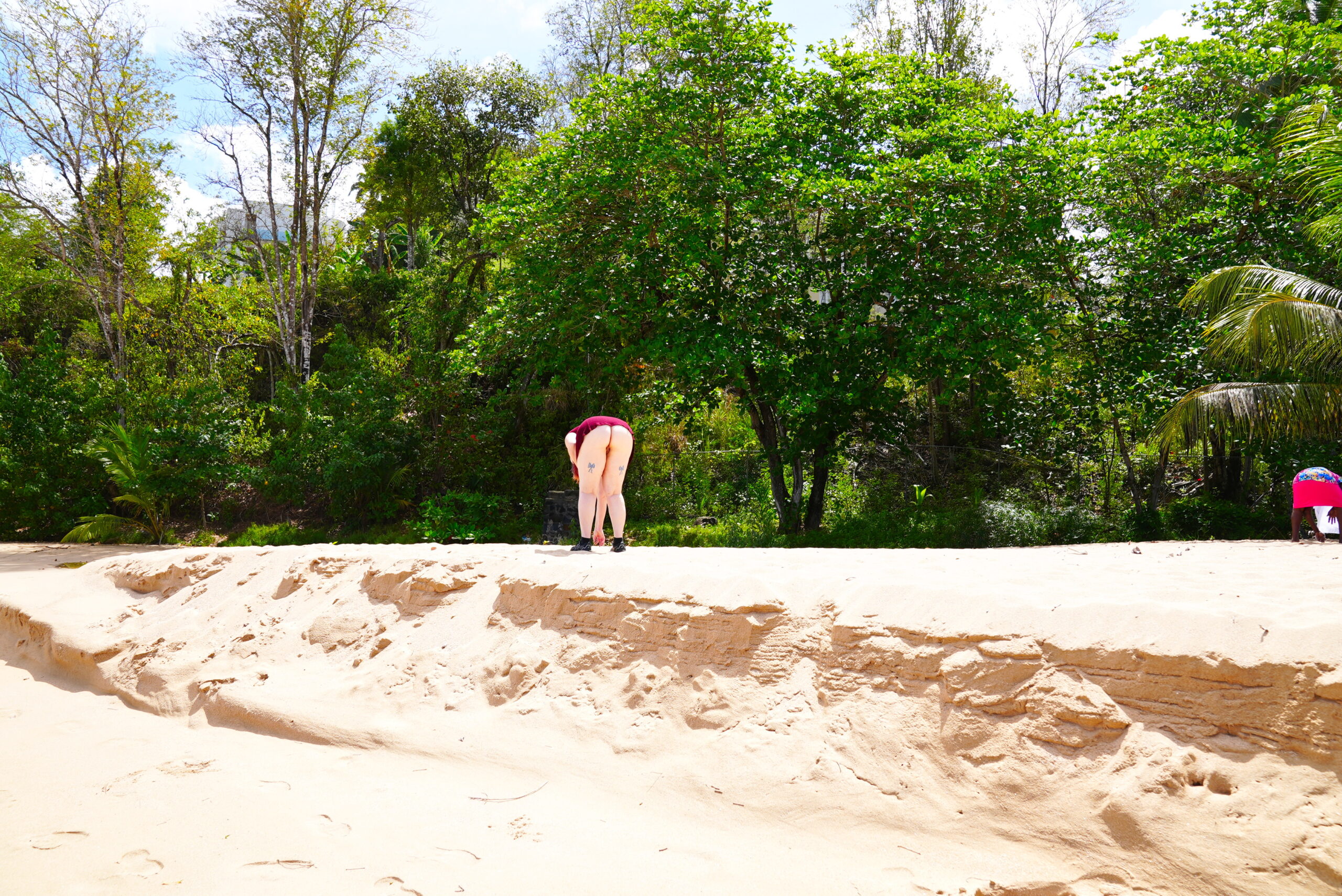
Everyone is doing it.
It seems like there are clams to be seen everywhere on this beach!!
One final look.
And this ends our second installment of Loving St. Lucia. Next time we will look at dining in St. Lucia, oddities we find here, a sunset dinner cruise, and proving a point to my girlfriend. See you then!