
We are off on another European Vacation, flying a total of 26,079 miles, plus 209 km driving. We fly from San Diego, stop over in Dallas, then on to London, which is very convenient because that is where our trip begins.
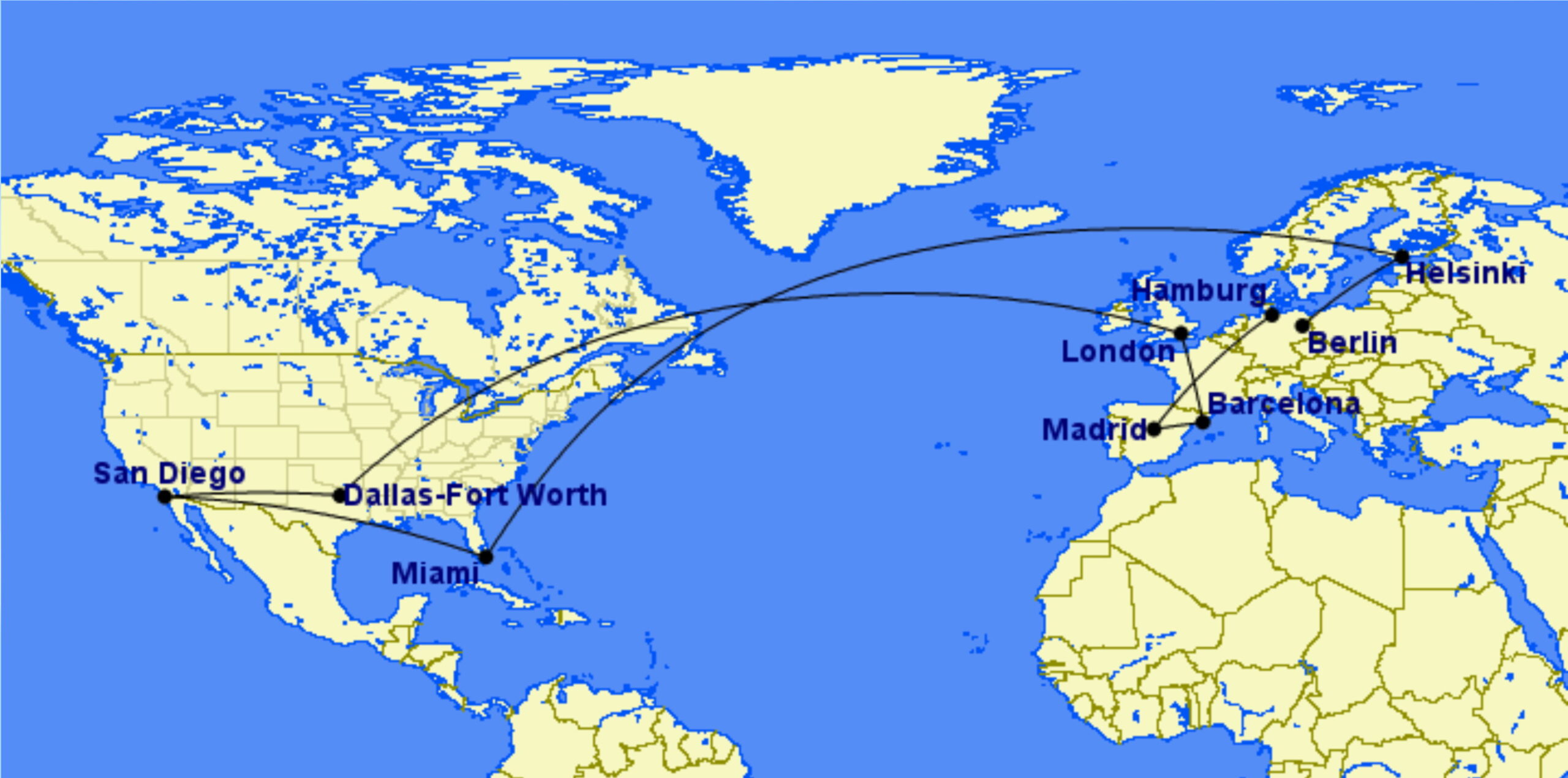
Bouncing around Europe.
London
London is the capital of both England and the United Kingdom. It is pronounced “luhn-dn”, not lon-don, for some reason. In earlier times, it was called Londinium, which to my ear sounds nicer, but nobody asked me. London has a rich history of arts, science, colonization, subjugation of foreigners, civil rights advances, etc. You can find reputable books in your public library concerning these topics, which will not be covered here. Anyway…
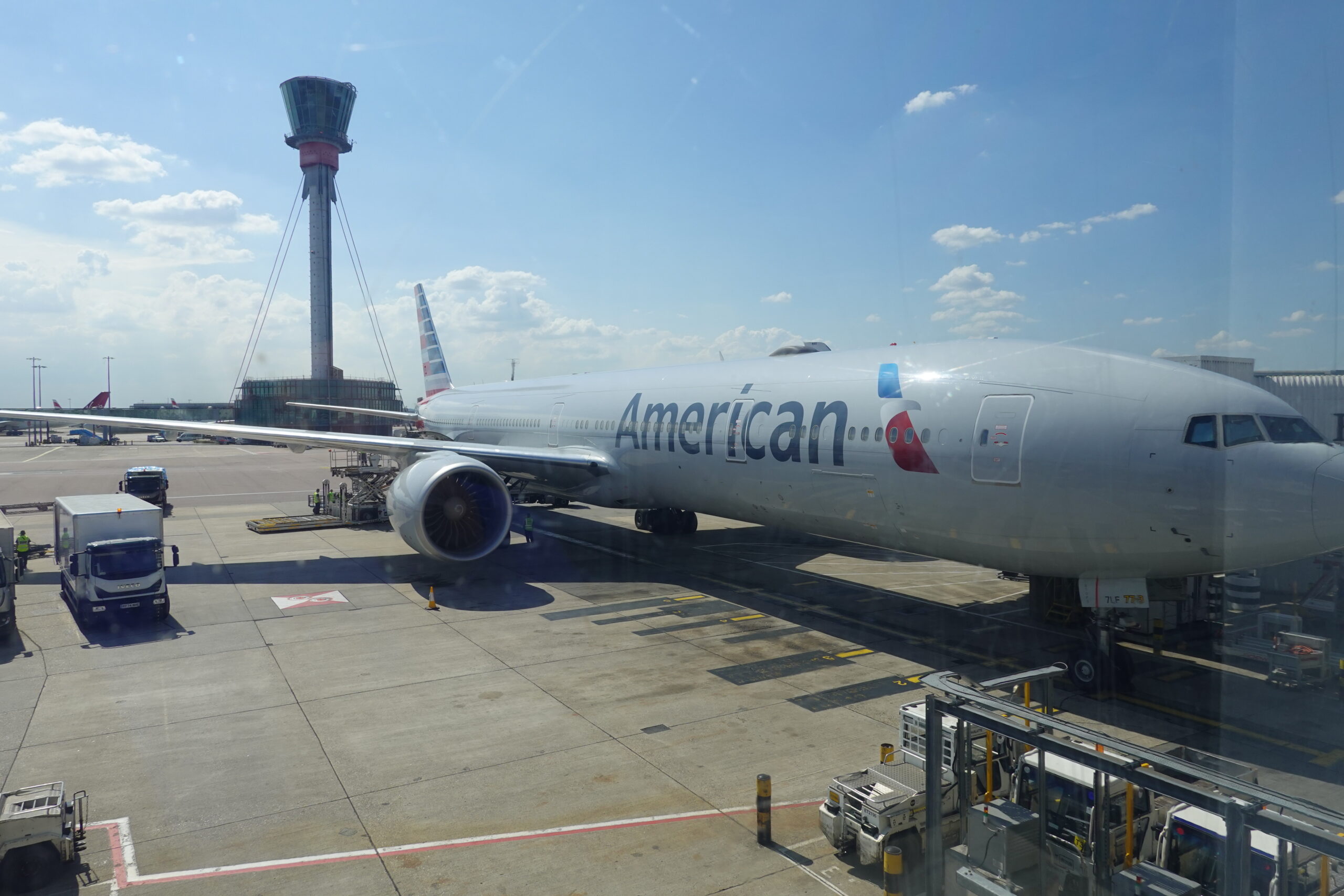
And, we’re off!
Here we are in San Diego, about to board our little 737 for the first leg. Sunny skies and clear sailing, so to speak.

This is more like it.
We endure the cramped business class seats of a single-aisle domestic flight from San Diego to Dallas, where we board the real aircraft, the one taking us to London.

We are still on the ground, and they have already served us a drink.
Okay, let’s watch some movies and get some dinner.
Uh oh….
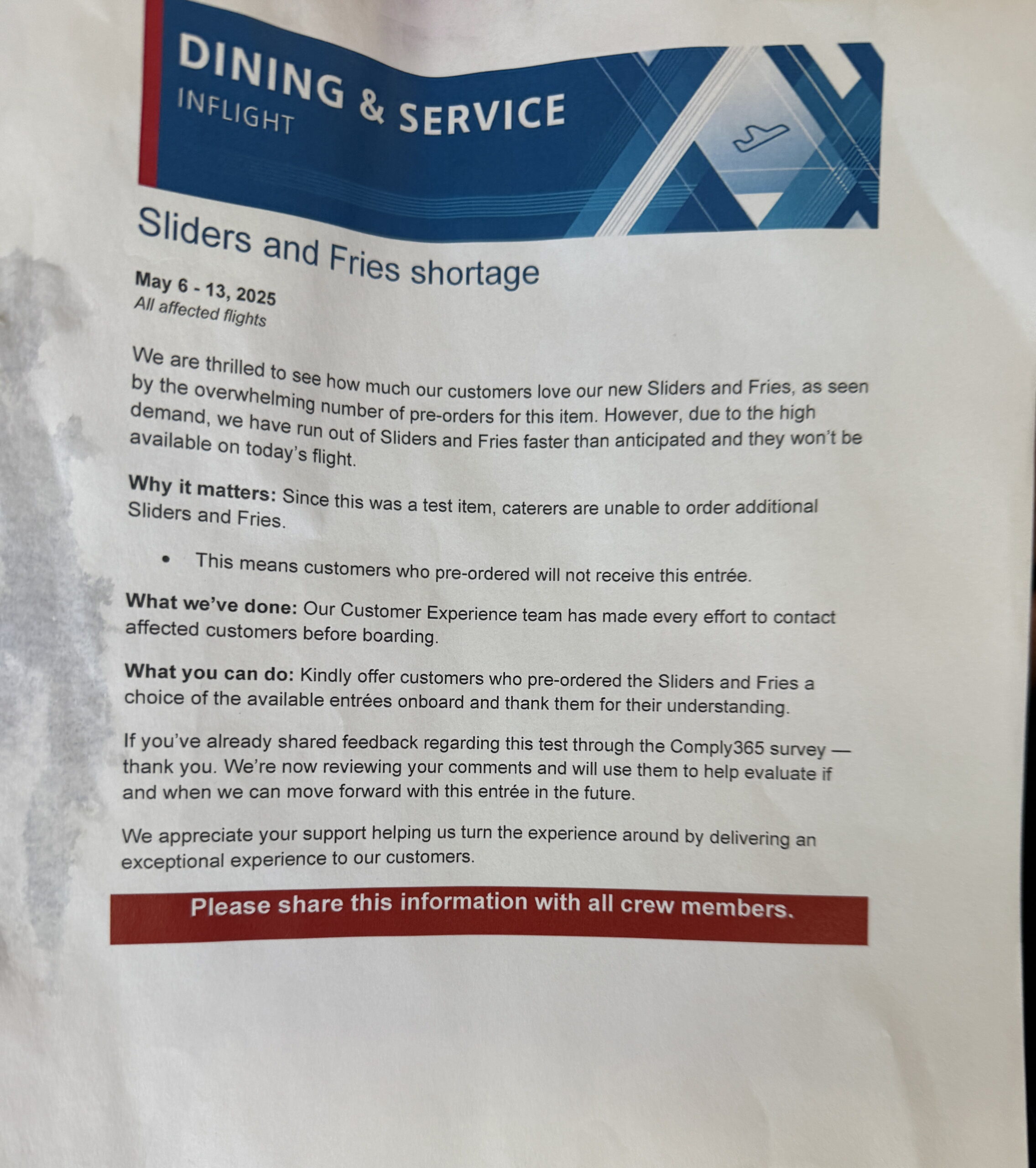
Oh, my gerd!
We were so looking forward to eating a soggy, small hamburger, but they apparently did not anticipate just how popular they would be with the passengers. Oh, well, let’s see what else is on the menu.
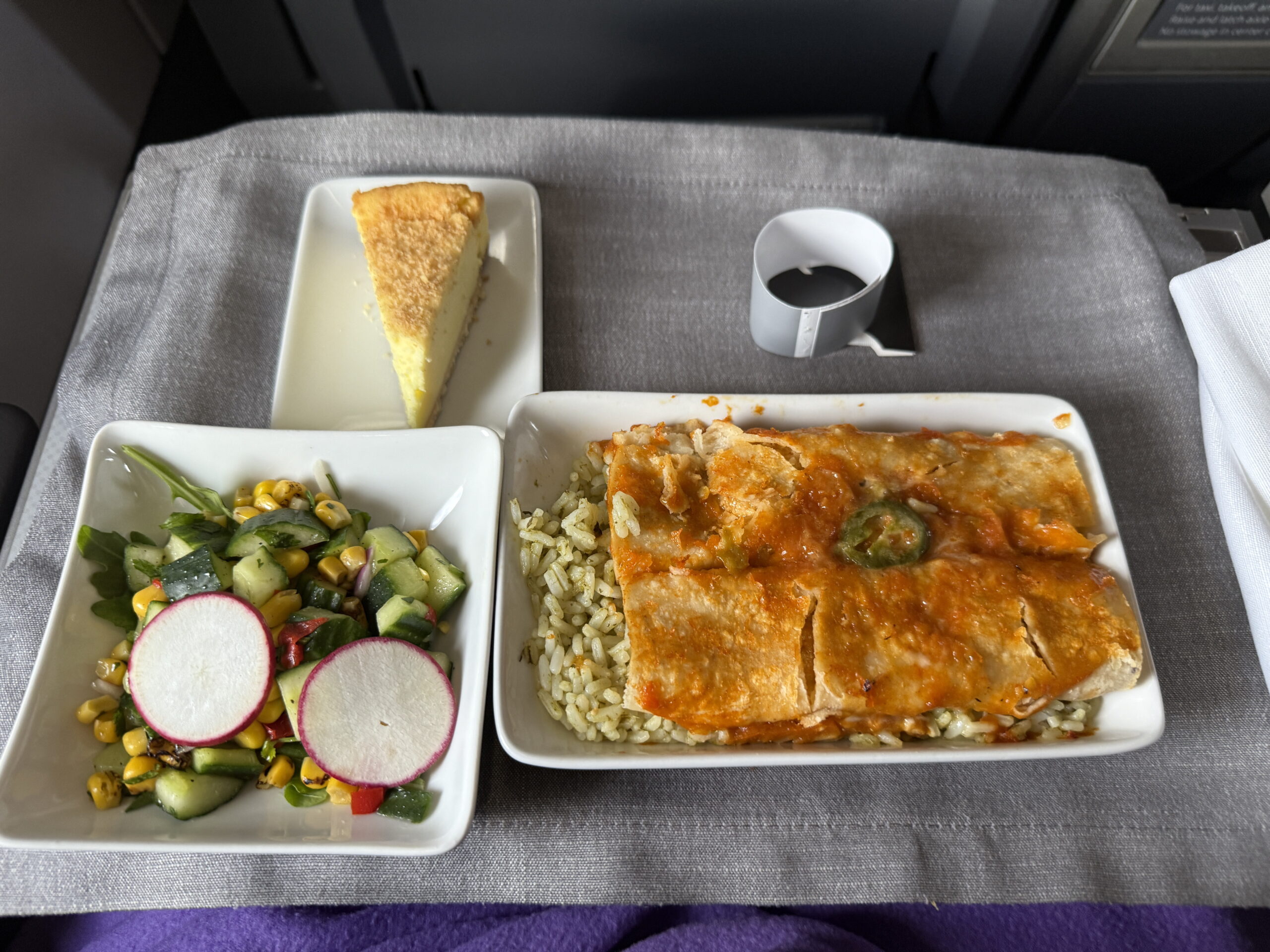
Yummy?
Well, ya pays your money, ya takes your chances, amiright?
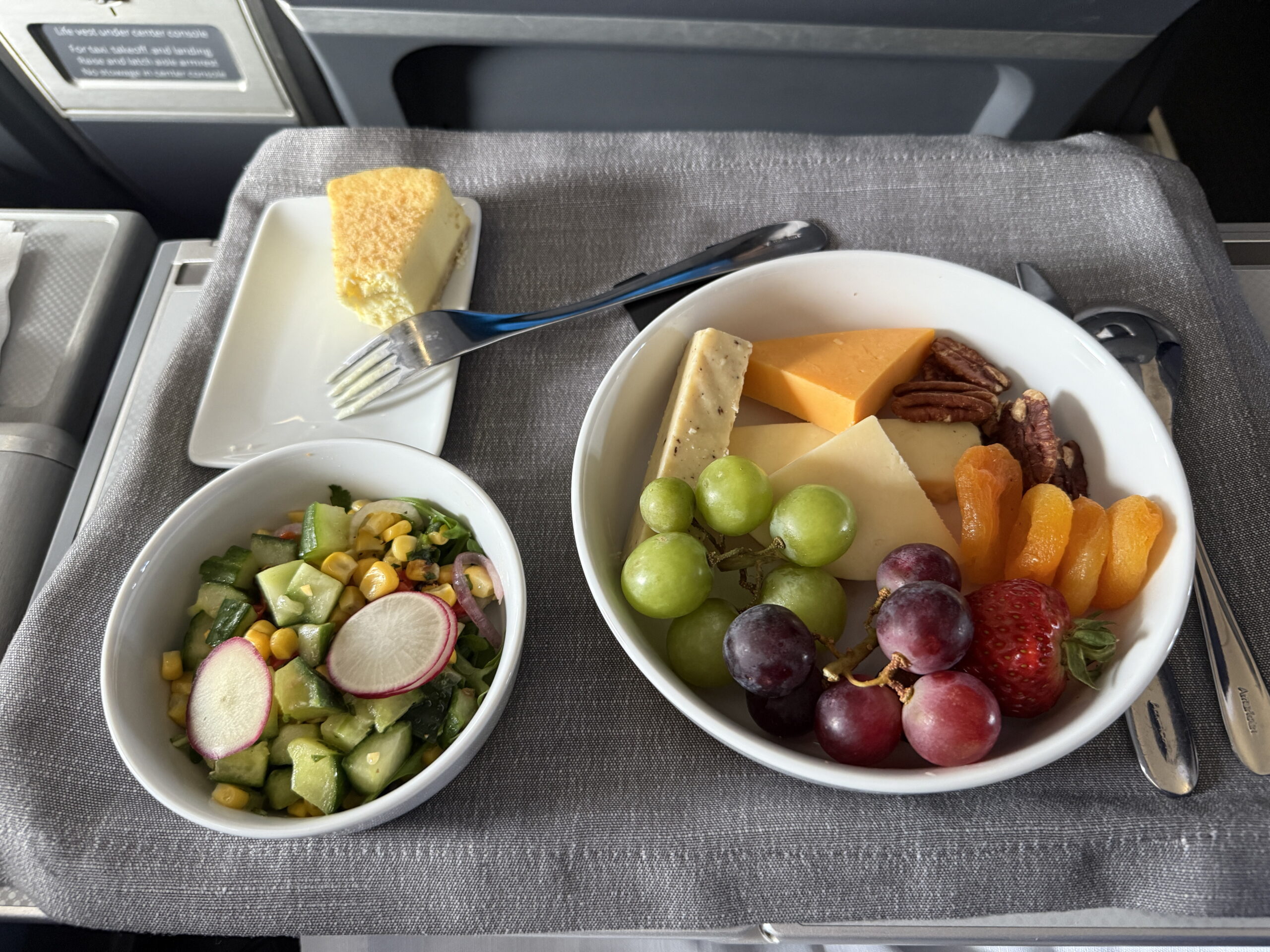
This is more like it.
You can’t go wrong with a simple cheese bowl.
Okay, enough of that. Let’s visit London!!
London Town
London is a multi-cultural city that embraces multiple cultures.
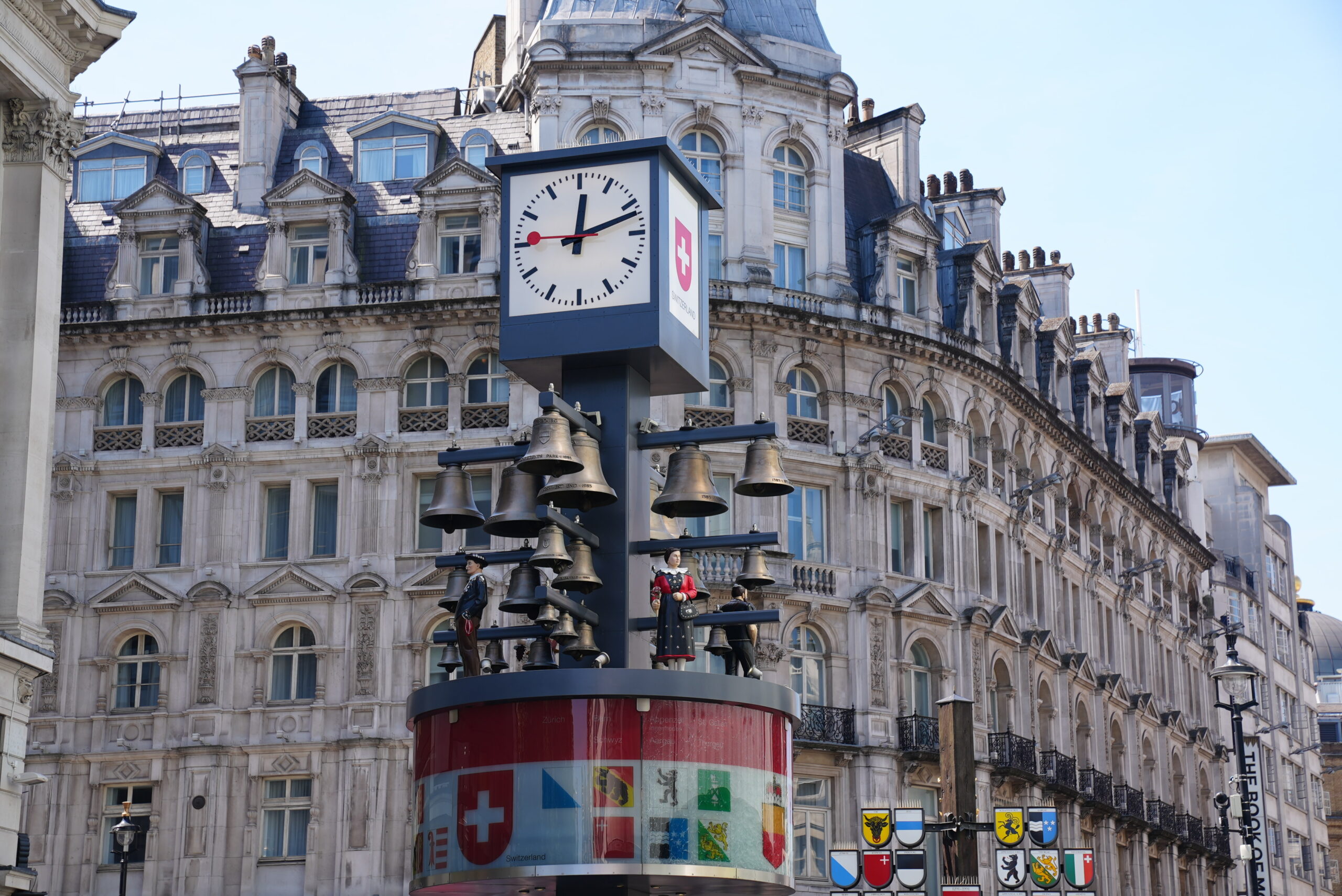
An English glockenspiel.
A Swiss clock sits atop a glockenspiel which sits atop images of flags associated with regions of Europe. If you look closely, you can see tiny spikes on all the signage, presumably to keep birds from landing on the signage and fouling it with their fowl fouling.
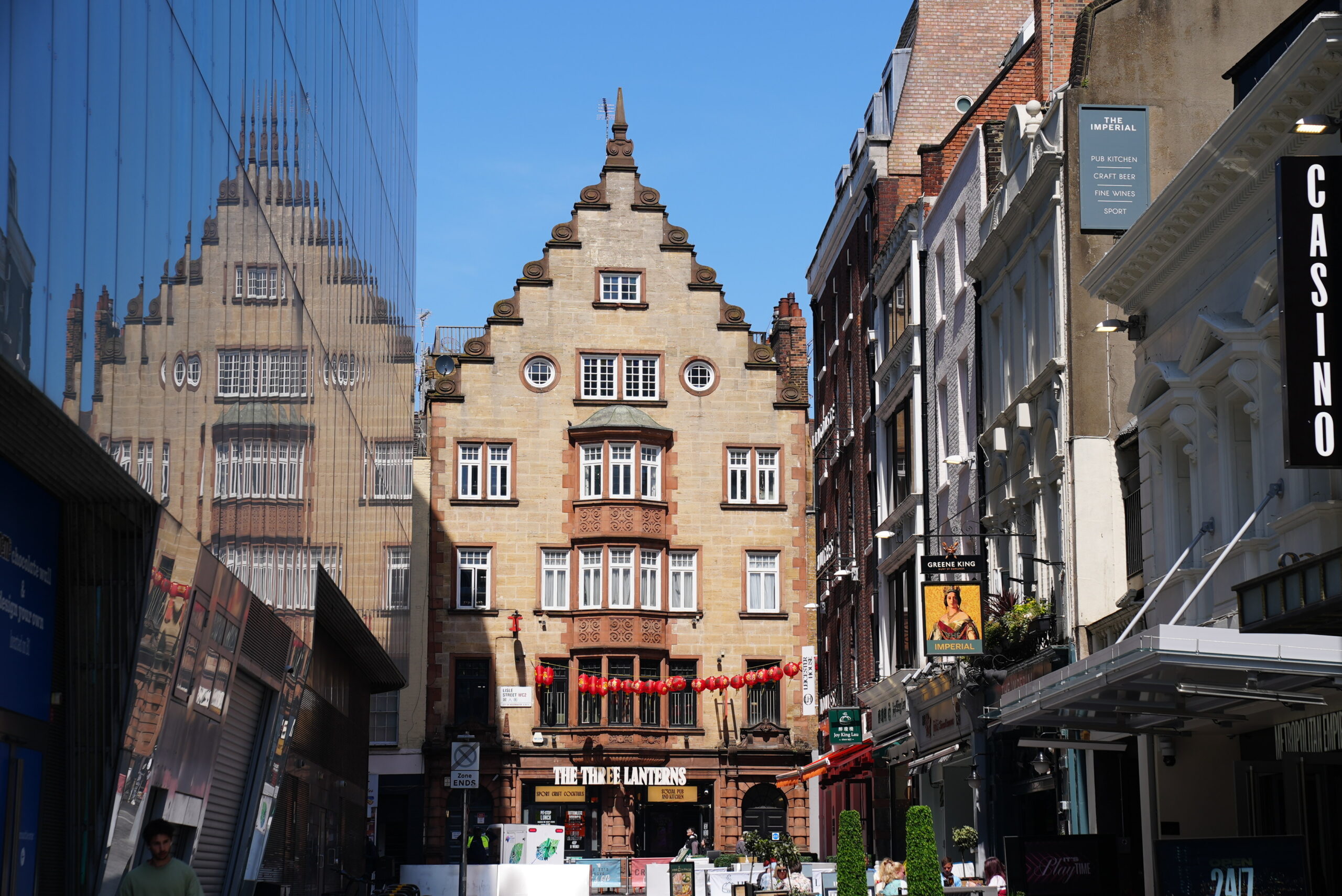
I hope they wash their hands before serving the food.
This building has a Dutch feeling, so of course, it is located in London’s Chinatown. For about 50 years in the 1900s, it was Saint John’s Hospital for Diseases of the Skin. However, I don’t know which Saint John. Wikipedia lists dozens of Saint Johns so, if one were so inclined, one could research all of them to see which was a leper or something. This particular one is not so inclined.
Now, it’s a restaurant and pub called The Three Lanterns. It’s a guess as to which three lanterns they are referring to.
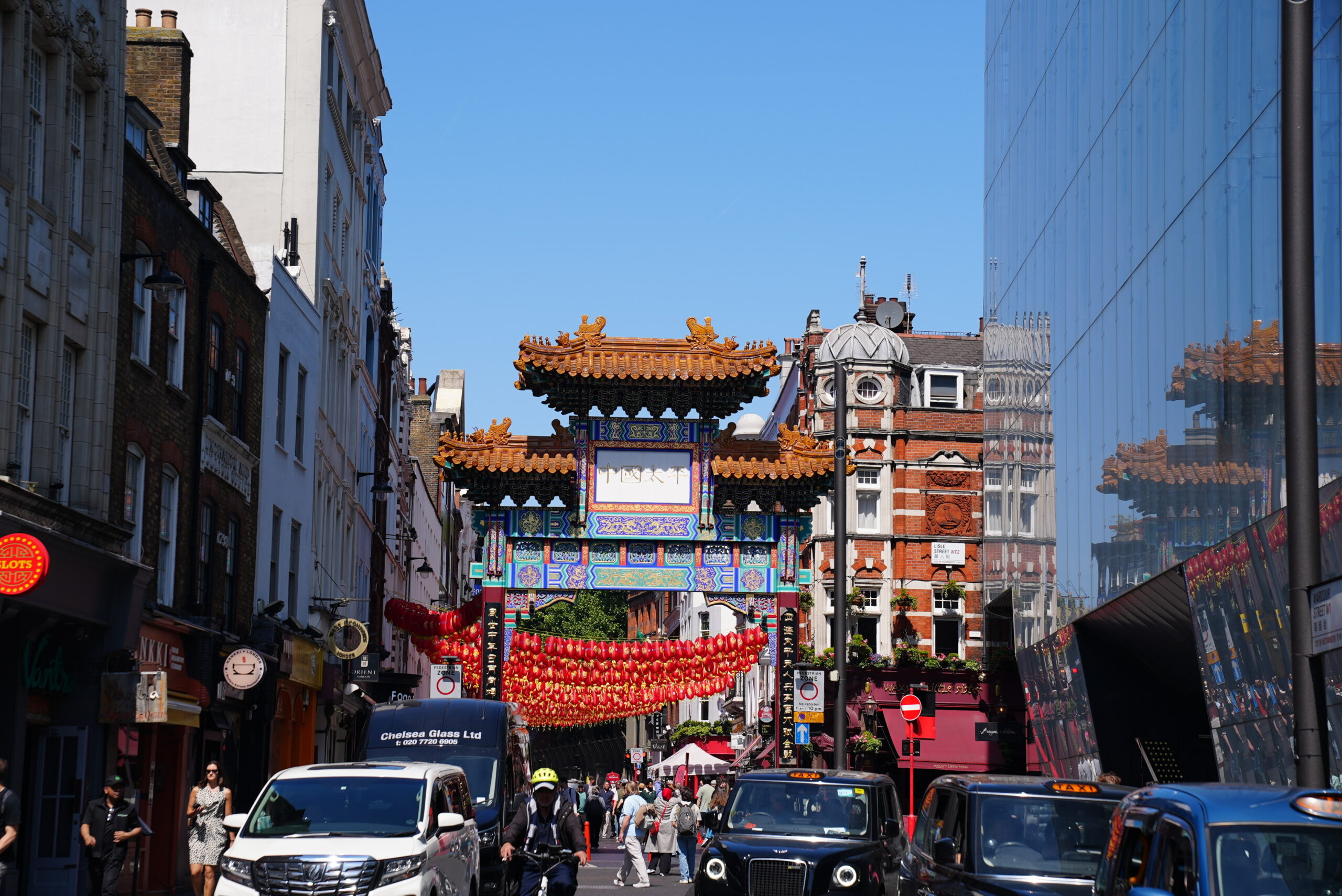
More lanterns!
Lanterns must be the international symbol for China…or, at least that’s what the English think, because this is the entrance to Chinatown.
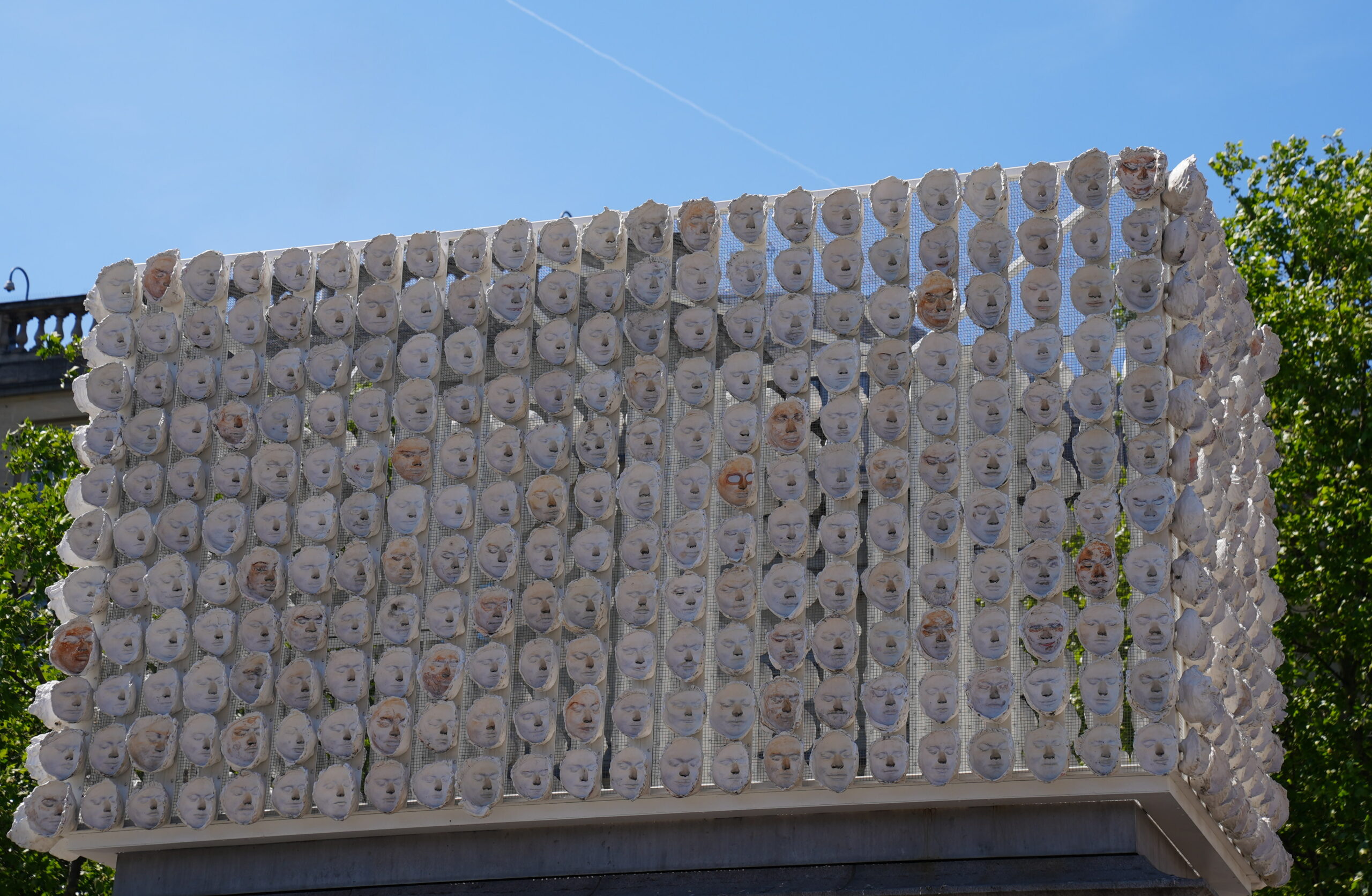
Mil Veces un Instante.
The fourth plinth in Trafalgar Square (I’m not making up those words) is a sculpture by Teresa Margolles consisting of plaster cast molds of the faces of 726 people. The sculpture is in the form of a ‘tzompantli’, a skull rack that was featured in meso-American civilization. The casts, made of plaster, will gradually disintegrate in the London weather.
This symbolizes something, which I suppose is Man’s Inhumanity to Man.
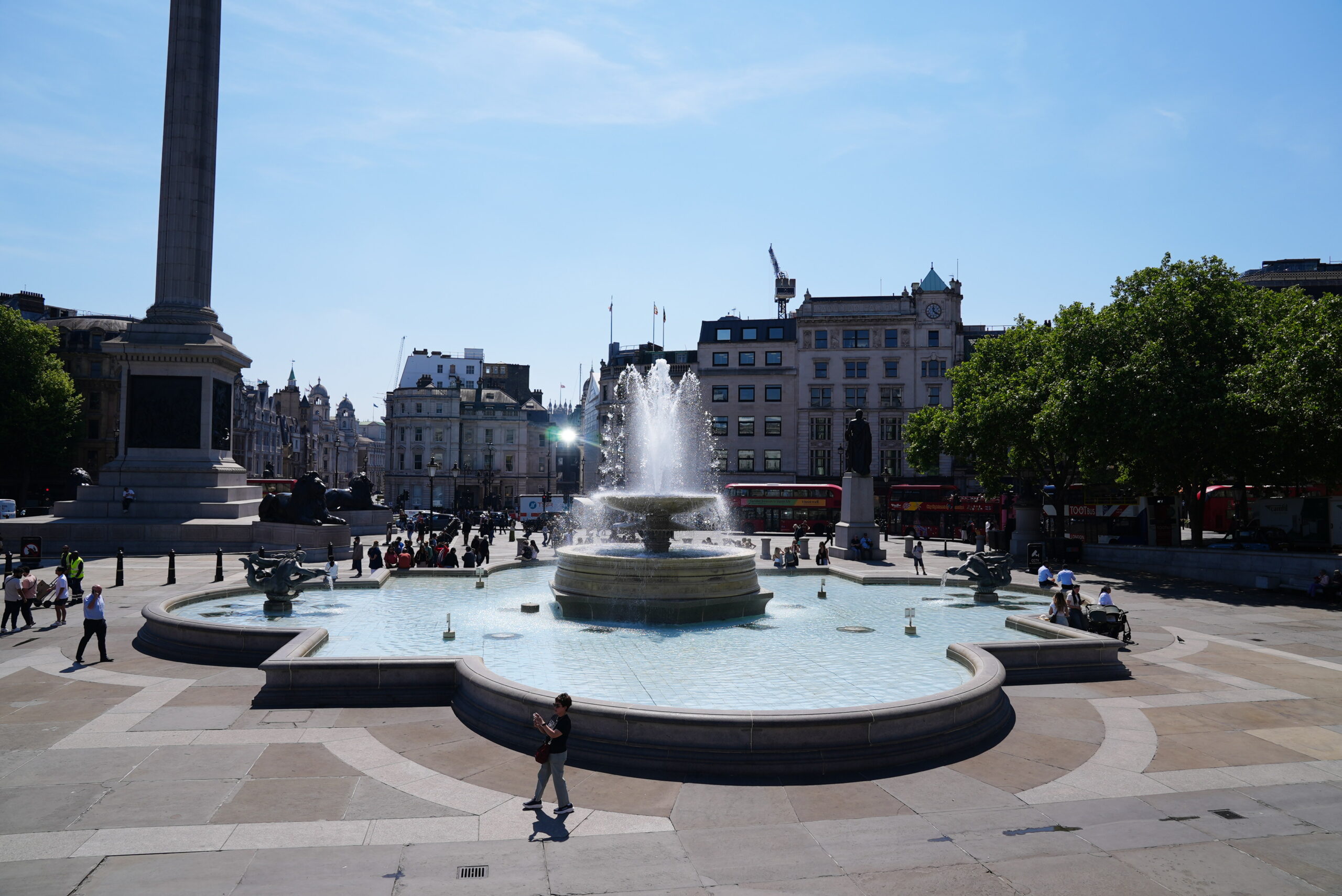
A square that’s not square.
Trafalgar Square is an open, public space in London named after the Battle of Trafalgar. The word “trafalgar” is a Spanish word of Arabic origin derived from either Taraf al-Ghar (طرف الغار ‘cape of the cave/laurel’) or Taraf al-Gharb (طرف الغرب ‘extremity of the west’). The tower on the left is Nelson’s Column.
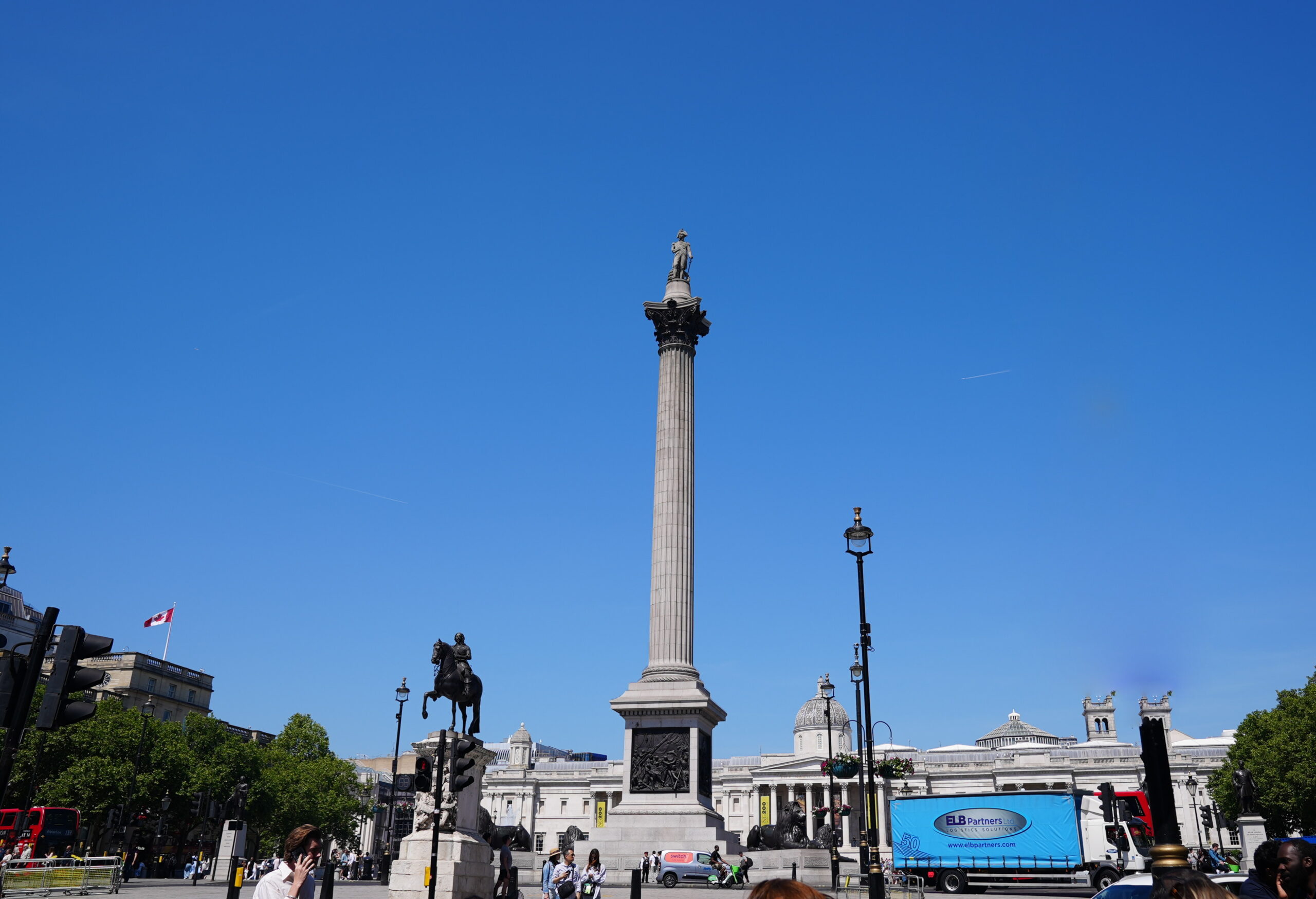
Someone was a bit insecure, know what I mean…?
Lord Nelson’s column is almost 52 meters high, although Nelson himself was only 1.3 meters tall. At any rate…Horatio Nelson, 1st Viscount Nelson, 1st Duke of Bronte, was a fellow who was killed by a sniper during a naval battle. We honor him by placing his likeness on a column so tall that we can’t see his likeness.
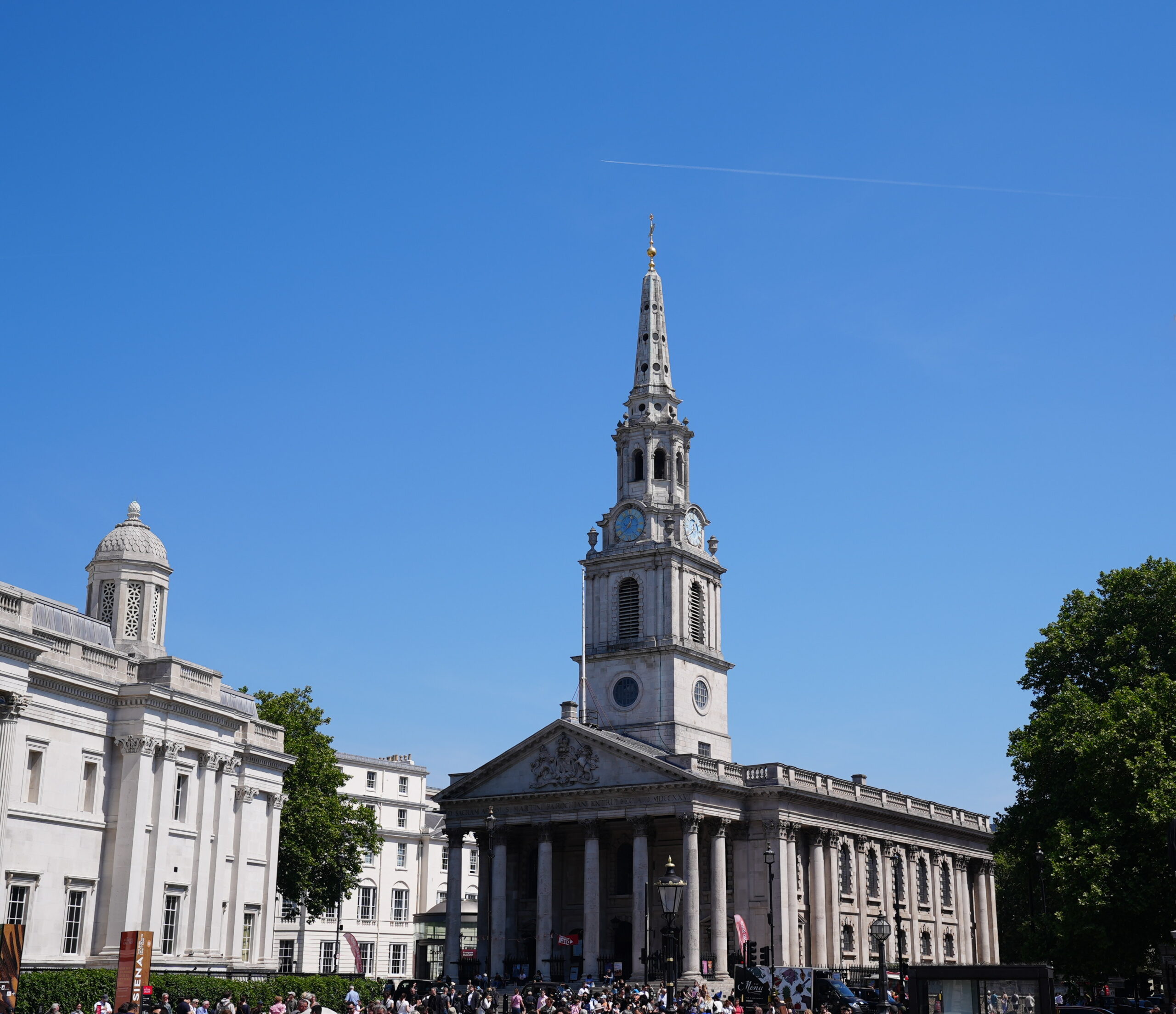
A church dedicated to a Hungarian.
Saint Martin-in-the-Fields Church, dedicated to Martin of Tours, was built in its present form in 1726. The earliest extant reference to the church is from 1222, when there was a dispute between the Abbot of Westminster and the Bishop of London as to who had control over it. The Archbishop of Canterbury decided in favor of Westminster, and the monks of Westminster Abbey began to use it. Henry VIII rebuilt the church in 1542 to keep plague victims in the area from having to pass through his Palace of Whitehall. So, that was nice for the plague victims, I suppose. We do not go inside because, well, it’s just a church.
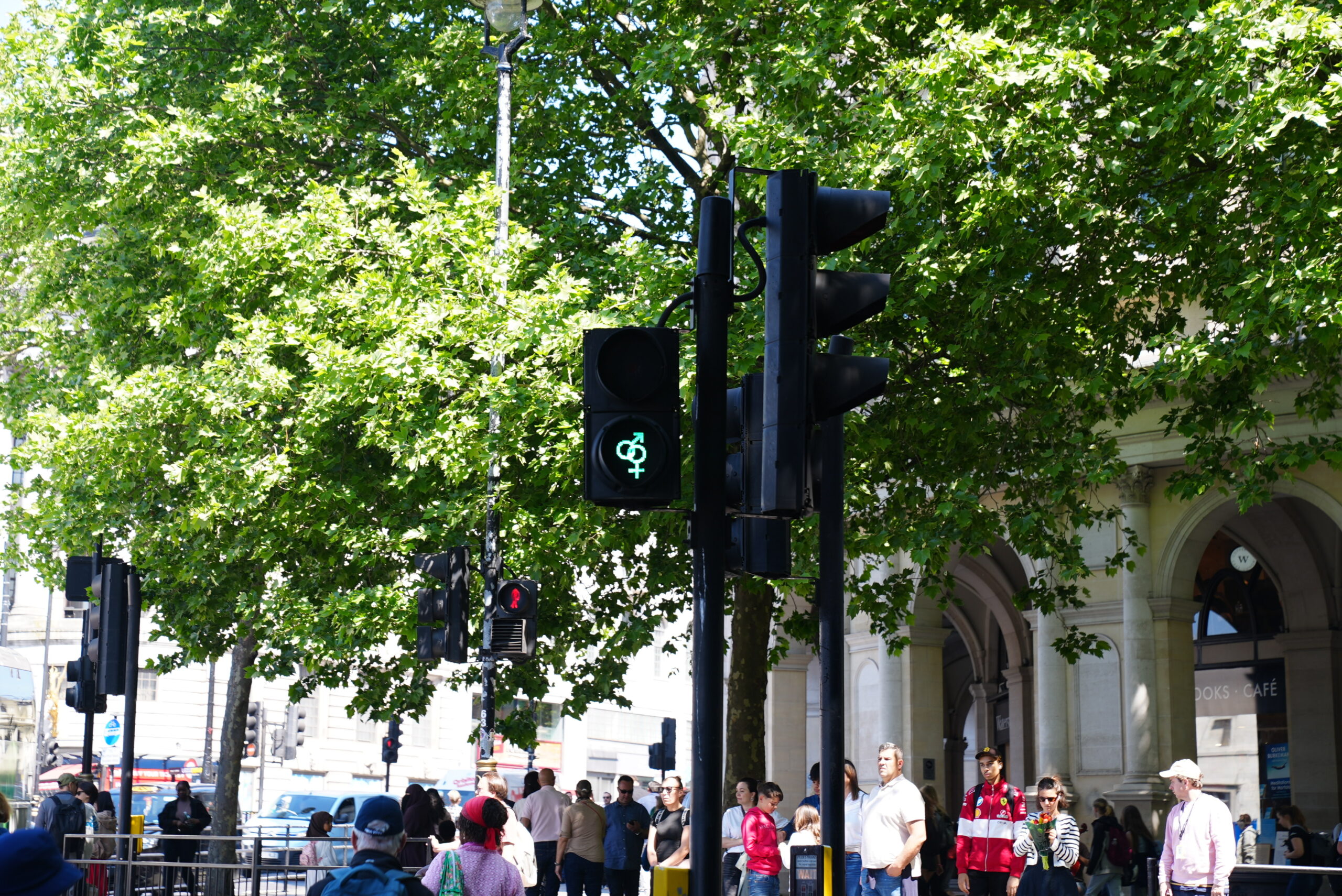
This symbolizes….something.
This is a “Walk” sign in London. There is no telling what the symbols mean and, even if you think you know their meaning, it will change in the next year or so. So I’m going to go with “people who are copulating can cross now” or “Man’s Inhumanity to Man”.
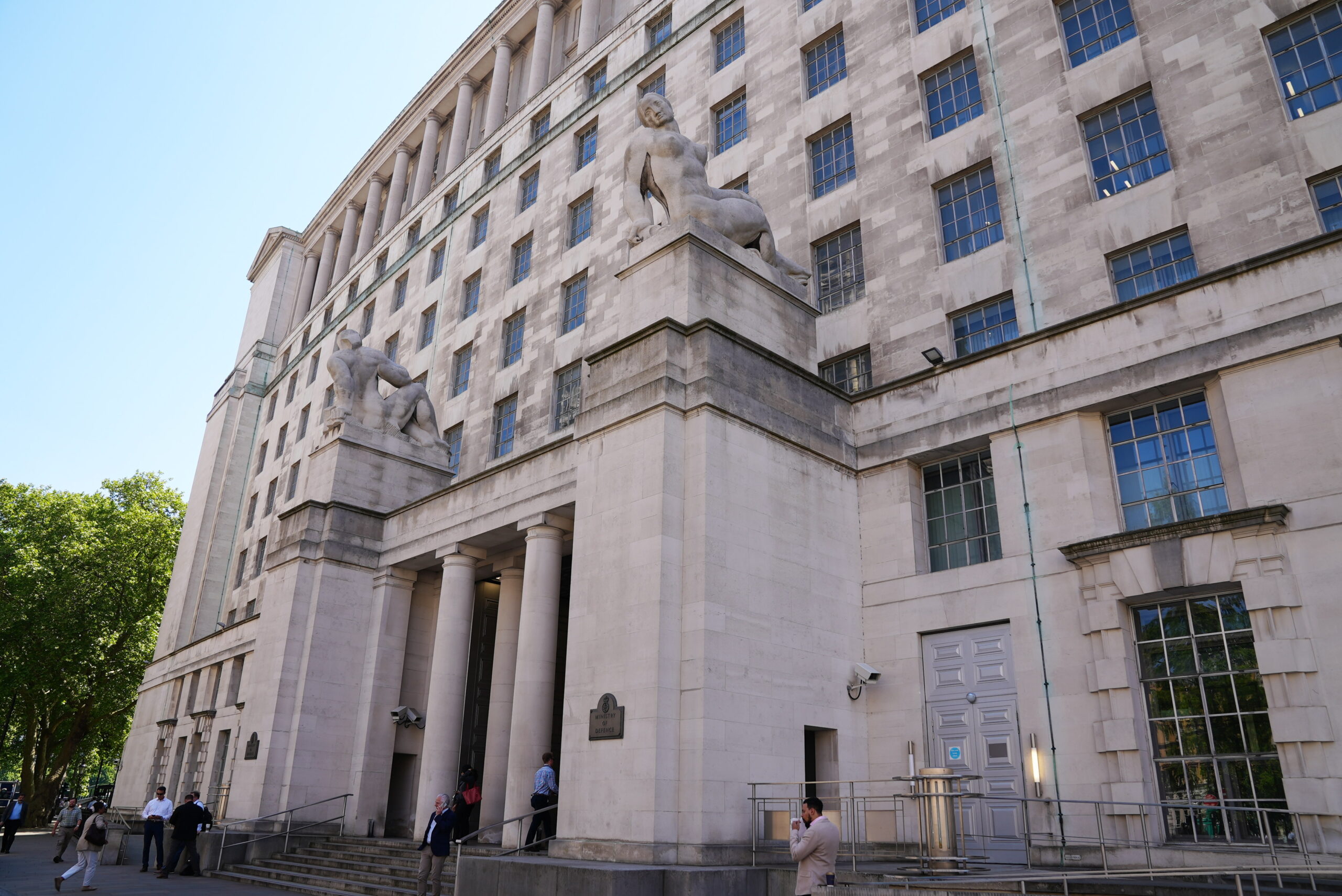
Mmmmm, concrete boobies…..
No one thinks of “England” and “boobies” in the same sentence, yet here we have them on the Ministry of Defence building. Well, I guess those guys defending England need to be reminded of what they are fighting for.
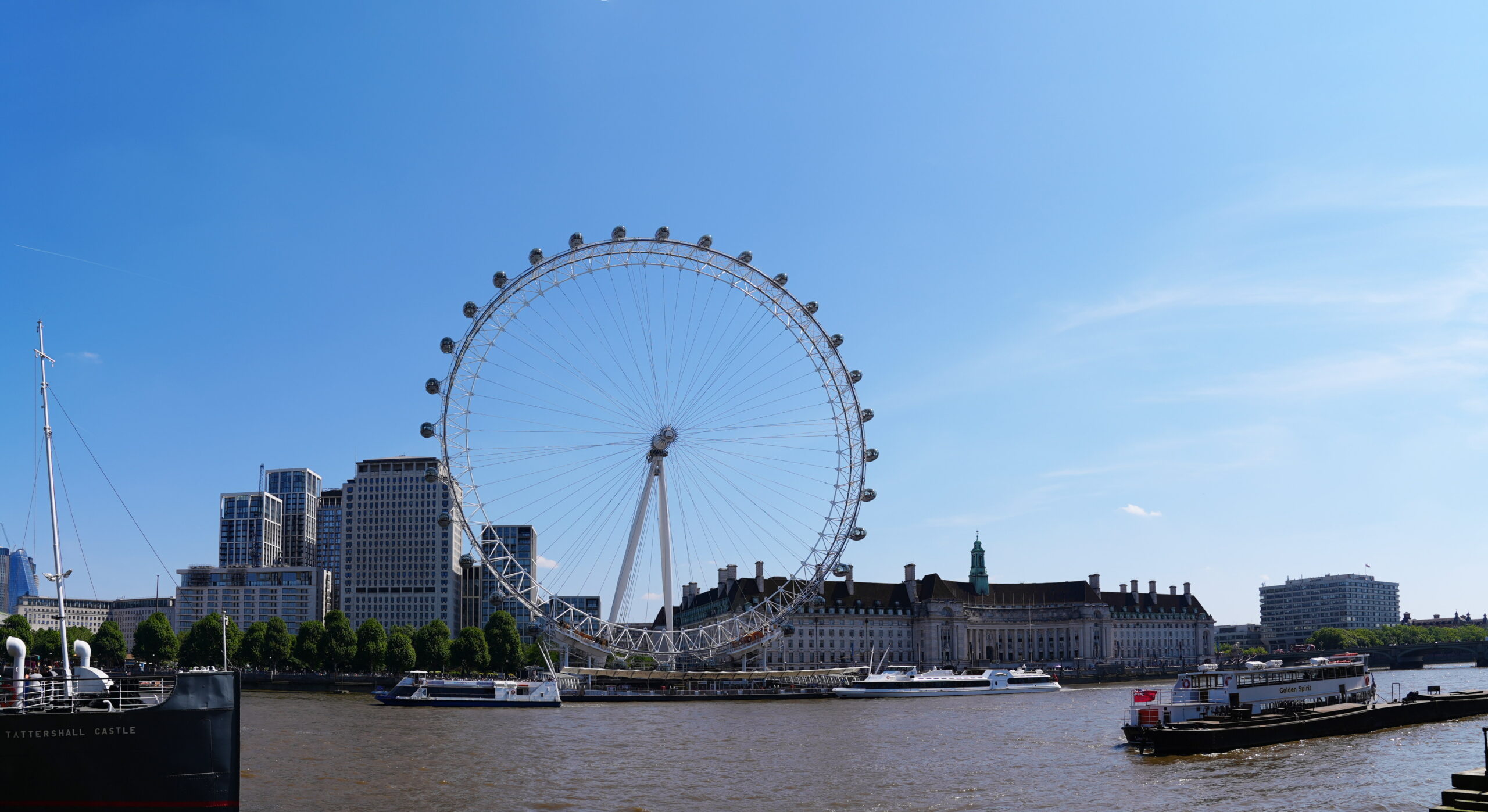
Eye see you.
The London Eye is a cantilevered observation wheel on the South Bank of the River Thames in London. It is the world’s tallest cantilevered observation wheel, and the most popular paid tourist attraction in the United Kingdom with over three million visitors annually. Wow, those tourists really know how to party, know what I mean?
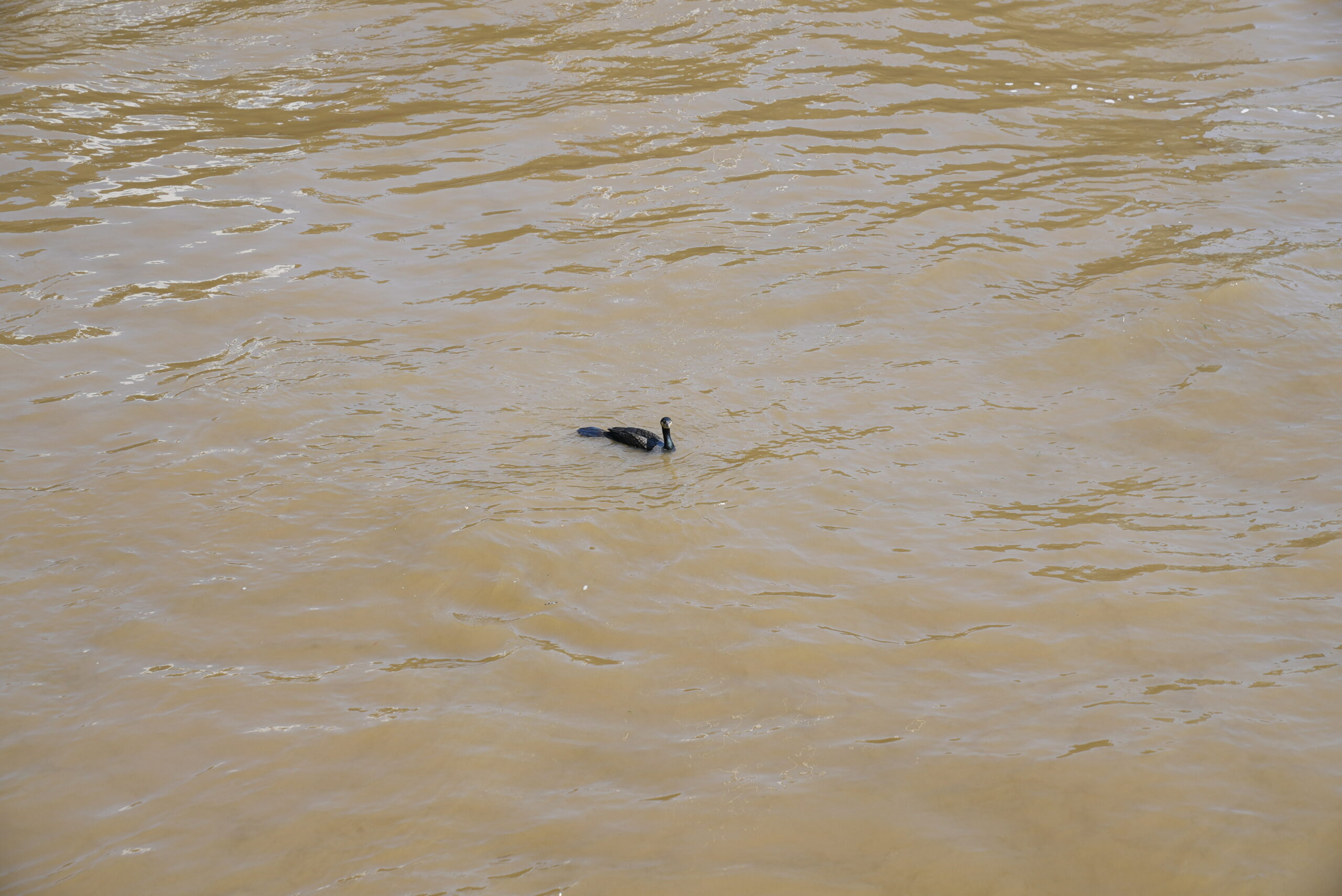
Let’s go swimming!
Here we see a bird taking a mud bath. Oh, wait. That’s the Thames River. Yikes!
Also, it’s pronounced “tames”, not “thems”.
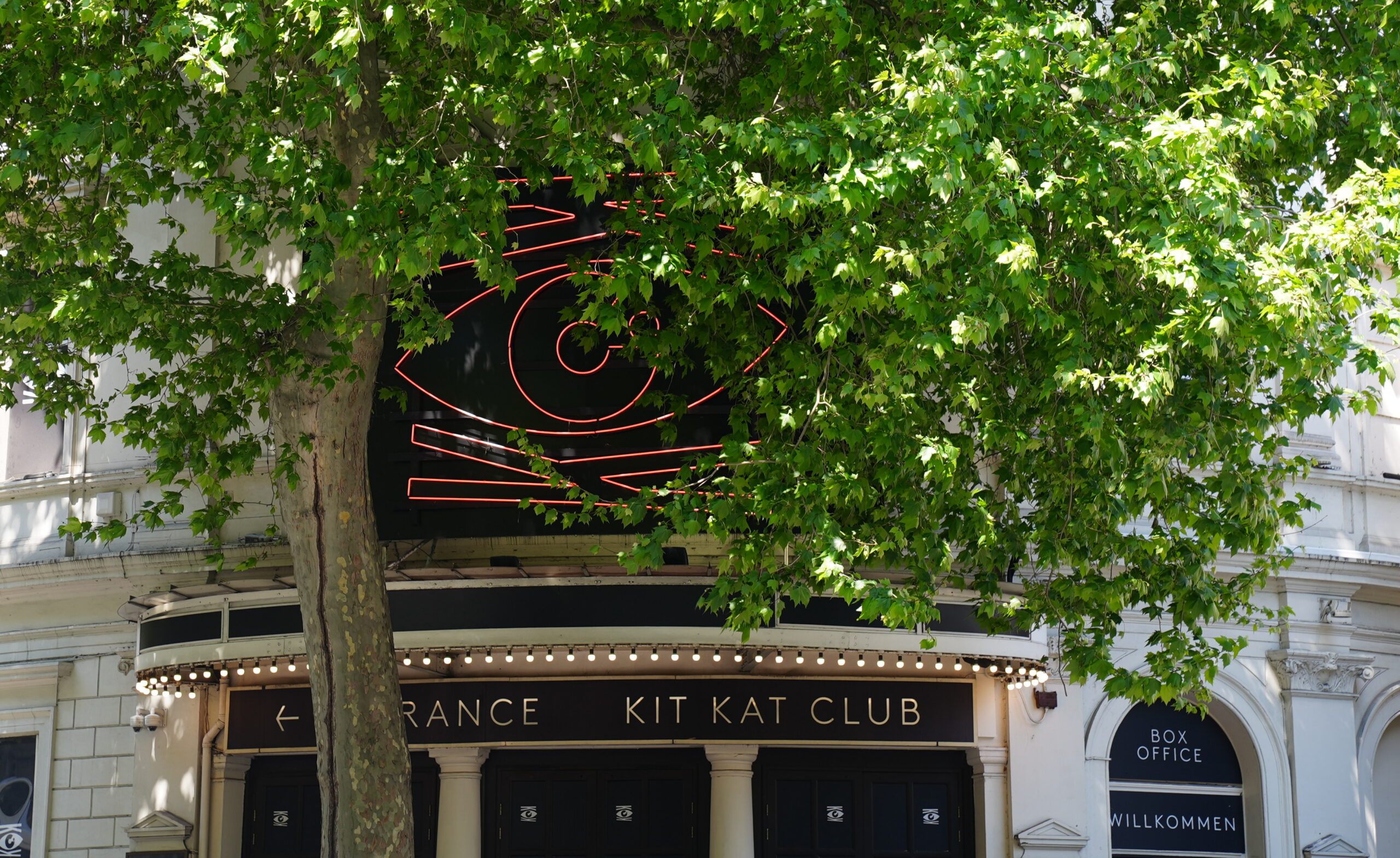
The famed Kit Kat Club!
Der KitKatClub war, ist und bleibt hedonistisch, natürlich, bunt, lebendig, musikalisch & kinky! Einfach Raum zum frei sein!
Oh, wait. That’s the KitKat Club in Berlin.
No, this is just a cabaret club for families and such. Meh.
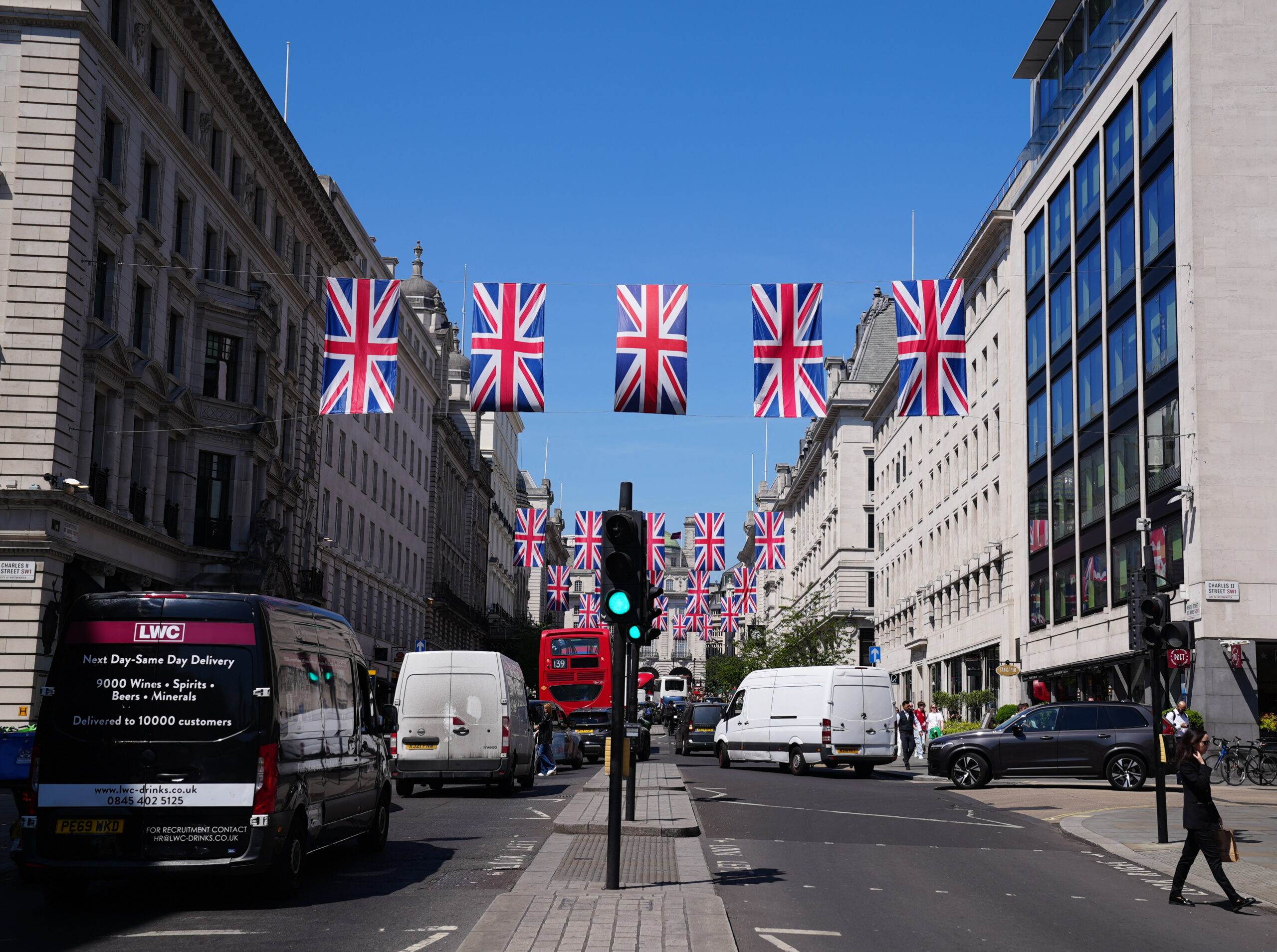
Wait, what country are we in? I forgot!!
It is, apparently, important to remind folks of which country they live in. Also, you can get wine, spirits, beers, and minerals (such as quartz and molybdenum, I suppose) delivered with same day service.
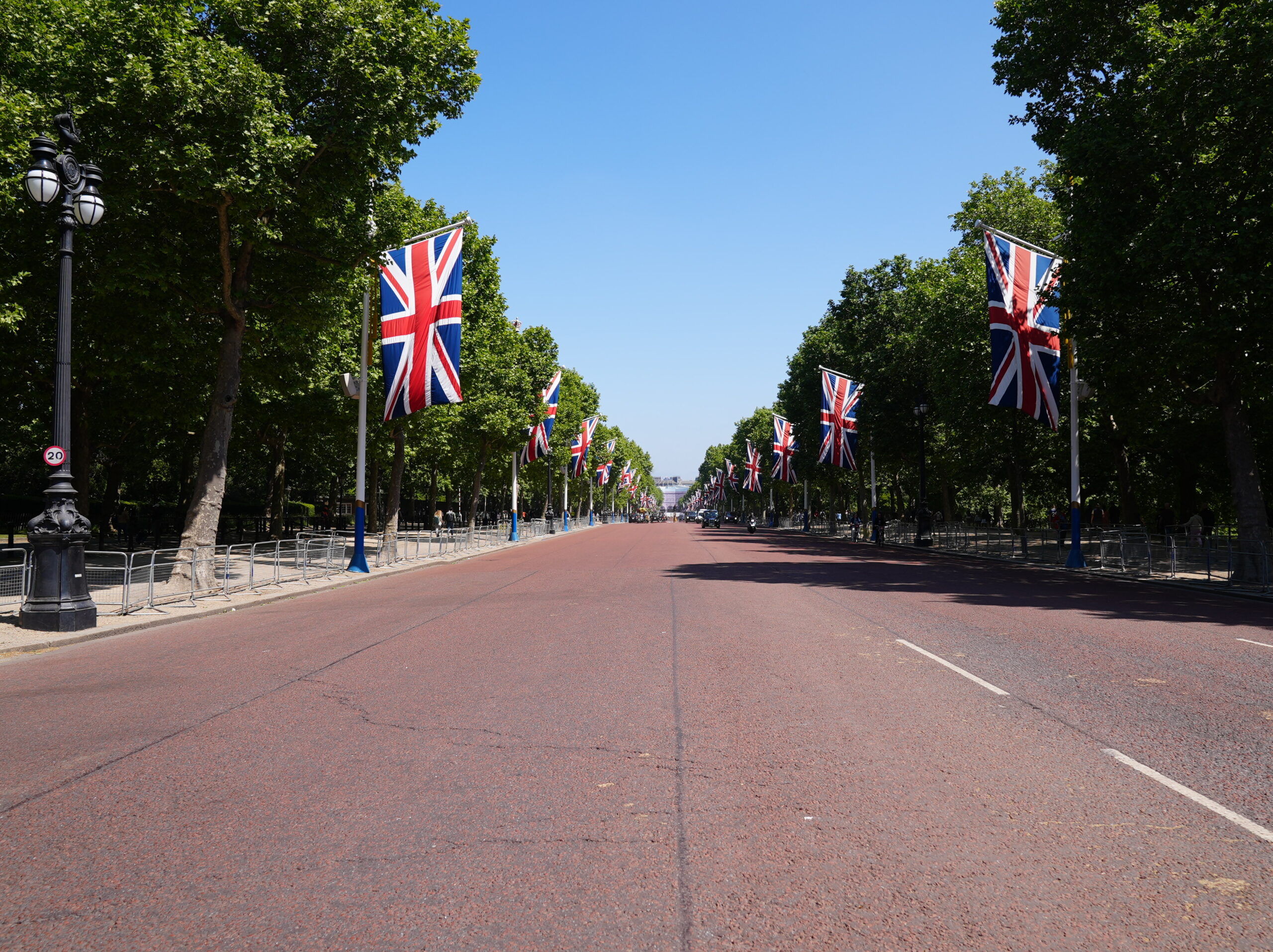
Just in case you were on a different street and forgot which country you were in.
At this point, I’m beginning to think the royal family has holdings in a flag-making company.
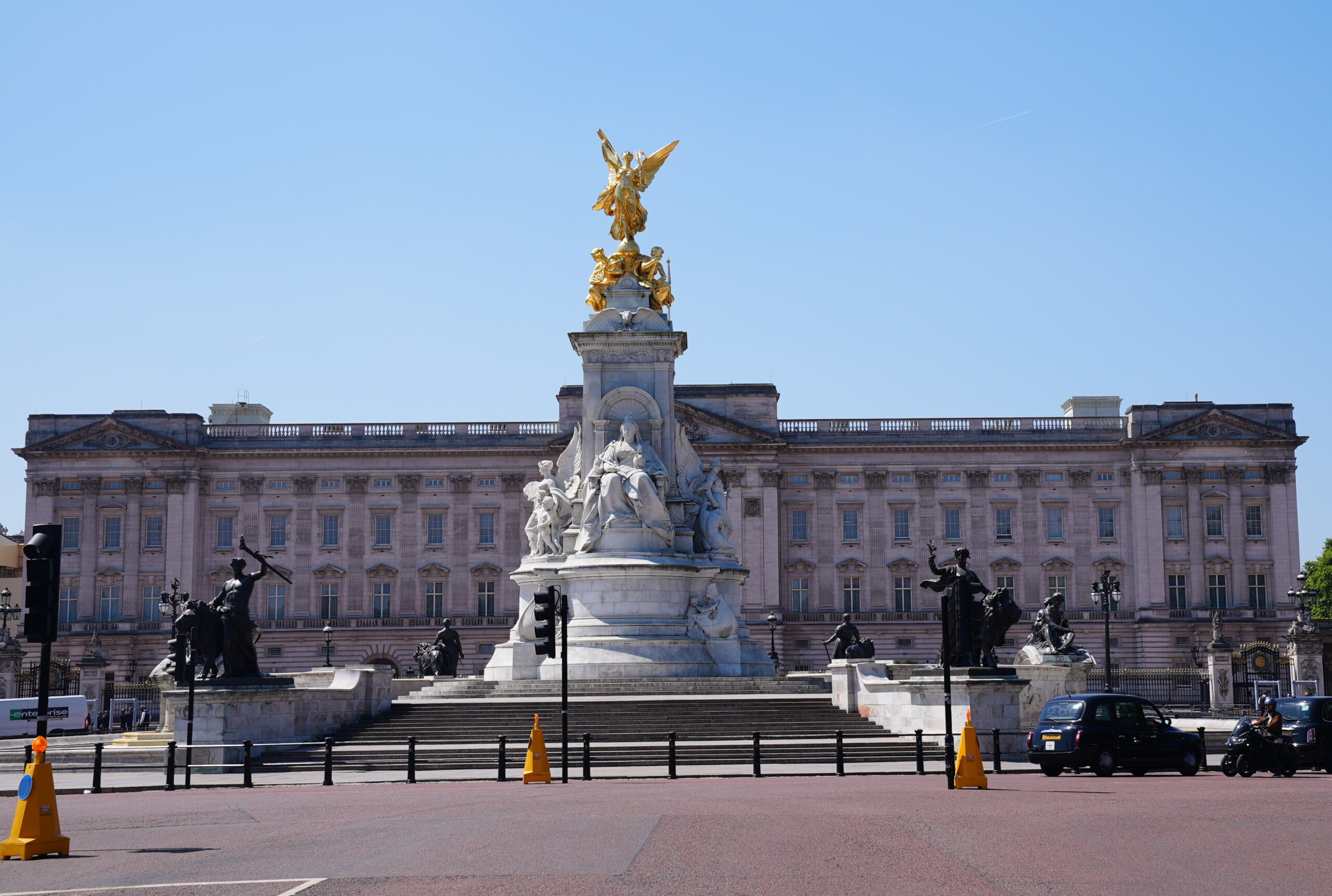
Victory shall be mine!
Behold a gilded bronze Winged Victory, which was a roman god symbolizing Rome’s hegemony and right to rule. Other personifications are personified below. These include two eagles with wings outspread, representing the British empire. There is more to it, but you have to be a fan of British history to care, I suppose. At any rate, it is called the Victoria Memorial, dedicated to the memory of the British Queen, Victoria. She married her first cousin, which was not uncommon in those days, I suppose due to a lack of suitable suitors. A lot of her descendants were hemophiliacs, and she “earned” the nickname “the grandmother of Europe”, according to some sources. To be clear, except for one online article, I have never heard of anyone being Europe’s grandmother, so take that last bit with a grain of salt.
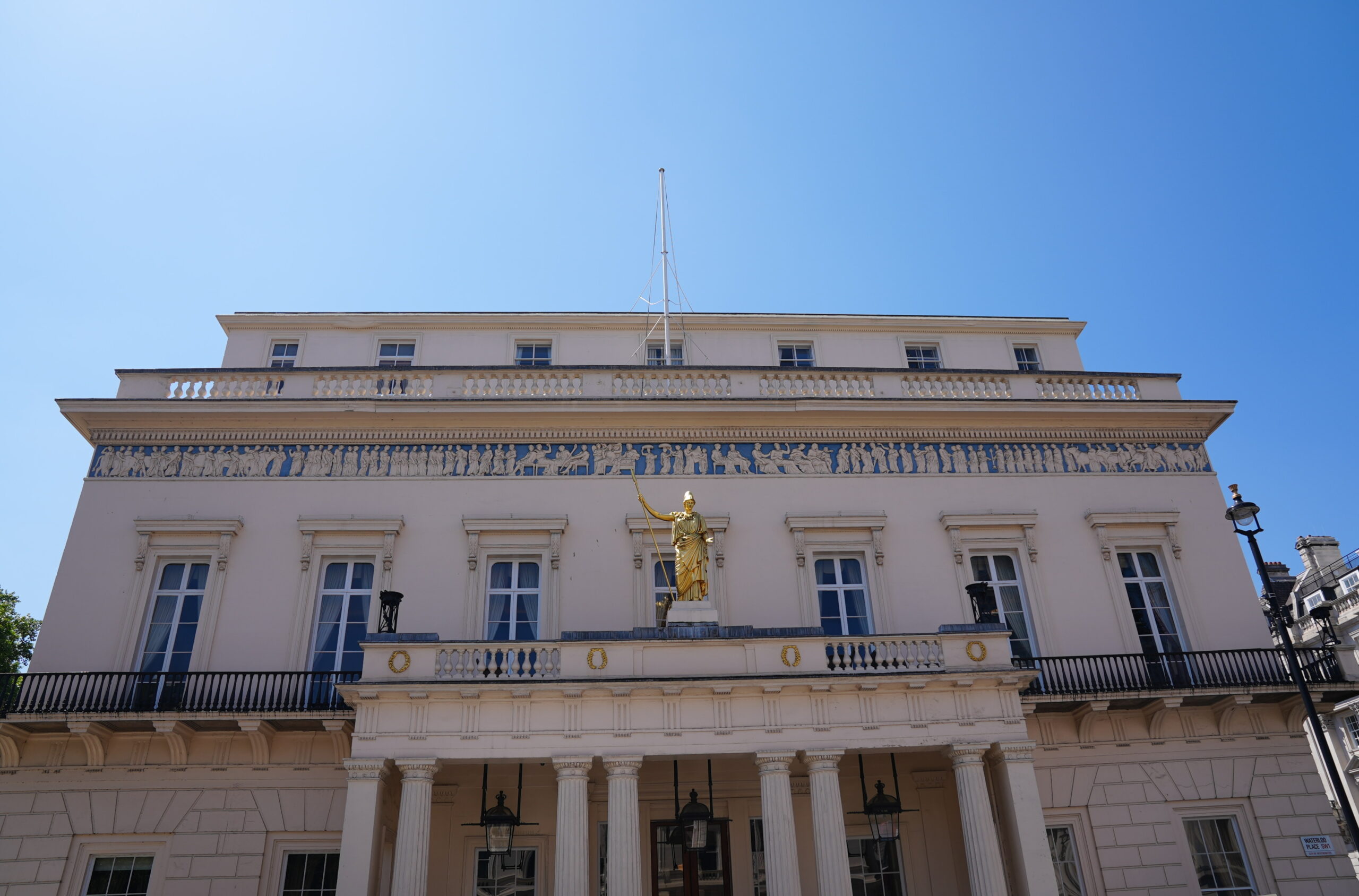
A club house in London.
A statue of the Greek god Athena sets atop the doorway of the Athenaeum Club, a club famous for needing too many letters in its name. It is a private club founded in 1824. The club’s facilities include an extensive library, a dining room known as the coffee room, a Morning Room, a drawing room on the first floor, a restored smoking room (smoking is no longer permitted) on the upper floor, and a suite of bedrooms. In 1972, members were permitted to invite women to the coffee room for dinner and to the drawing room afterwards. Later, they were also allowed as guests to lunch. In 2002 the members voted by a large majority to admit women as members on the same terms in all respects as men.
Since we are not members, we did not enter. Also, it sounds pretty gay.
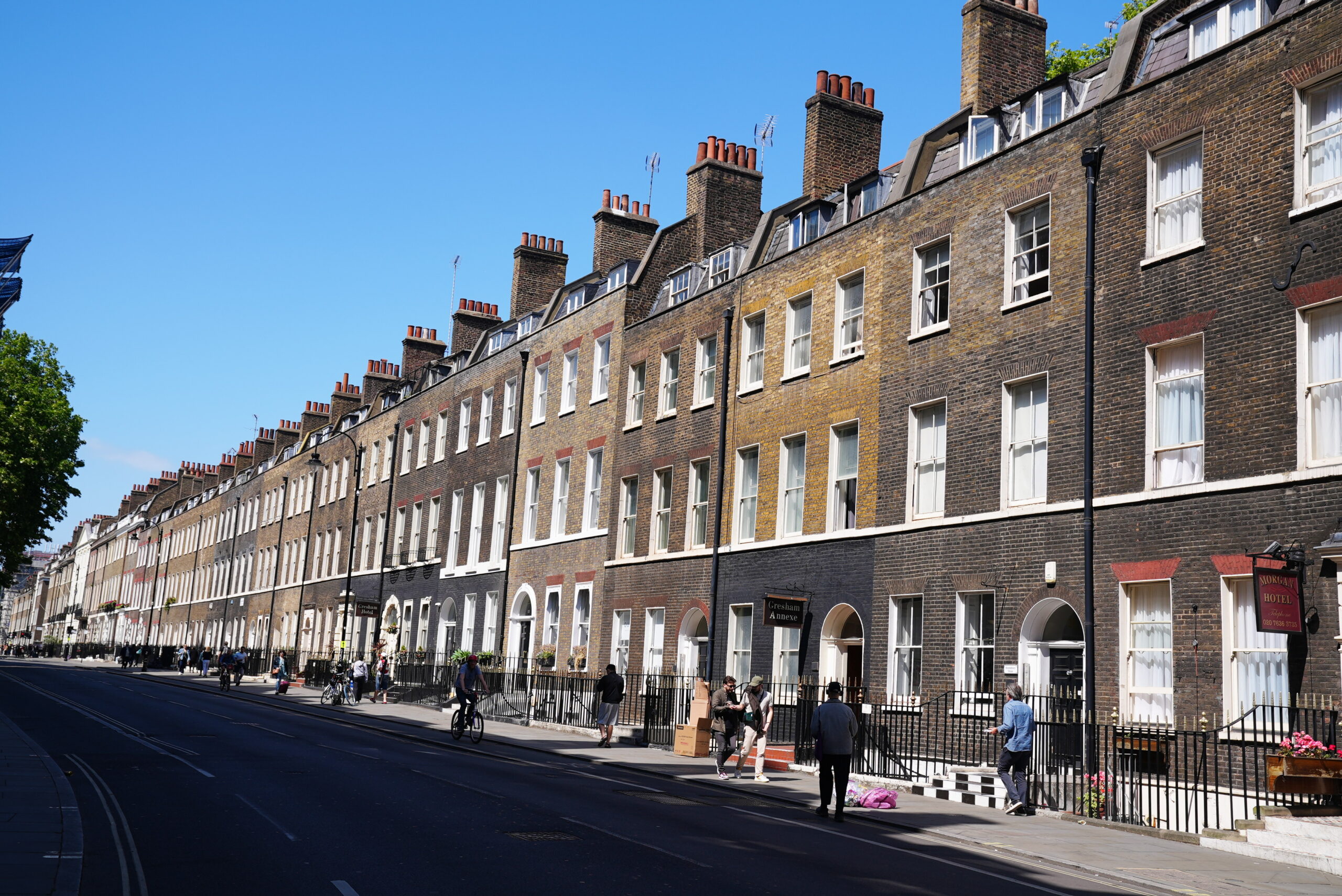
“I live in the brown building with rectangular windows. You can’t miss it.”
You may have heard the expression, “a block of flats”. That’s how folks in London refer to the buildings, for good reason. Each long block of apartments (flats, if you speak British) is built using one template with very minor deviations. I suppose there is some economy to that, but it is less than inspiring.
Parks and Rec
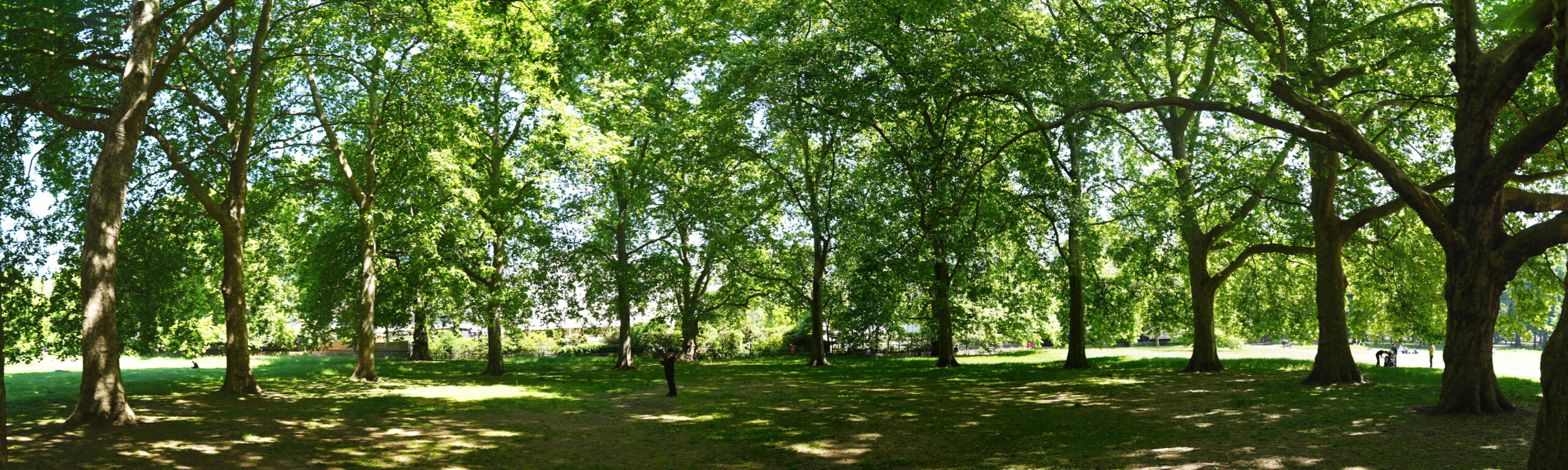
A proper English park.
The people of London do enjoy a bit of greenery, as long as it is well maintained and orderly. Trees are required to be a certain distance apart, and the grass is required to be no more than a certain height above the ground.

I heart London.
These trees are attempting to show their love of their city by forming a heart. They don’t do it very well, but, after all, they are just British trees, so we must cut them some slack.
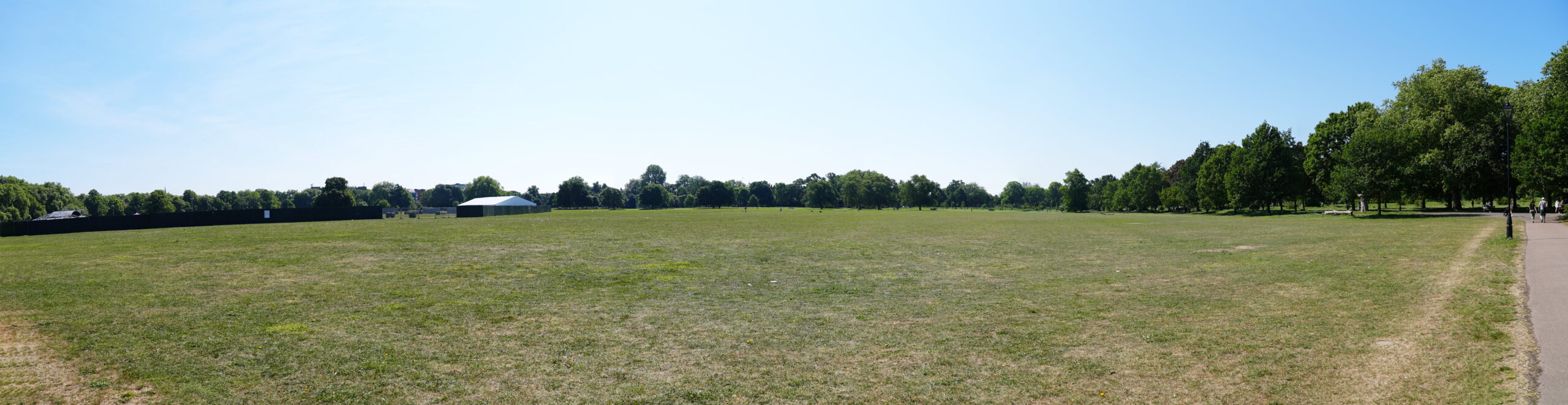
See? London is not just ugly buildings.
We are surprised to find that, once you leave London proper (or, as we say in America, “downtown”), there are many open spaces with no particular activity associated with them.
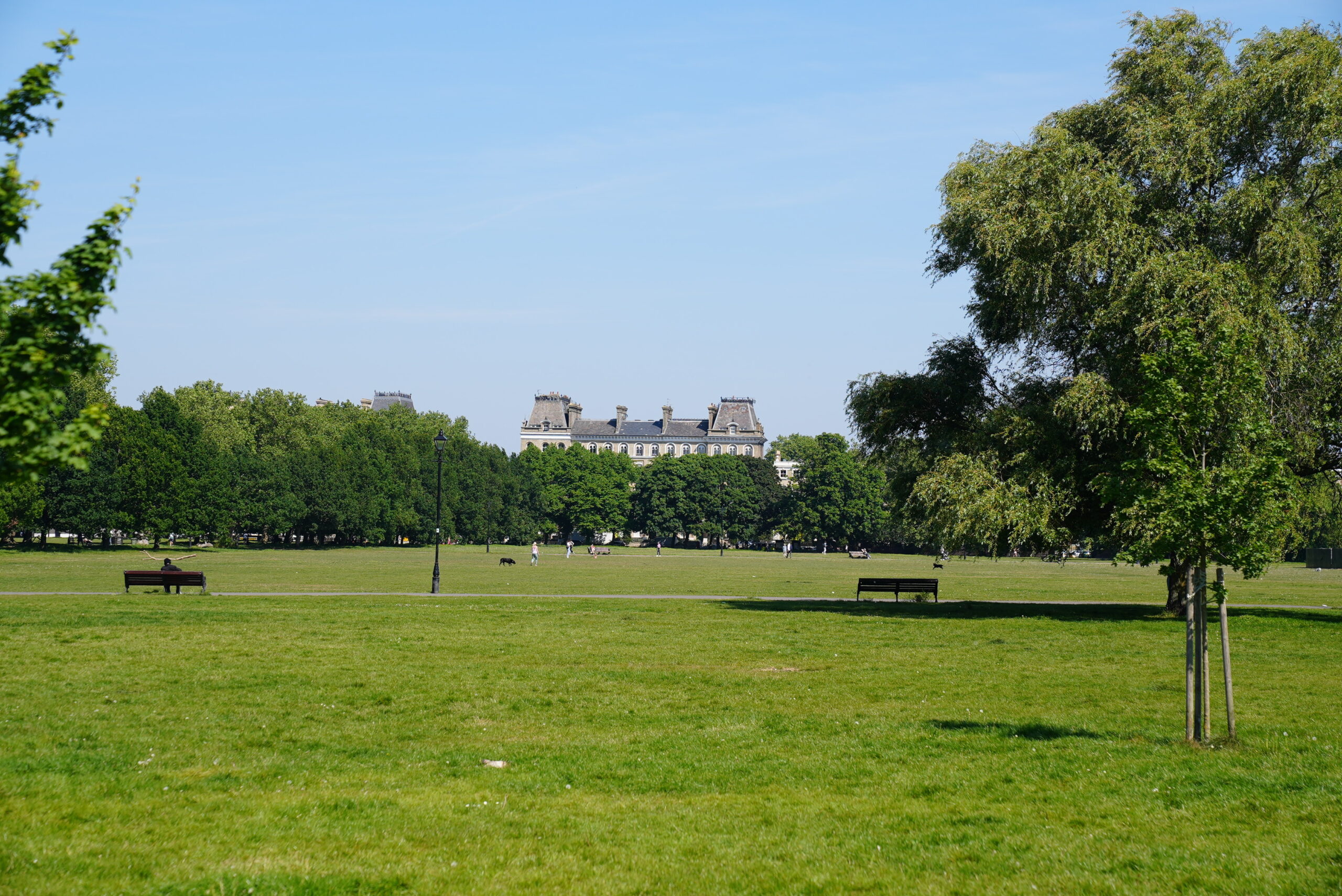
Some parks have people in them.
Look closely at the fellow sitting on the bench on the left. Yeah, that’s just a well-composed photograph, not a stick-balancing guy.
Or is it…?
At any rate, this is Clapham Common, an 89 hectare green space, with three ponds and a Victorian bandstand. It is overlooked by large Georgian and Victorian mansions.
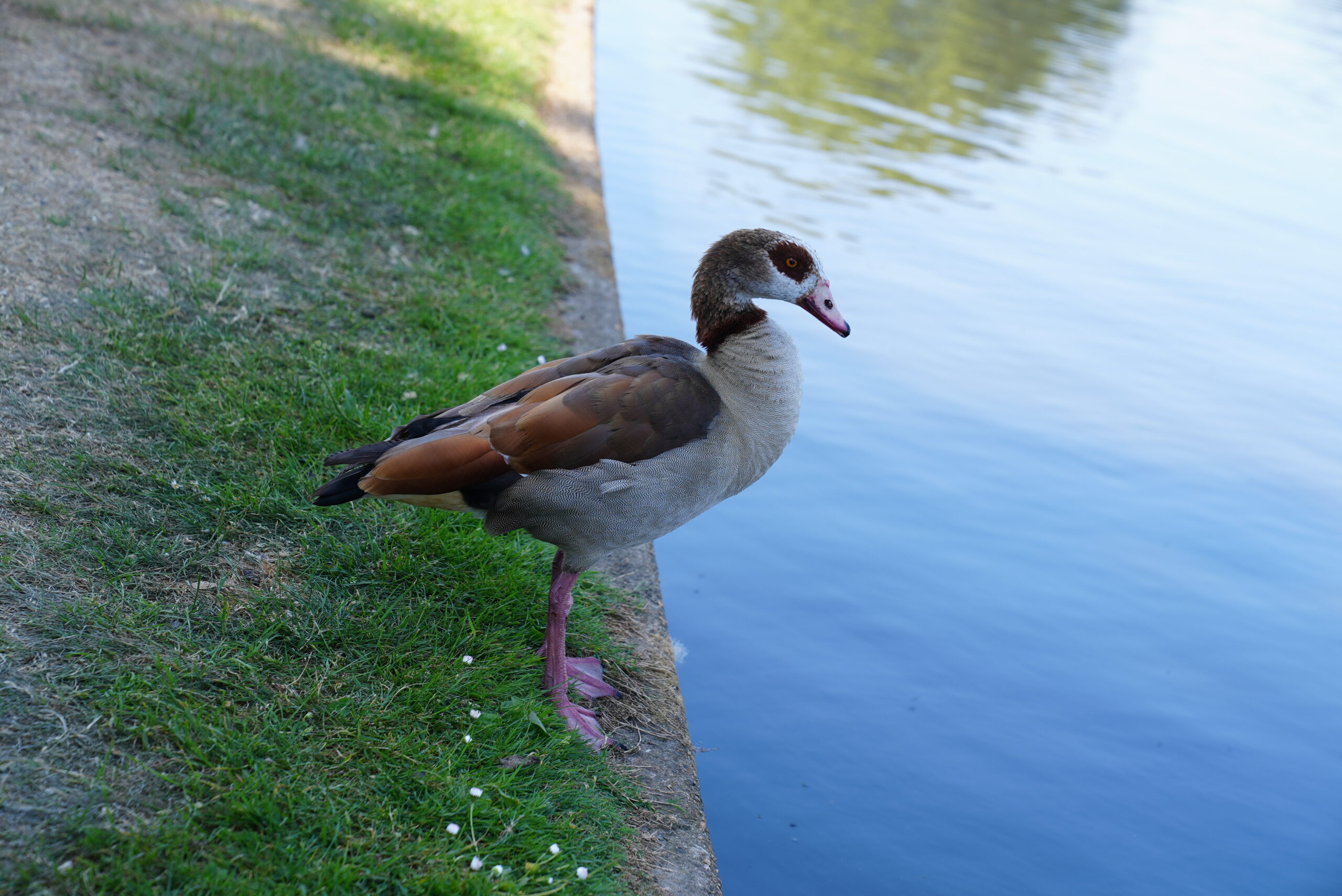
You quack me up.
There is some small amount of wildlife found in the parks of London, including Egyptian geese. Its native range is sub-Saharan Africa, but it has been brought to England as an ornamental animal.
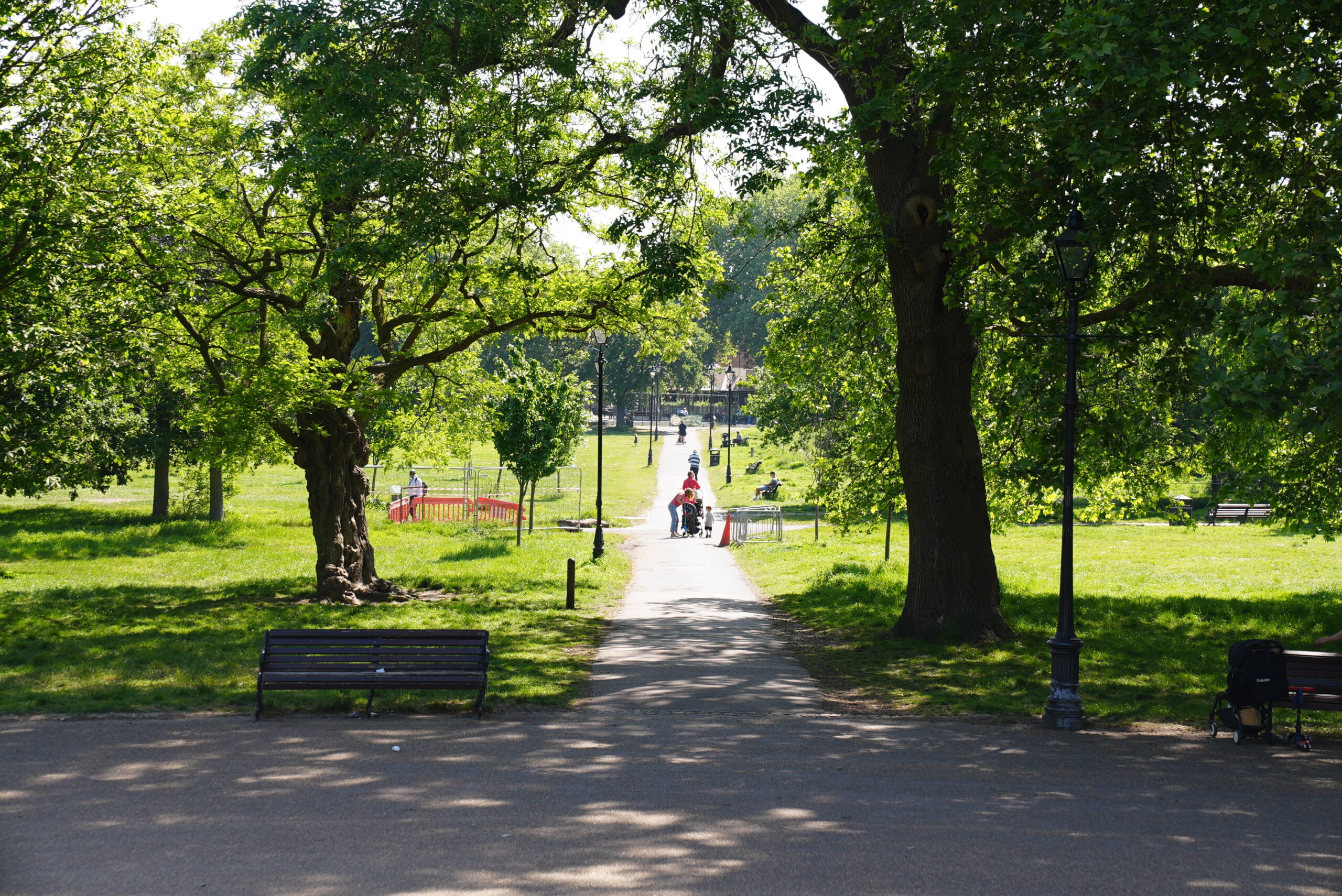
Orange is the new orange.
If folks like orange, then they like orange. At least they are easy to find.
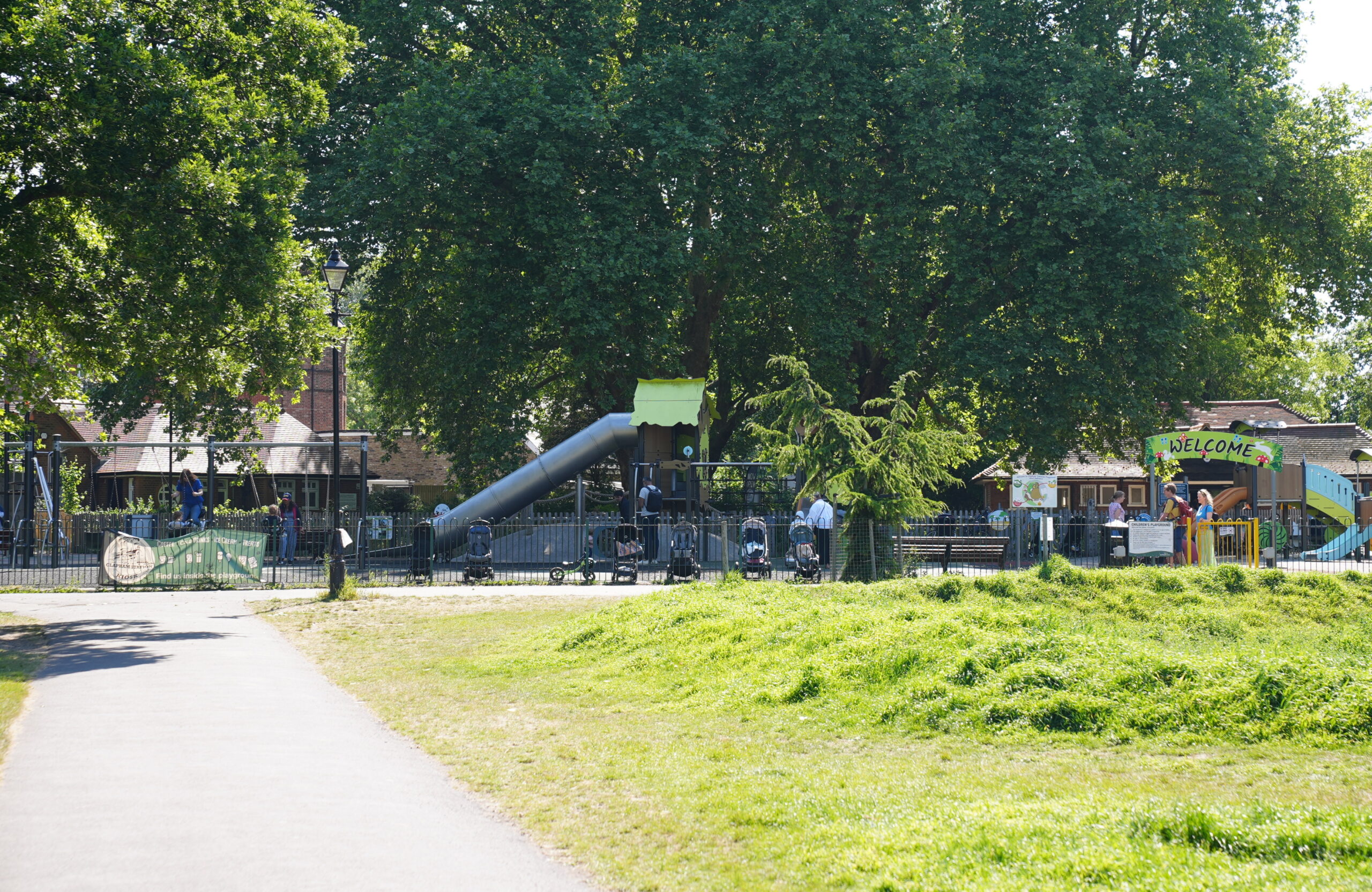
Welcome!
Near an unusual expanse of unkempt grass is a children’s playground where all are welcome! If you look closely, the sign actually reads “children’s playground”, just in case someone thought it was an adult’s playground. Better safe than sorry, I suppose.
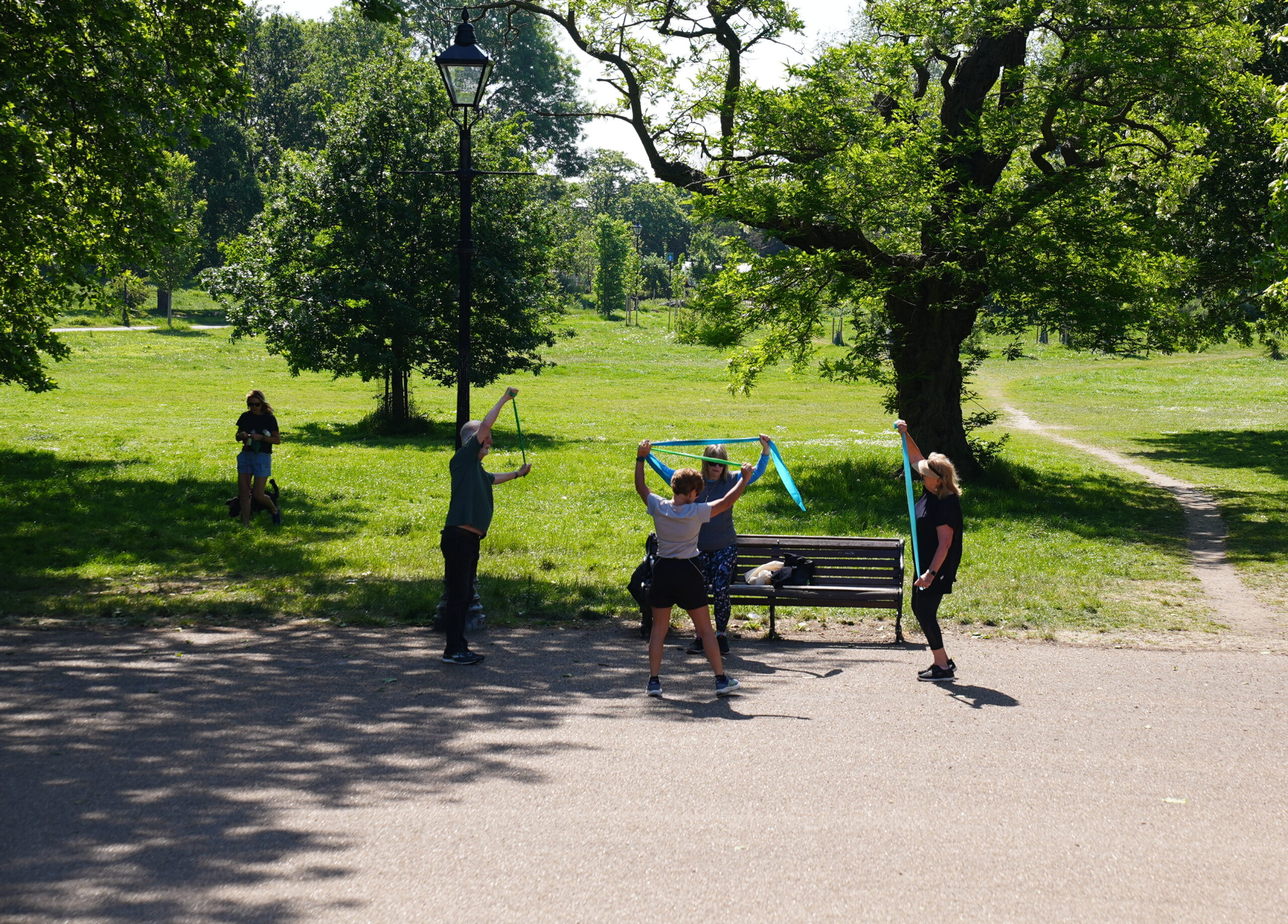
Stretchy Londoners.
These folks gather together to form a square. They then take a short length of stretchy material, and stretch it. This is good exercise, I suppose.
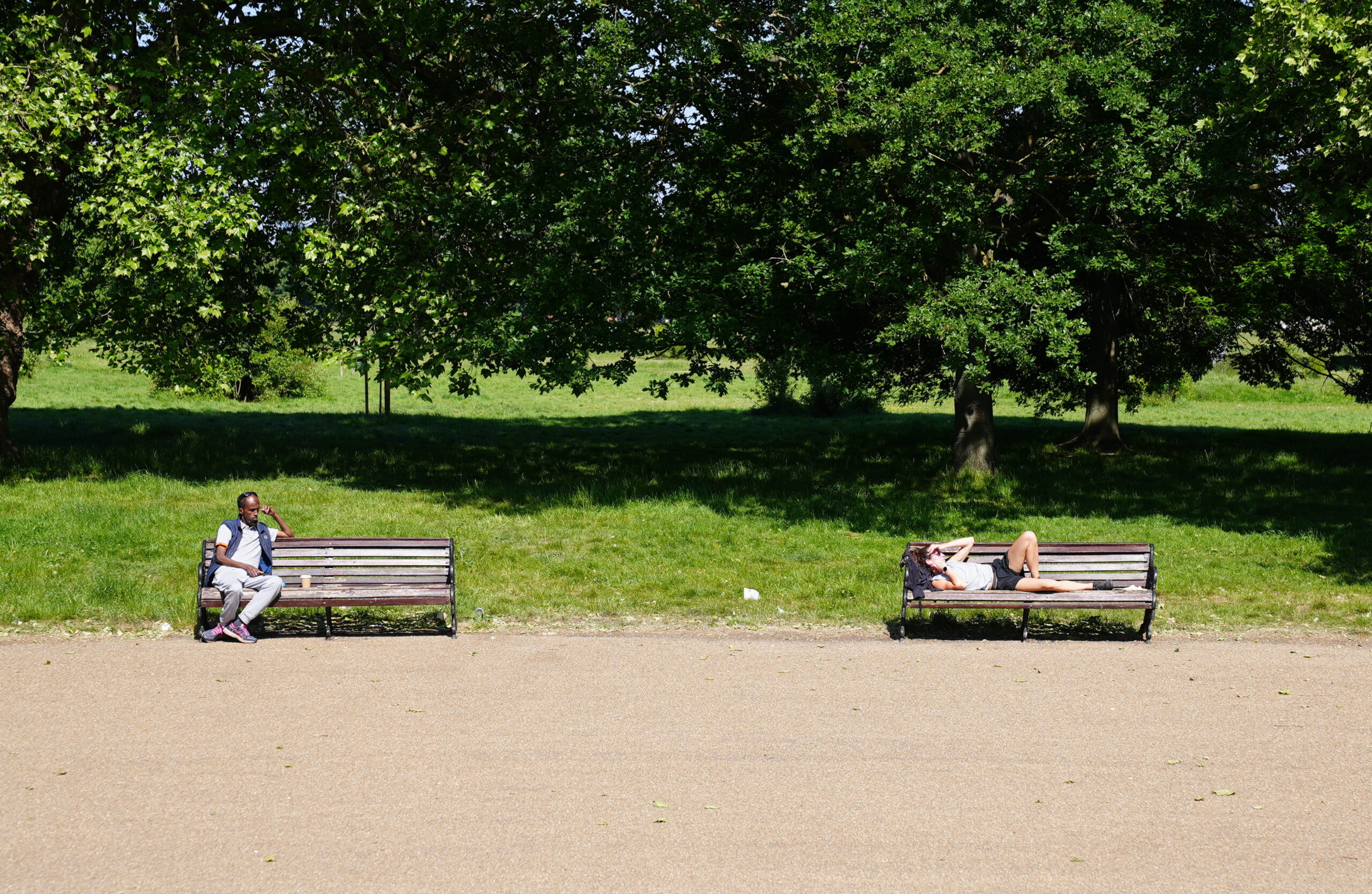
Time to relax.
Parks are also for reclining, drinking stuff, and just enjoying the day. Good for them!
People of London
You may recall that we have asserted that London is a multi-cultural city that embraces multiple cultures. Let’s take a look at some of the people who populate London.
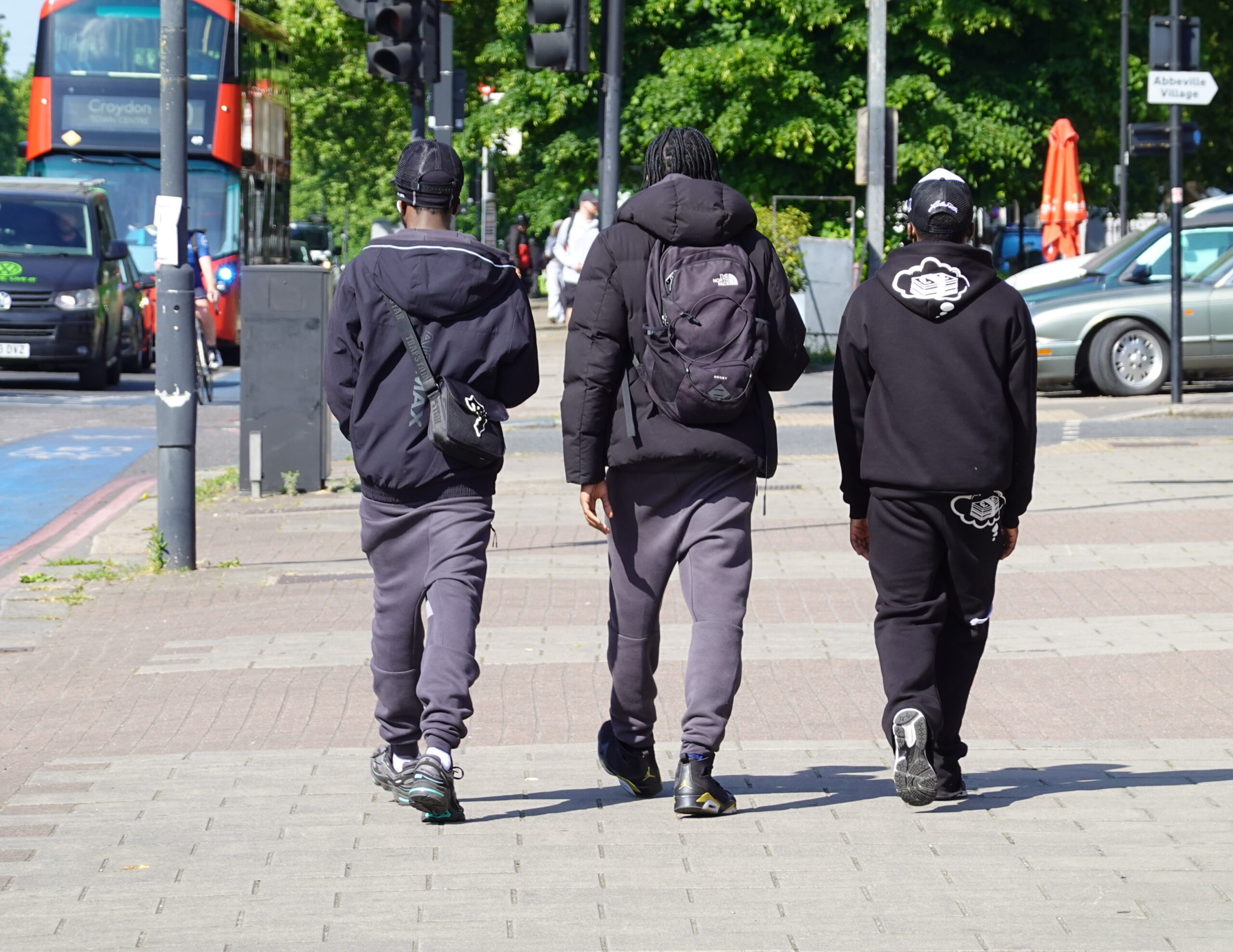
Set the wayback machine to 1990.
Saggy pants, originating in the US prison system, became a statement of something(?) for non-prisoners, and were popular in the 1990s. So, these guys are emulating their grandparents. Good for them!
Also, it is known that homosexual men will display their backside to indicate availability. Just sayin’.
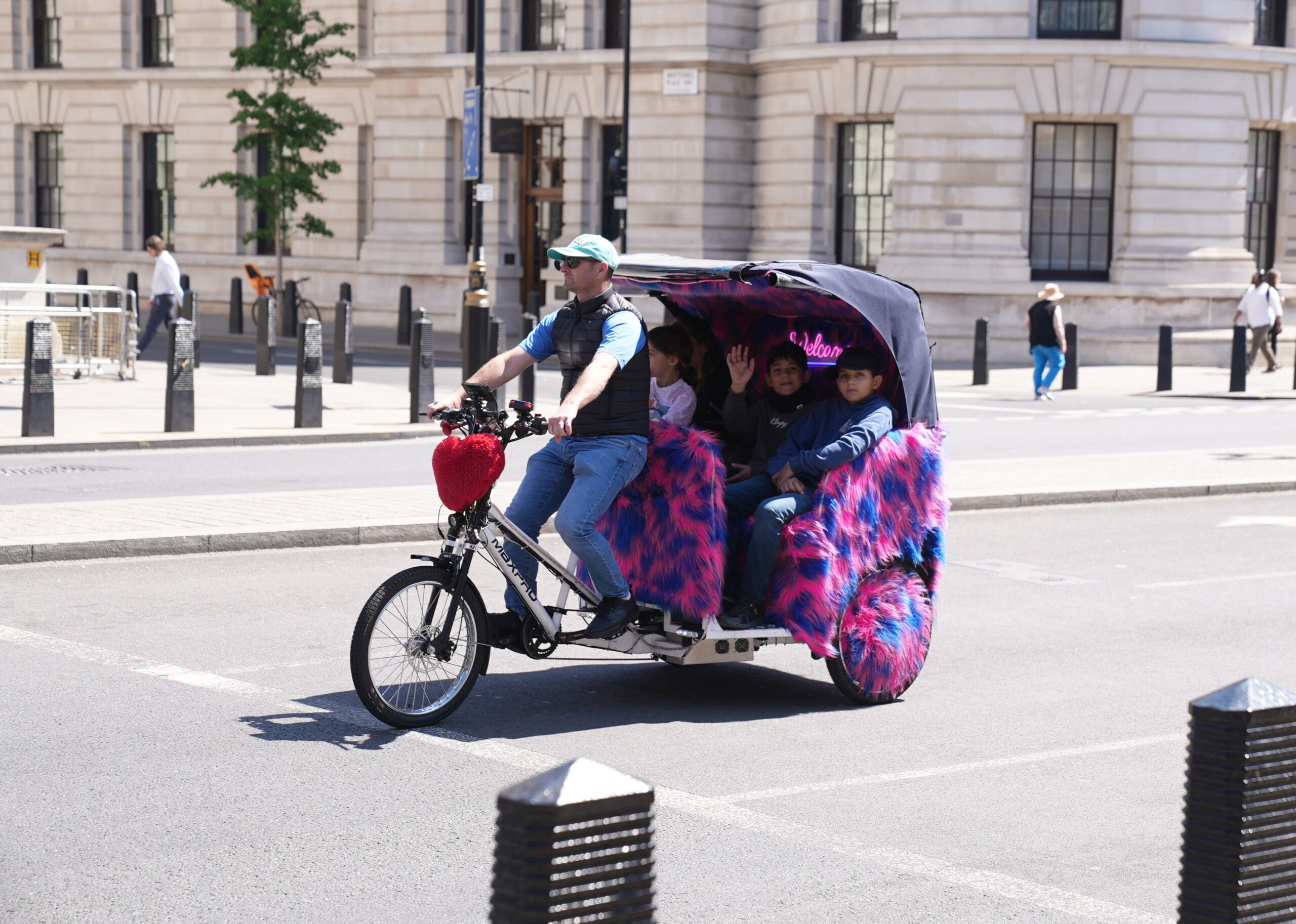
London furries.
Not all people in London are silly. Some people transport tourists in three-wheeled carts with pink and blue fur, and a large heart on. Ha ha. “Heart on”.
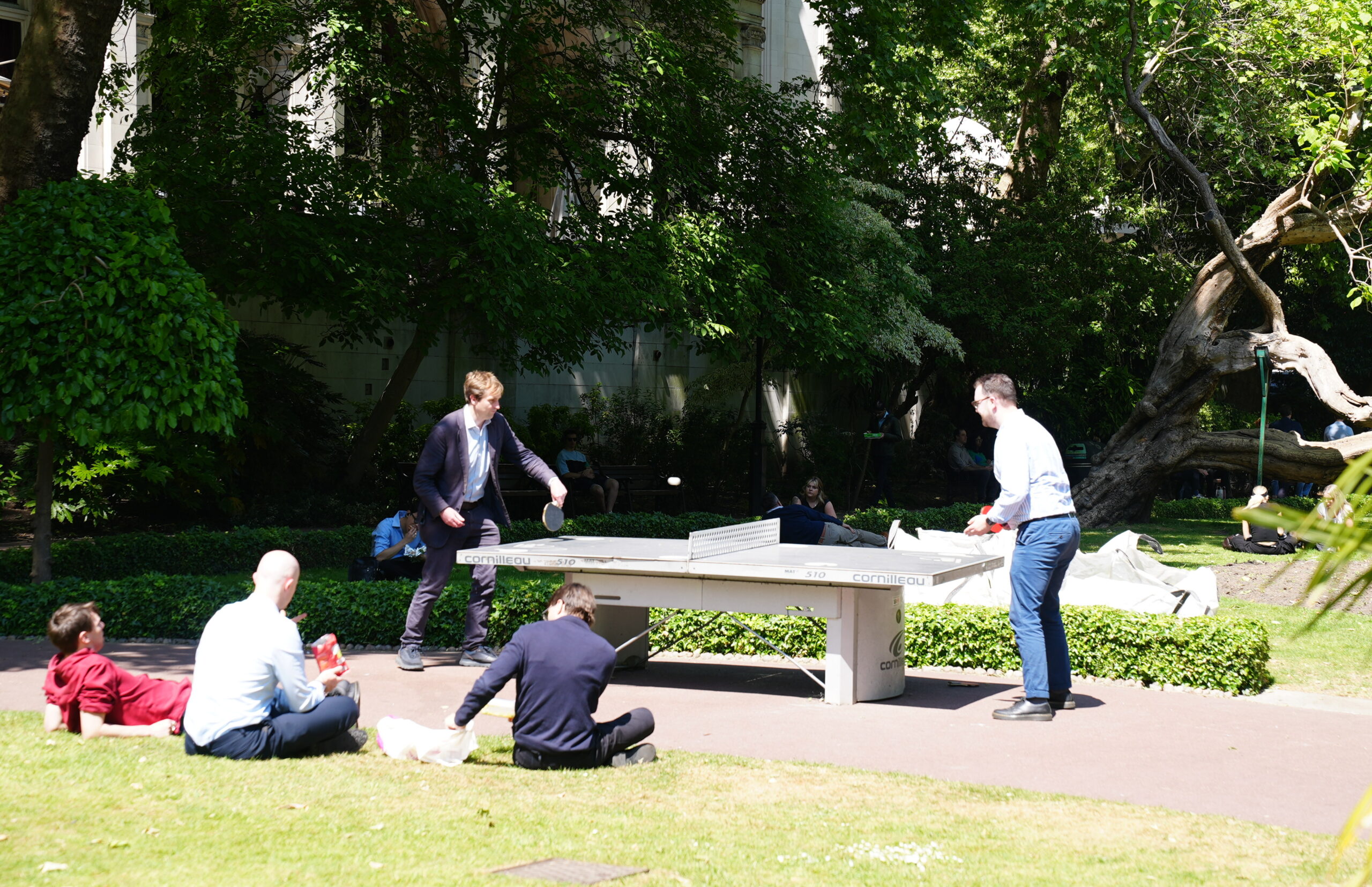
Let’s do sports!
A rousing game of table tennis, with an appreciative audience, is the perfect way to spend a sunny day in London.
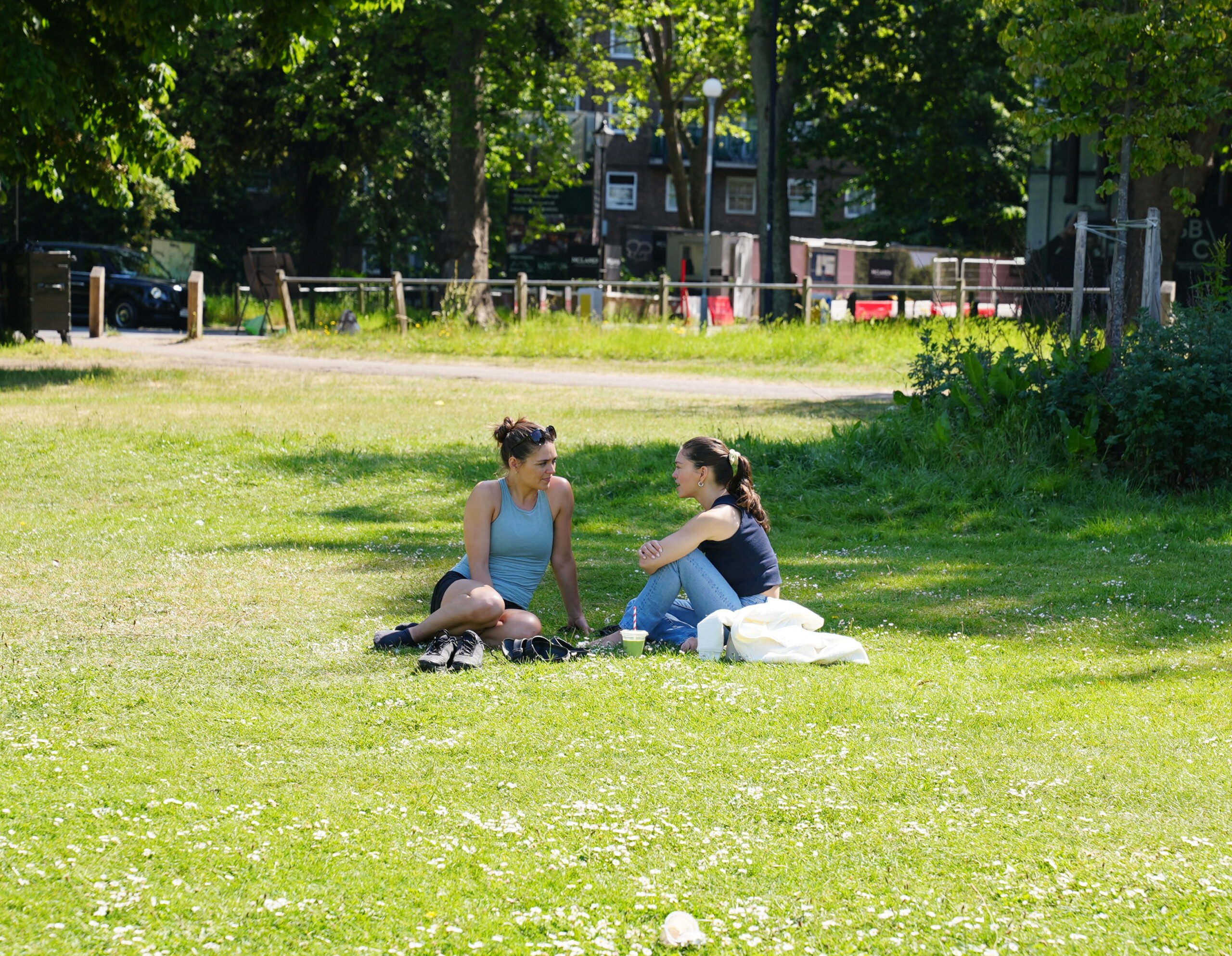
Young love.
Two lesbians reveal their innermost emotions to each other at a private location in a London park. I think they are discussing pillow fights, and what sweaters to wear when they splash water on each other. So sweet!
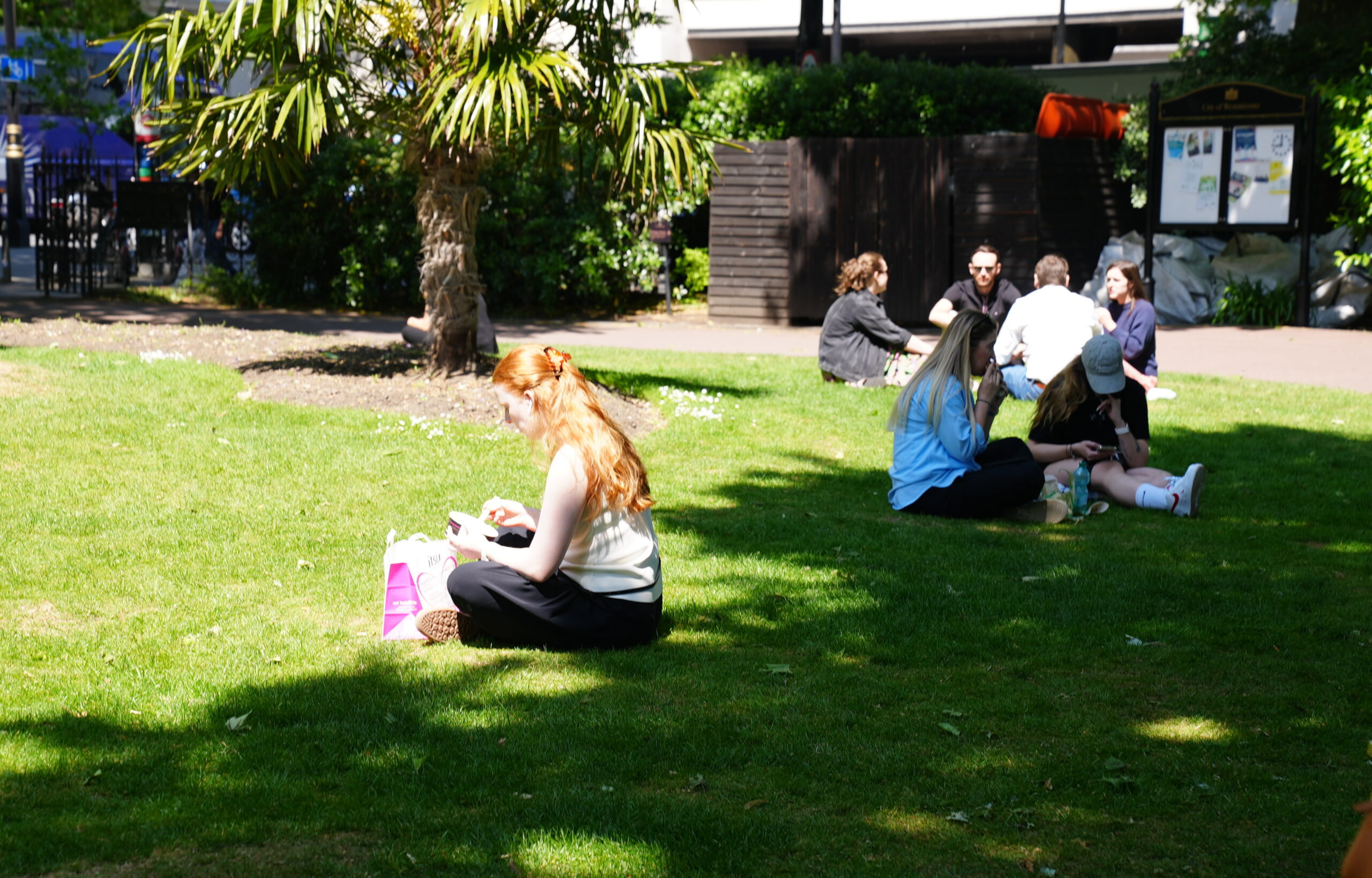
A day walker.
Since red hair is associate with northern Europe, you would think redhead would be common in London. You’d be wrong.
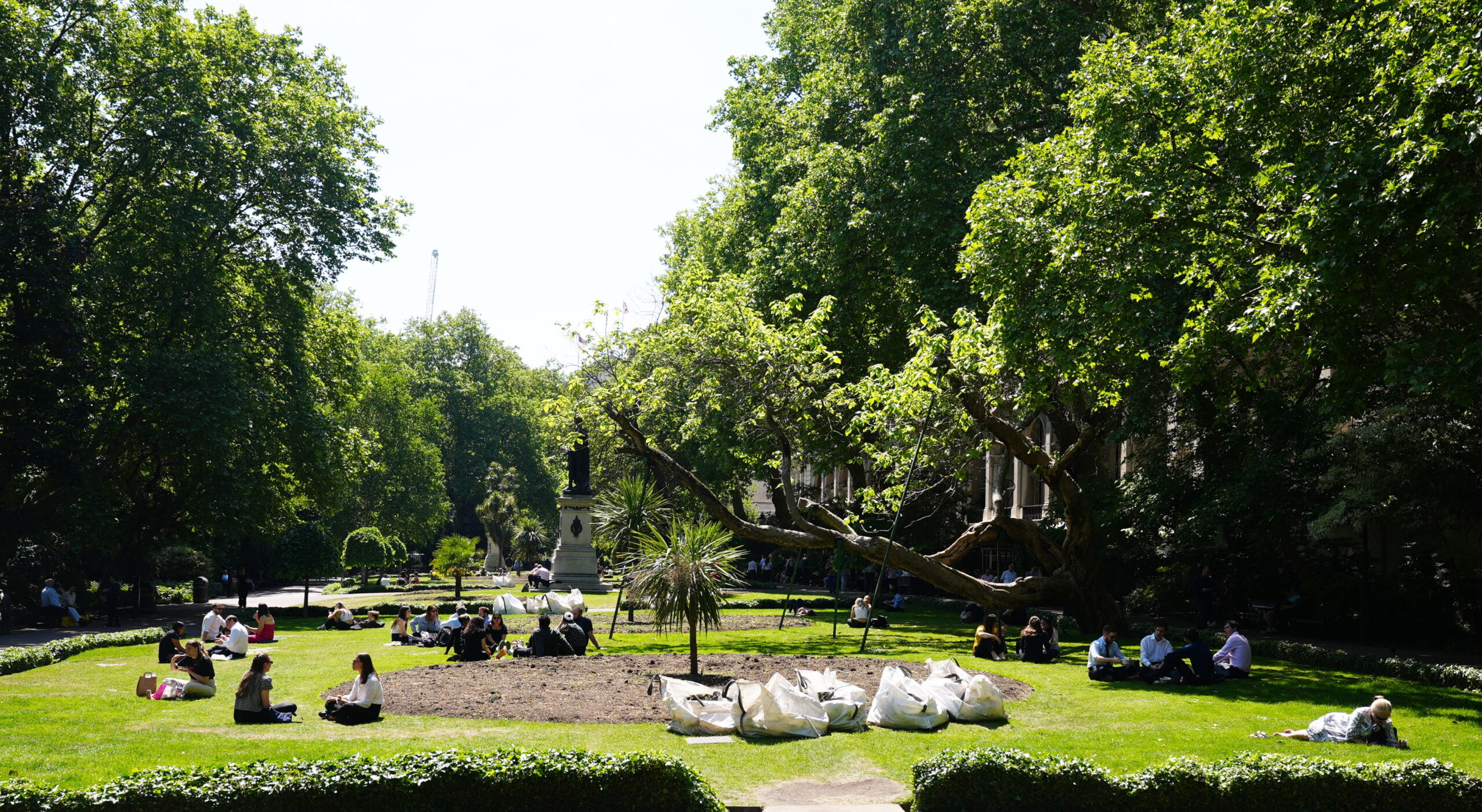
A pastoral scene in London.
There appears to be a distinct lack of chairs in London. But, I suppose, sitting on grass near bags of dirt isn’t the worst way to spend a sunny day in London.
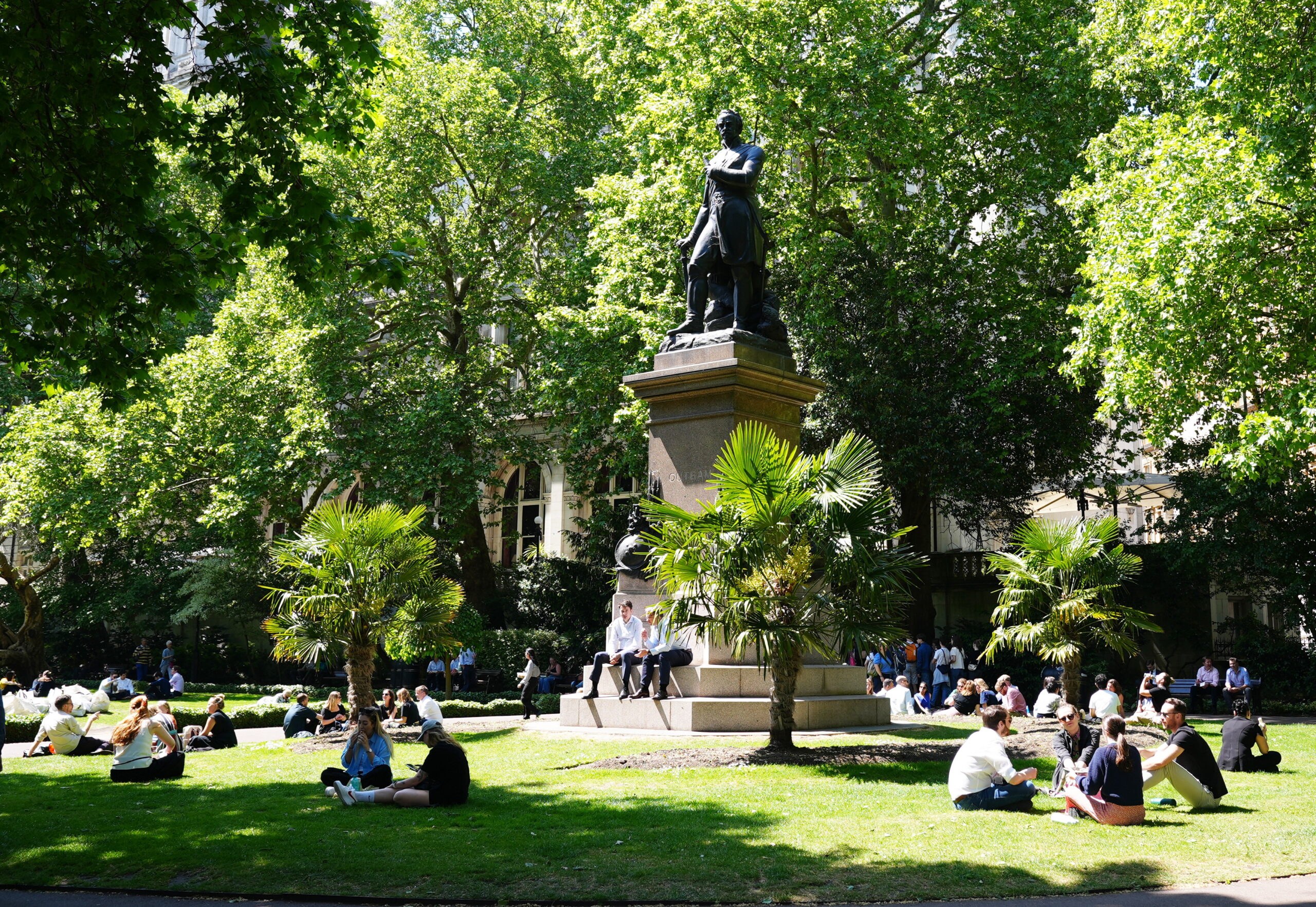
No chairs here, either.
The good folks who tend this park thought to erect a statue on a base that could accommodate blokes who don’t enjoy sitting on dirt. Good for them!
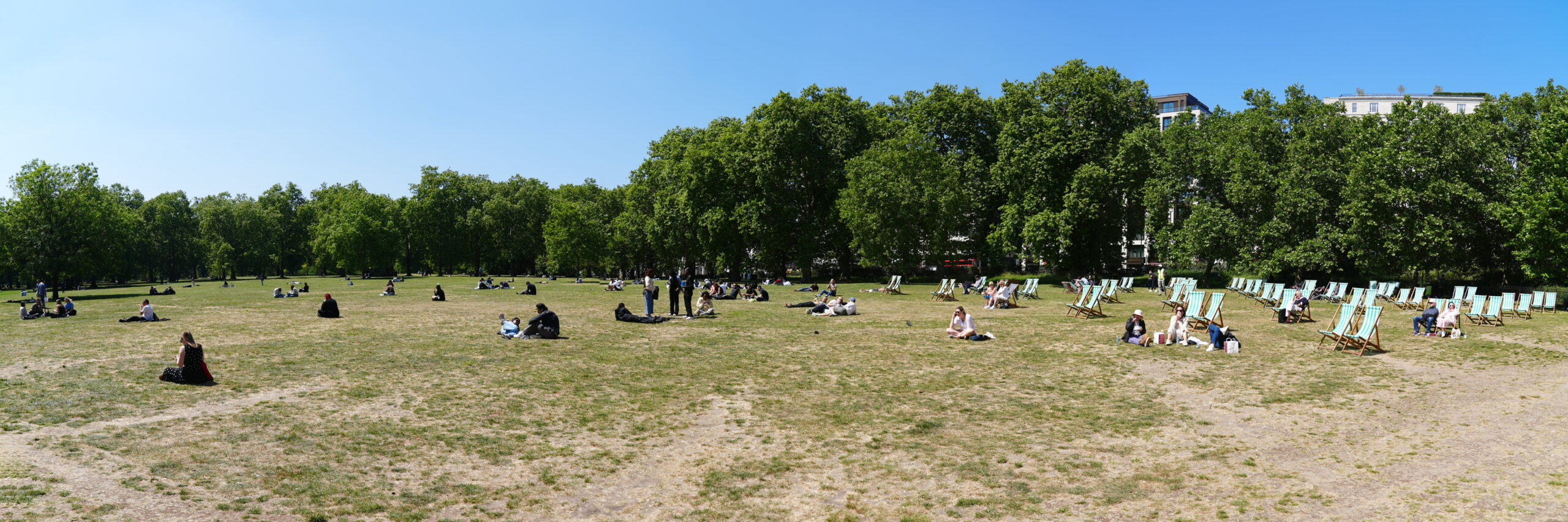
Ah, here are the chairs!
Yet, even when chairs are available, set in orderly rows and columns, Londoners prefer to sit on the hard dirt. I suppose it’s a form of civil disobedience. Good for them!
The Dark Side of London Life
The number of knife or sharp instrument offenses recorded by the police in London rose to approximately 16,344 in 2024/25, compared with 15,016 in the previous year. (Statista.com) I suppose this is because firearms are highly restricted in the United Kingdom and, when you have to kill someone without a firearm, you have to be creative.
At any rate, not everyone thinks this is a good idea.
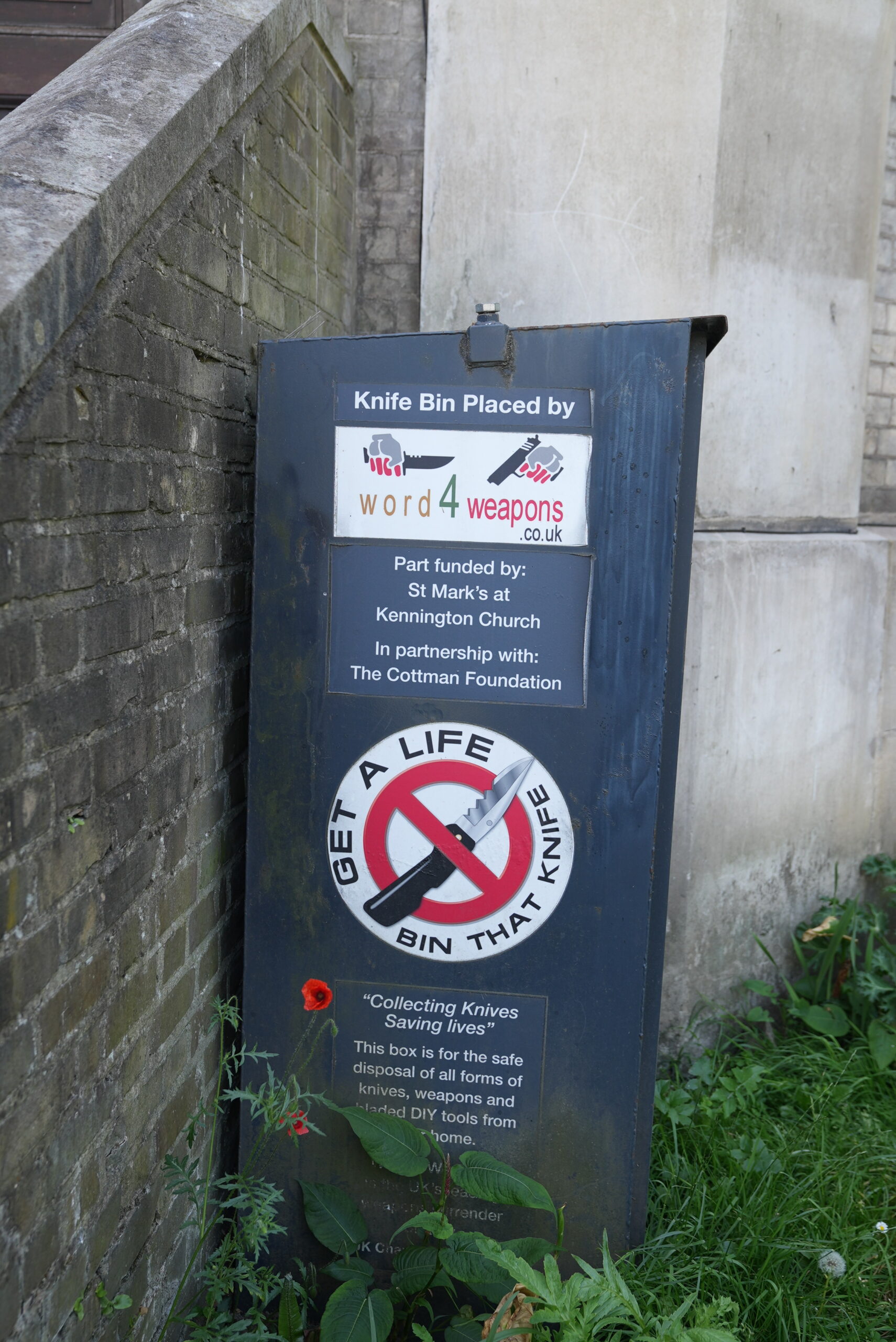
In England, “bin” is a verb.
Word 4 Weapons (pronounced “word for weapons”) collect knives and any other weapons, including Do It Yourself tools. We don’t know what they do with the weapons once the weapons are binned in the bin.
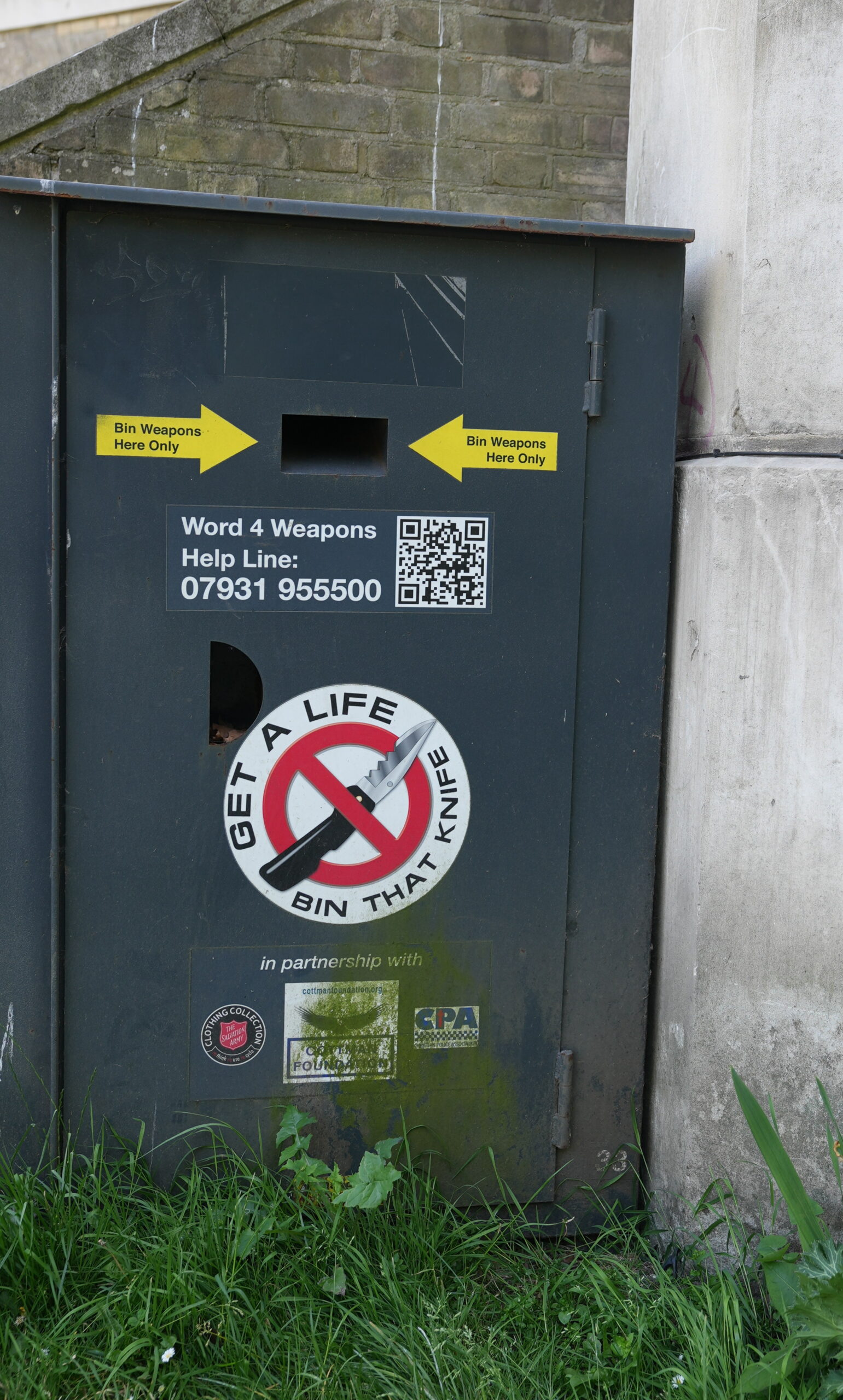
Read the sign, man!
“Bin Weapons Here Only”. This information would not be here unless folks did not understand where to put their weapons. Did they try to open the bin, not understanding that “bin” is a verb, or perhaps just lay the weapon in front of the bin, not understanding what “bin your knife” means?
We will never know.
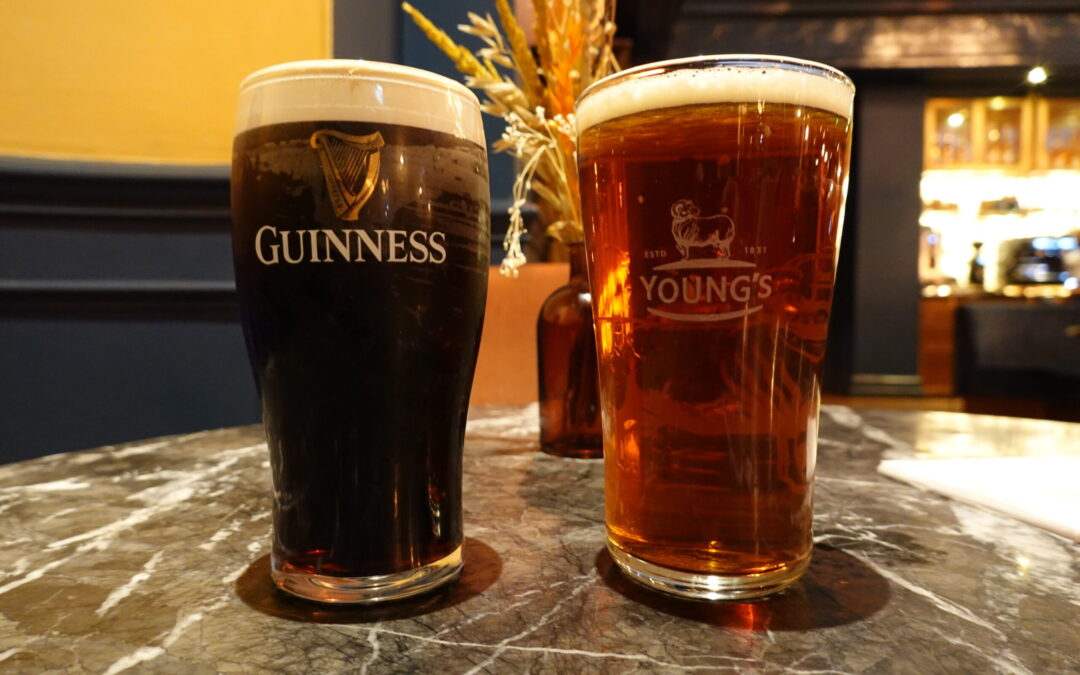
Alas, this brings us to the close of our first article on wonderful London. Be sure to come back next time when we look at “Life in London” and talk about that beer that we teased you with at the beginning of this article. Until then, ta-ta.