
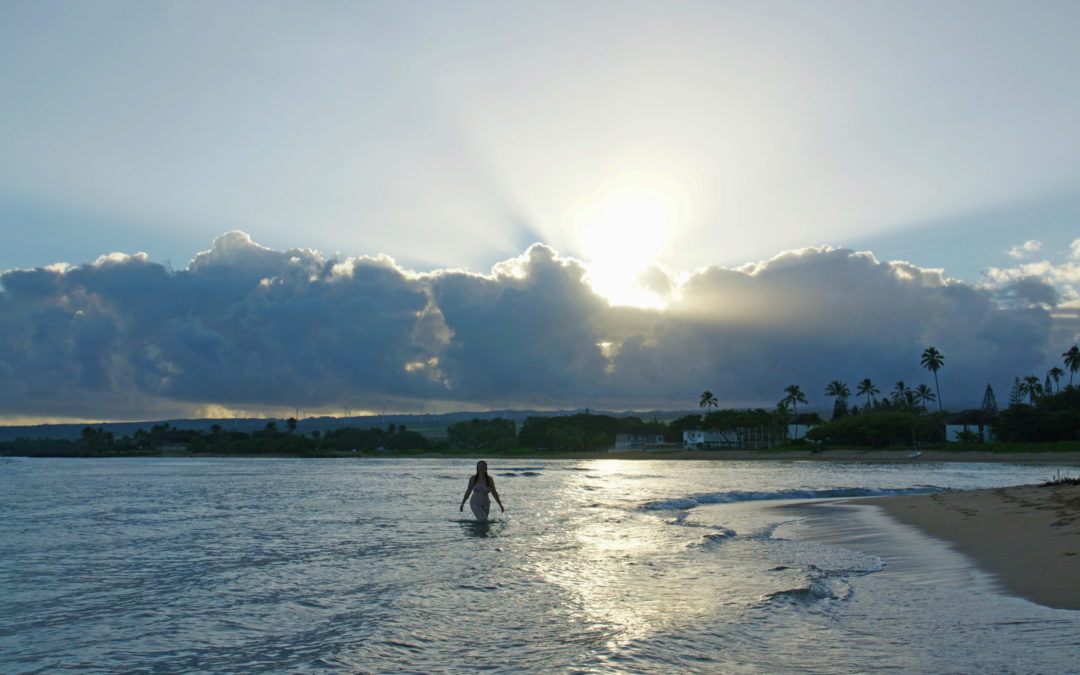
In 1898 a businessman named Benjamin Dillingham opened a hotel in the North Shore area of O’ahu, Hawai’i, and named it Haleʻiwa. In the Hawaiian language, hale means “house”, and the ʻiwa is a frigatebird. Today, Haleʻiwa is a North Shore community and census-designated place, and is located on Waialua Bay, the mouth of Anahulu River. And that’s where we are!
Haleʻiwa
We are staying in a house located between Kaiaki Bay Beach Park and Hale’iwa Ali’i Beach Park.
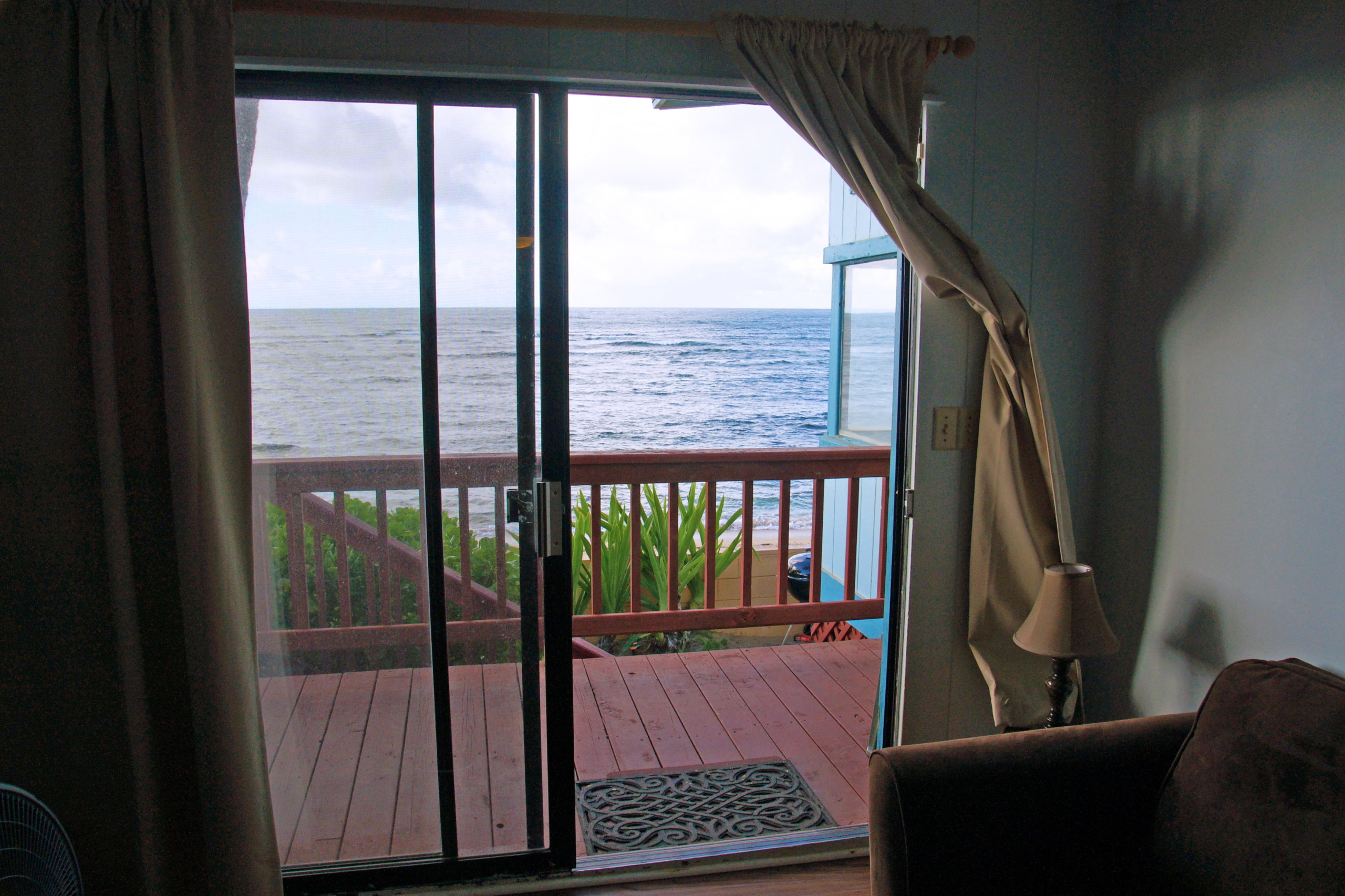
The view from our living room.
When renting a house on VRBO or Airbnb, we are never sure if the description on the website represents the actual experience. Well, we wanted a house on the beach, and this is what we got!
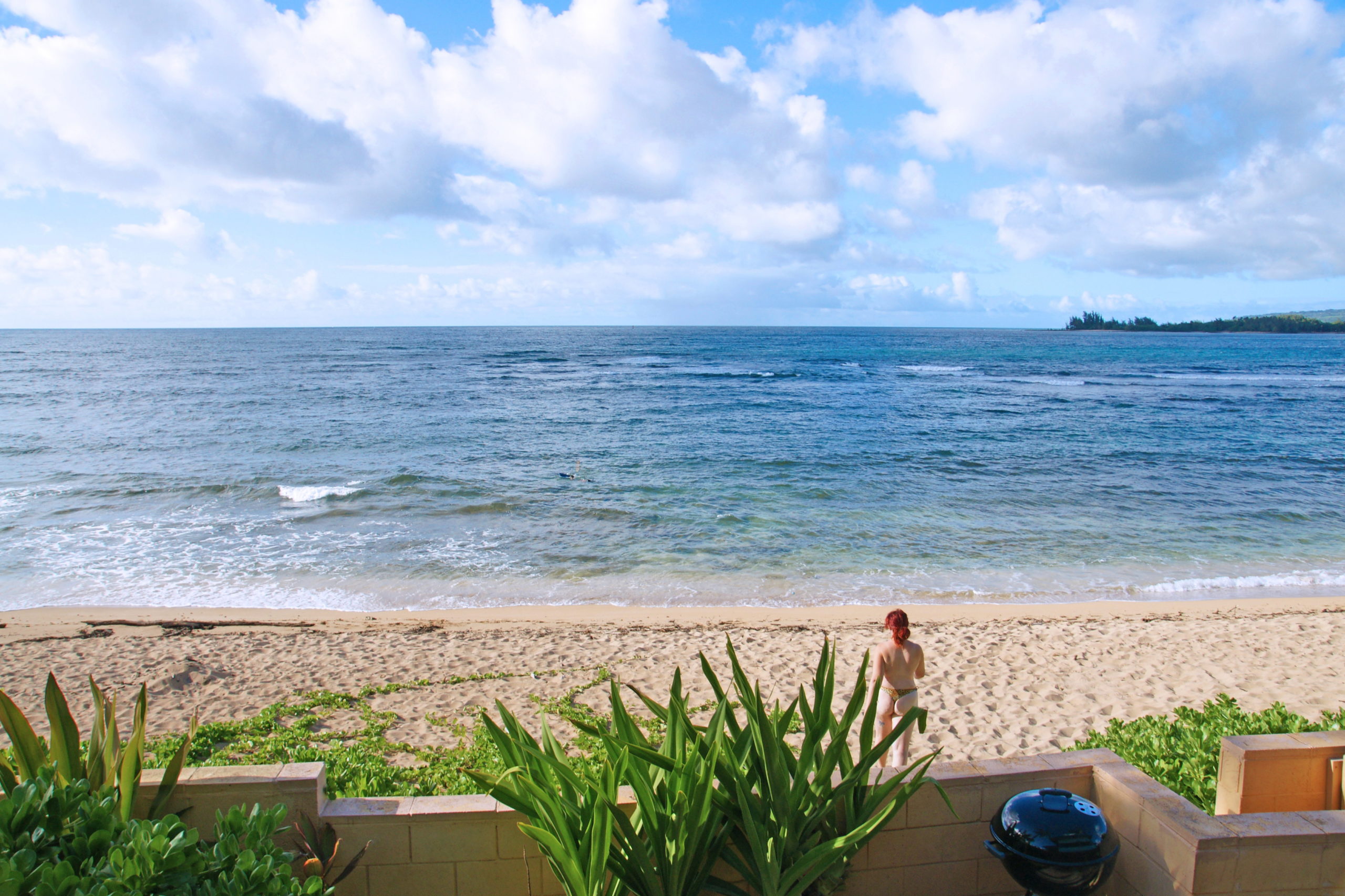
Time for a swim!
After a long flight from San Diego and a drive across the island from Honolulu, the first thing we do is head out for a swim.
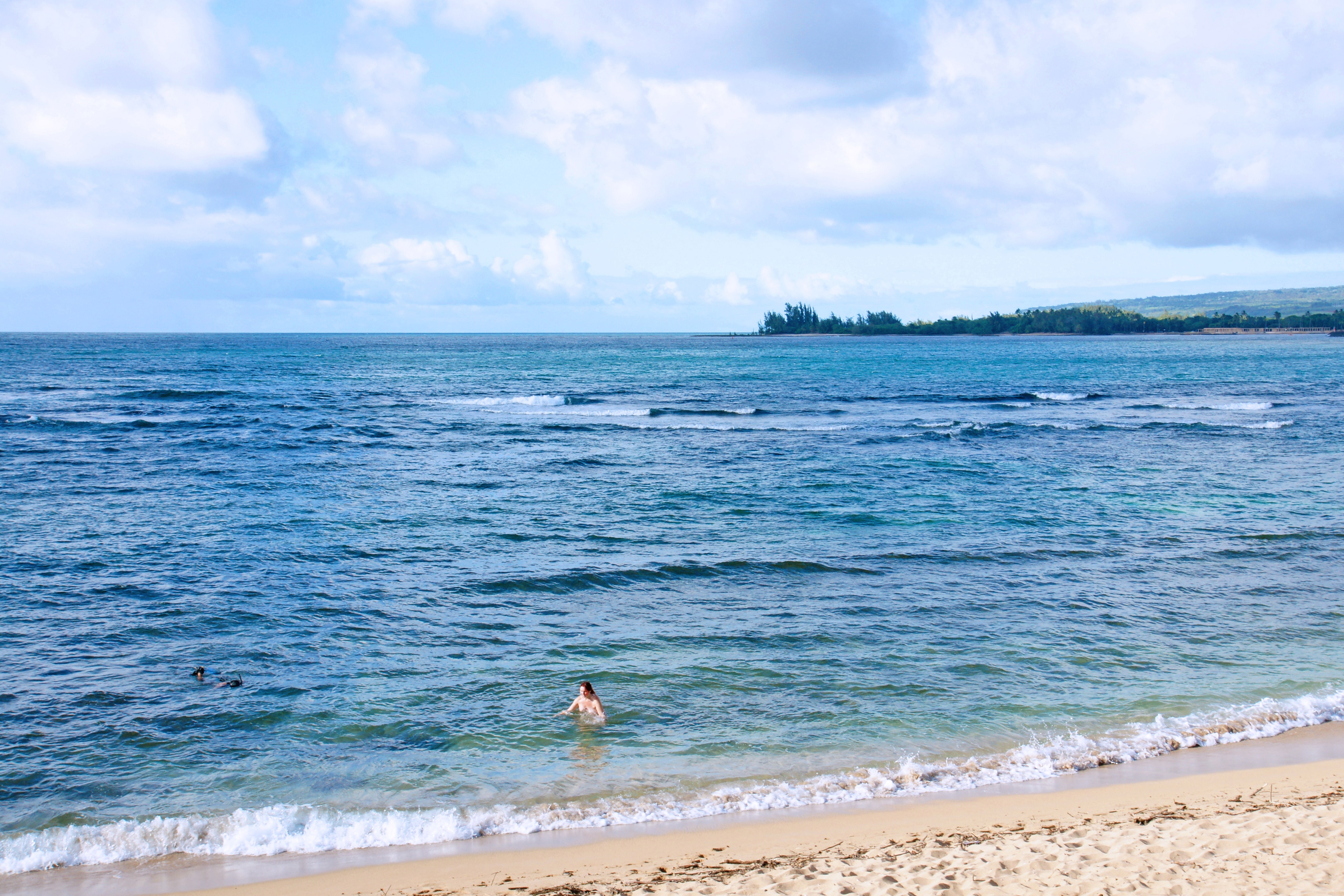
Enjoying the North Shore.
If you look closely, you can see a pair of swimmers snorkeling to our right. Along with fish, there is an abundance of turtles in these waters, which we will explore in just a bit.
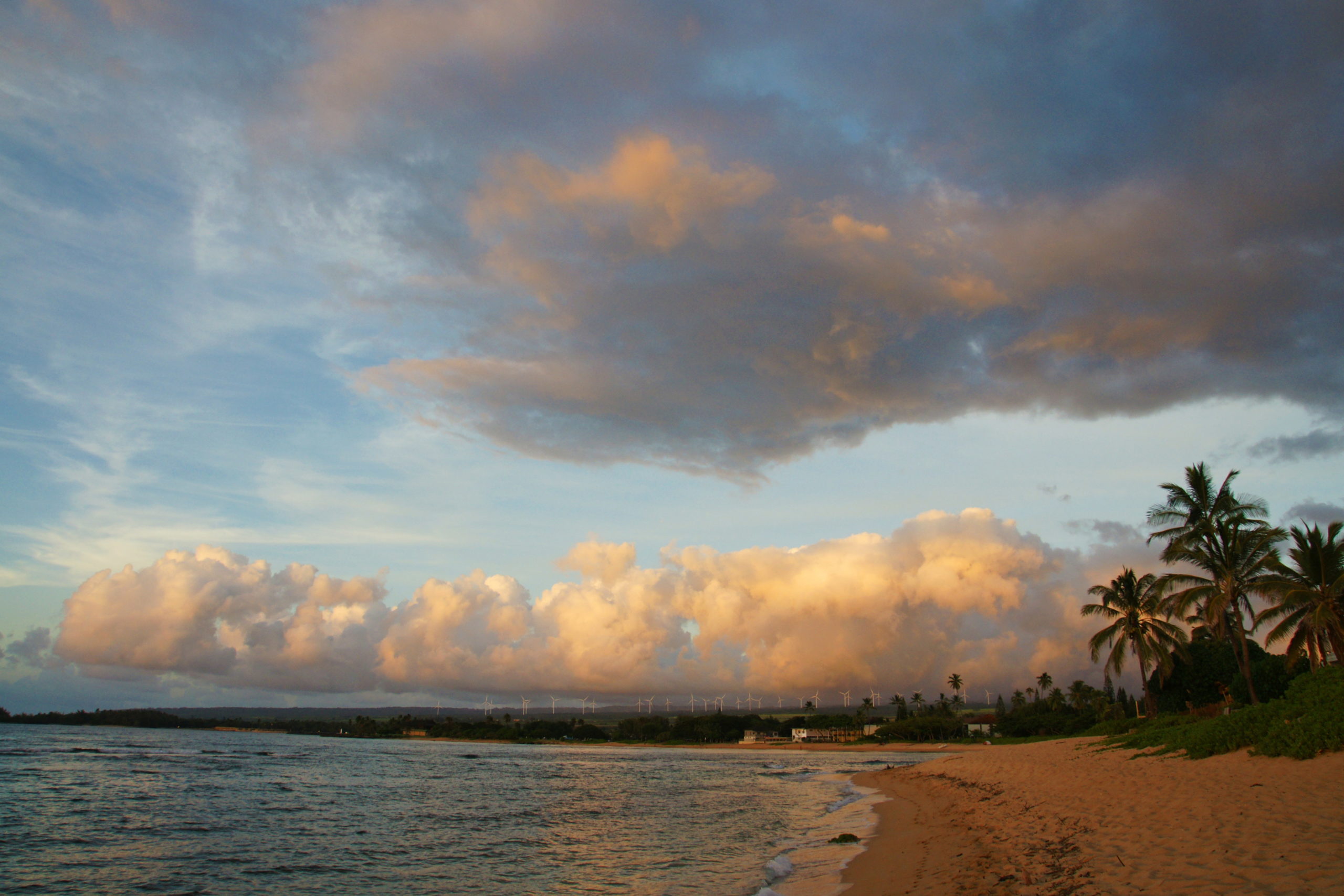
Sunrise over the island.
From our porch, we can see the sun rise each morning. Yes, the Hawaiian Islands are mountains, but our view to the east shows a flat, forested area populated mostly by windmills.
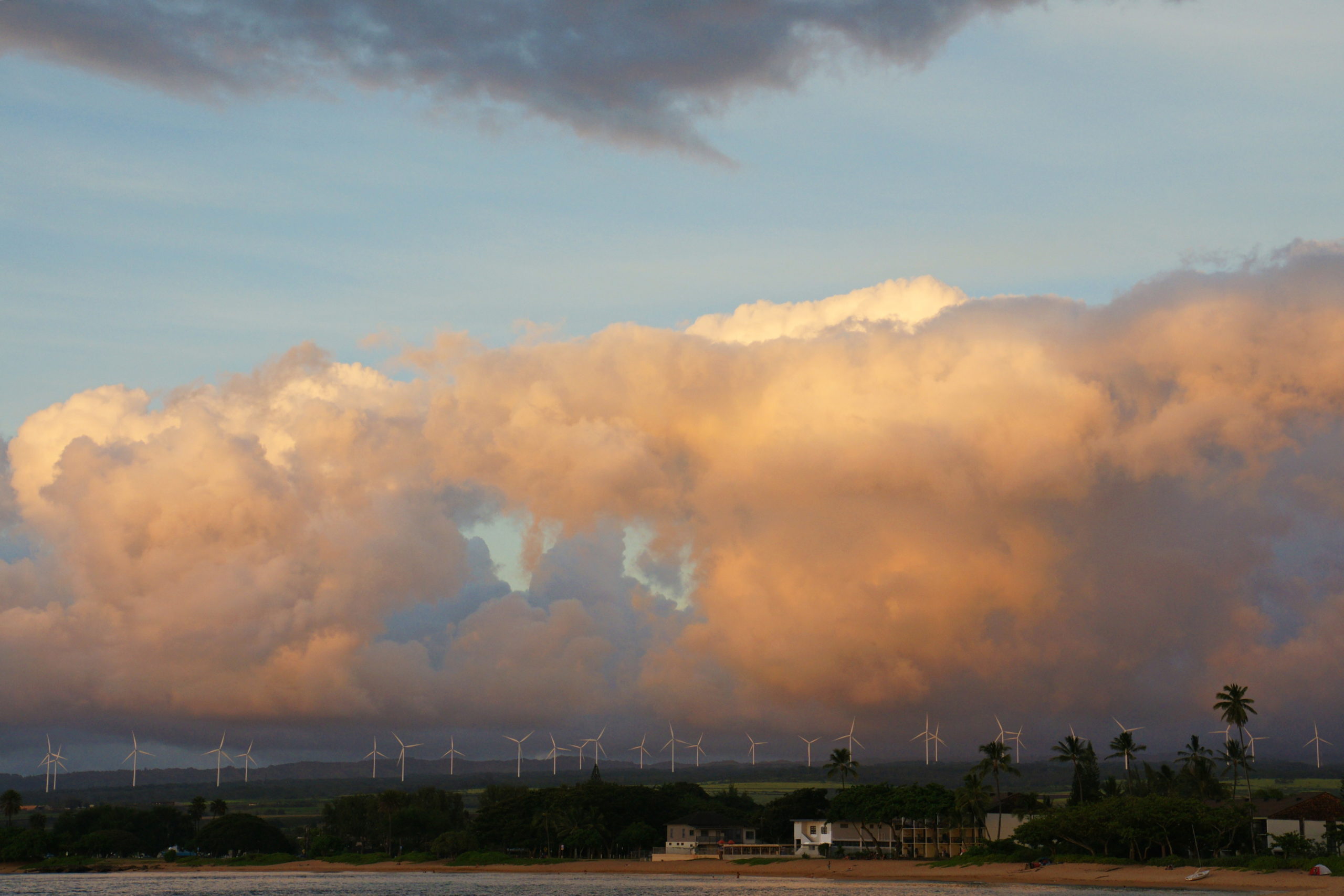
Even though this is a farm, they don’t actually harvest the windmills.
Kawailoa Wind Farm is a wind farm near the Waimea Valley, on the North Shore of O’ahu. Commissioned in 2011, it is composed of 28 wind turbines. At maximum capacity, the farm is able to produce 69 MW. Kawailoa Wind Farm has been operational since 2012 and is a part of Hawaii’s renewable energy efforts. Despite its clean energy, there are unintended ecosystem impacts on some native species of birds and bats, and efforts to mitigate these threats are ongoing.
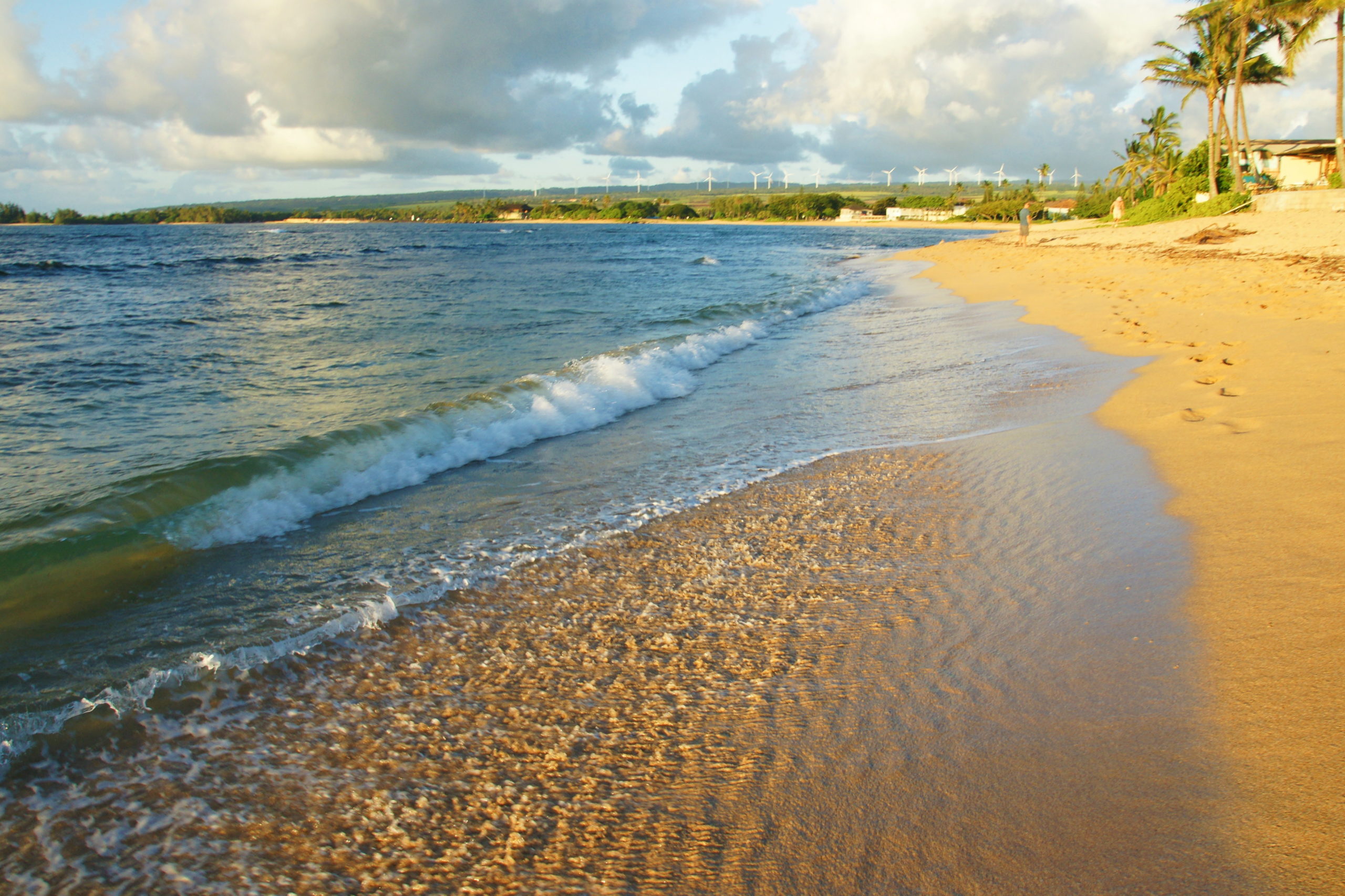
No, that guy is not urinating. At least, we don’t think he is…
During the long summer’s day, the gentle waves create a washboard effect on the sand as they wipe clean the beach of footprints.
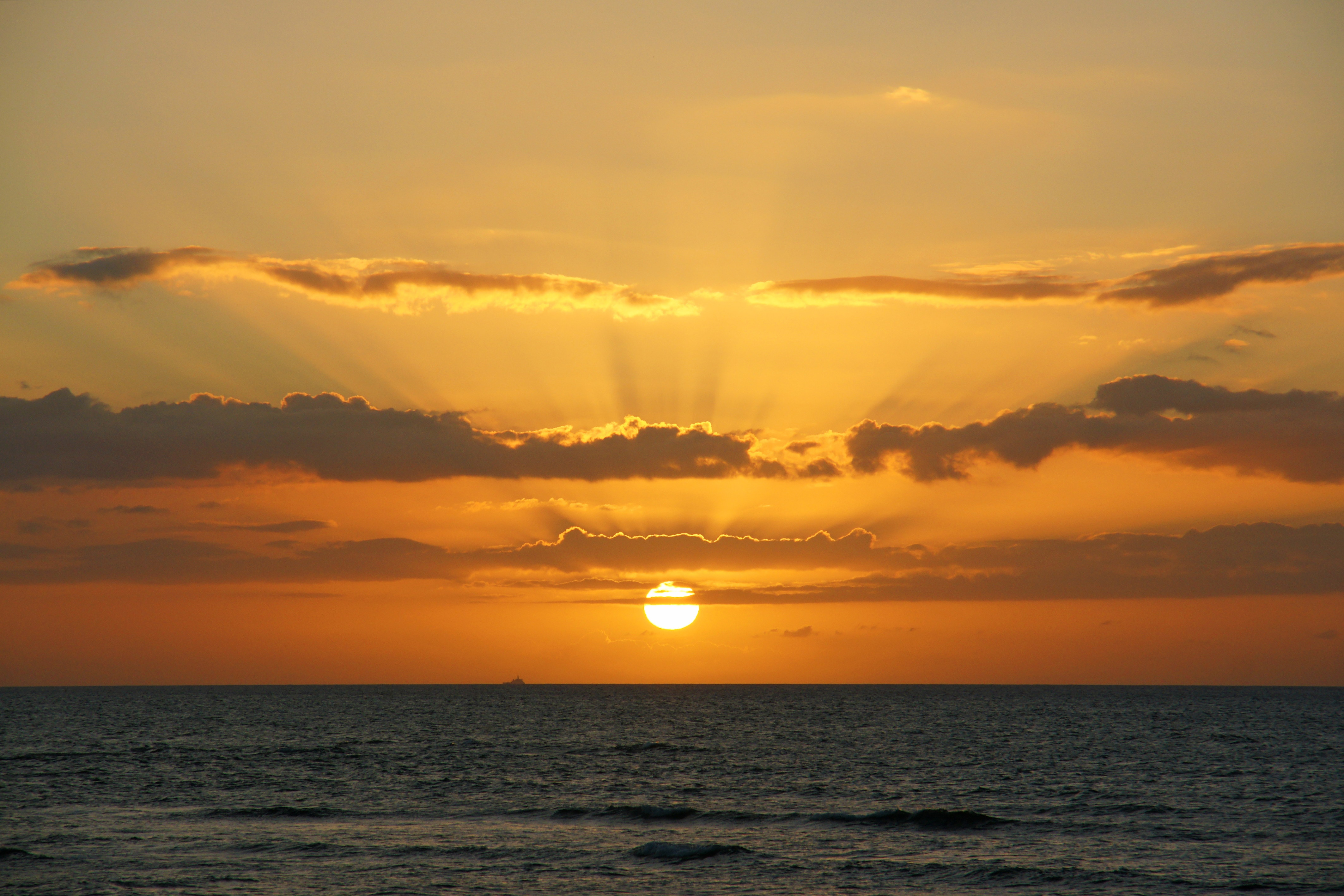
The view to the western Pacific ocean.
From our porch, we can also see the setting sun, which delights us each evening with a sunset-full of colors, reminding us that, as Superman well knows, our sun is yellow.
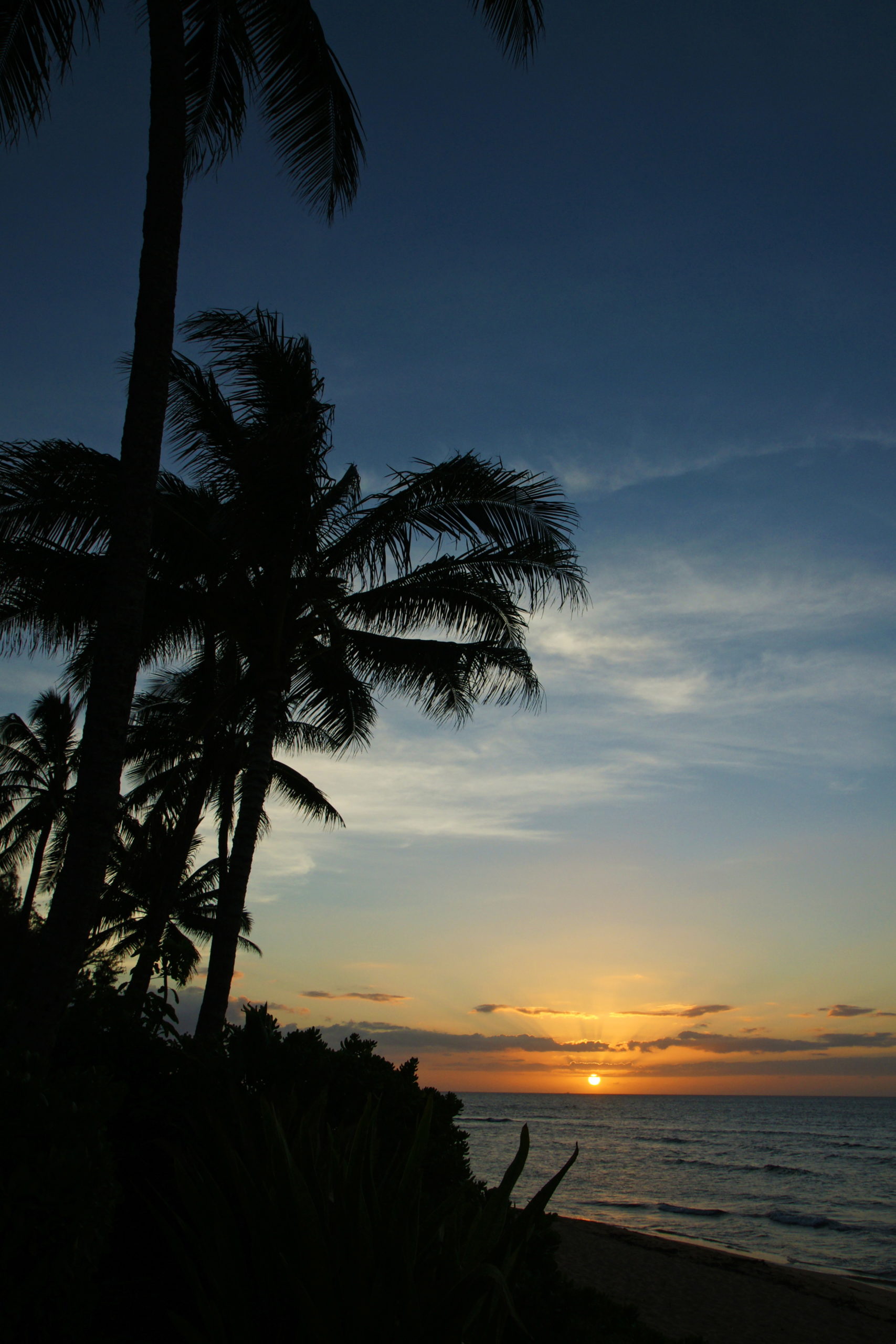
Those are not two legs; just two logs.
This is what you think of when you imagine being in Hawai’i, right? Palm trees, blue ocean, and beautiful sunsets. Well, that’s what I imagine. 😎
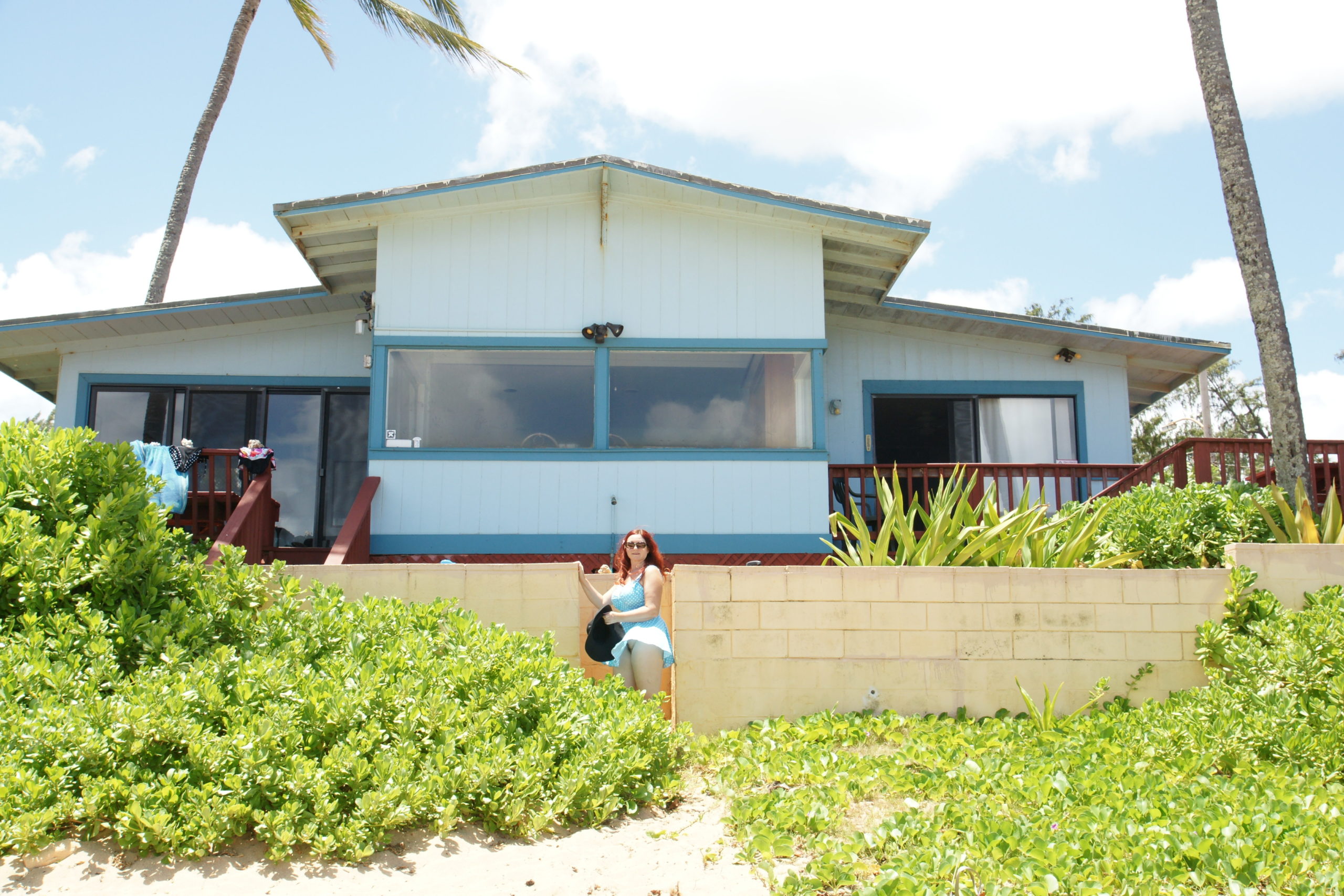
The view from the ocean.
This is the view of our place looking from the ocean, made more spectacular on a windy day. 🙂
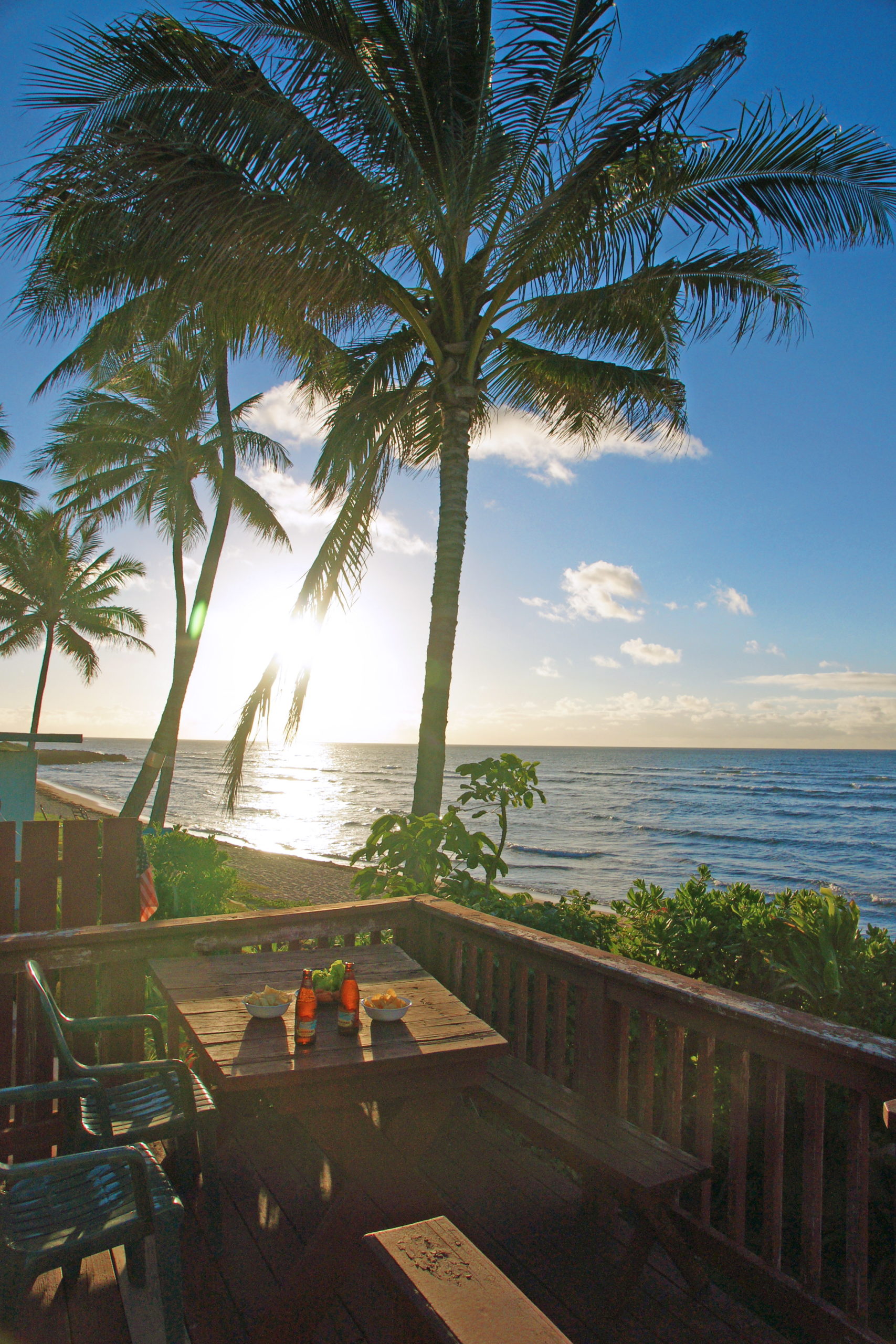
Correction.
Okay, let’s add beer. Palm trees, blue ocean, beautiful sunsets, and plenty of beer.
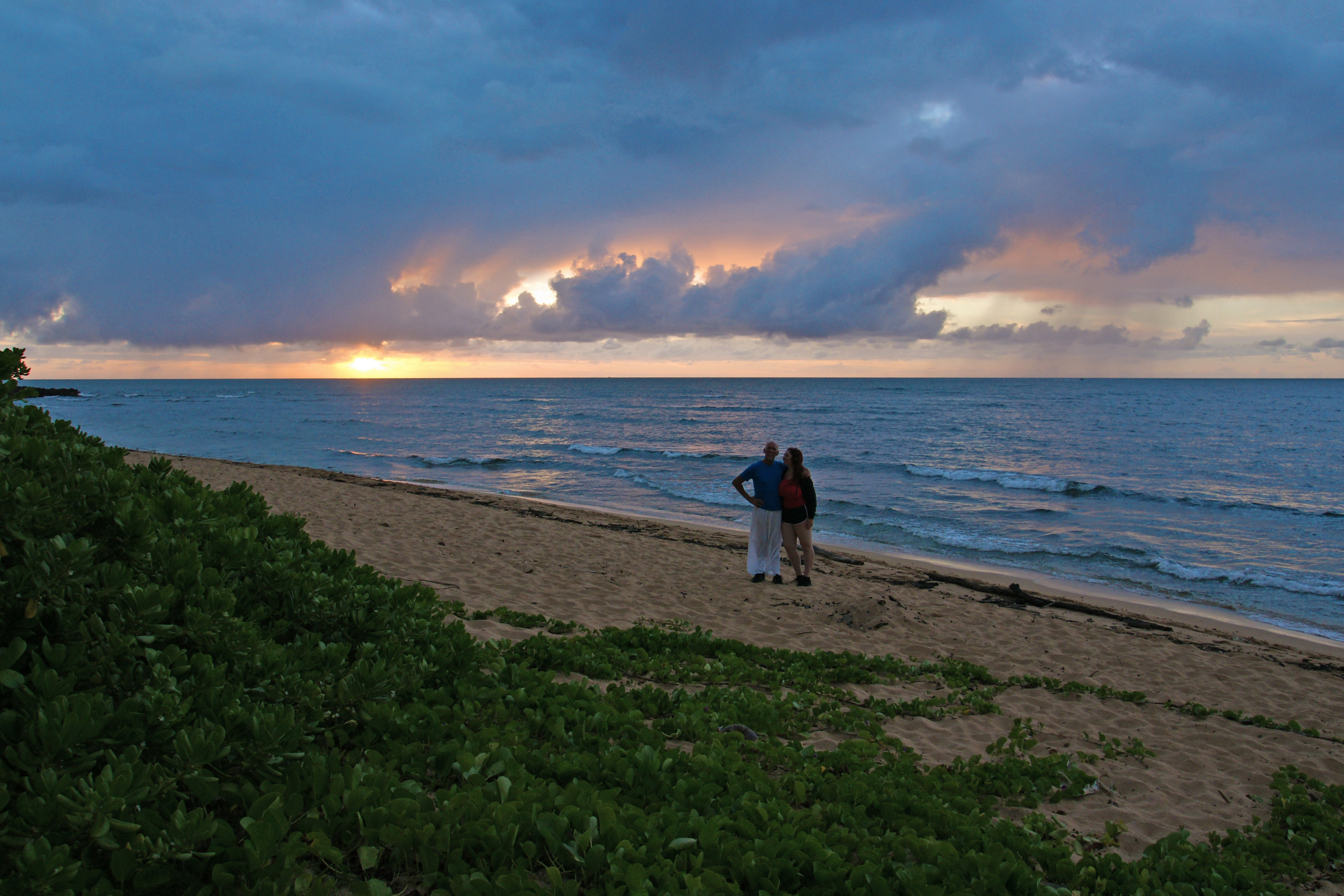
Okay, final correction.
Palm trees, blue ocean, beautiful sunsets, plenty of beer, and beautiful women. ( • )( • ) (‿|‿)
Morning Swim
Let’s take a refreshing morning swim, shall we?
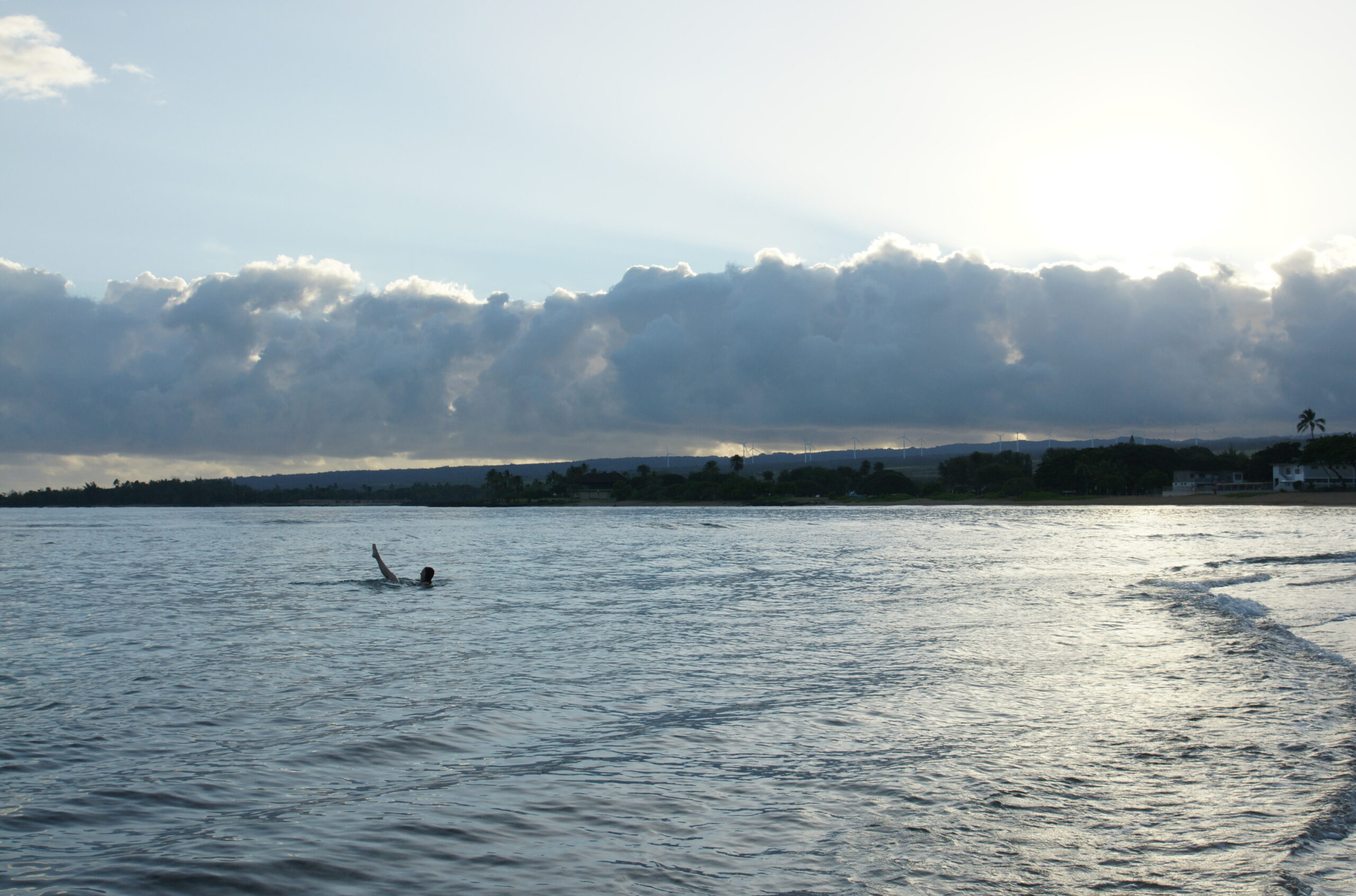
Does it look like I’m a professional swim model?
The temperature is warm, even before the sun rises. And I have the ocean all to myself.
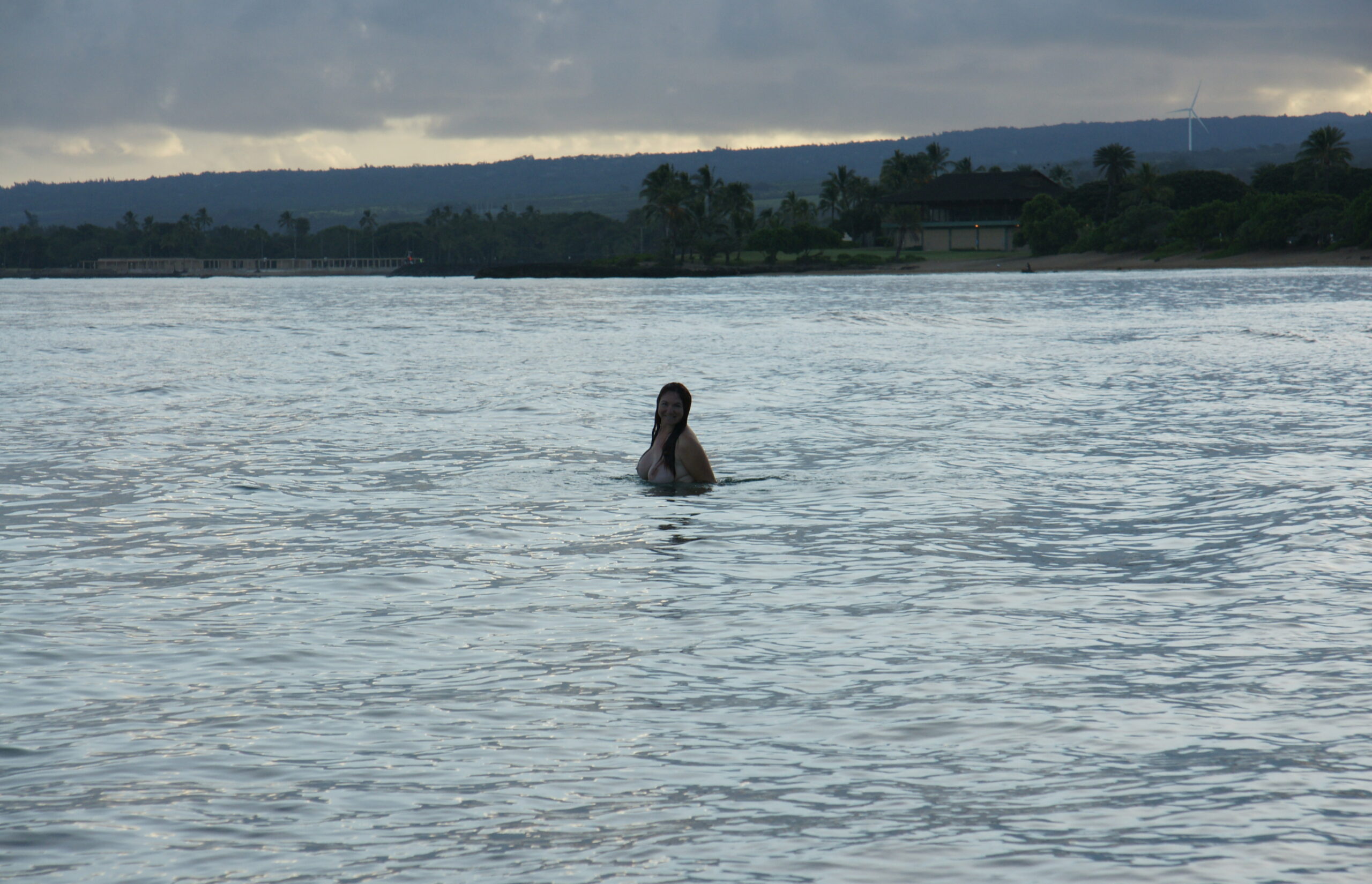
Well, maybe the water is a bit cool.
This is why we travel to the islands, right?
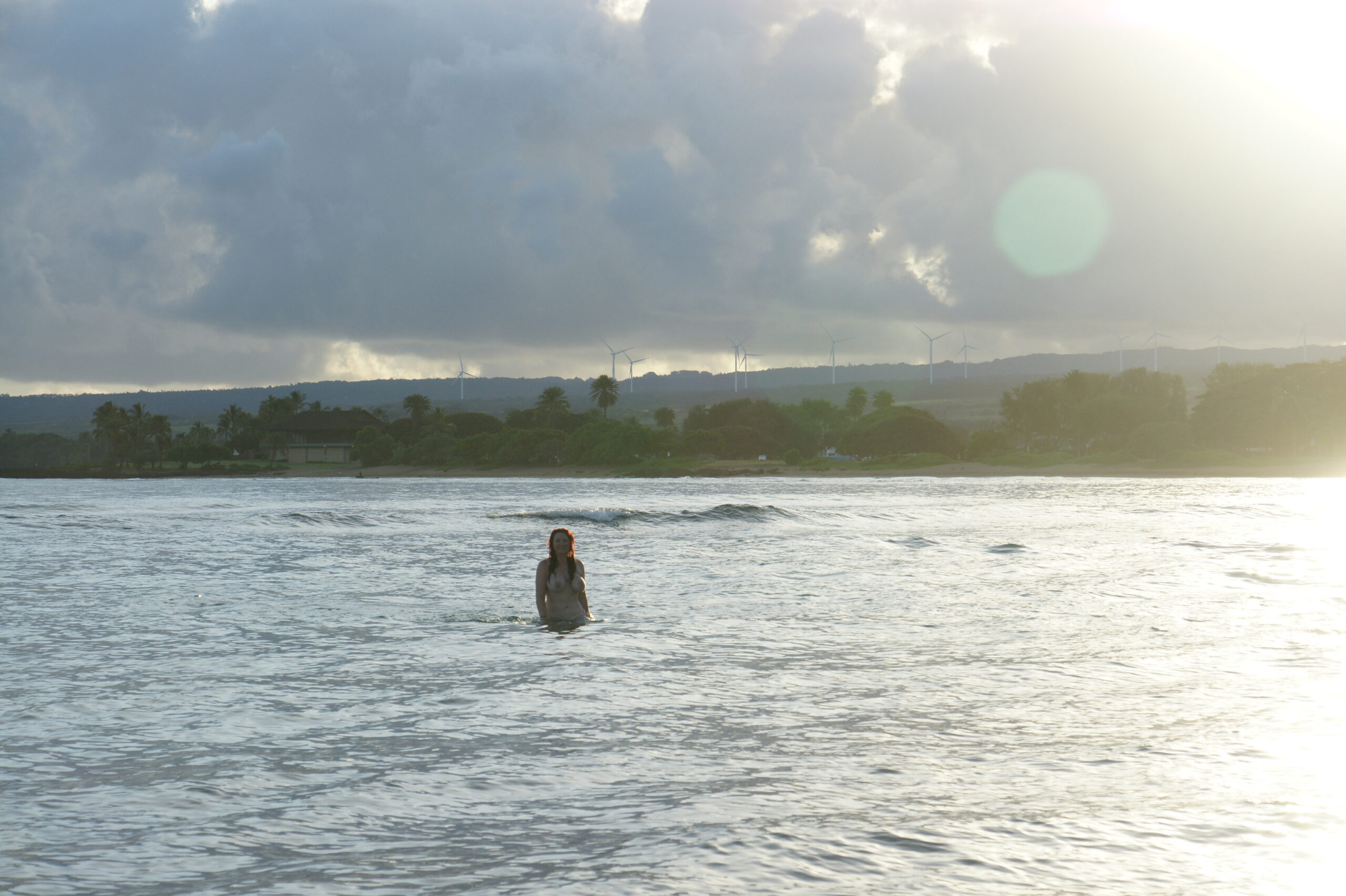
Yup, I have red hair.
The sun begins to rise, and it’s the perfect opportunity for backlit photographs.
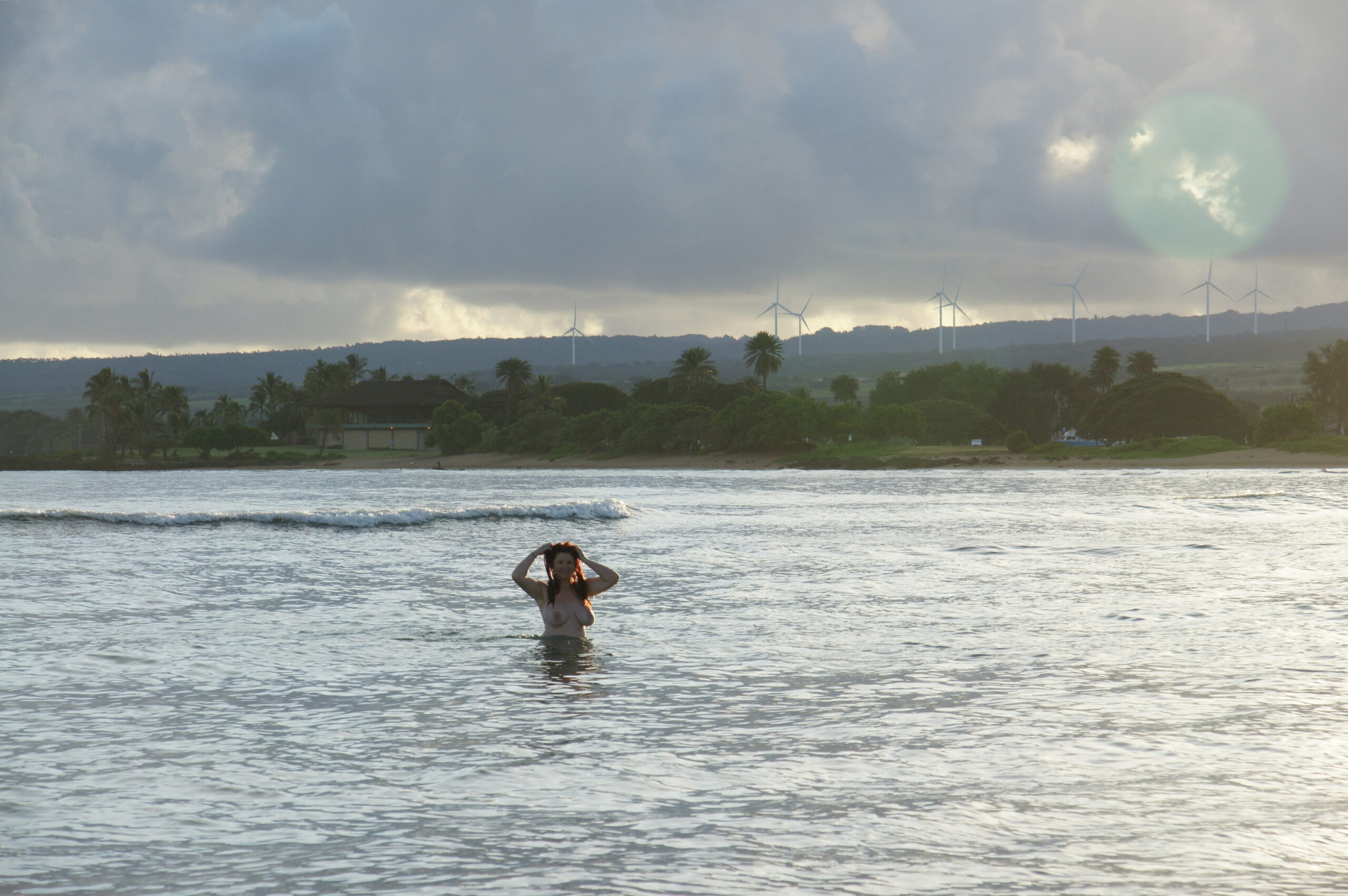
You can see my hair better now.
That blue circle in the upper right is just a lens artifact, not a UFO. Well, that’s what they want you to believe.
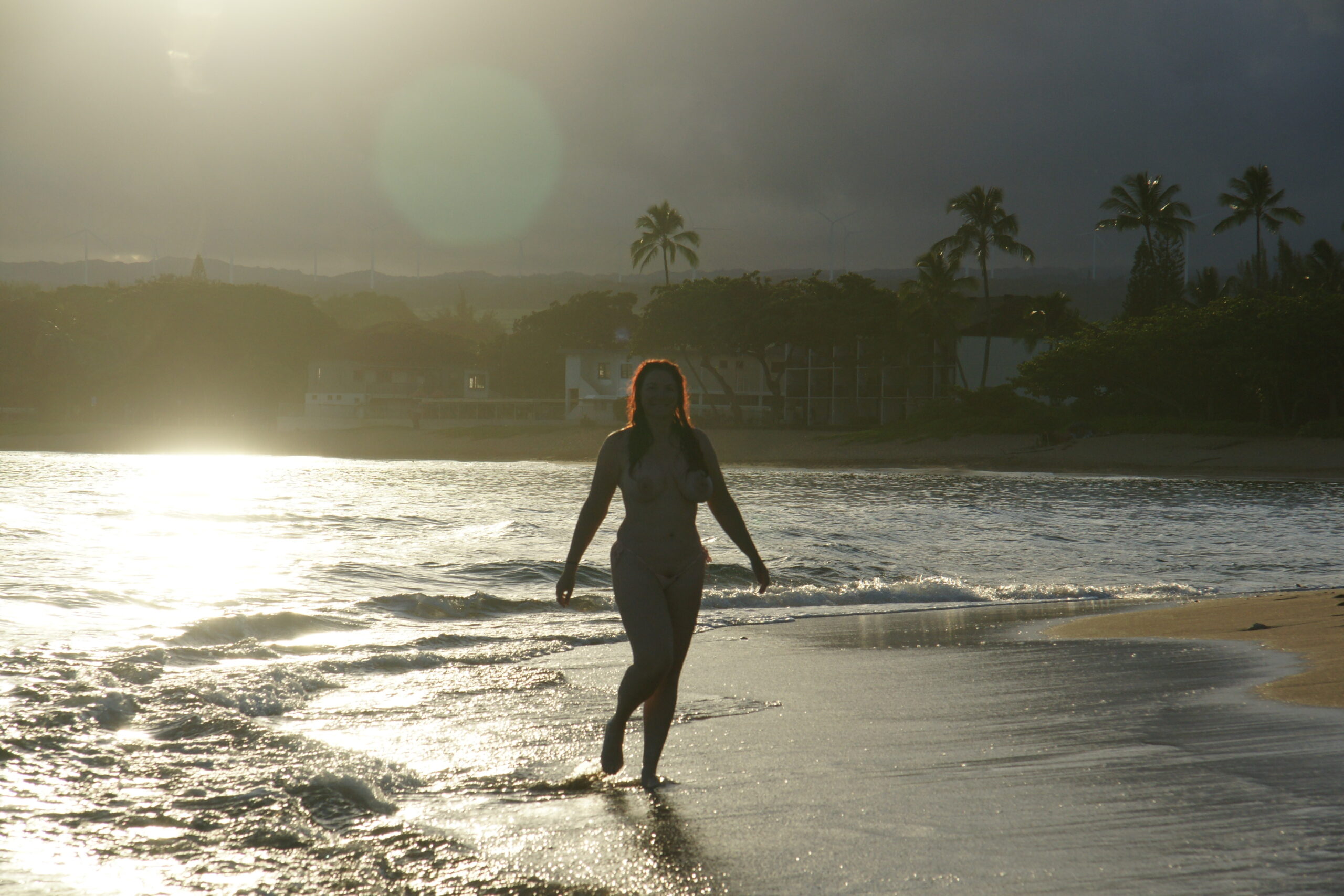
It’s like a halo, but red.
The background looks dark and scary, but that’s just because the sunlight on the water causes the camera to take a fast photograph.
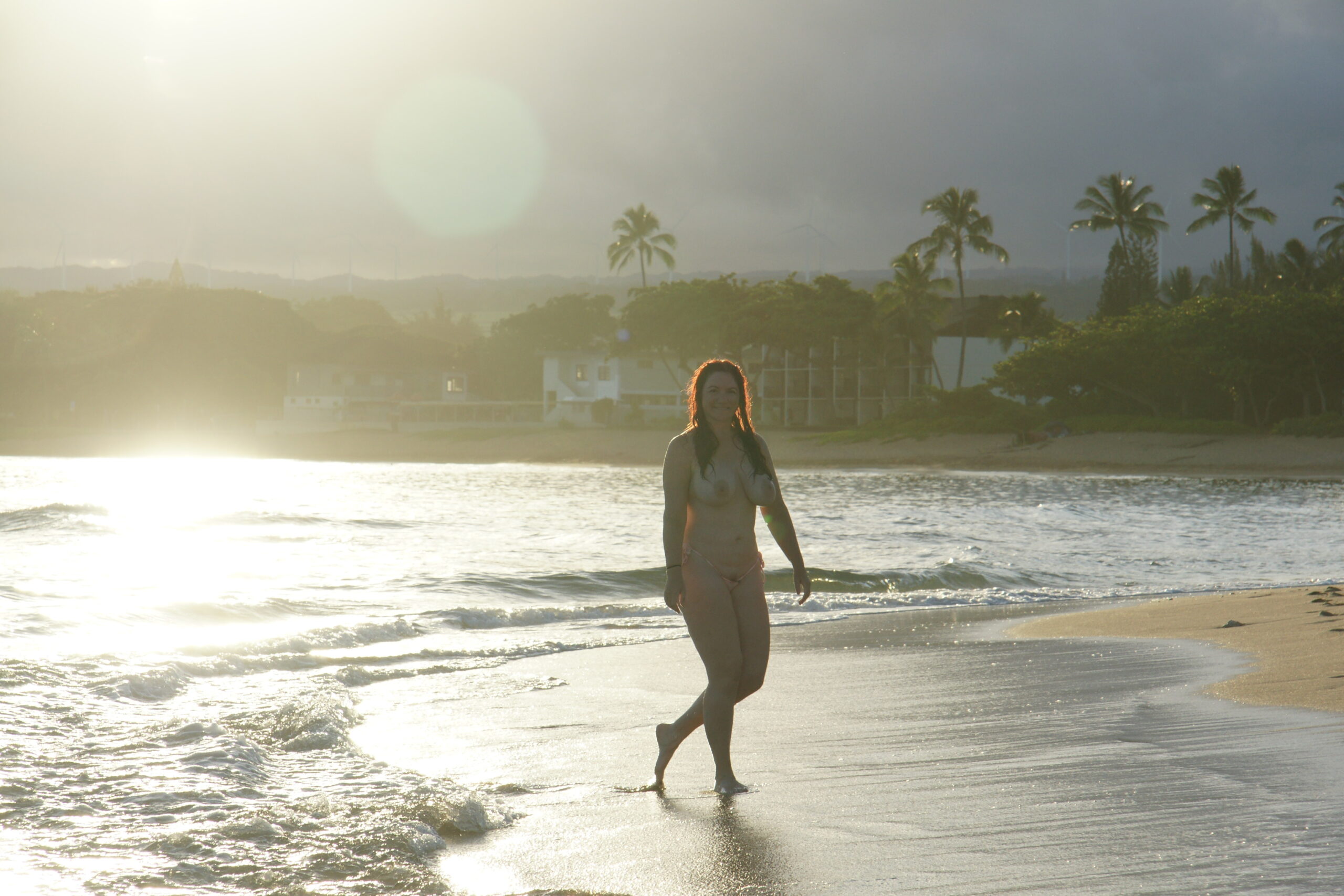
Swimming, Oahu-style.
Just another perfect day in paradise. 😀
Ka’ena Point State Park
On the western tip of O’ahu is Ka’ena Point. This dramatic lava shoreline is said to be the place where the souls of ancient Hawaiians would jump off into the spirit world and meet the souls of their ancestors. Although how a soul can jump is never clarified.
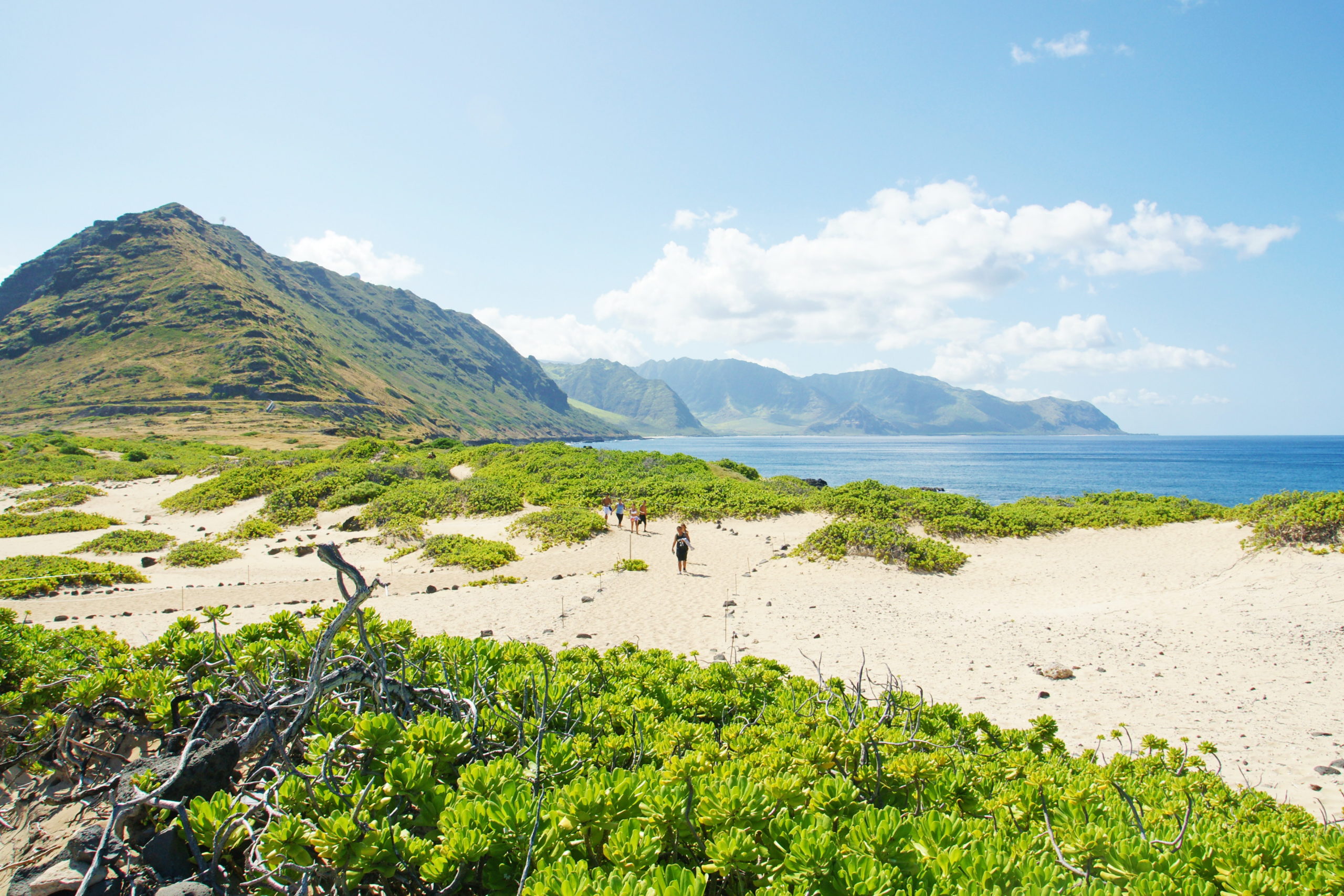
It’s a park, so stay on the trail.
“The only way to get to Ka’ena Point is by hiking. There are two trailheads: From the north side, or Mokulēia side, drive to the very end of Farrington Highway and park at the trailhead. This is a long and notoriously hot hike, so bring plenty of sunscreen and water. Hazardous conditions make any water activities extremely dangerous and are highly discouraged. From the south side, or Leeward Coast side, the trail starts at the end of the road past Yokohama Beach and its three “dips,” or breaks. This west side O’ahu icon offers white sand beaches, diving, and the possible sight of dolphins.”
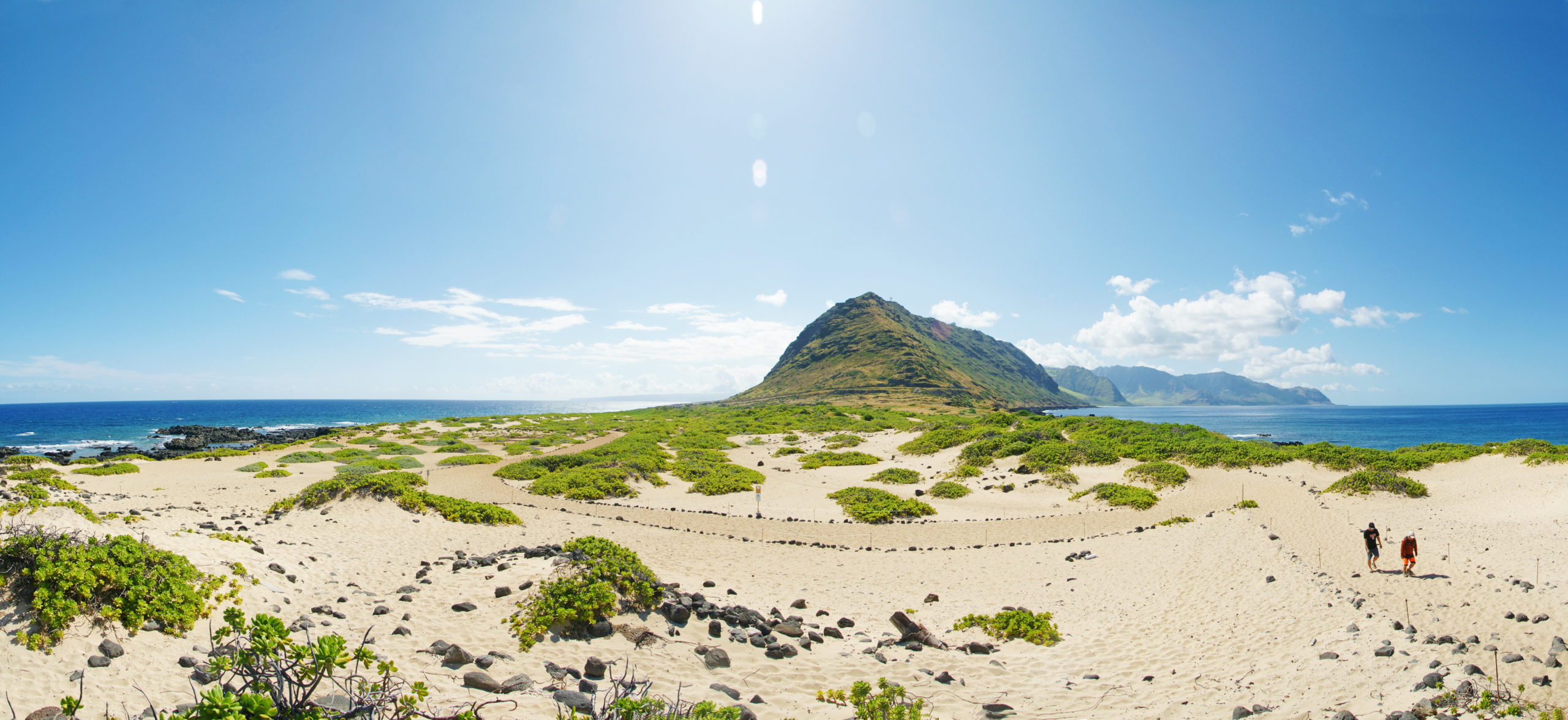
Yes, this is a “point”.
If you don’t want to go to the tip of the land, you can make a u-turn and see the other side. Hawaiians are so very thoughtful!
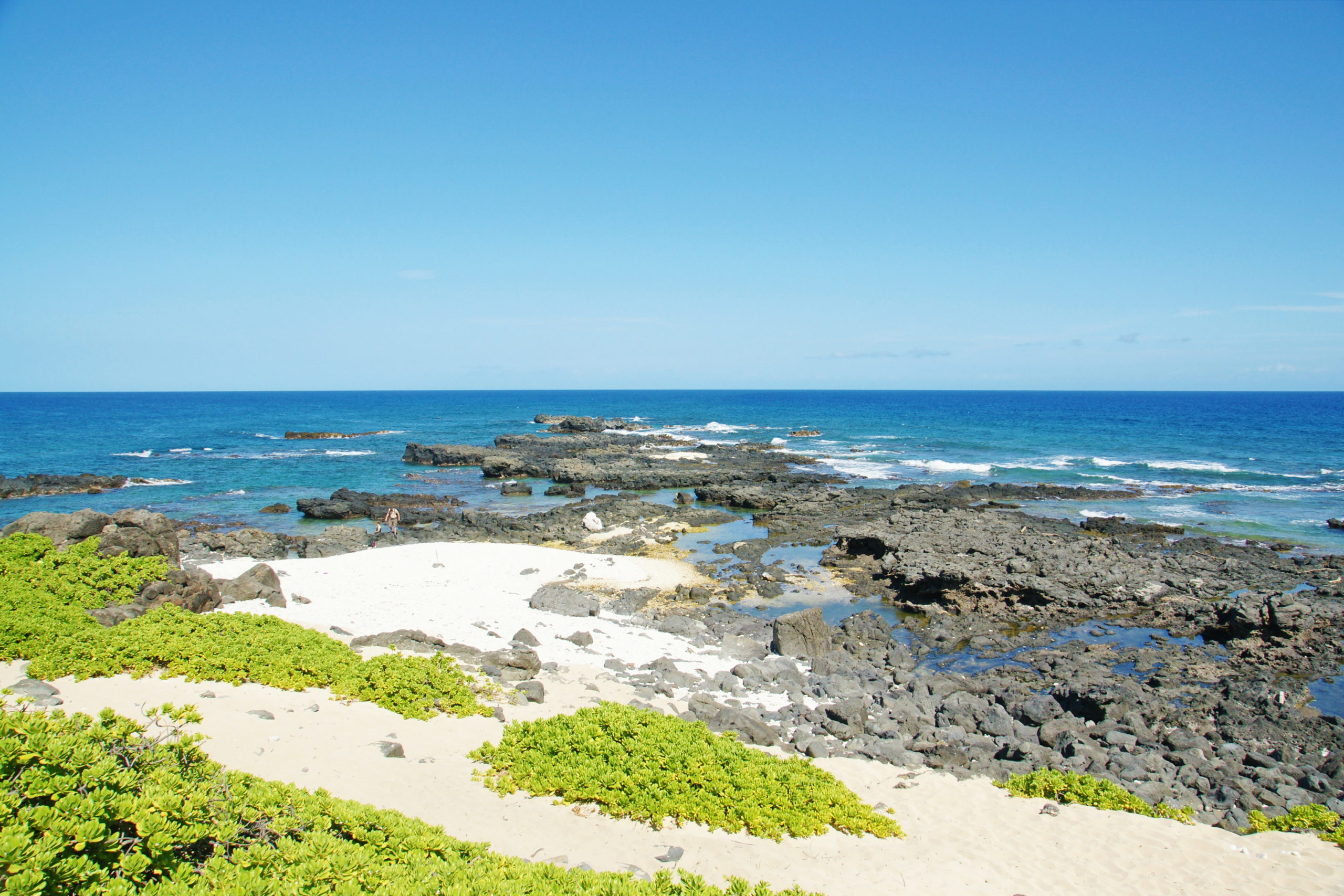
Hey! Stay on the path!
The State of Hawaiʻi has designated the point as a Natural Area Reserve to protect nesting Laysan Albatrosses and wedge-tailed Shearwaters, Hawaiian monk seals, and the fragile (to vehicular traffic) native strand vegetation that has been restored there. And they don’t really want people leaving the path and walking on the lava, because that is where many of those creatures are lounging, hoping to enjoy some peace and quiet.
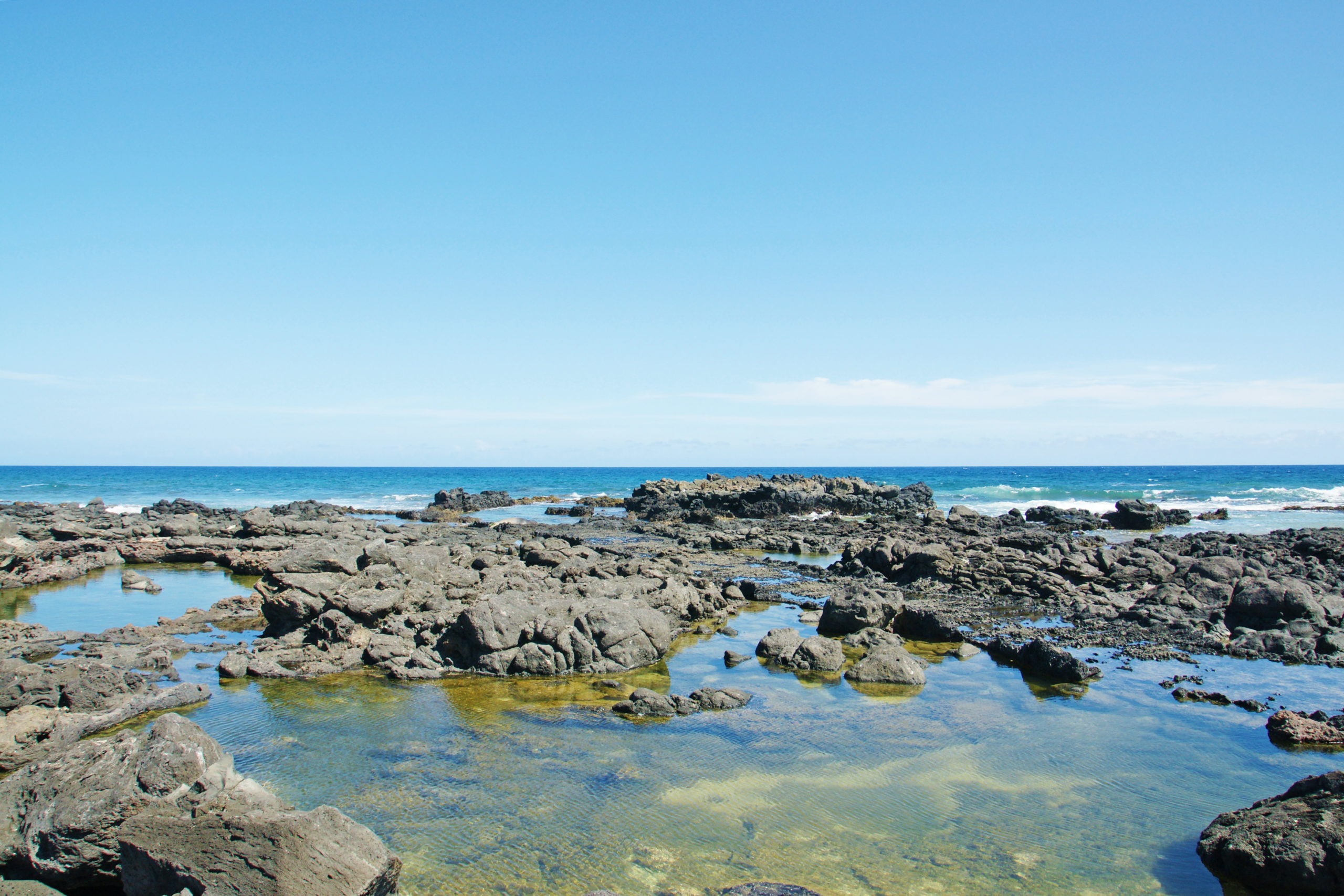
Look! Seals!!
We stop to look over the lava, and eventually see seals laying on the lava, enjoying the afternoon sun. Can you see that one just a bit left of center? It is the official state mammal of Hawaii, so look closely!
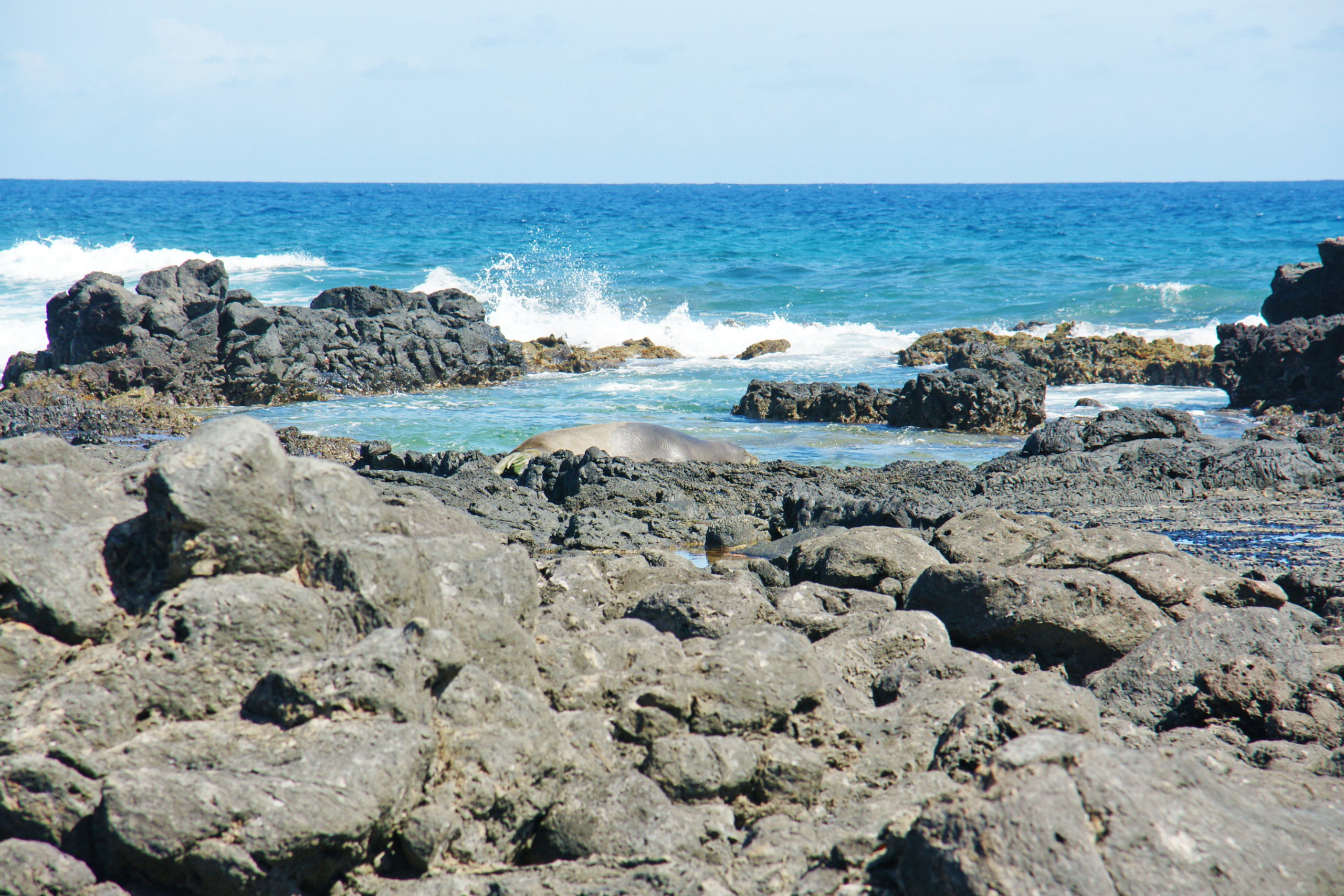
There it is!
Yup, they blend in, which probably protects them from any avian predators looking for a tasty dinner. But, seriously, why do they sleep on hard, pokey lava when there are sand beaches a few yards distant? Only the seals know.
Known to native Hawaiians as ʻIlio-holo-i-ka-uaua, or “dog that runs in rough water”, its scientific name (Neomonachus schauinslandi) is from Hugo Schauinsland, a German scientist who discovered a skull on Laysan Island in 1899. Its common name comes from short hairs on its head, said to resemble a monk.
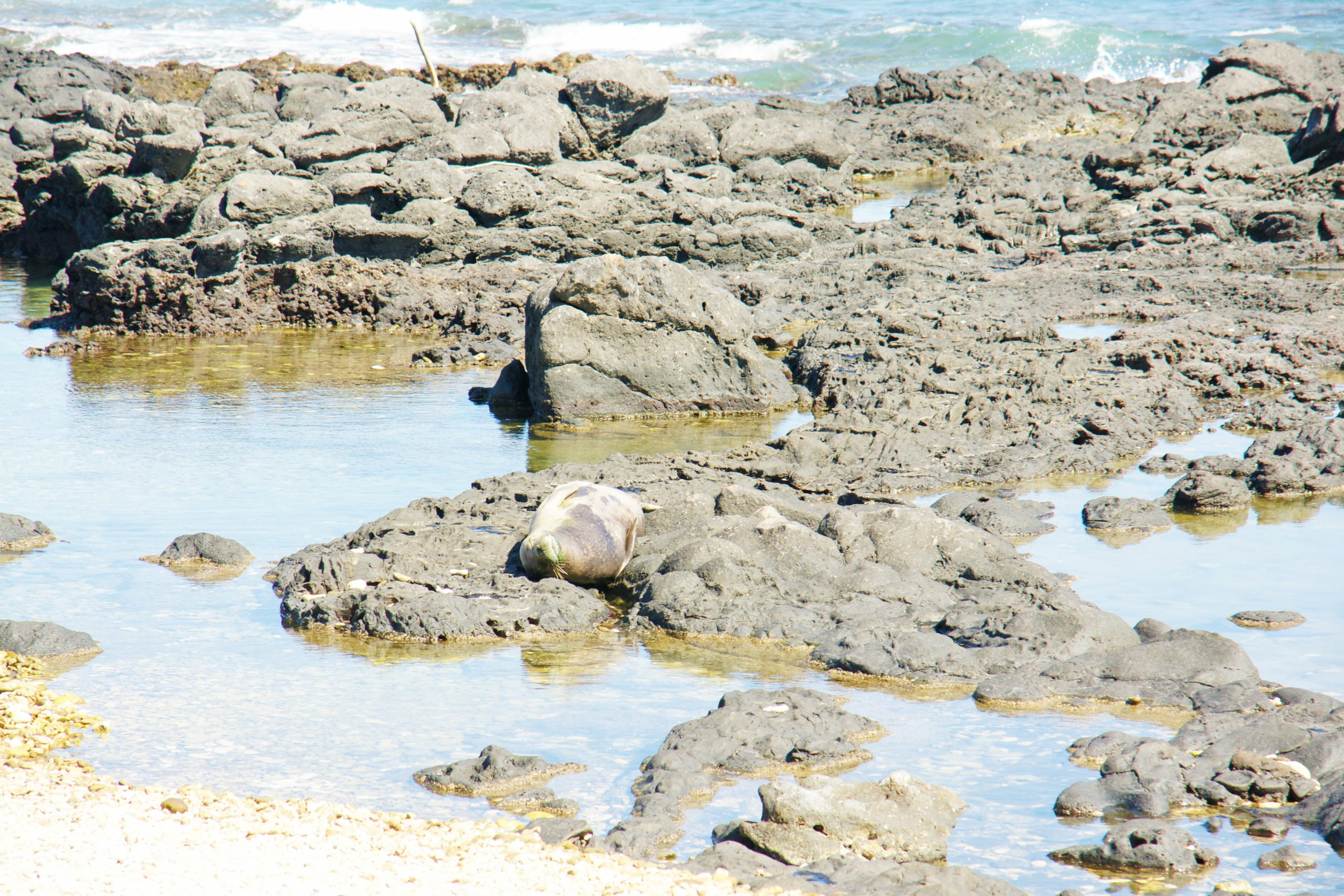
No, it’s not dead.
Behold another Hawaiian Monk seal, sleeping peacefully on its bed of stone. FYI, the Hawaiian monk seal is the only seal native to Hawaii, and, along with the Hawaiian hoary bat, is one of only two mammals endemic to the islands. All other mammals, including humans, have been introduced by humans.
Mokoli’i
The rock commonly known as Chinaman’s Hat is a basalt islet in Kāneʻohe Bay, Hawaii. The 12.5-acre (5.1 ha) islet was at one time part of a basaltic ridge on Oahu before marine erosion separated it (which happened a few years ago….).
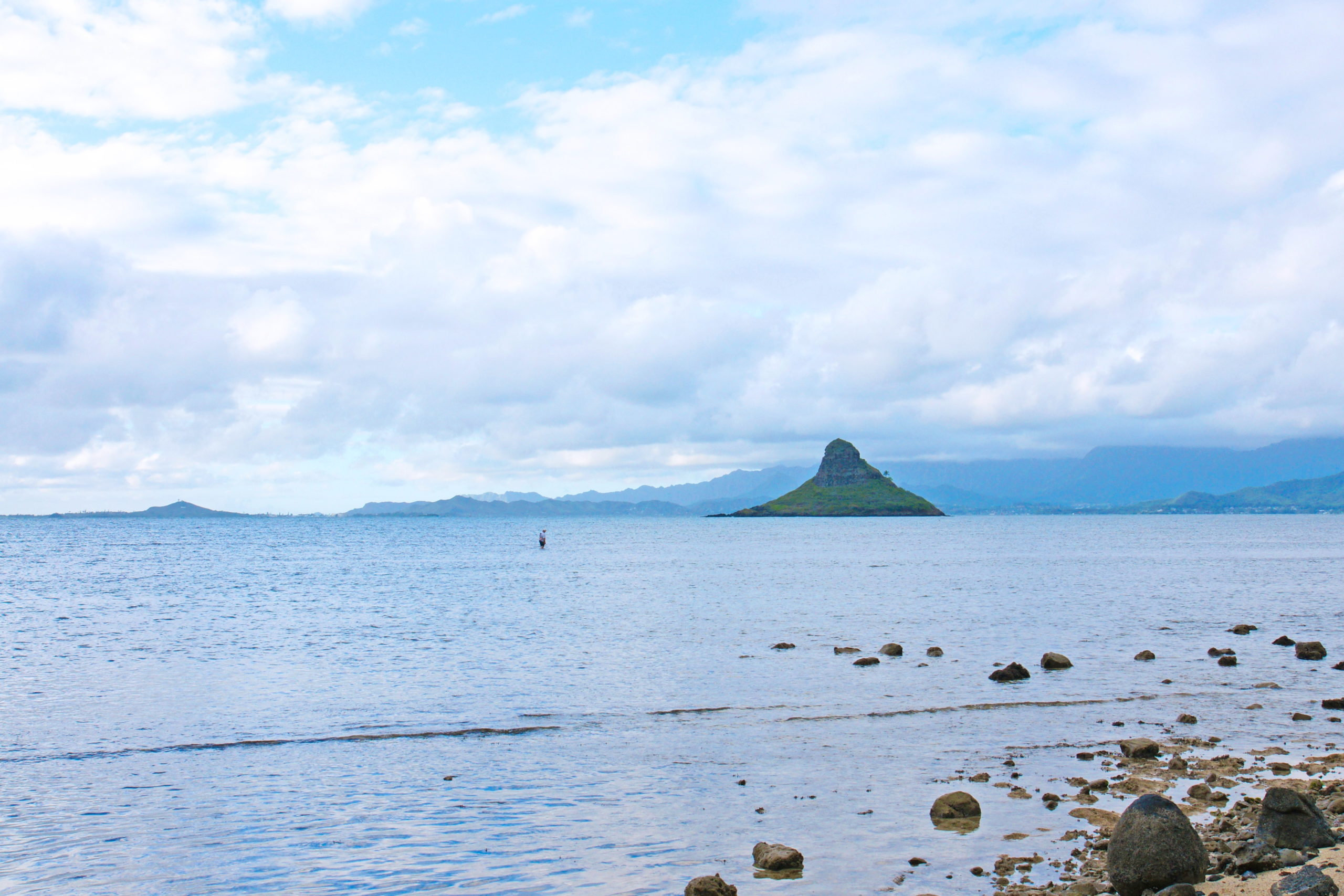
It has at least two trees.
Mokoliʻi translates from Hawaiian as “little lizard.” According to Hawaiian mythology, the island is the remains of a giant lizard’s tail or dragon’s tail that was chopped off and tossed into the ocean by the goddess Hiʻiaka.
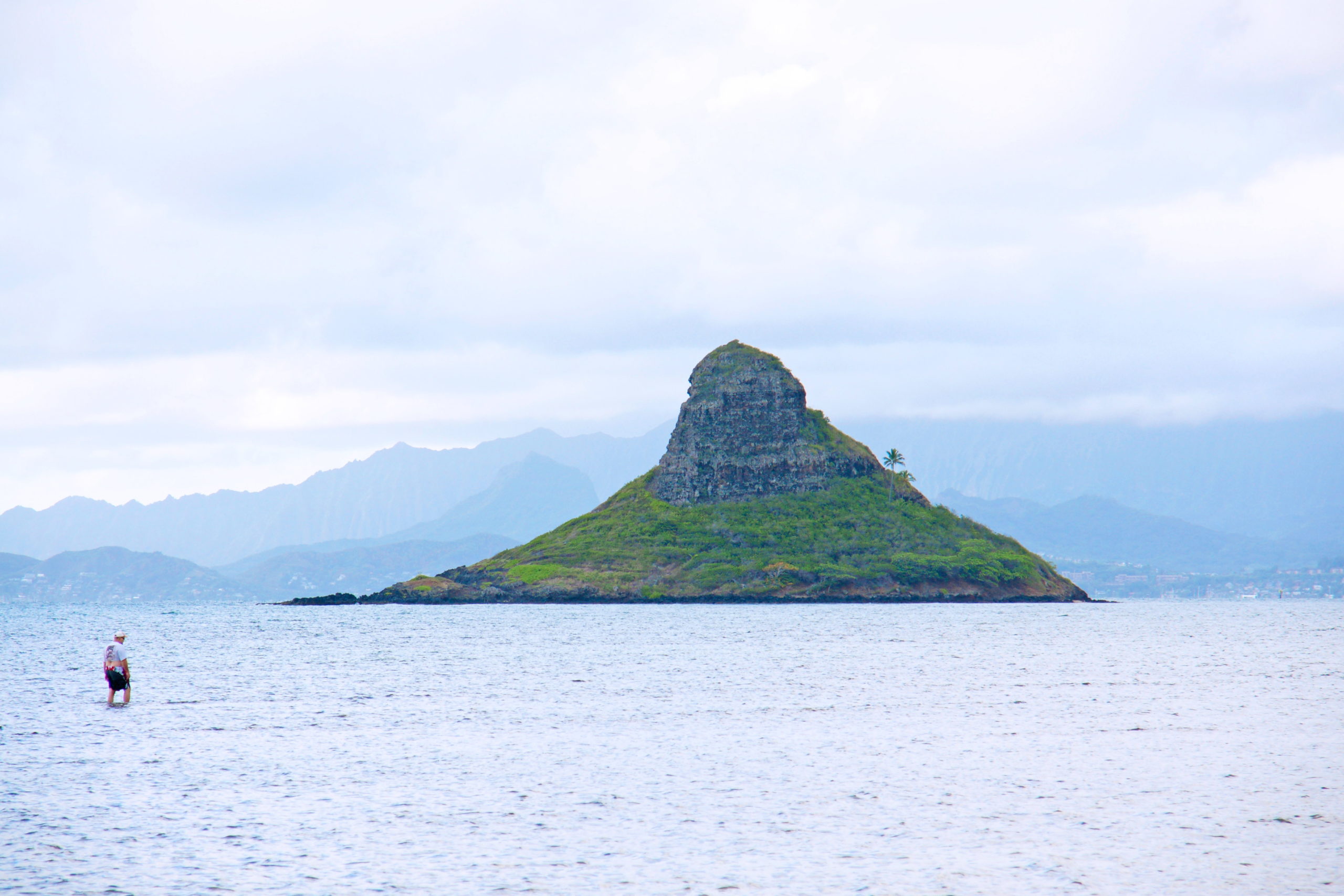
They should call it the Jesus Rock.
The common name of Chinaman’s Hat derives from its likeness to the Asian conical hat. However, based on what’s happening here, there is more to this rock than the Hawaiians are telling us.
The Hole in the Rock
On O’ahu’s North Shore at Lā’ie Point State Wayside is a holey place called “the hole in the rock.
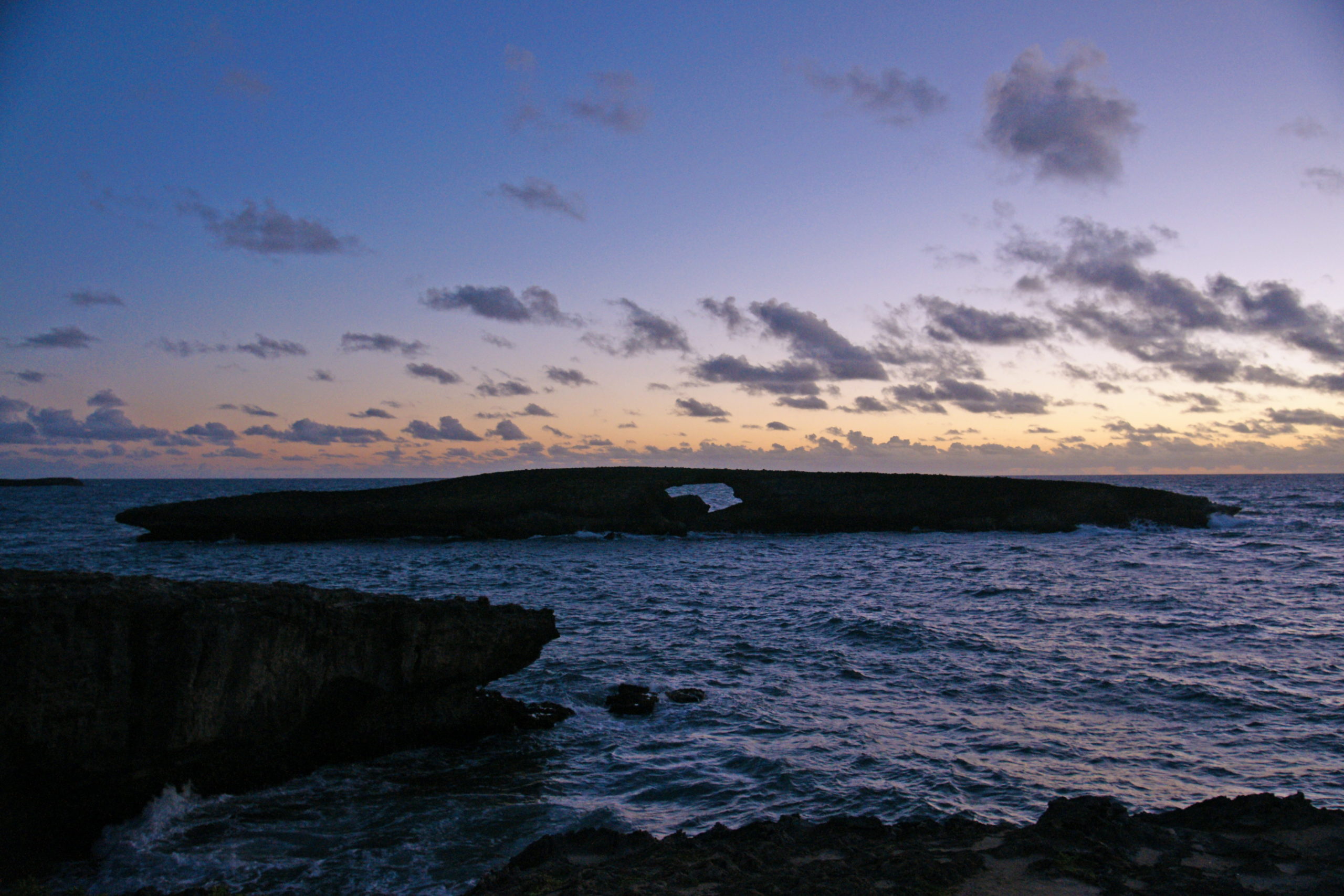
Holy rock, Batman!
According to legend, this hole was created on April 01, 1946 when a tsunami blasted a hole in the rock.

Sunrise near the holey rock.
There is not much to it, but if you get here early in the morning, you are rewarded with a beautiful sunrise.
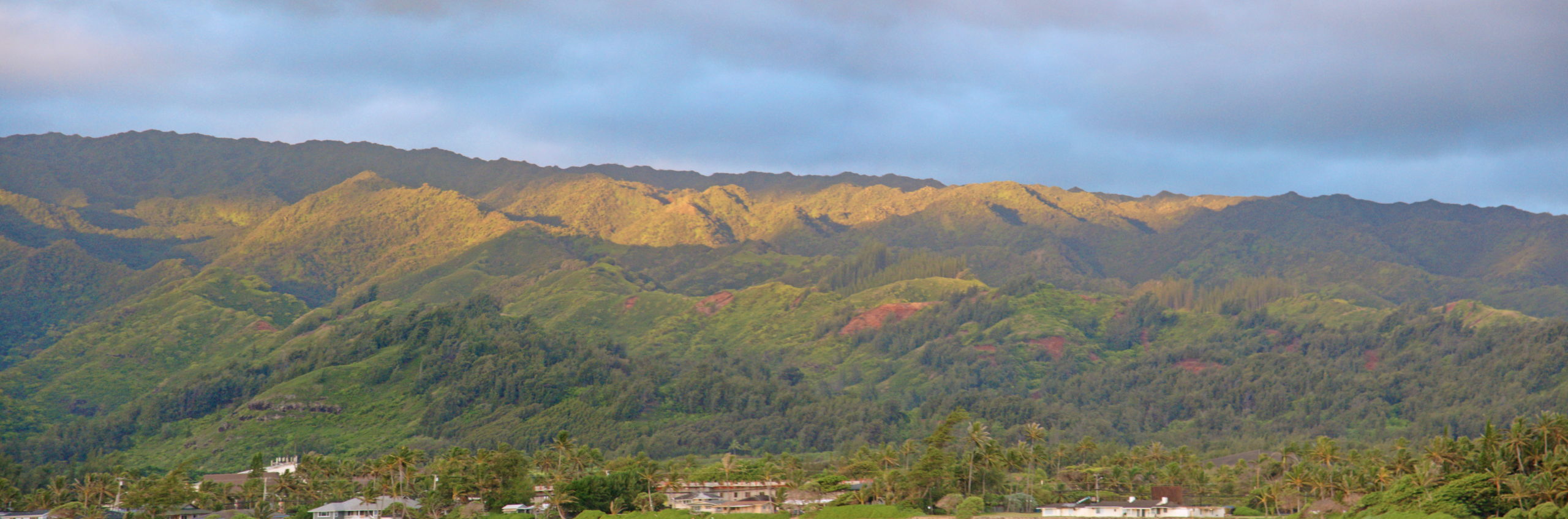
The opposite of a hole.
If you then turn around, you have a view of what you always imagined Hawai’i to look like.
Opana Radar Site
On December 7, 1941, the Opana Radar Site was manned by Private Joseph L. Lockard and Private George Elliot, who detected approaching aircraft at 7:02 am (past the end of the site’s scheduled operating day). Since the truck to take them to breakfast was late, the pair continued to practice with the radar equipment. The men reported their findings to the temporary information center at Fort Shafter. Pvt Joseph McDonald took the call. Private McDonald found Lt. Kermit Tyler when he entered the plotting room when he timed the message. Tyler told him that it was nothing. McDonald called back the Opana Radar site and spoke to Pvt Joseph Lockard. Lockard was excited, he had never seen so many planes. Infected with Lockard’s excitement, McDonald returned to Tyler. McDonald suggested to Tyler to call back the plotters and notify Wheeler Field of the sighting. When Tyler again indicated that it was nothing, McDonald insisted that Tyler talk to Lockard directly. The information center staff had gone to breakfast and Lt. Kermit Tyler received the report. Tyler reasoned that the activity was a flight of Army B-17 Flying Fortress bombers, and advised the radar crew not to worry. Tyler told investigators that a friend in the Bomber group advised him that whenever the radio station played Hawaiian music all night, a flight from the mainland was arriving, and using that for navigation homing. McDonald was relieved at about 7:40 and returned to his tent waking his tent mate up by saying “Shim the Japs are coming”. Elliot and Lockard continued plotting the incoming planes until 7:40 when contact was lost. Shortly before 8:00 am they headed to Kawailoa for breakfast and only learned about the attack when they arrived. Elliot and Lockard rushed back to Opana and operated the radar until the attack ended.
U.S.A! U.S.A!
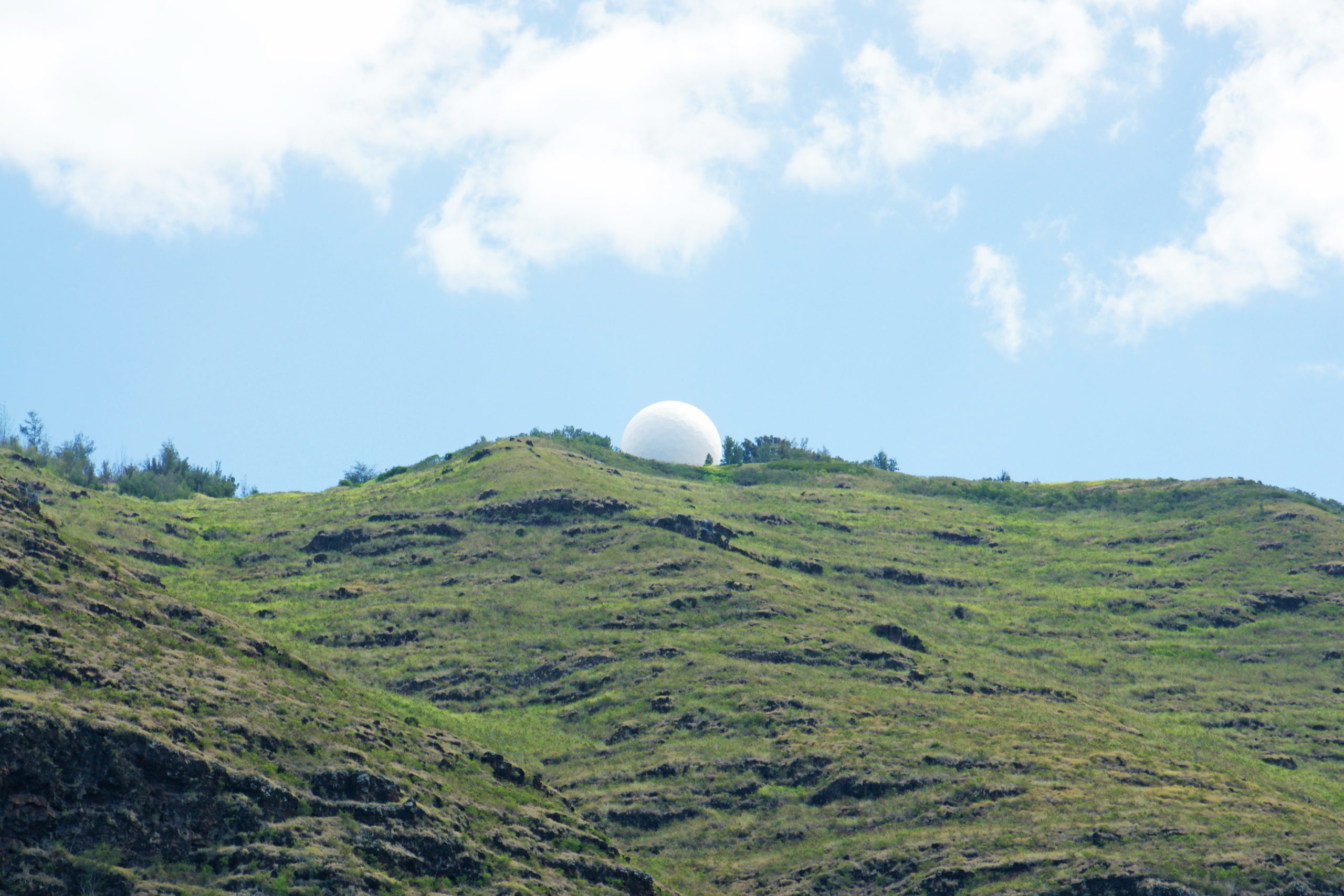
That’s no moon. It’s a radar station!
Today, the Opana Radar Site is a National Historic Landmark and IEEE Milestone that commemorates the first operational use of radar by the United States in wartime, during that attack on Pearl Harbor.
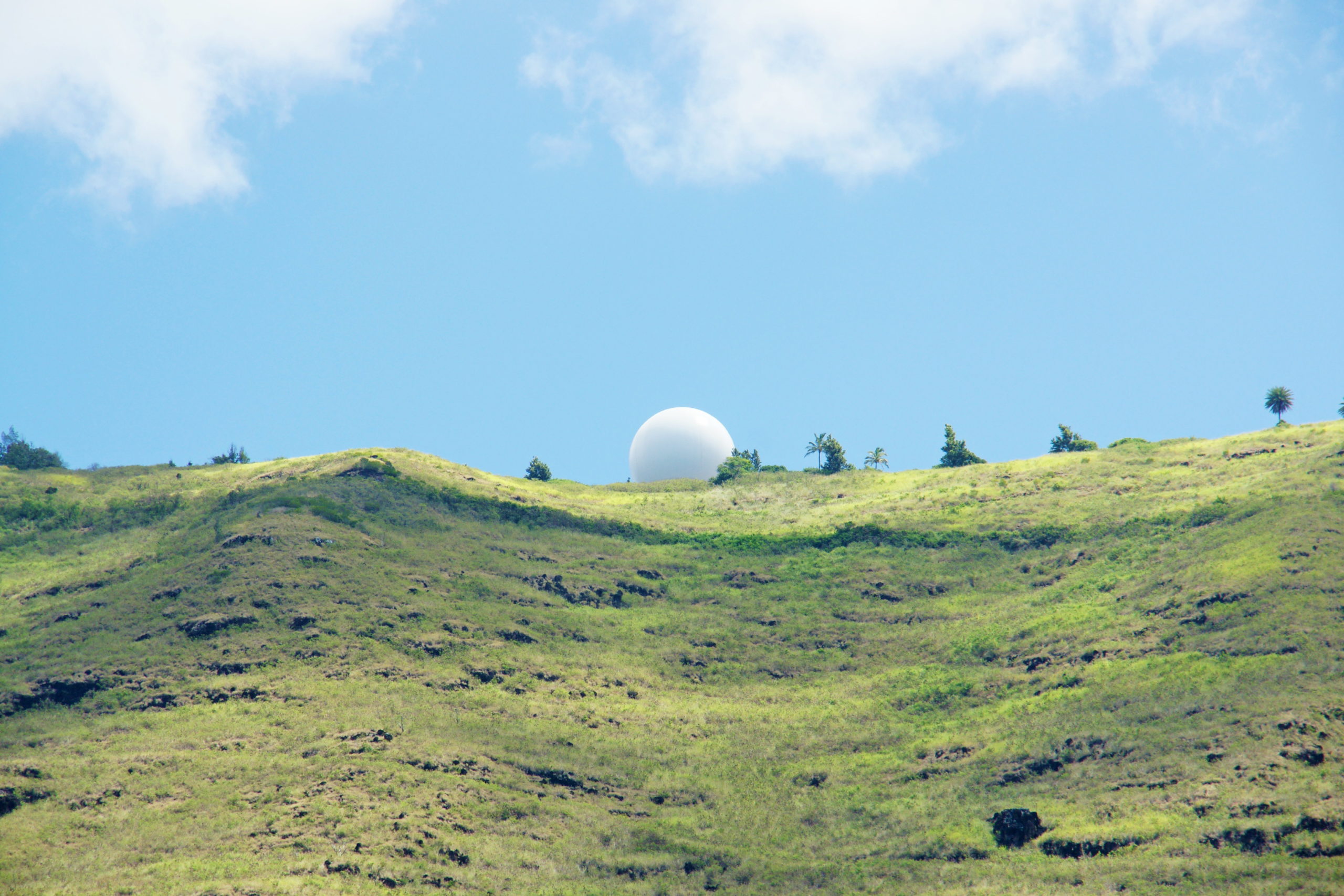
Wait, there’s more!
It is located off the Kamehameha Highway just inland from the north shore of O’ahu, Hawai’i, south of Kawela Bay. It is not open to the public. However, it is photograph-able by the general public.
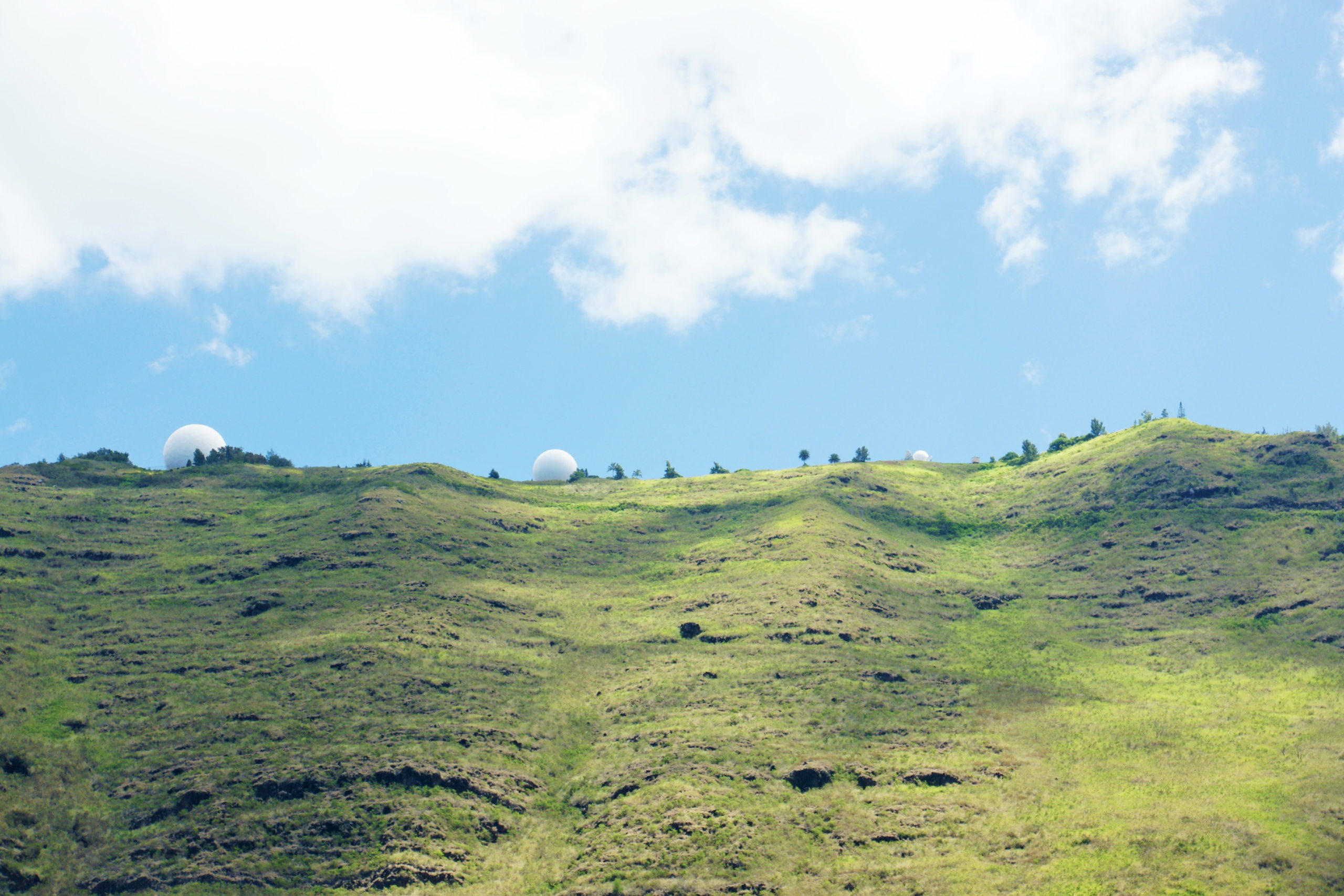
Golf balls of the Gods.
However, this is not the radar station of 1941. Since the 1941 radar was a mobile unit, there is no physical evidence of the historic unit at the site. Rather, this is a modern Navy telecommunications station adjacent to the radar site.
Sorry we misled you. 😆
Getting Around
We typically rent SUVs when traveling. They are more comfortable than regular cars and they hold more stuff.
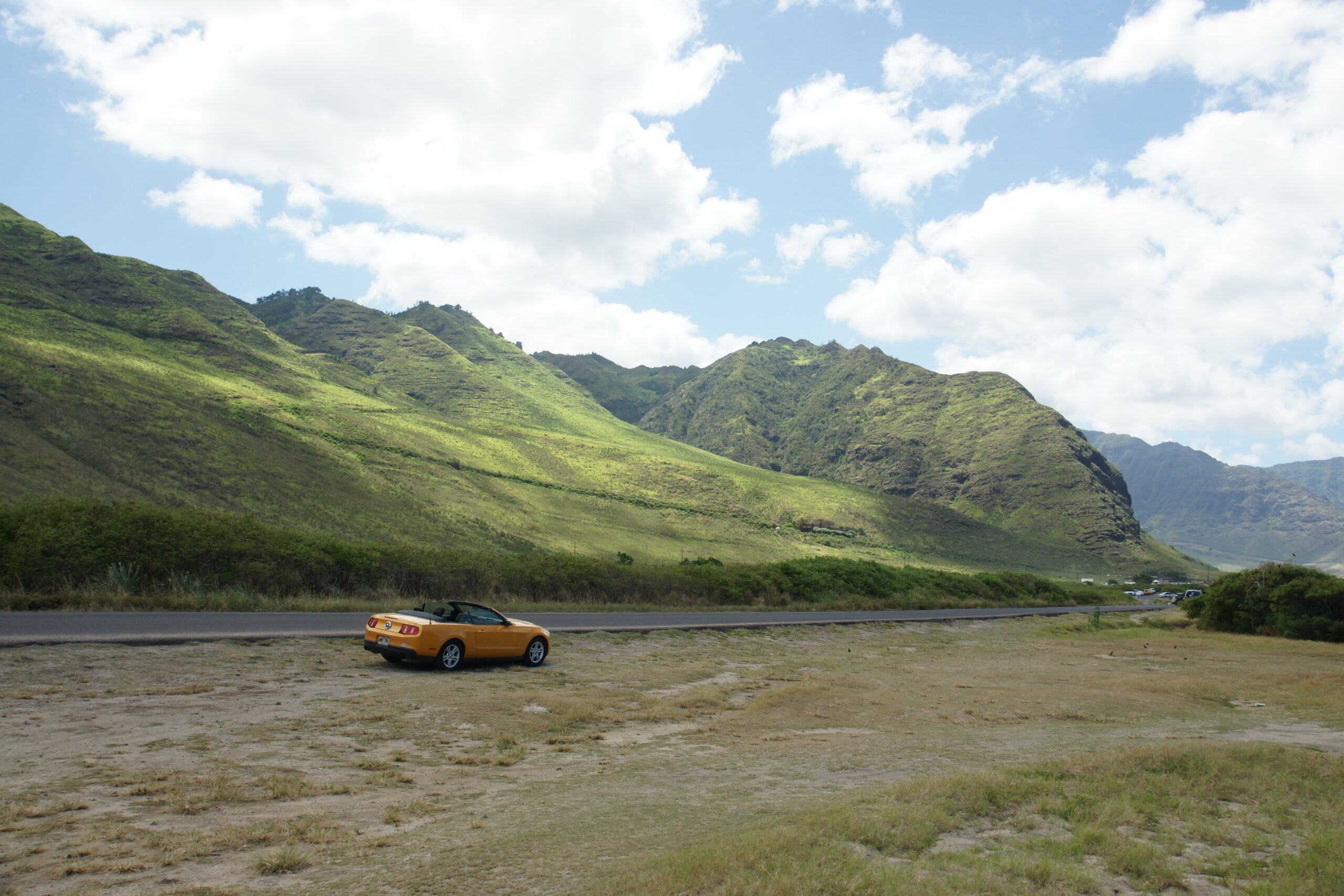
It doesn’t quite blend in to the background, does it?
But, since we are traveling around the islands, we thought a convertible sedan would be more fun.
Optical Illusion: If you look long enough at this photograph, you will see a car.
There are, of course, other reasons to rent a sedan, and that is because you then have a nice, big trunk which, when covered, protects your belongings.
Kayak Trip
Let’s take a kayak trip!
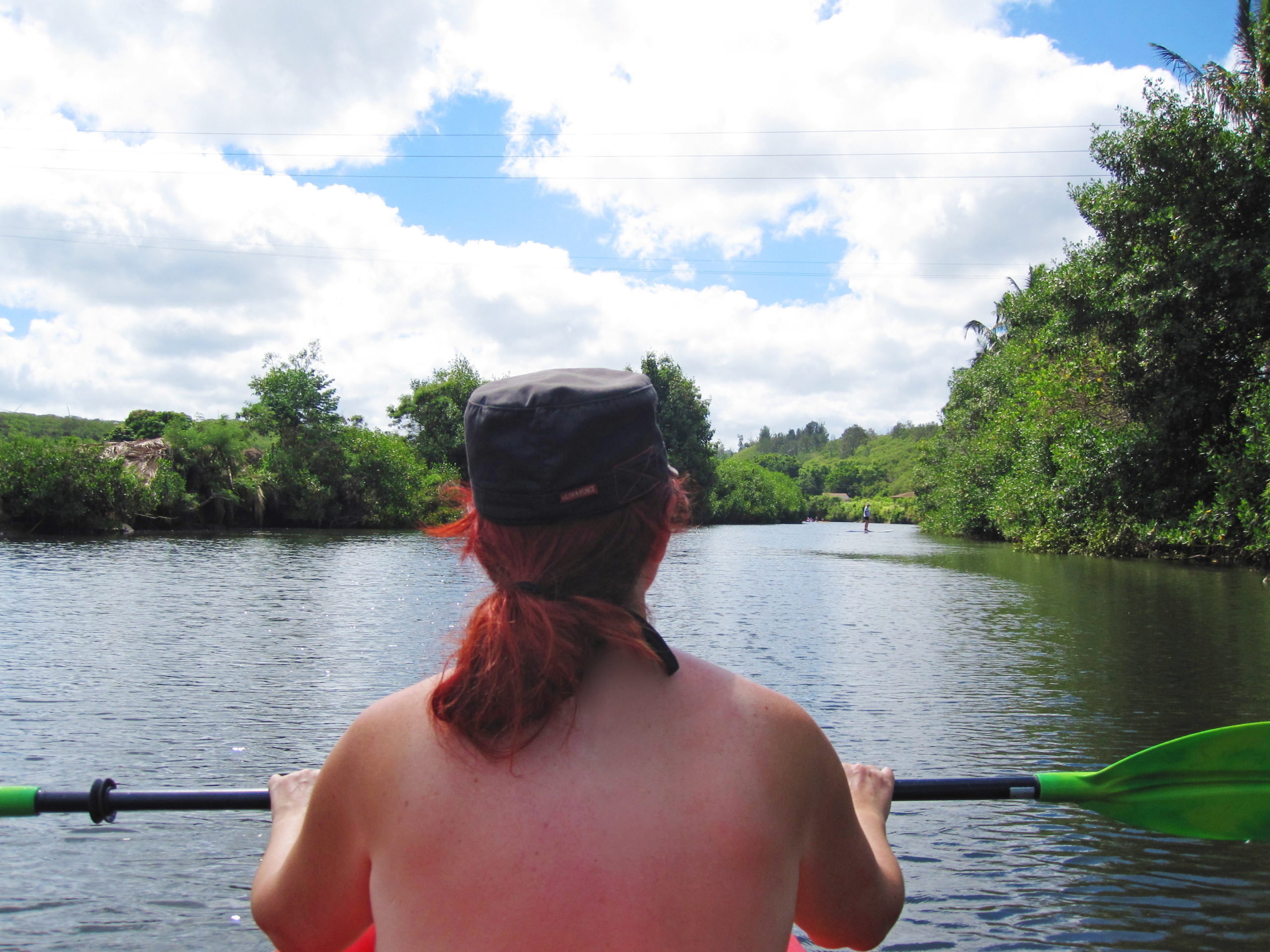
Turtle River, here we come!
We rent kayaks to take a voyage up Turtle River, also known as Anahulu River. Most of the other voyagers are standing on boards, but that smacks of effort. Besides, we can both travel in the same kayak!
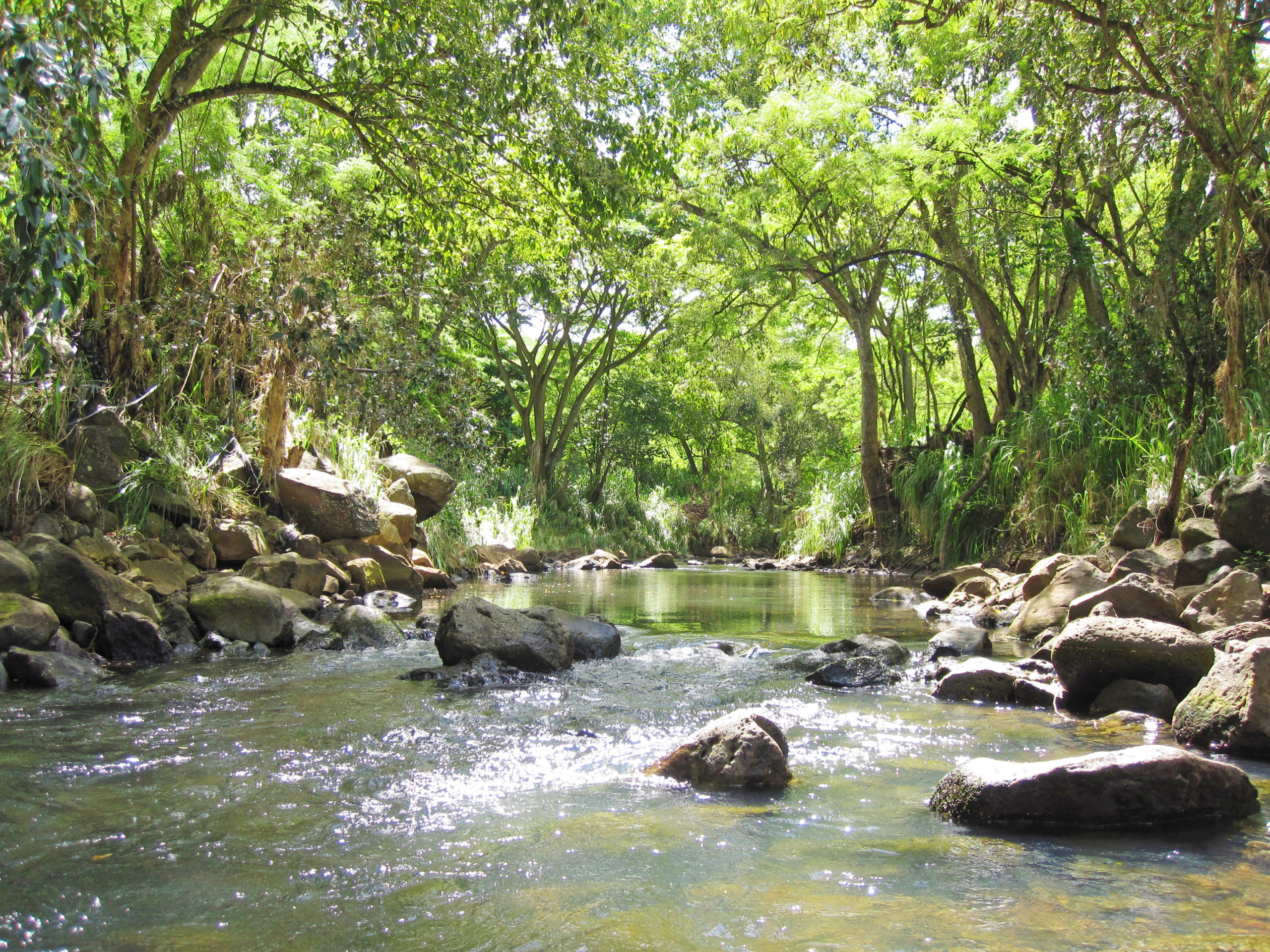
Ohhhhh, jungley!
The river is a bit wide and windy (blowing downstream), but after perhaps an hour we are kayaking through a more secluded and tropical area.
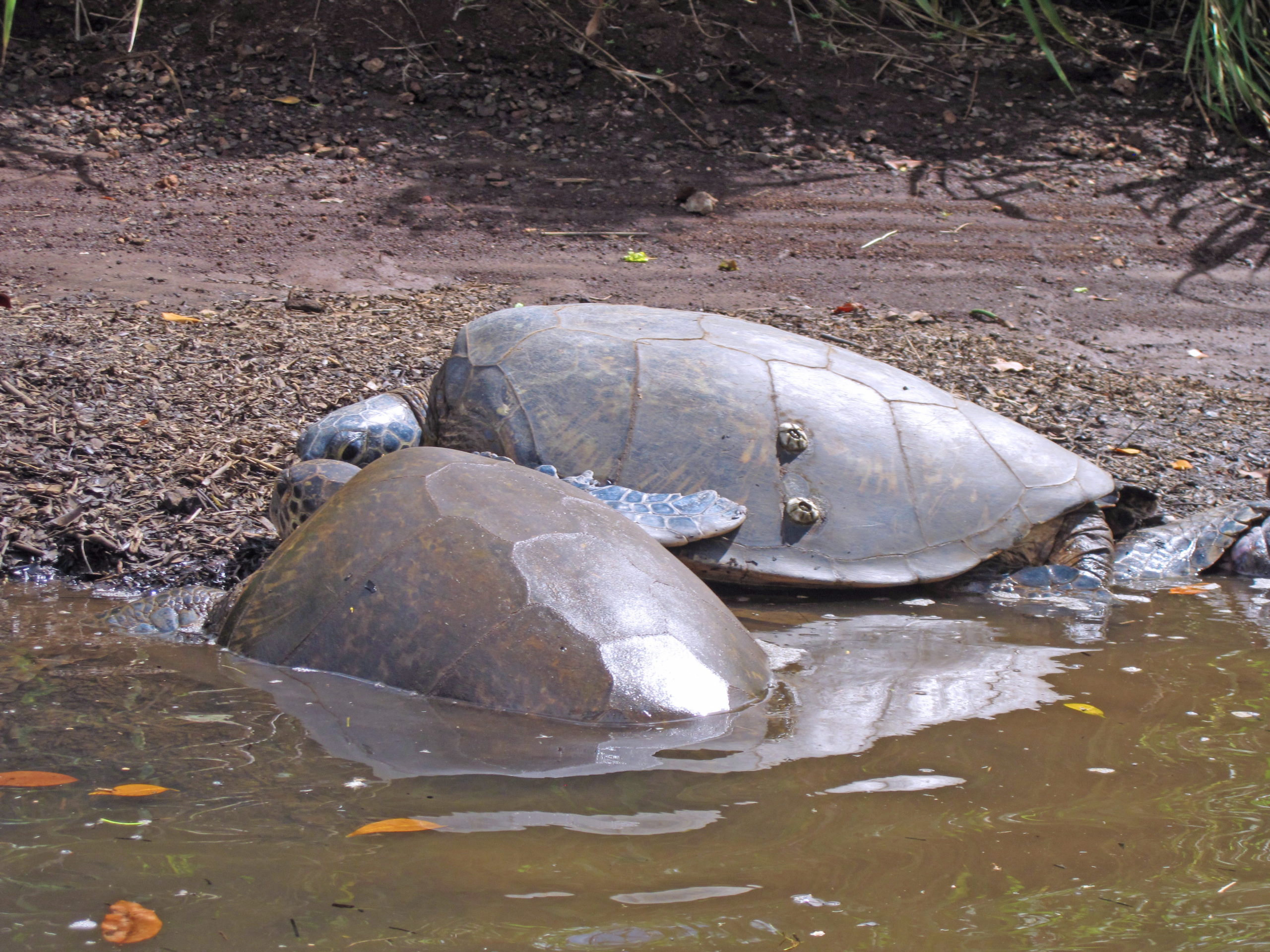
The river’s namesake.
It’s not long before we see Hawaiian green sea turtles, aka Chelonia mydas. And because we are safely ensconced in our kayak, we can get closer than usual without disturbing our flippered friends.
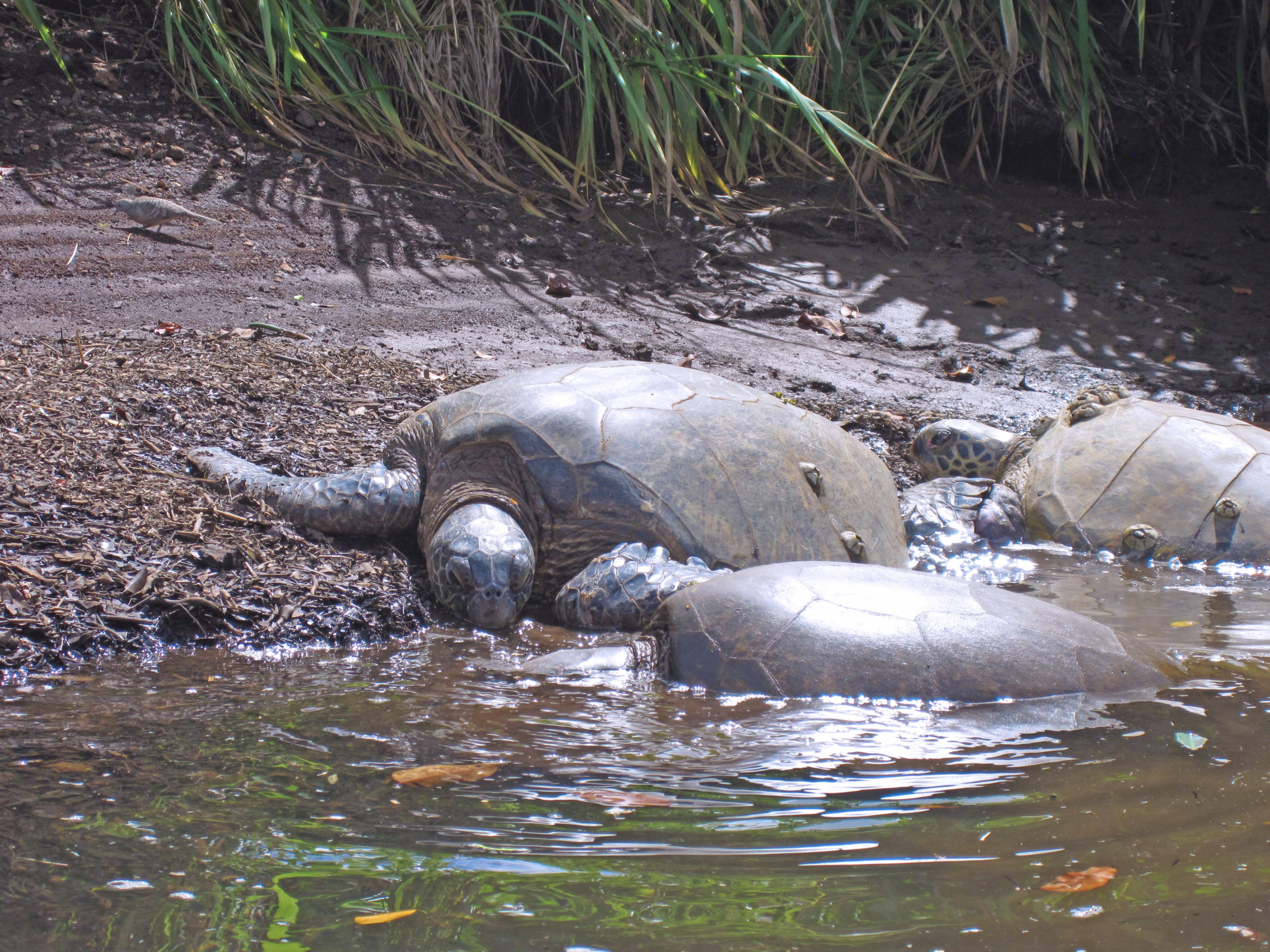
Turtle beauty marks.
These fellows have a number of barnacles attached to their shells. If you search the Internet, you’ll find opinions stating that barnacles do not harm the turtles. You’ll also find that none of those opinions are from turtles.
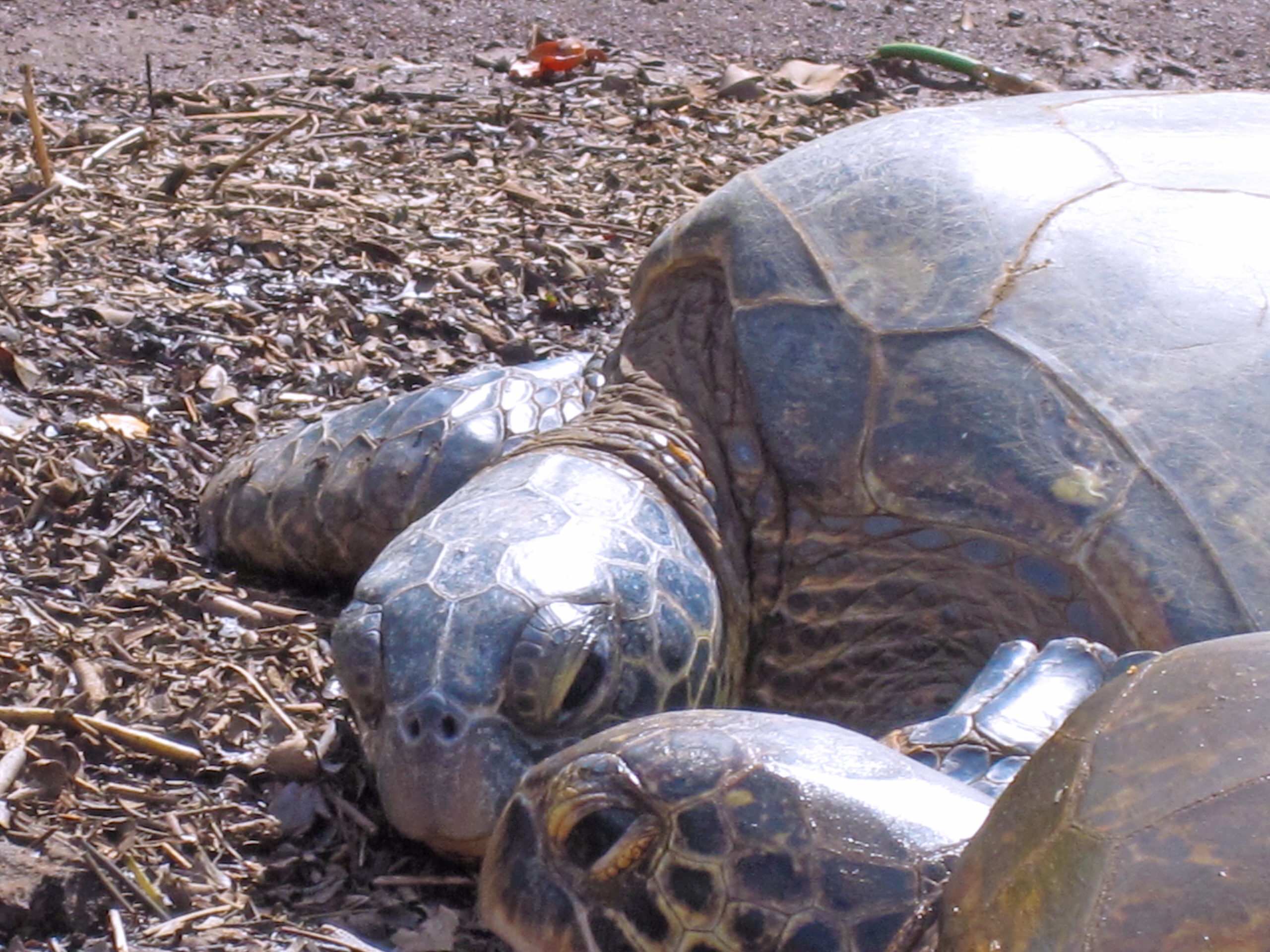
No, they are not kissing. They don’t have lips.
According to the Internet, “Females crawl out on beaches, dig nests, and lay eggs during the night. Later, hatchlings emerge, and scramble into the water. Those that reach maturity may live to 80 years in the wild.” Meaning, I suppose that those turtles that do not reach maturity don’t live quite as long.
As long as we are looking at turtles, note that they spend a lot more time in the ocean than in streams.
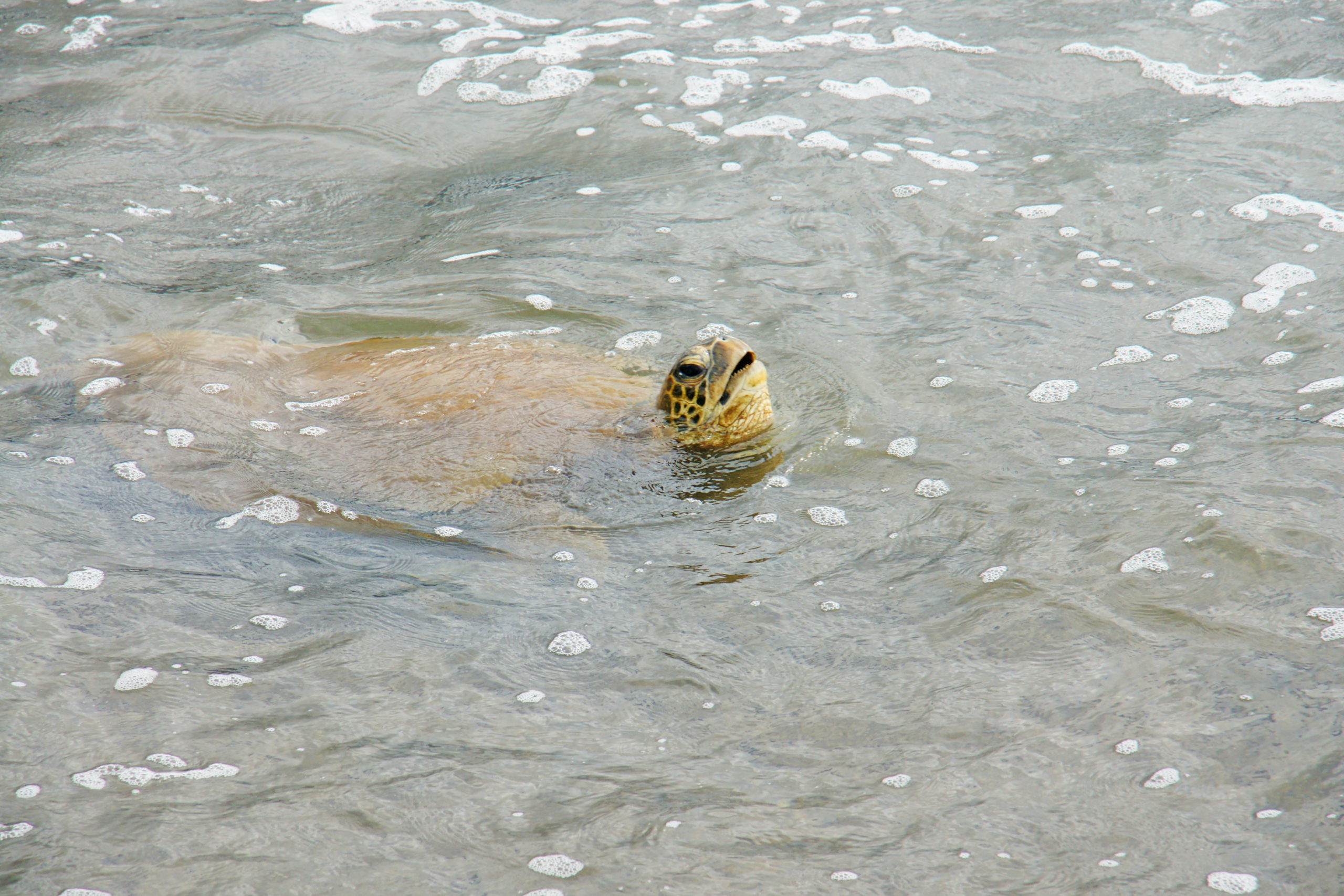
Yes, it will hurt if he bites you.
In fact, we are able to take photographs of quite a of few of them.


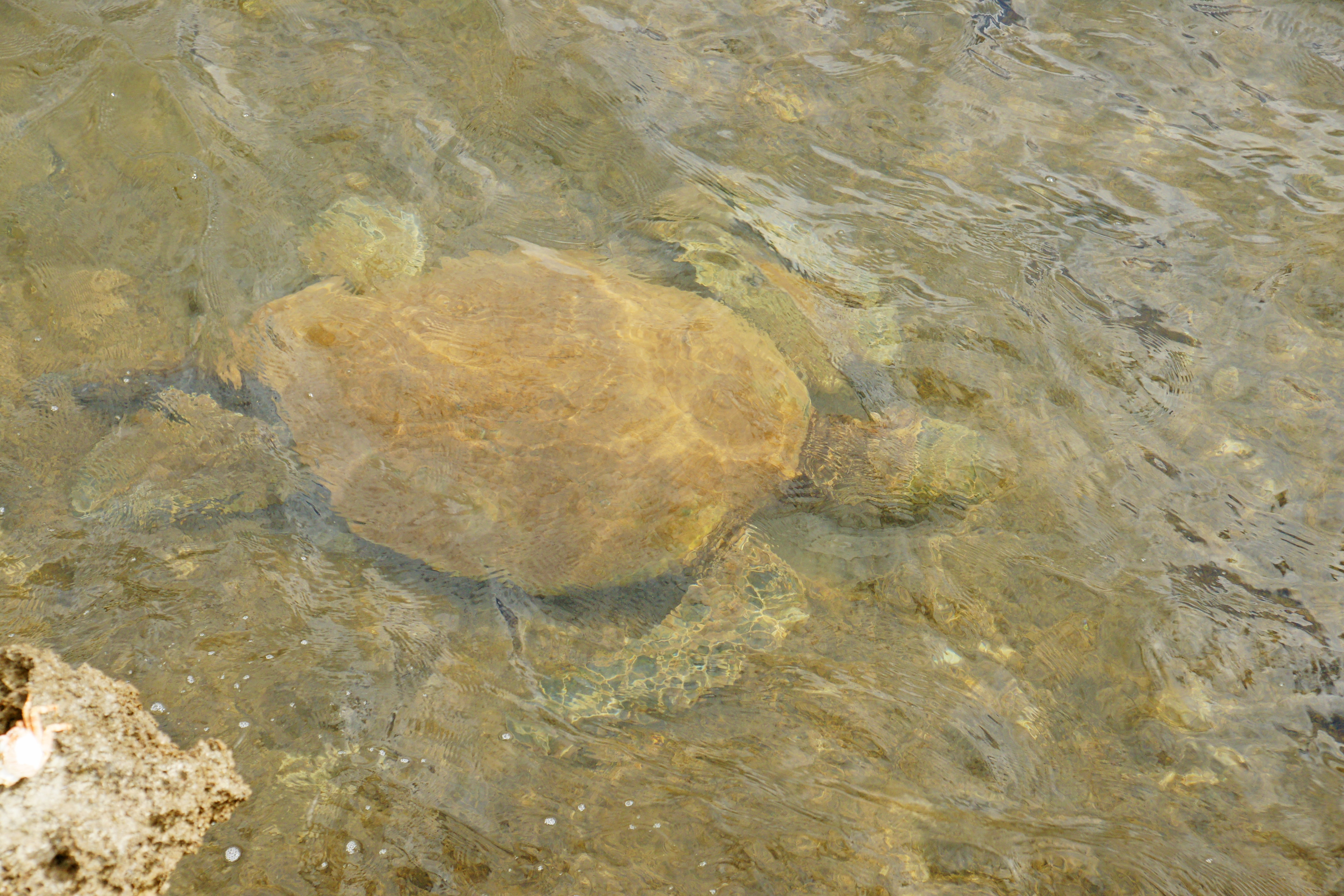


We encounter these reptiles often while swimming and snorkeling. They swim with a gentle ease. Occasionally we inadvertently approach too closely, and they swim away much faster than we could ever swim.
Getting Clean
The landlord has conveniently provided an outdoor shower to rinse all the sand off before entering the house.
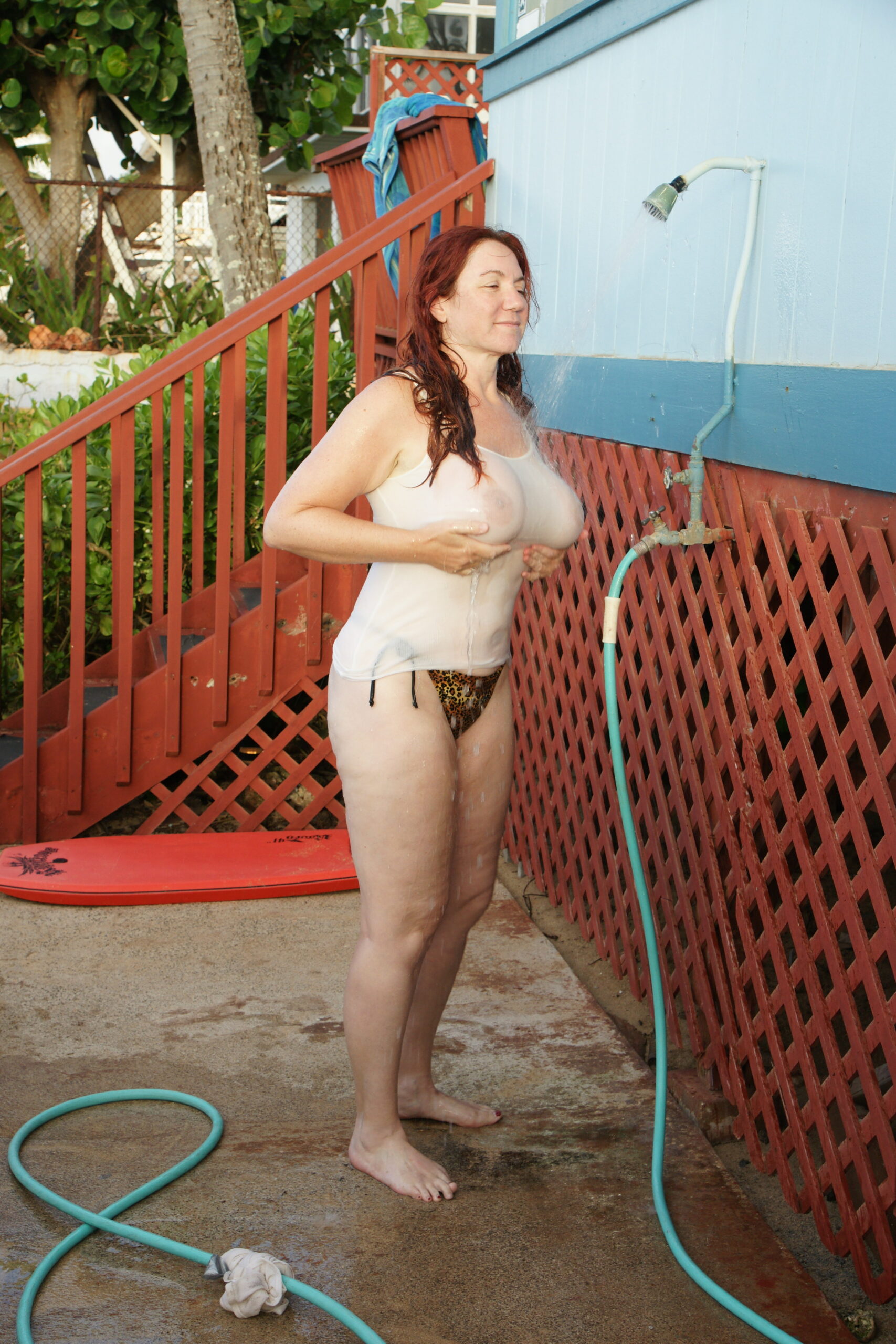
Cleanliness is next to wetness…
There is probably not a lot of sand on my top, but I have to start somewhere.
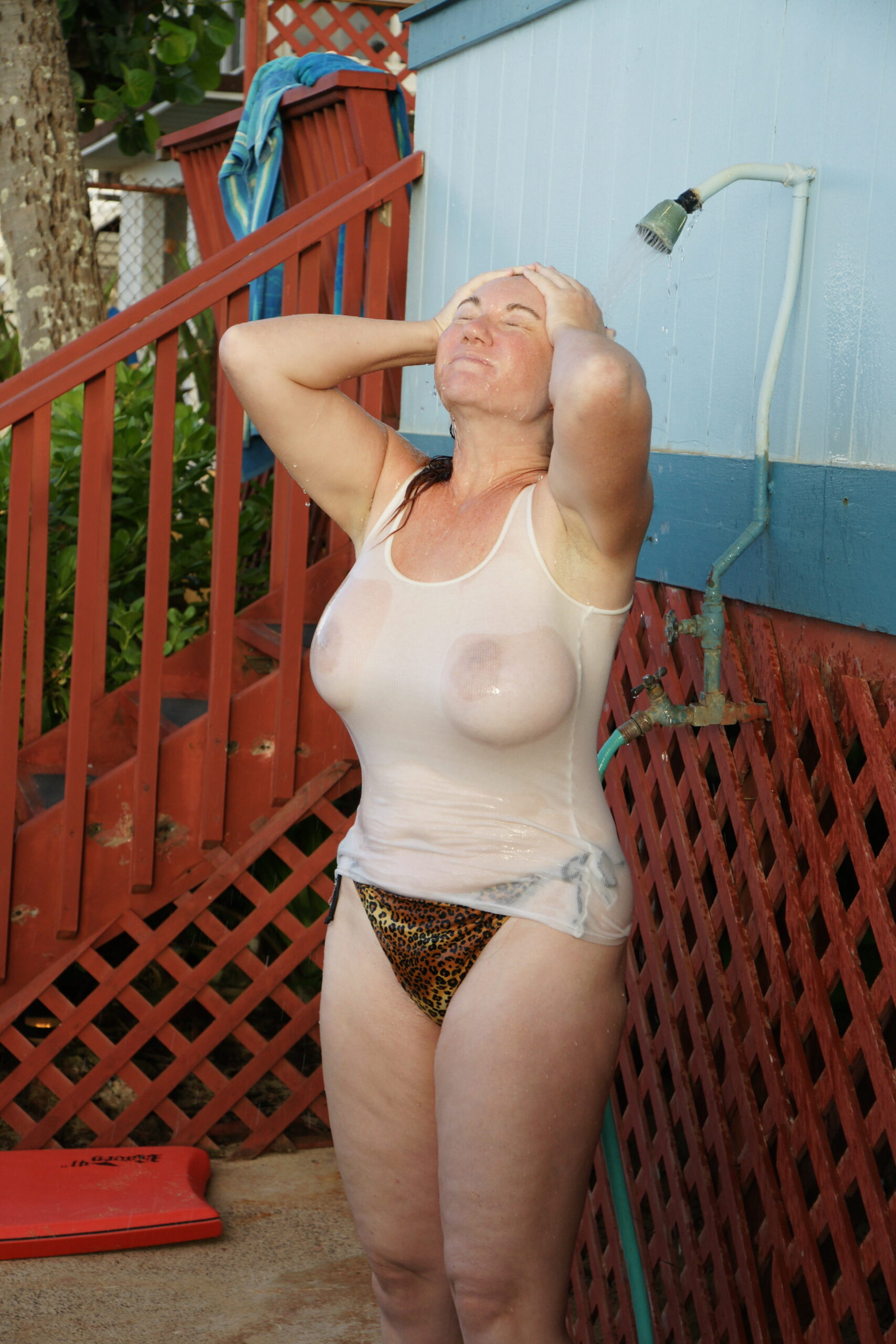
Gonna wash that sand right out of my hair.
Now I’m getting a good rinse. This feels soooo good!
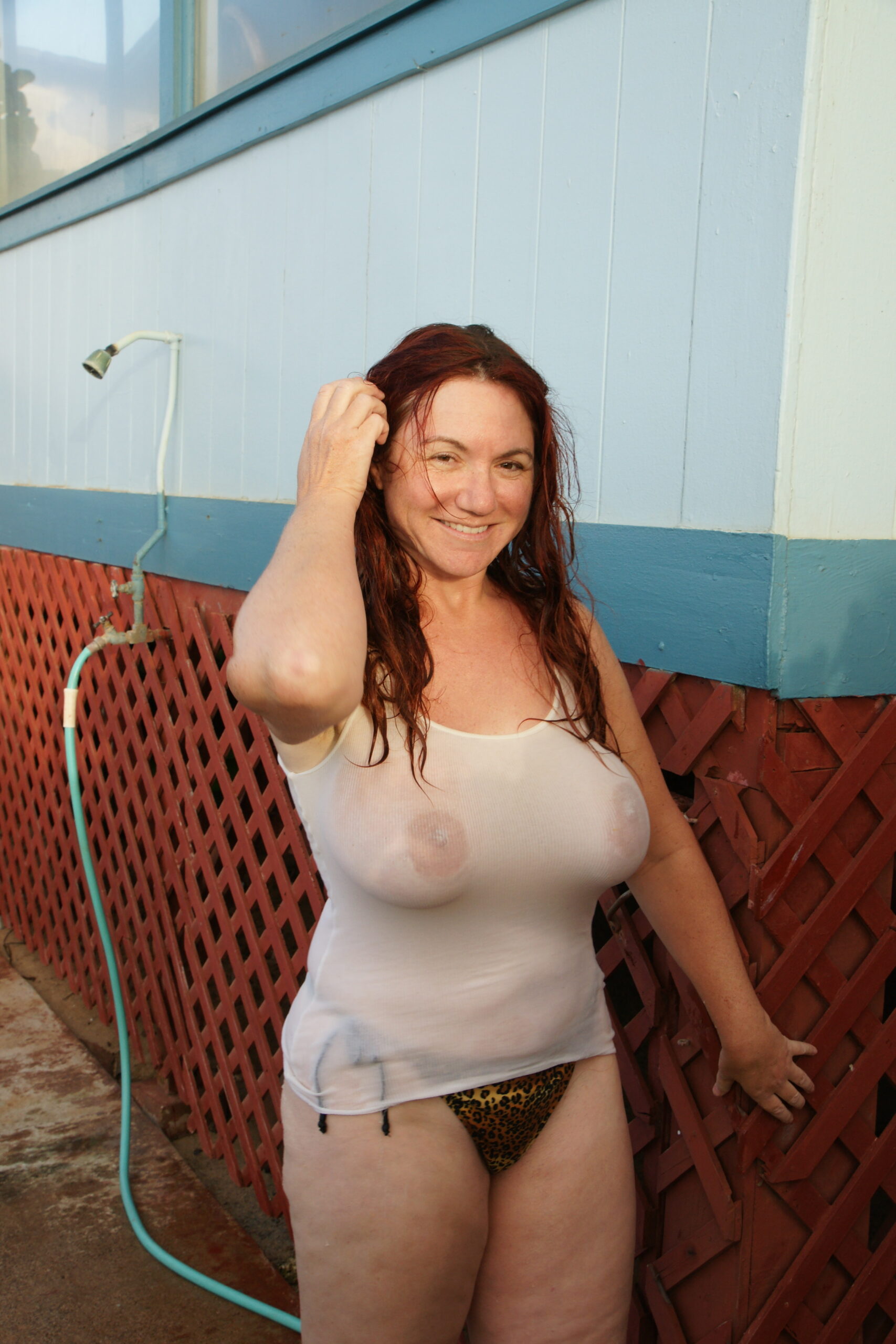
Sand-free at last.
As you can see, there is no sand on me anywhere!! Aren’t outdoor showers great!!
Animals of Hale’iwa
Let’s take a look at other critters we find here.
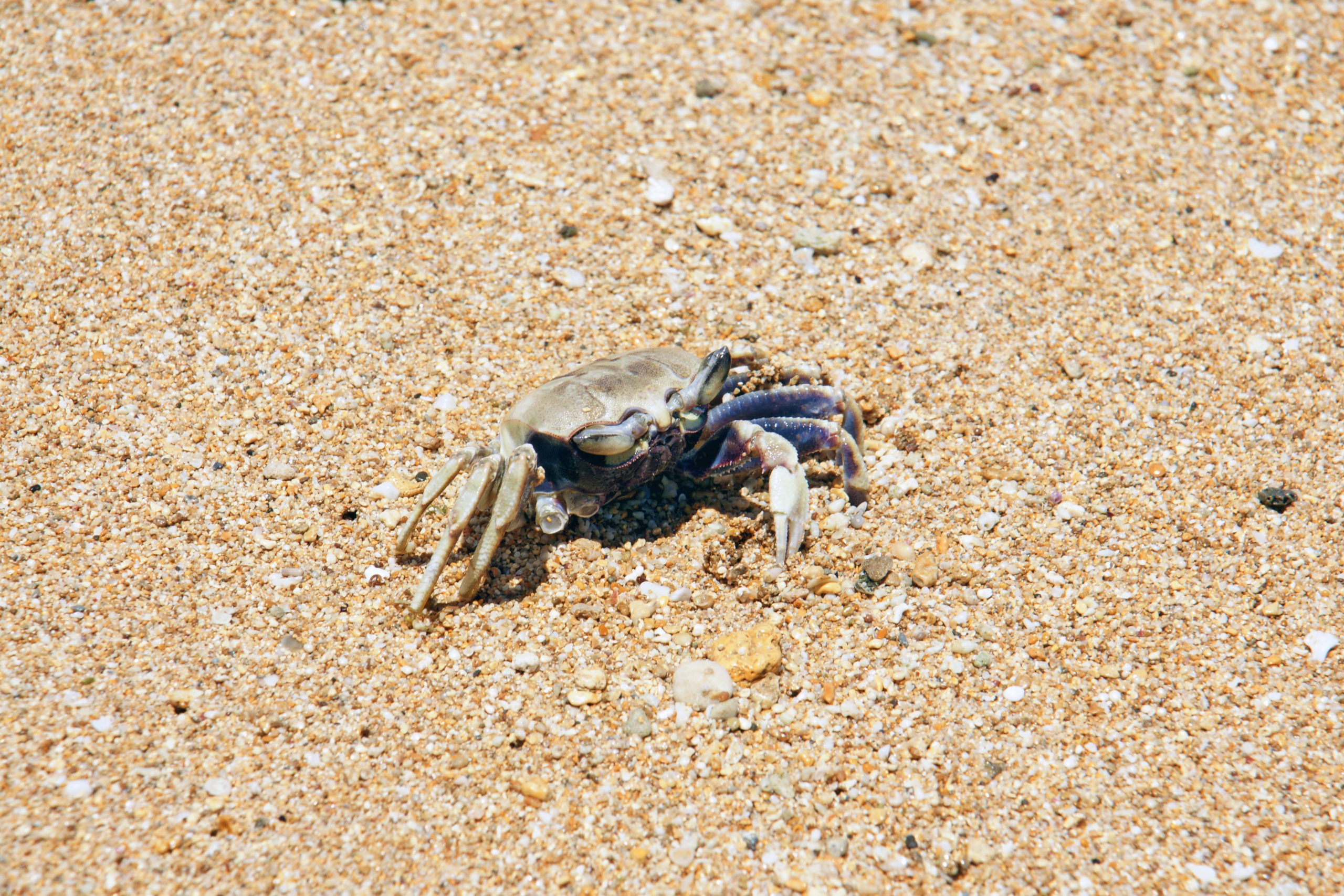
Lefty is feeling blue.
When you think of crabs, you probably imagine a life of leisure, snacking on morsels of food while you enjoy the warm ocean. Just remember that there is always some bloke who will pull your arms and legs off if so inclined.
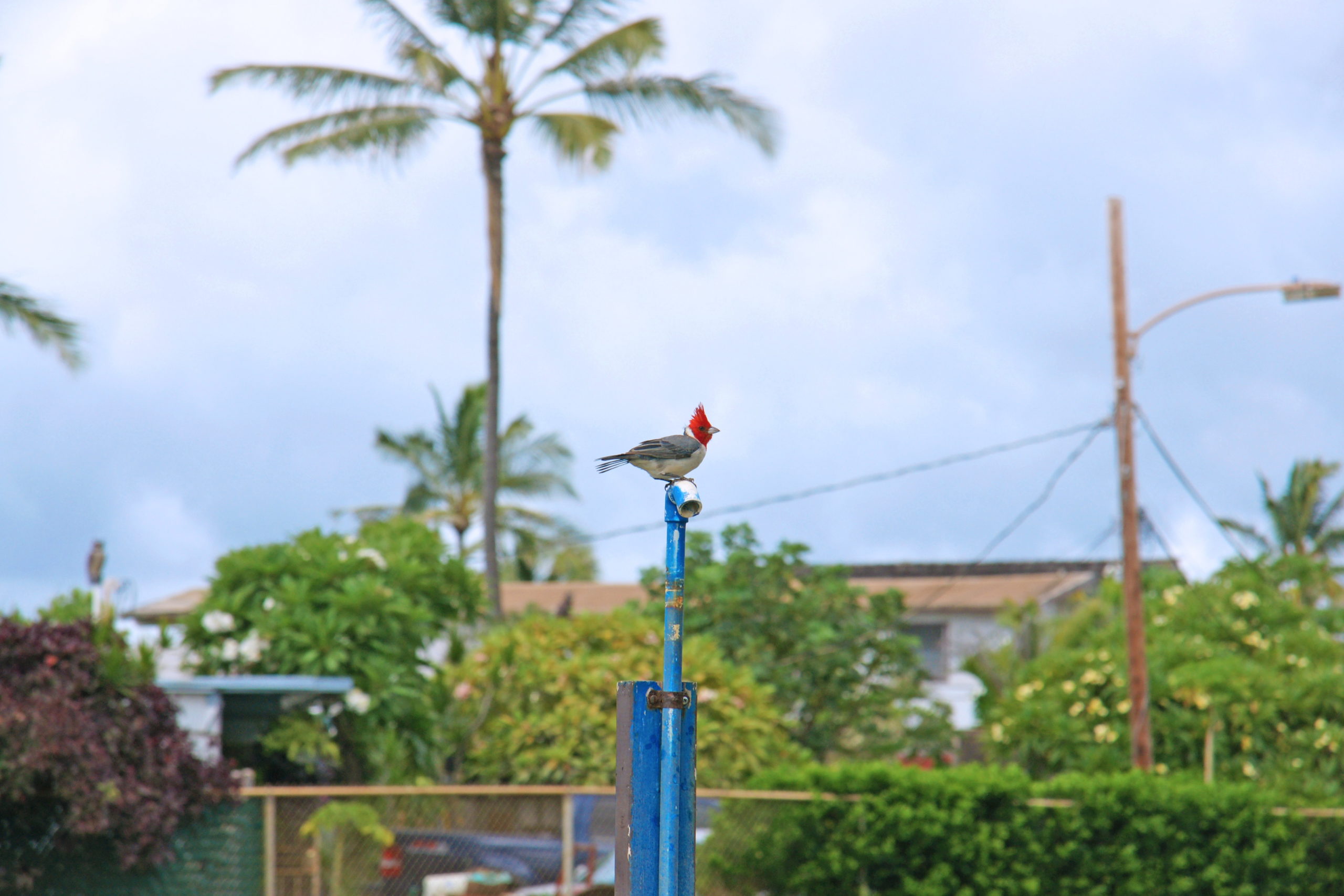
That’s a lot of cardinals!
The Brazilian Cardinal, also called the Red-crested Cardinal (Paroaria coronata), was introduced to O’ahu around 1930. We don’t know why he’s on this water pipe rather than searching for food.
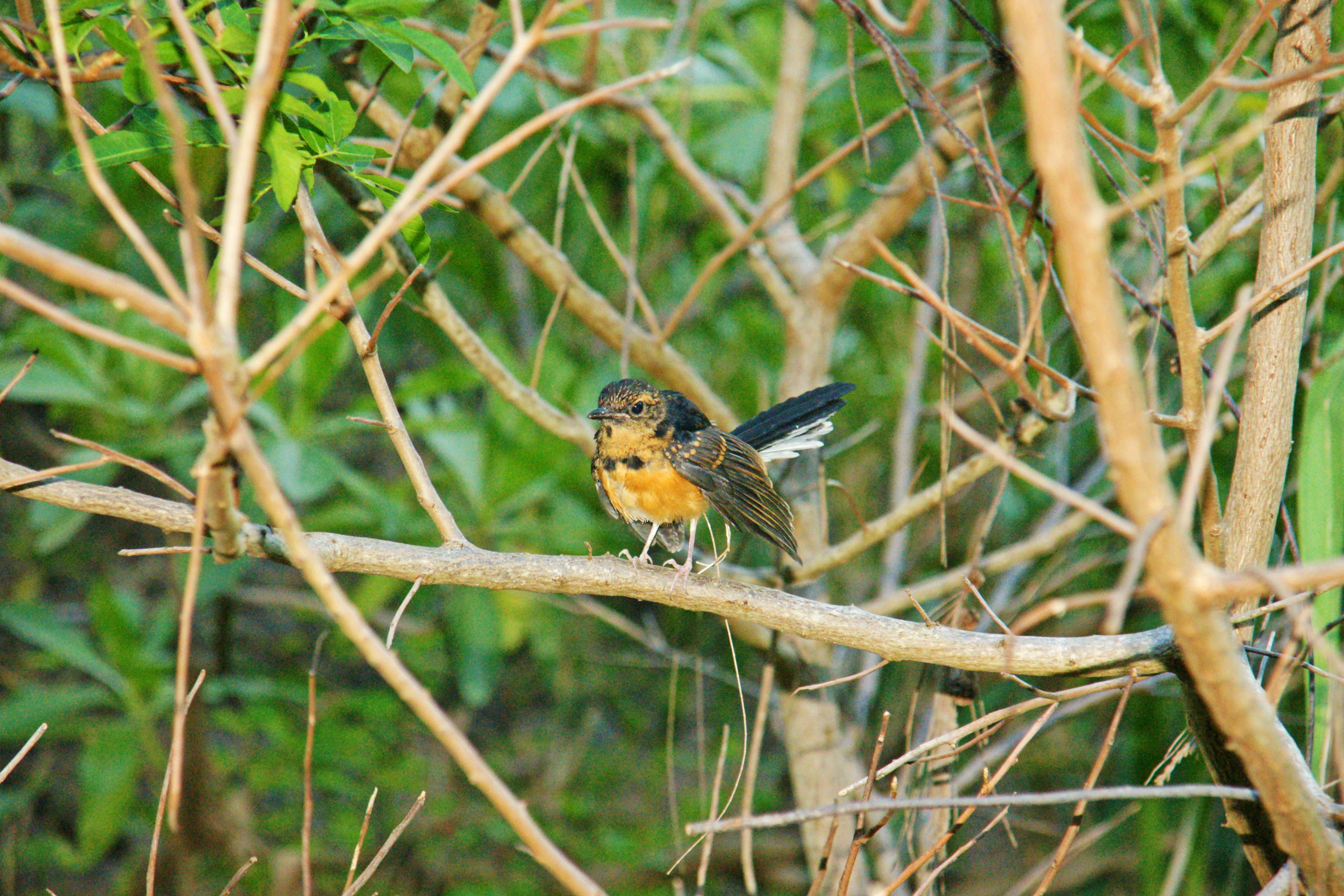
Awwww, he’s just a kid!
The White-rumped Shama (although not this particular one) was introduced to O’ahu in 1940. This juvenile (Copsychus malabaricus) adds to the ever-larger population of invasive birds on these islands.
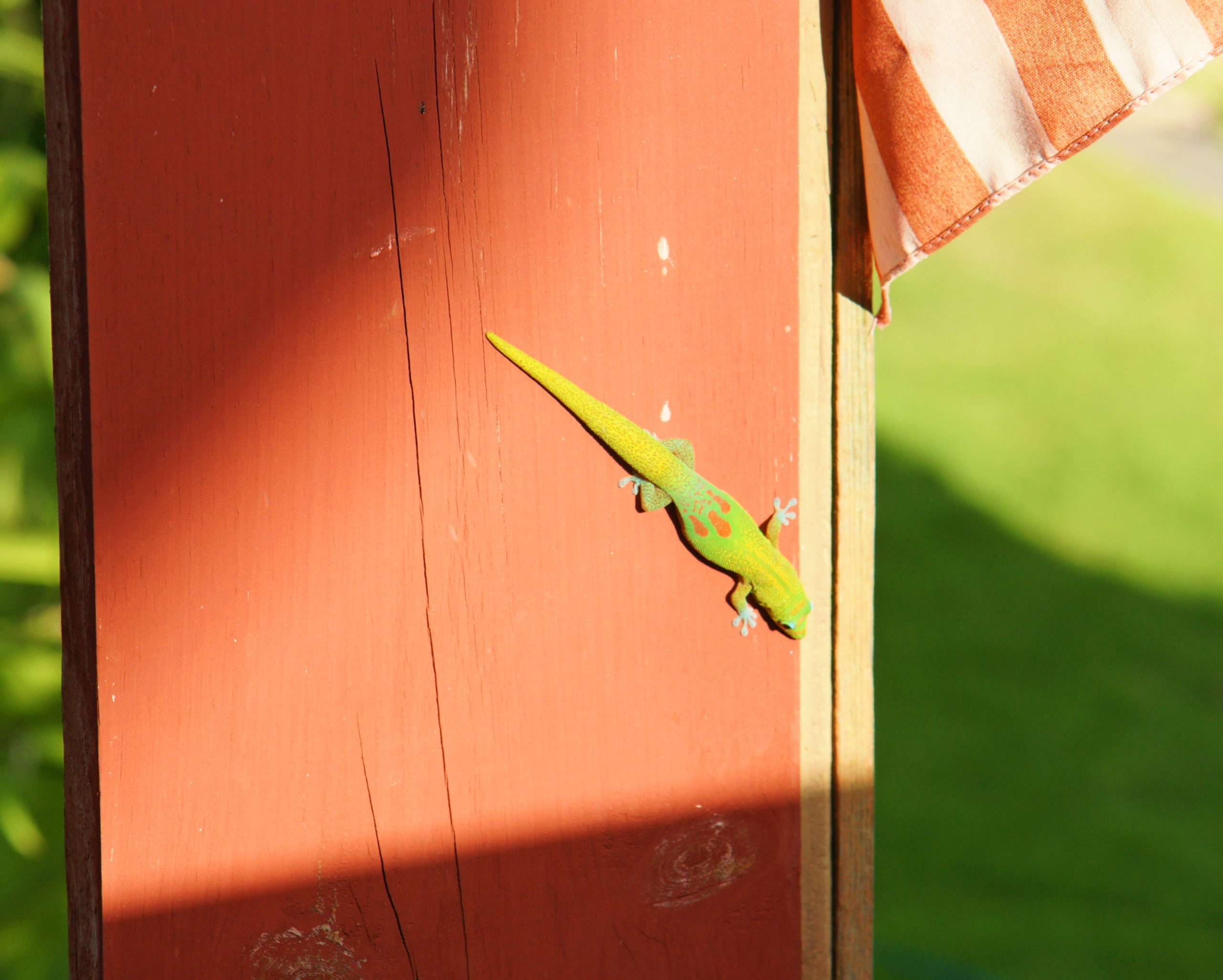
Dang! Are there any animals here that are NOT invasive?
The Gold Dust Day gecko (Phelsuma laticauda) feed on various insects and other invertebrates, and are also capable of eating other smaller lizards. They also eat soft, sweet fruit and pollen and nectar from flowers, often congregating in groups of many individuals to feed off of one plant. The males are rather aggressive and can be quite quarrelsome. They do not accept other males in their territory. In captivity, where the females cannot escape, the males may also seriously wound a female.
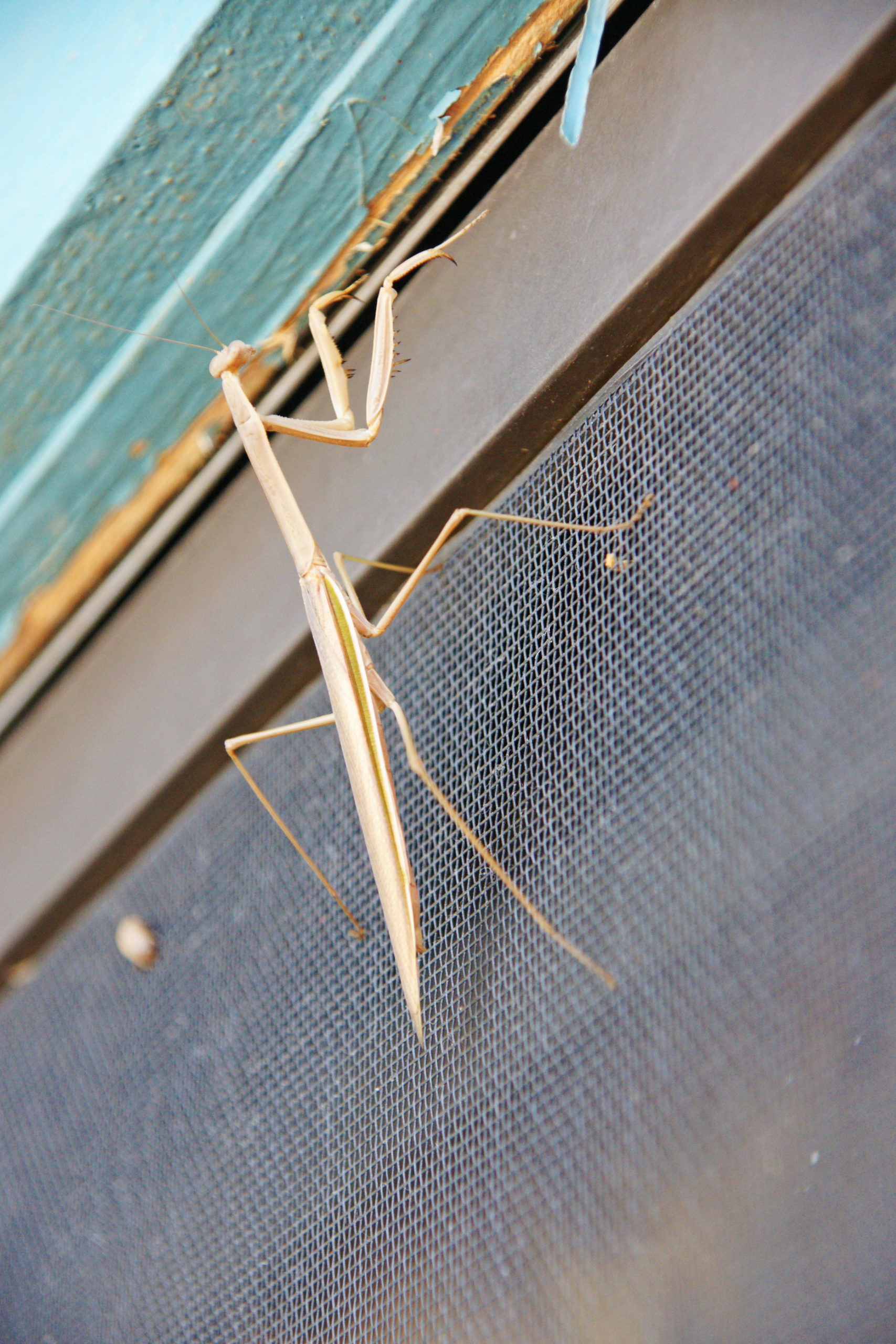
Say your prayers, bug!
Mantises are an order (Mantodea) of insects that contains over 2,400 species in about 430 genera in 30 families. The largest family is the Mantidae (“mantids”). Mantises are distributed worldwide in temperate and tropical habitats. They have triangular heads with bulging eyes supported on flexible necks. Their elongated bodies may or may not have wings, but all Mantodea have forelegs that are greatly enlarged and adapted for catching and gripping prey; their upright posture, while remaining stationary with forearms folded, has led to the common name praying mantis.
And, of course, they are not native to this island.
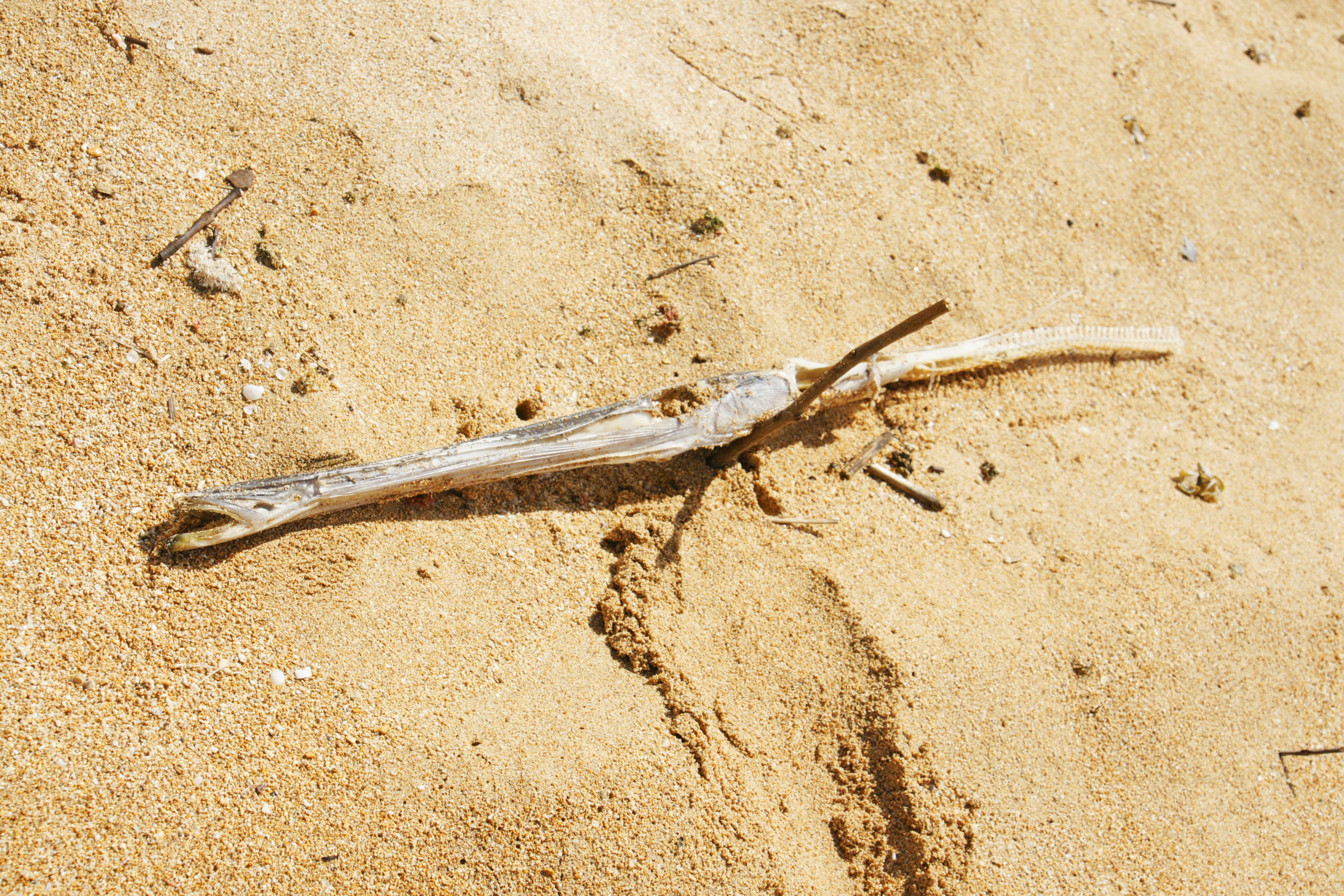
Tooting his own horn.
This appears to be the earthly remains of a Trumpetfish, which, surprisingly, is not an invasive species! The part to the left of the stick is (was) its head.
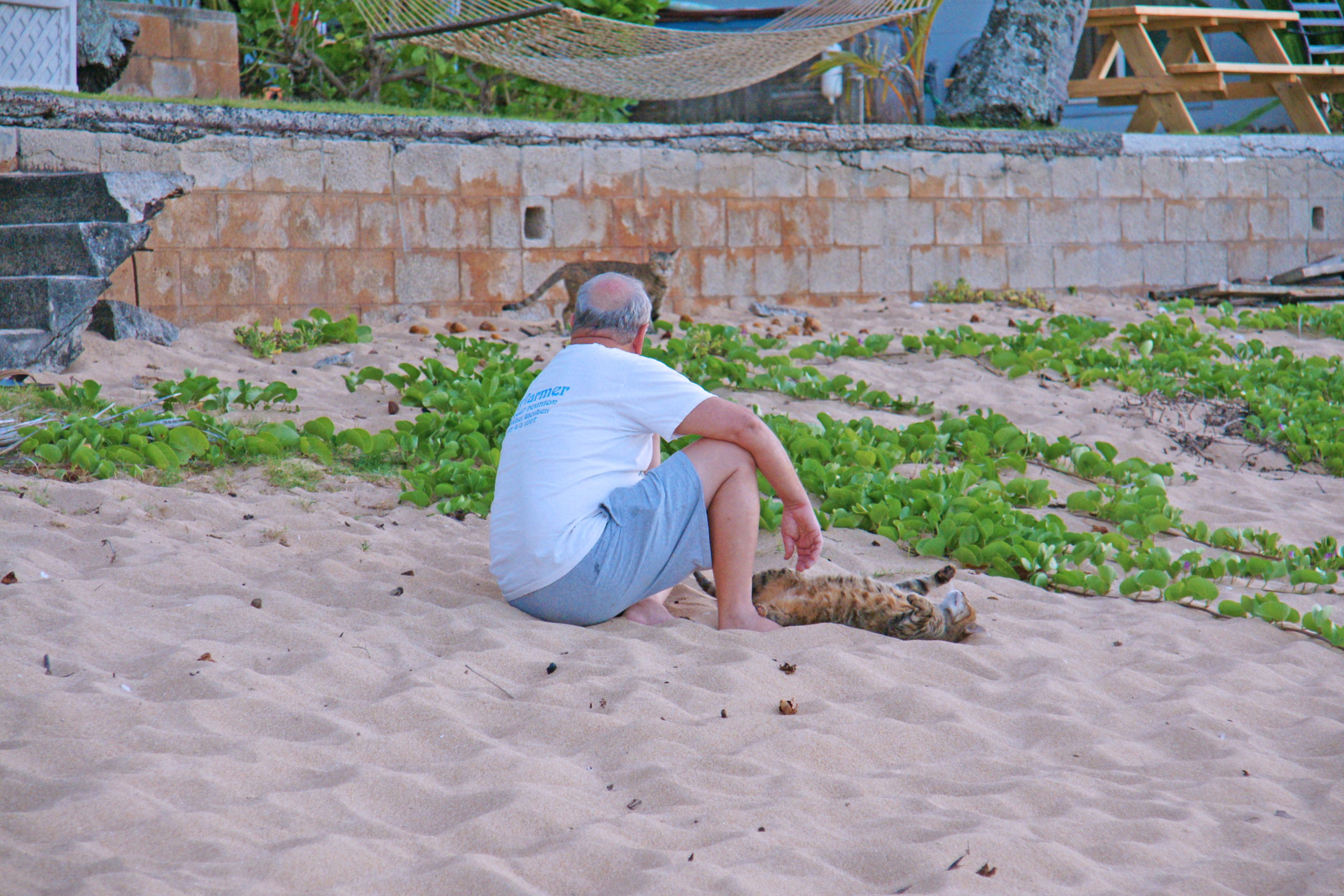
Grrrrrrr, baby.
Here we observe two more invasive species in a symbiotic relationship. The one stretched on its back is fed, watered, brushed, medicated, petted, and pampered by the larger one. The benefit to the larger one remains a mystery.
Plants
We have a few tropical plants grown here, too.
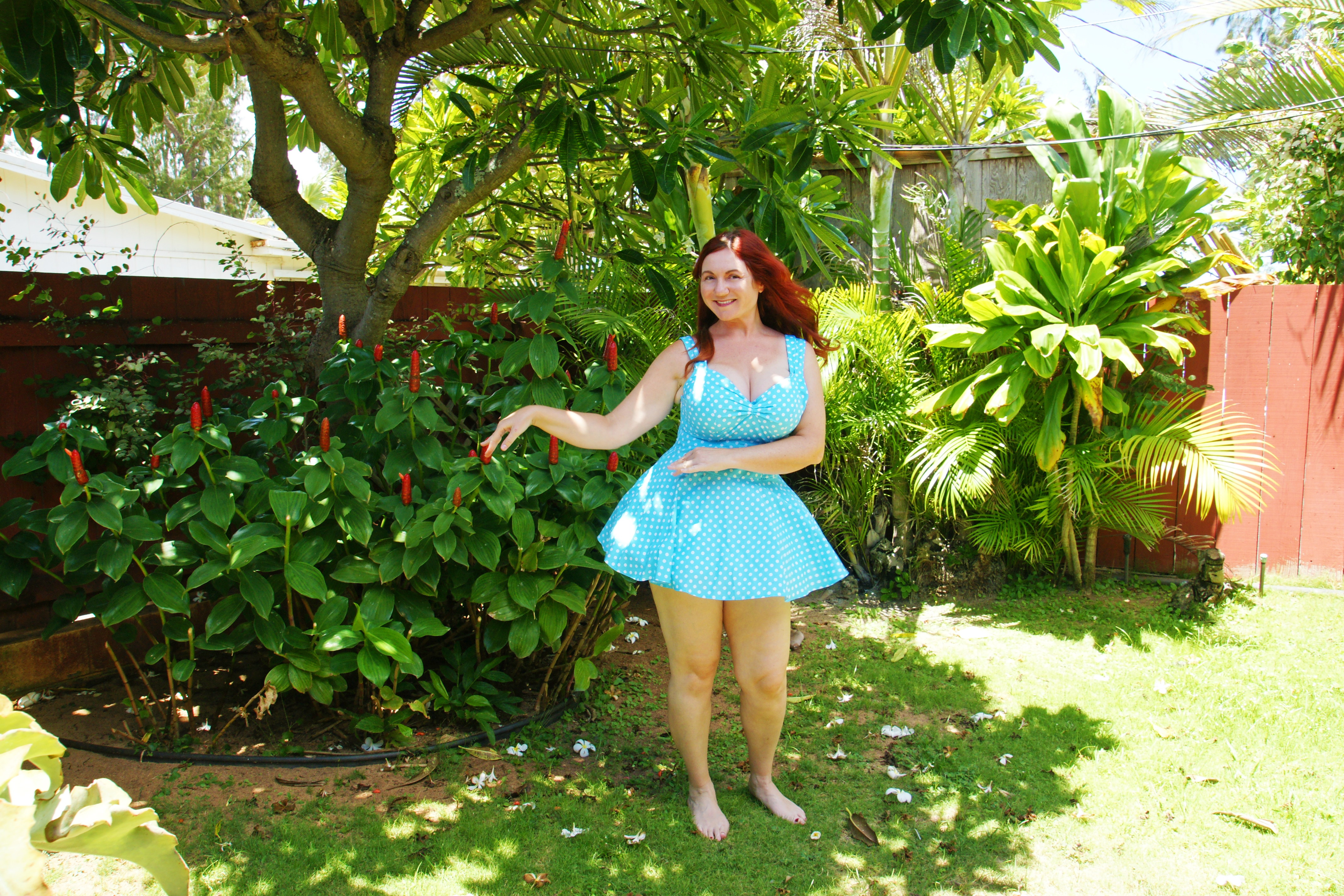
Time to wash my hair!
Shampoo ginger (Zingiber zerumbet) is commonly used as a shampoo and conditioner. The clear fragrant juice present in the mature flower heads that resemble red pine cones is used for softening and bringing shininess to the hair. It can be left in the hair or rinsed out and can also be used as a massage lubricant. Hawaiian women often pick or cut the red pod flowerheads of this plant in the forest, as they approach a pool or waterfall for a refreshing summer bath, leave the flowers atop a nearby rock, and then squeeze the sweet juices into their hair and over their bodies when the swim is completed.
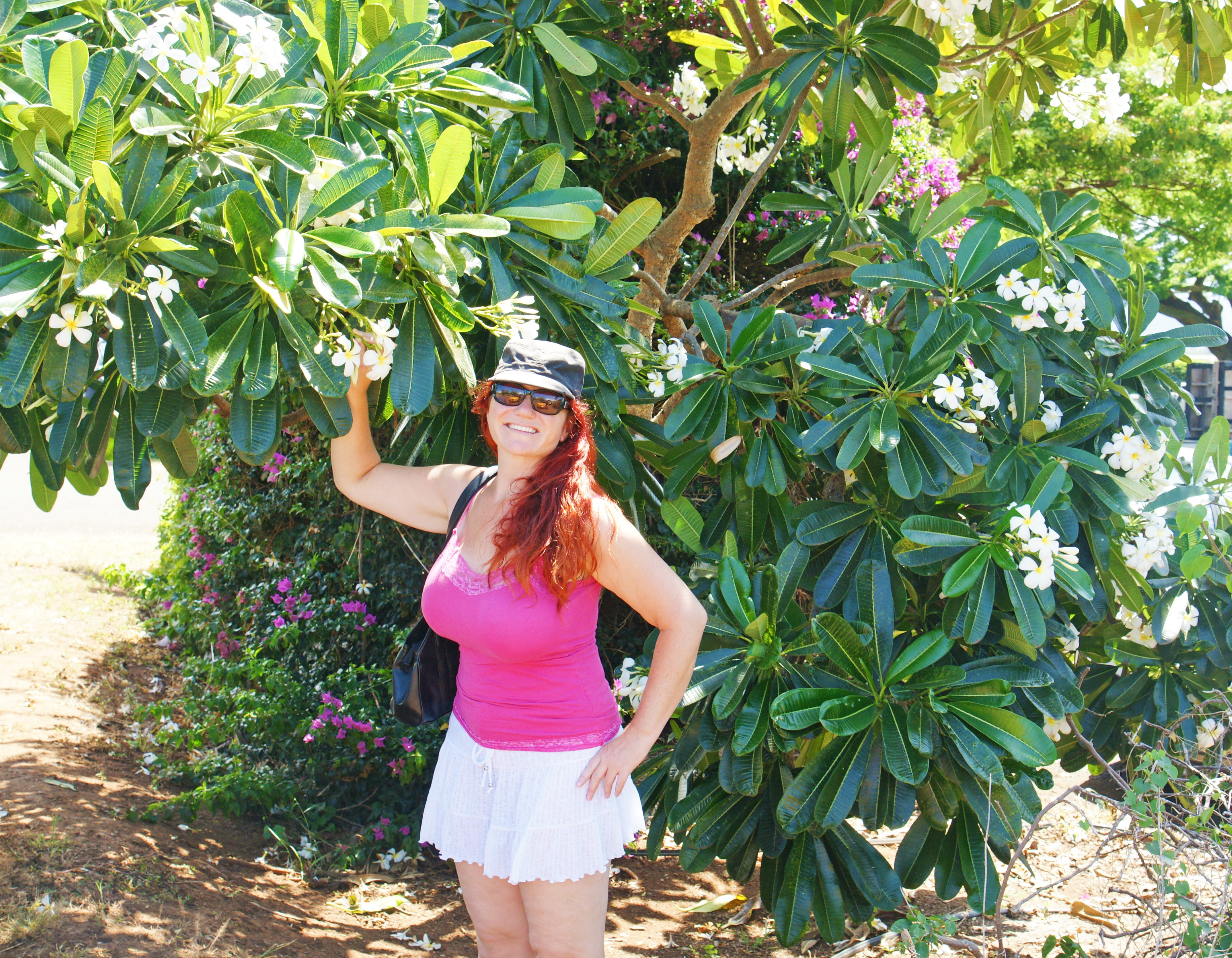
I’m beginning to think nothing is native to Hawaii….
Plumerias were brought to these islands in 1860. According to the Internet, “Plumeria flowers are most fragrant at night in order to lure sphinx moths to pollinate them. The flowers yield no nectar, however, and simply trick their pollinators. The moths inadvertently pollinate them by transferring pollen from flower to flower in their fruitless search for nectar.” Plants tricking moths; what an age we live in!
Poses
With all the beauty here in Hale’iwa, it’s the natural place to take a few photographs, right?

Walking on the lovely beaches of O’ahu.
If you know where to go, the beaches of Hawai’i are romantically secluded.
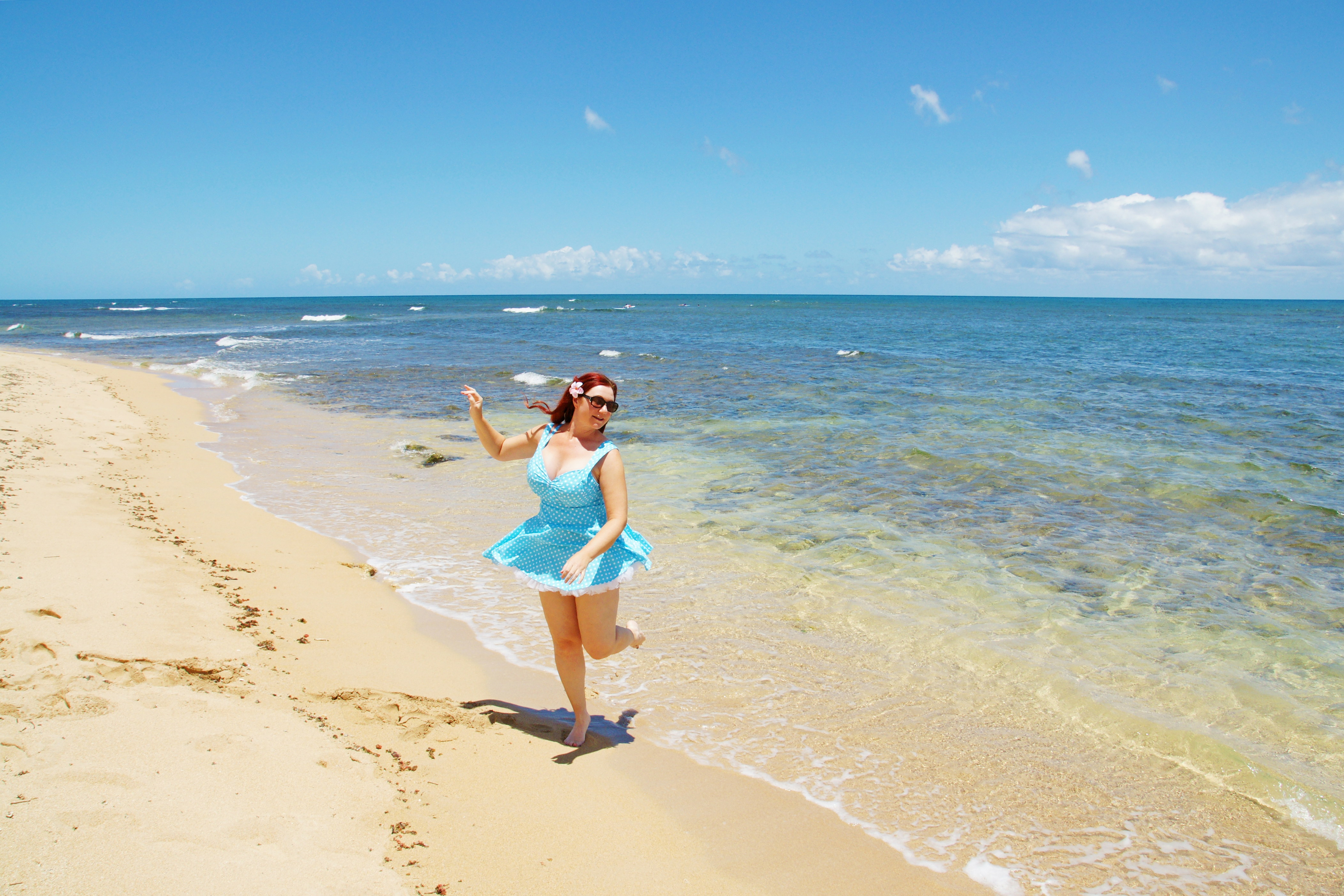
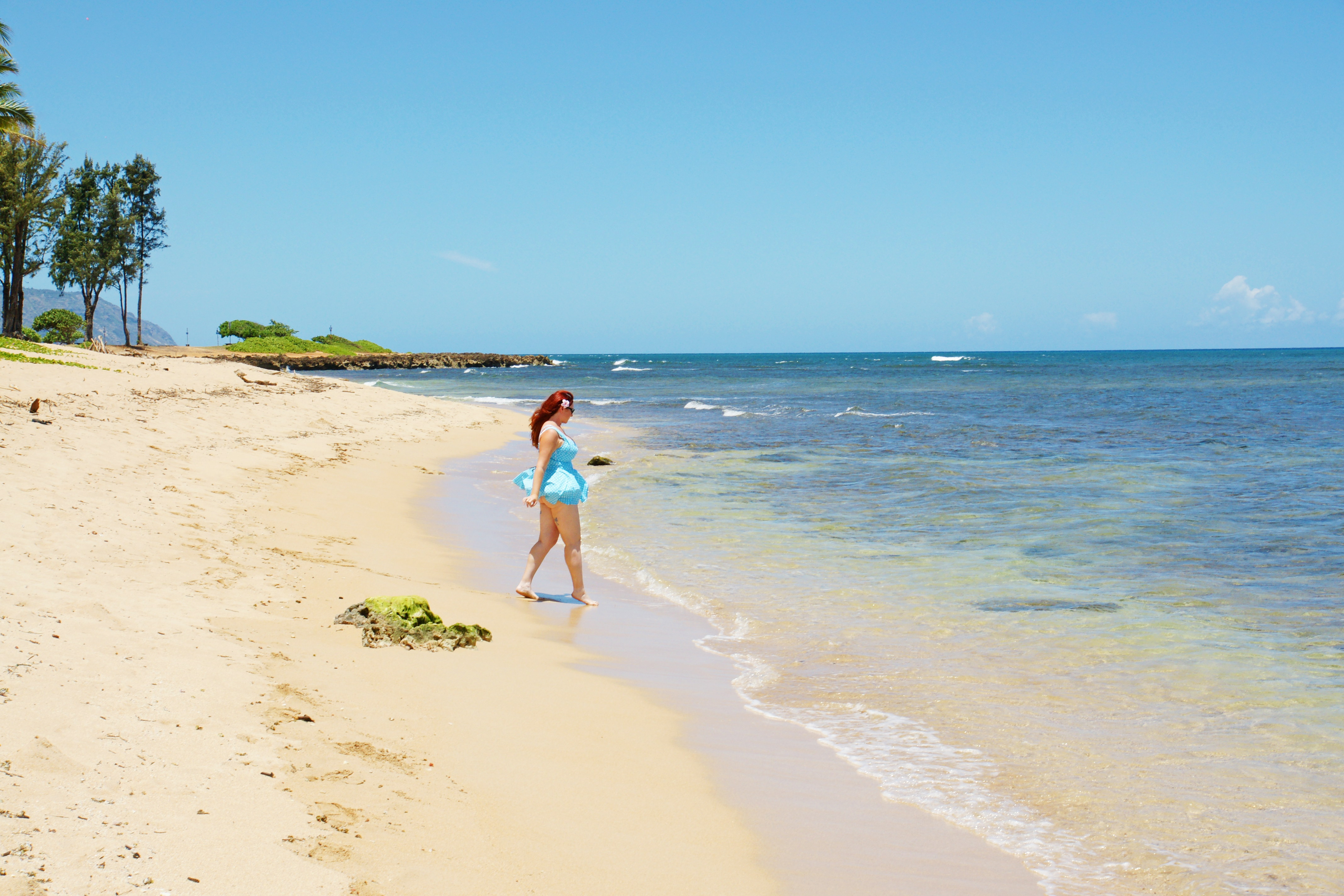
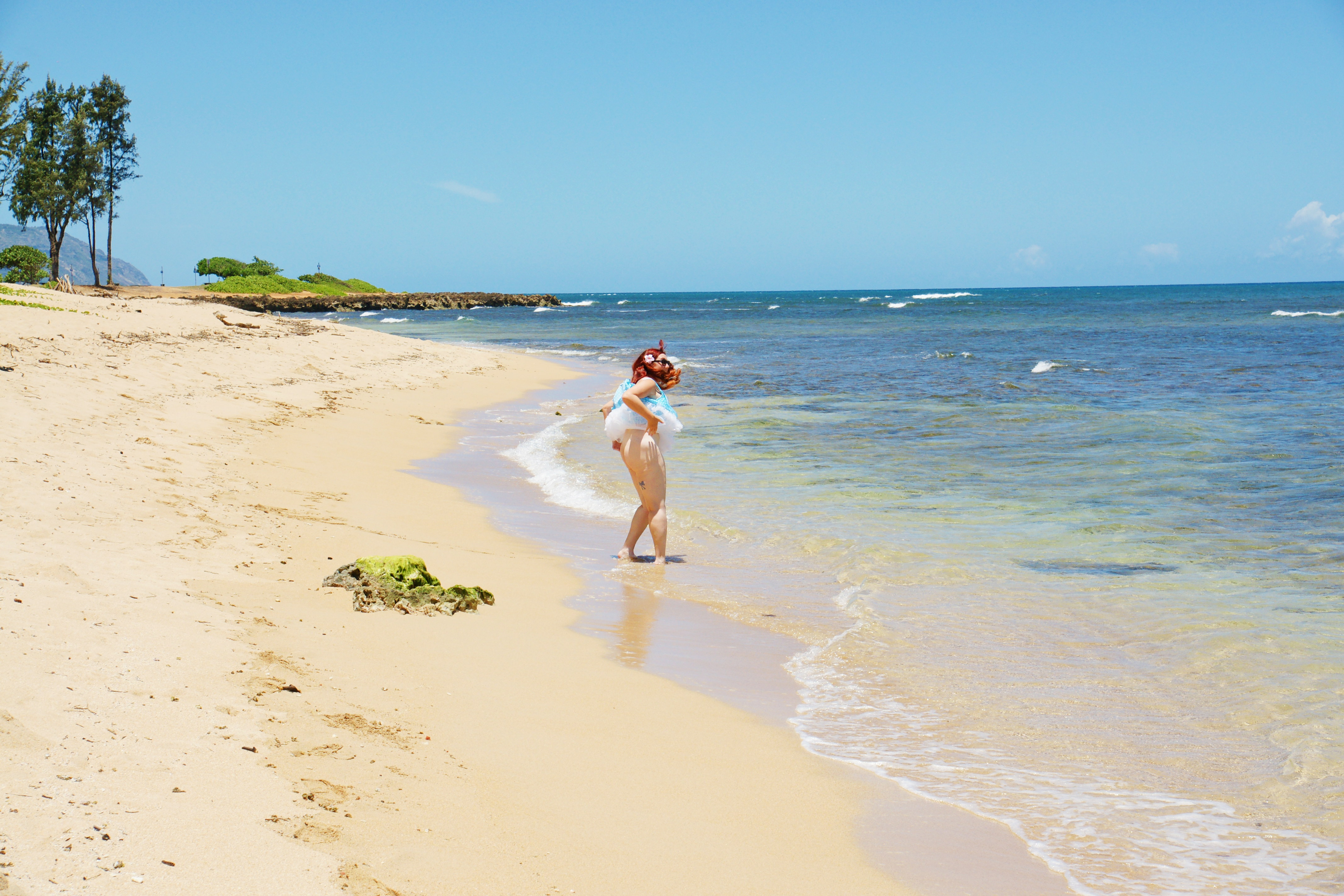
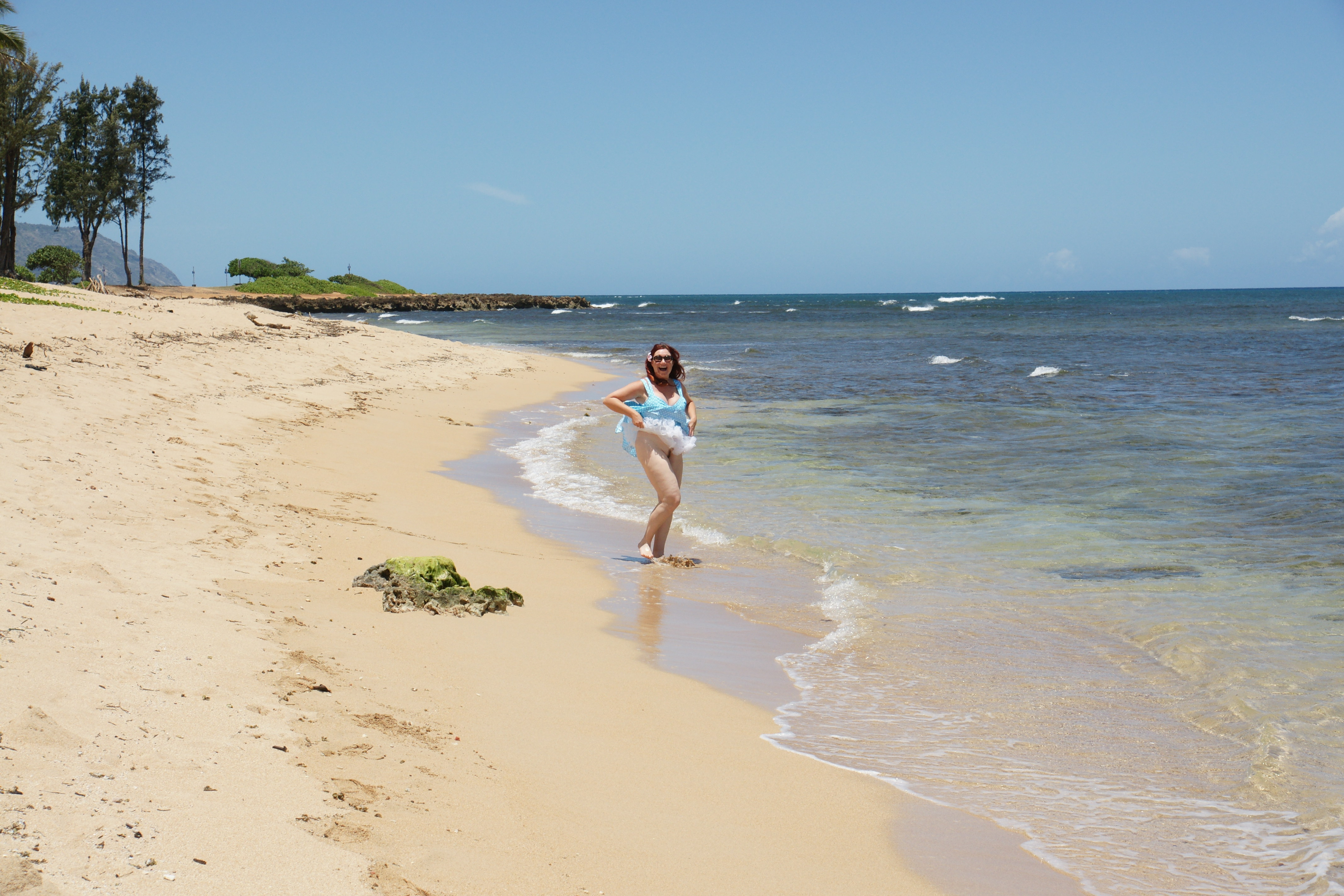
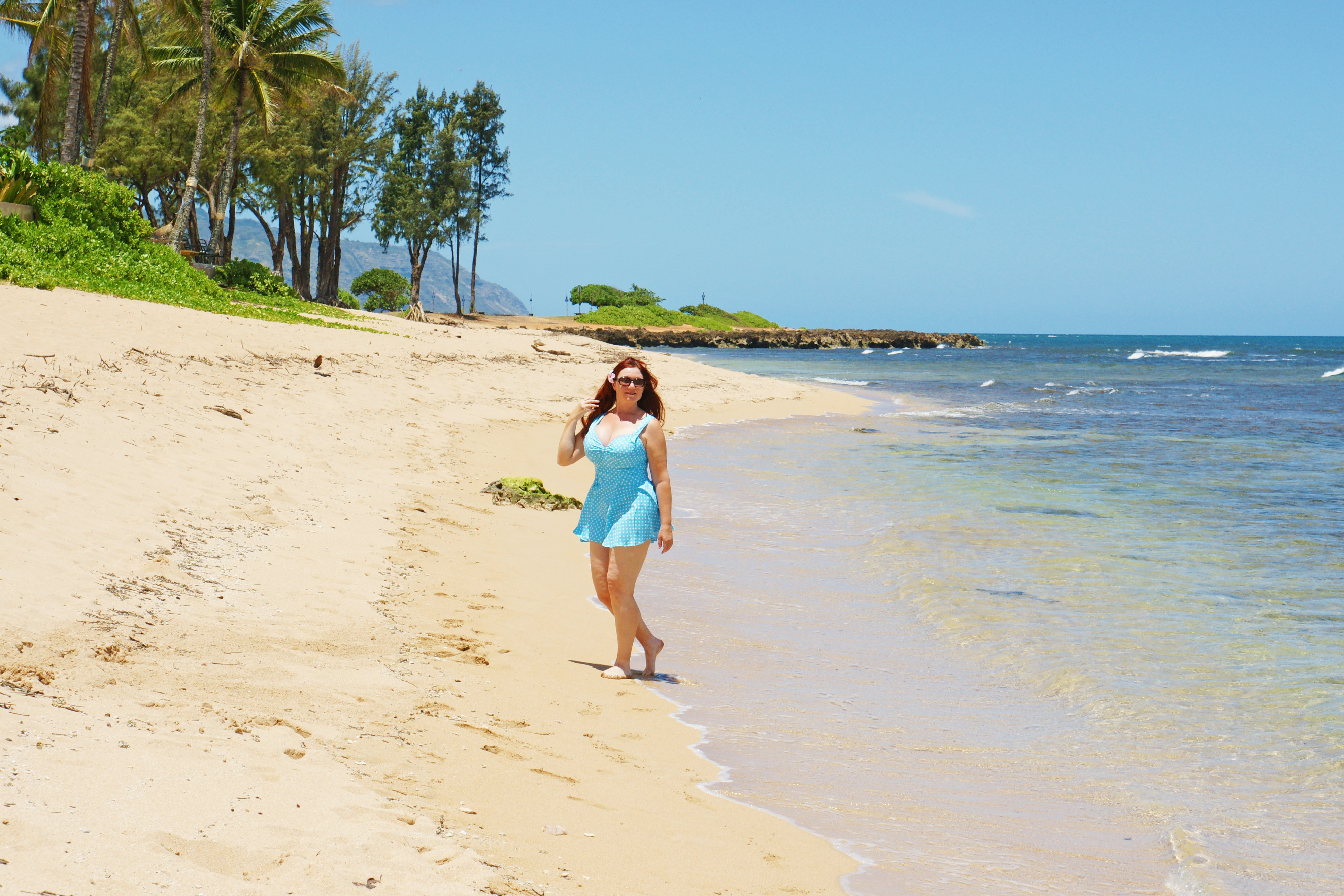
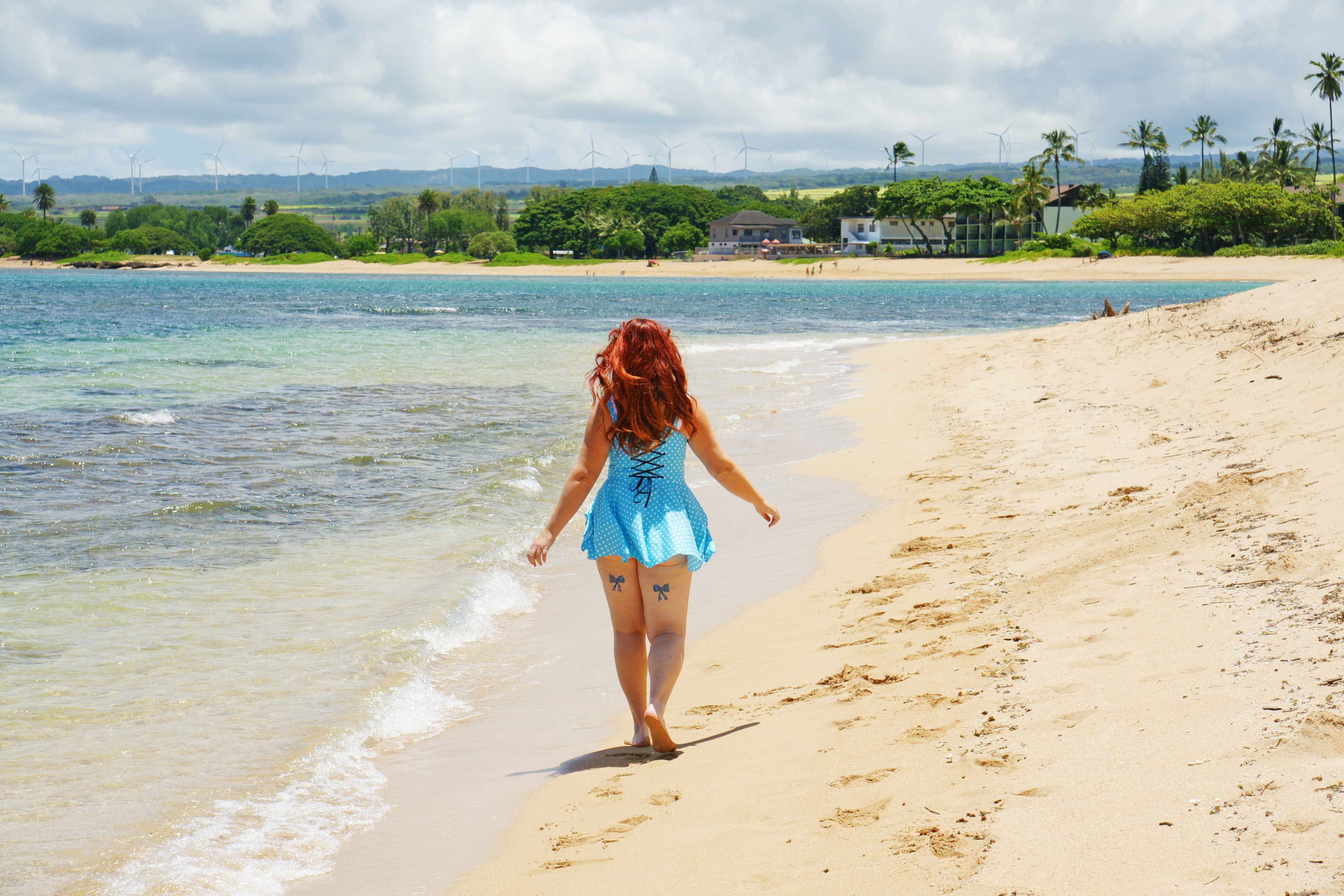
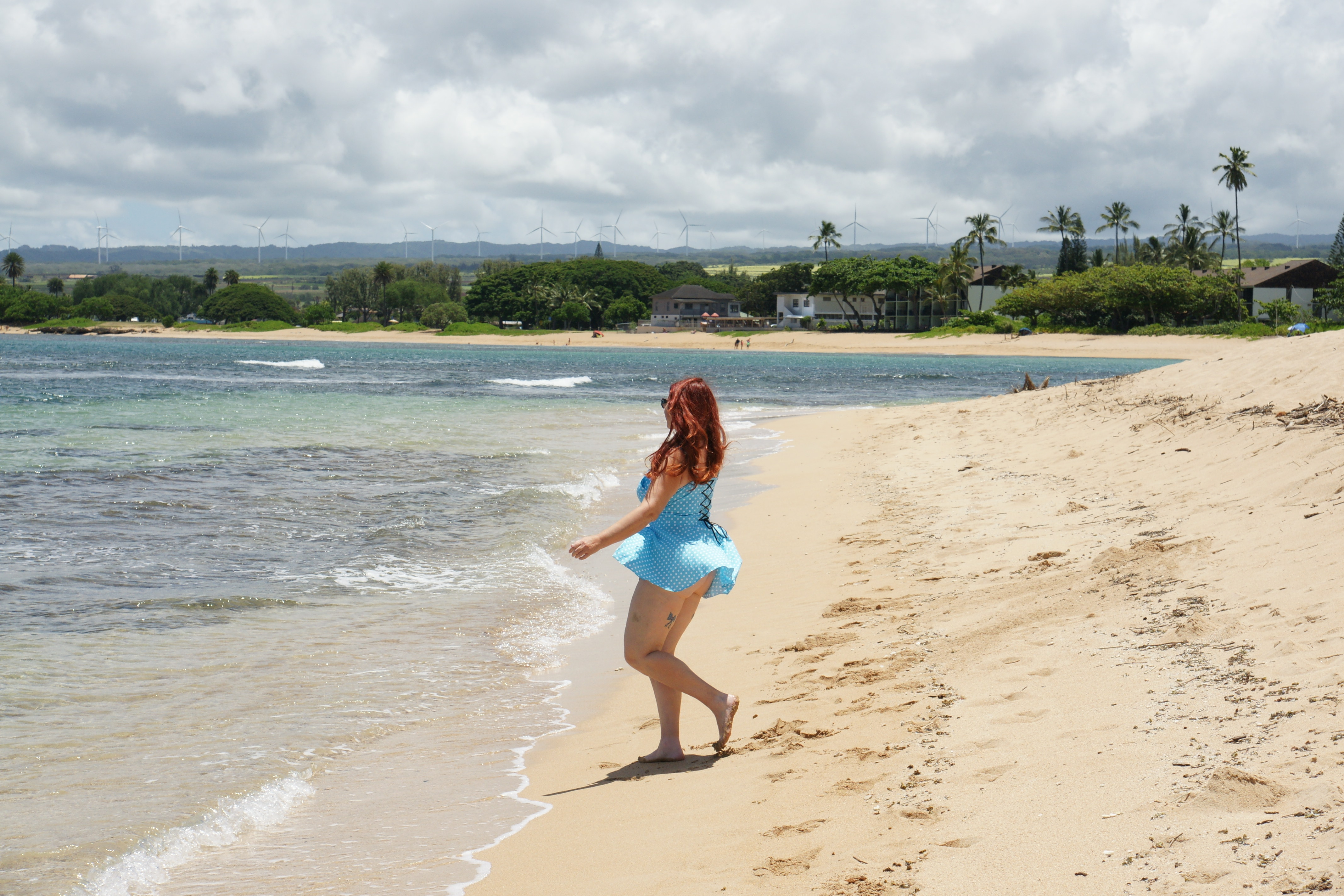
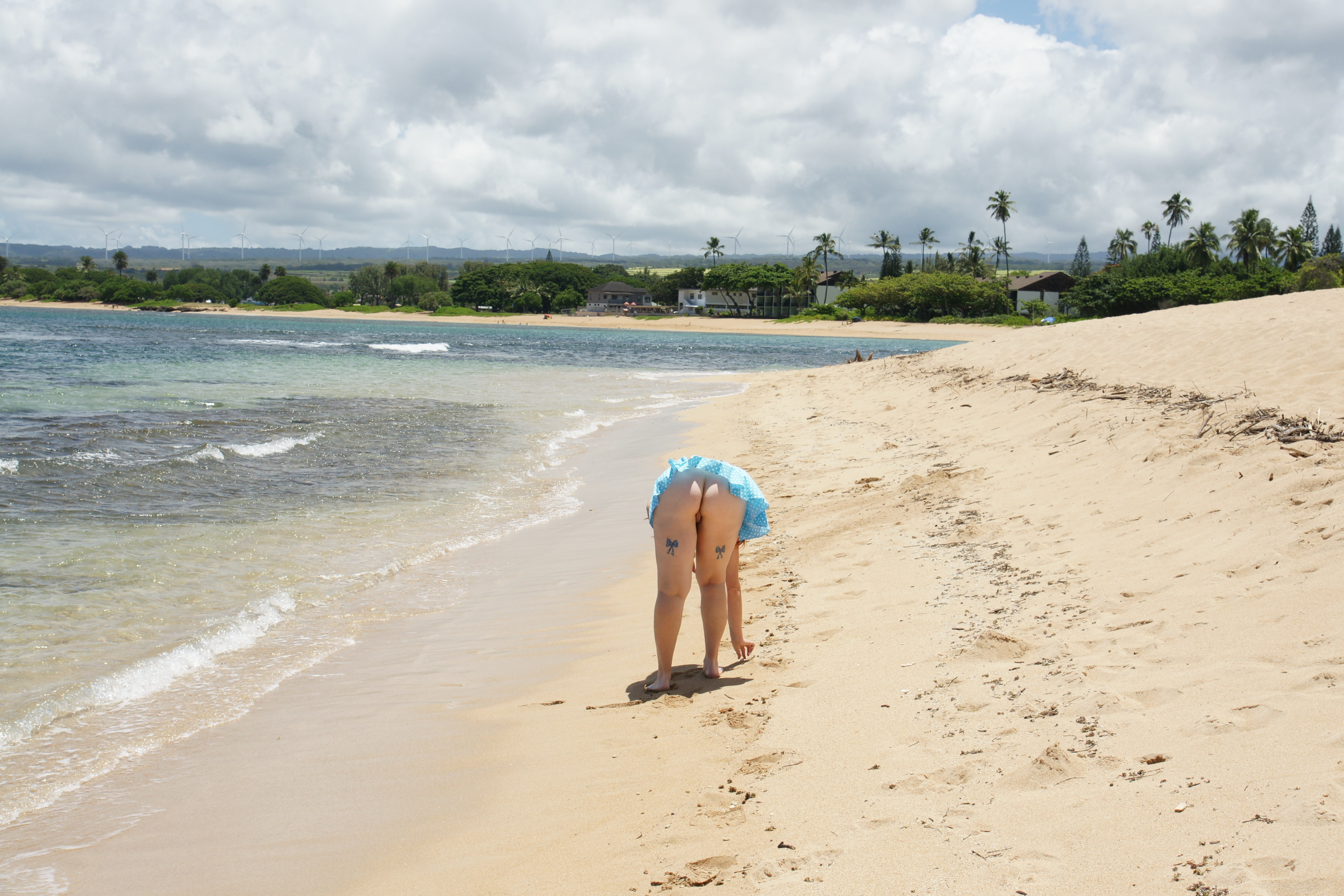
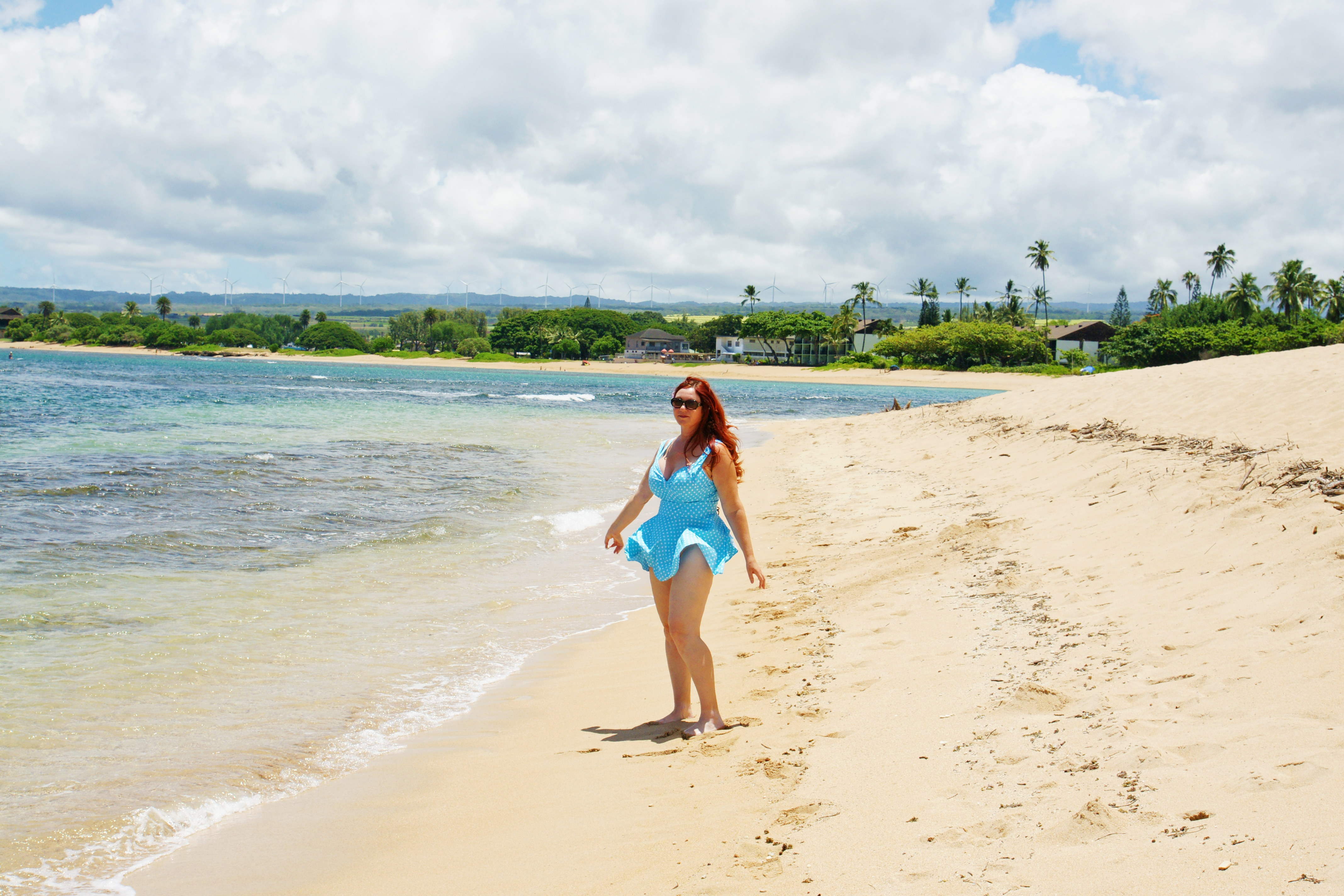
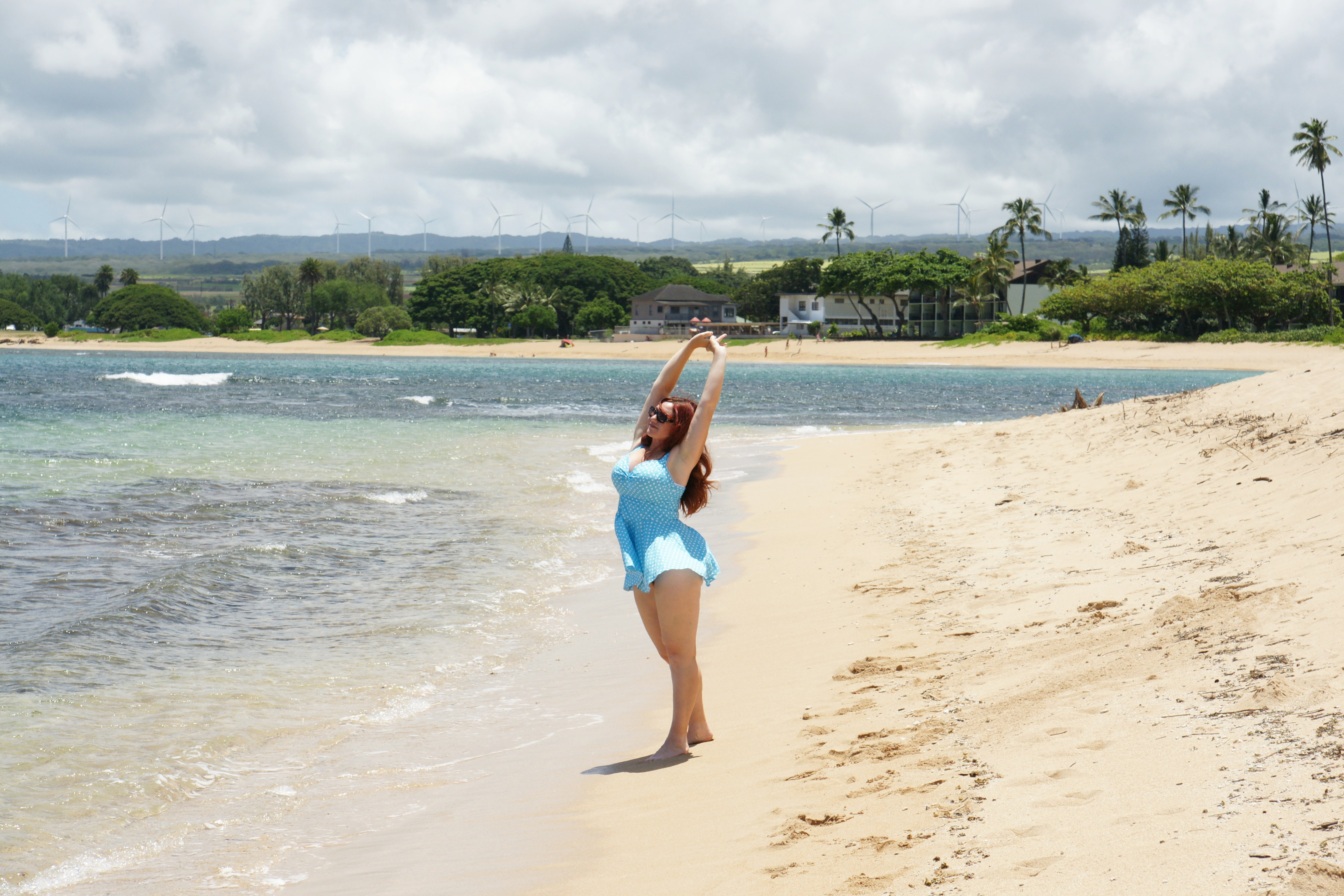
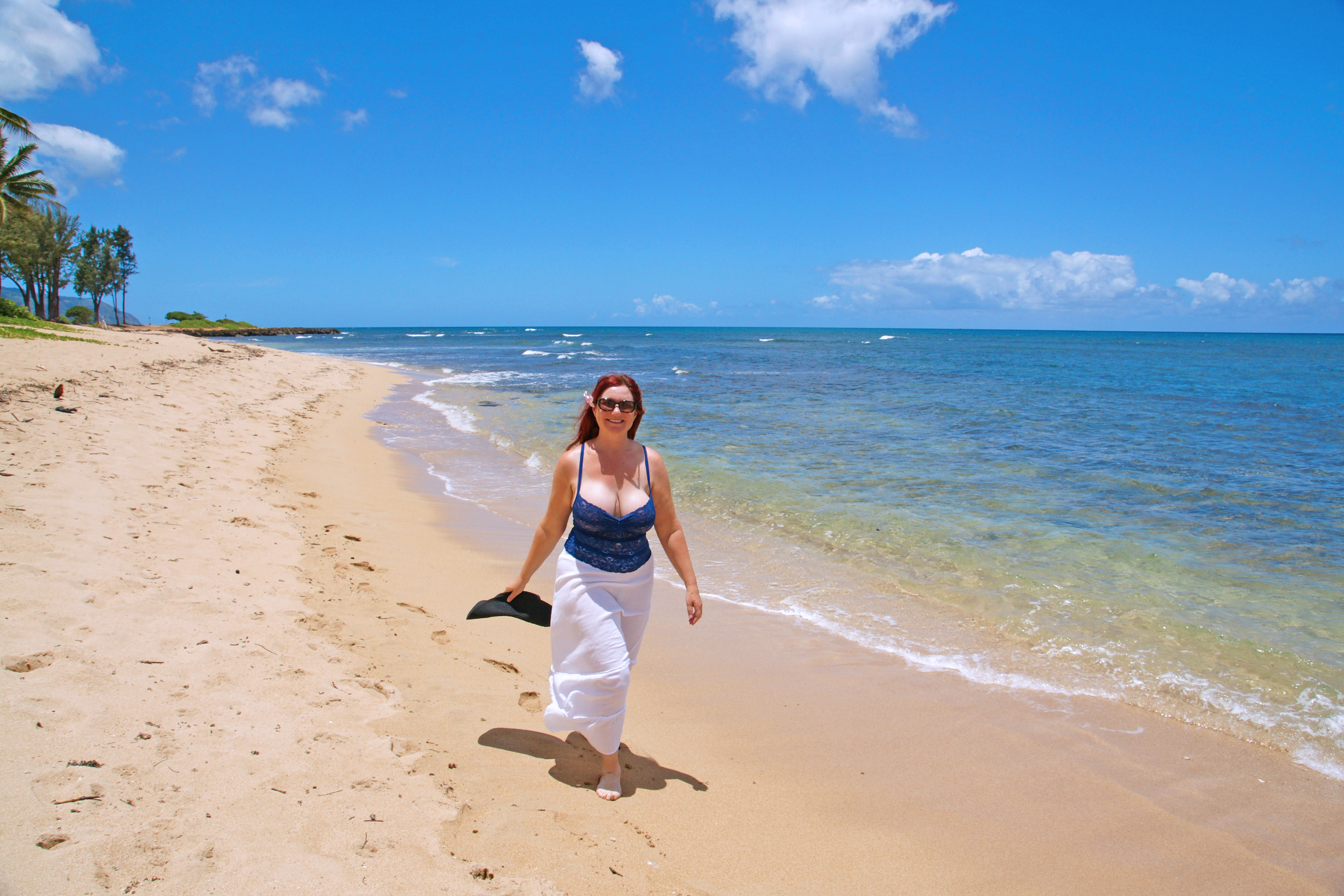
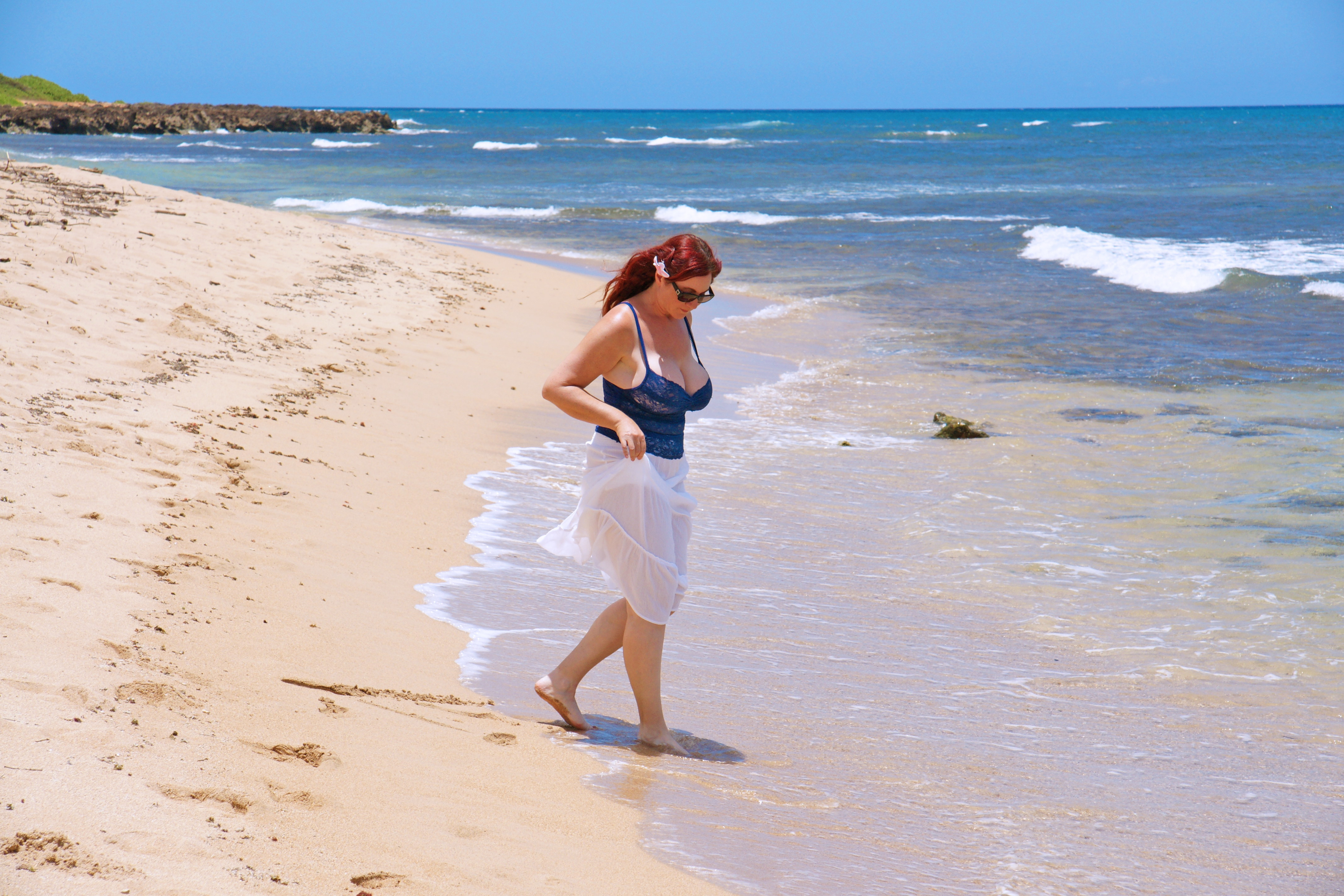
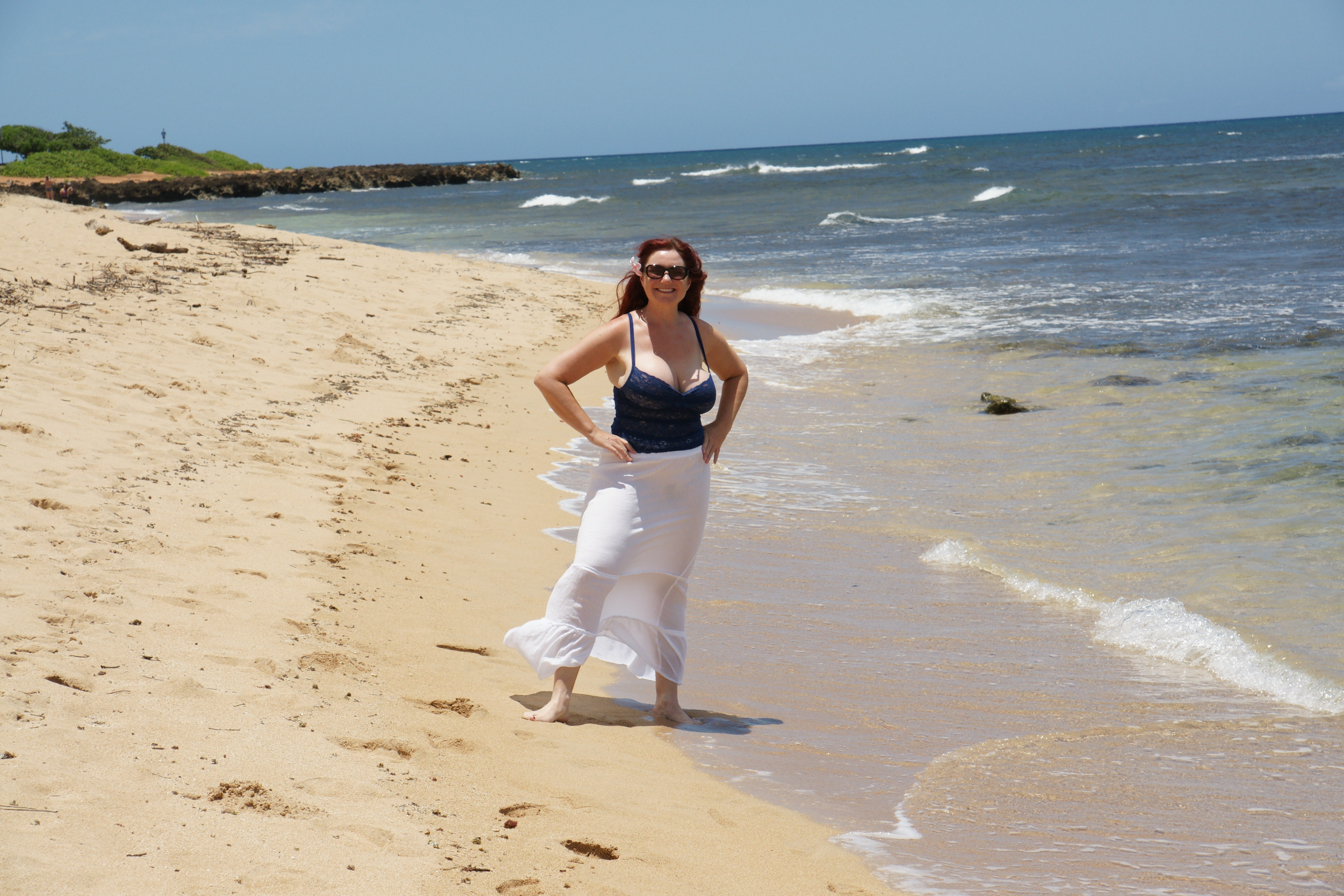
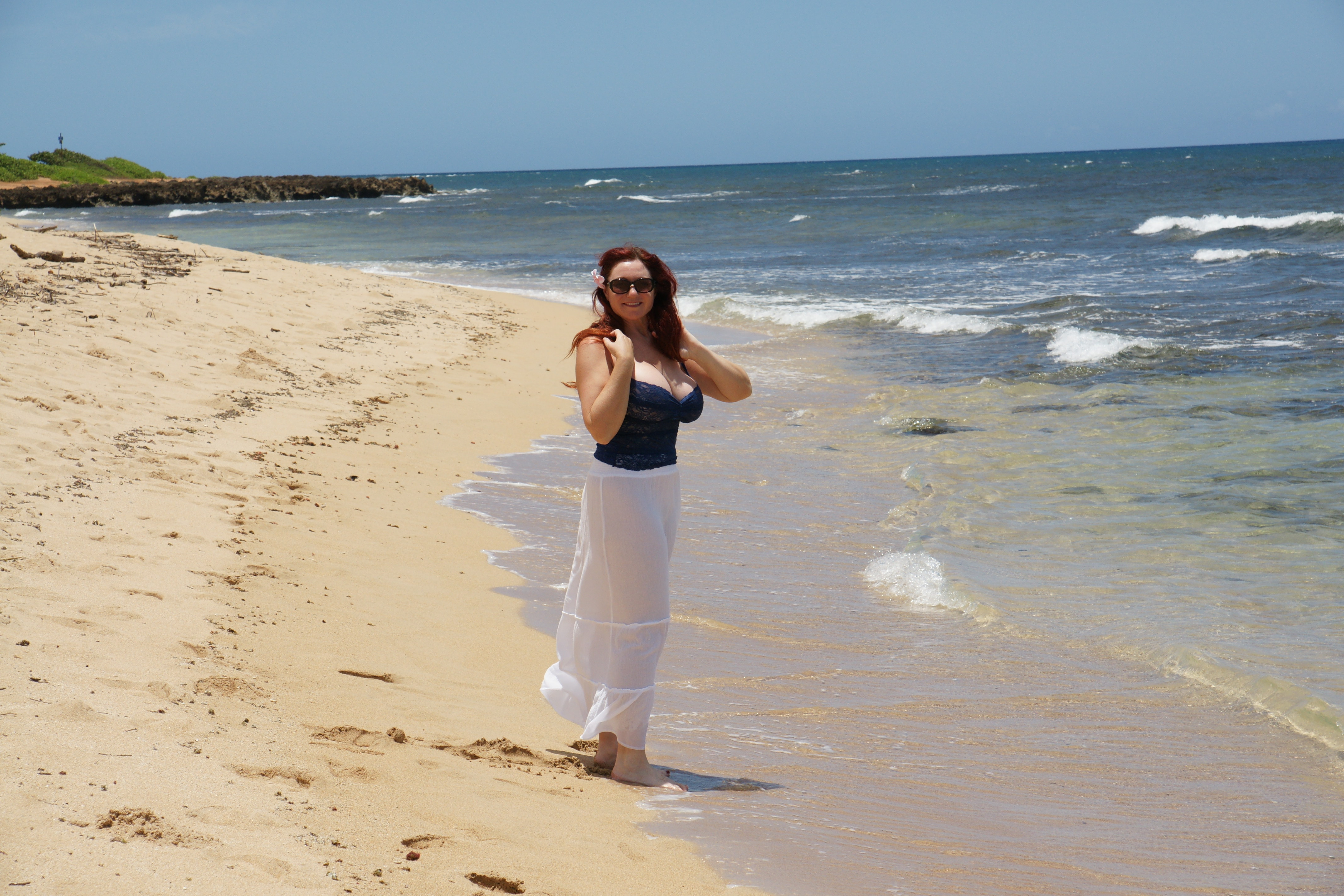
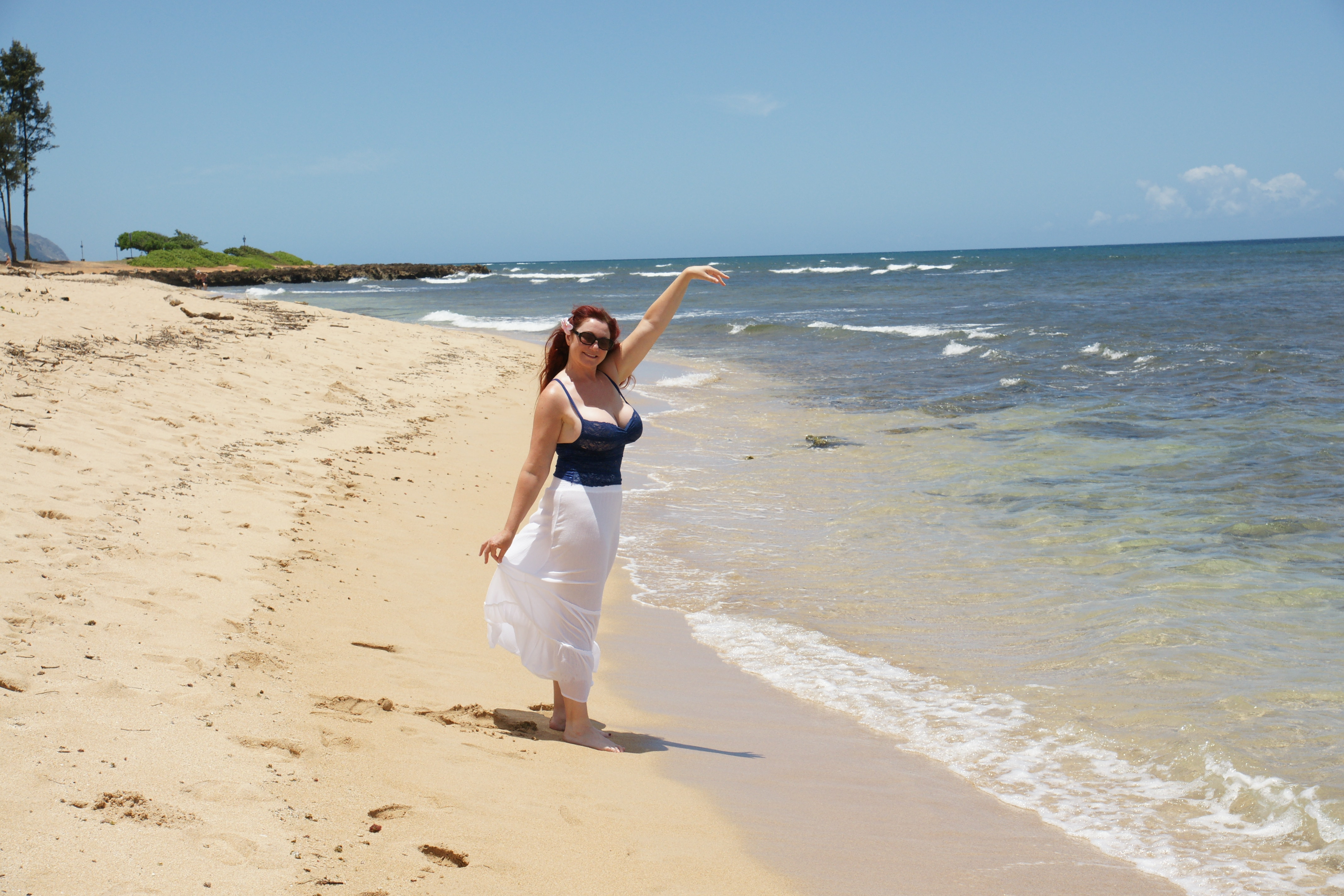
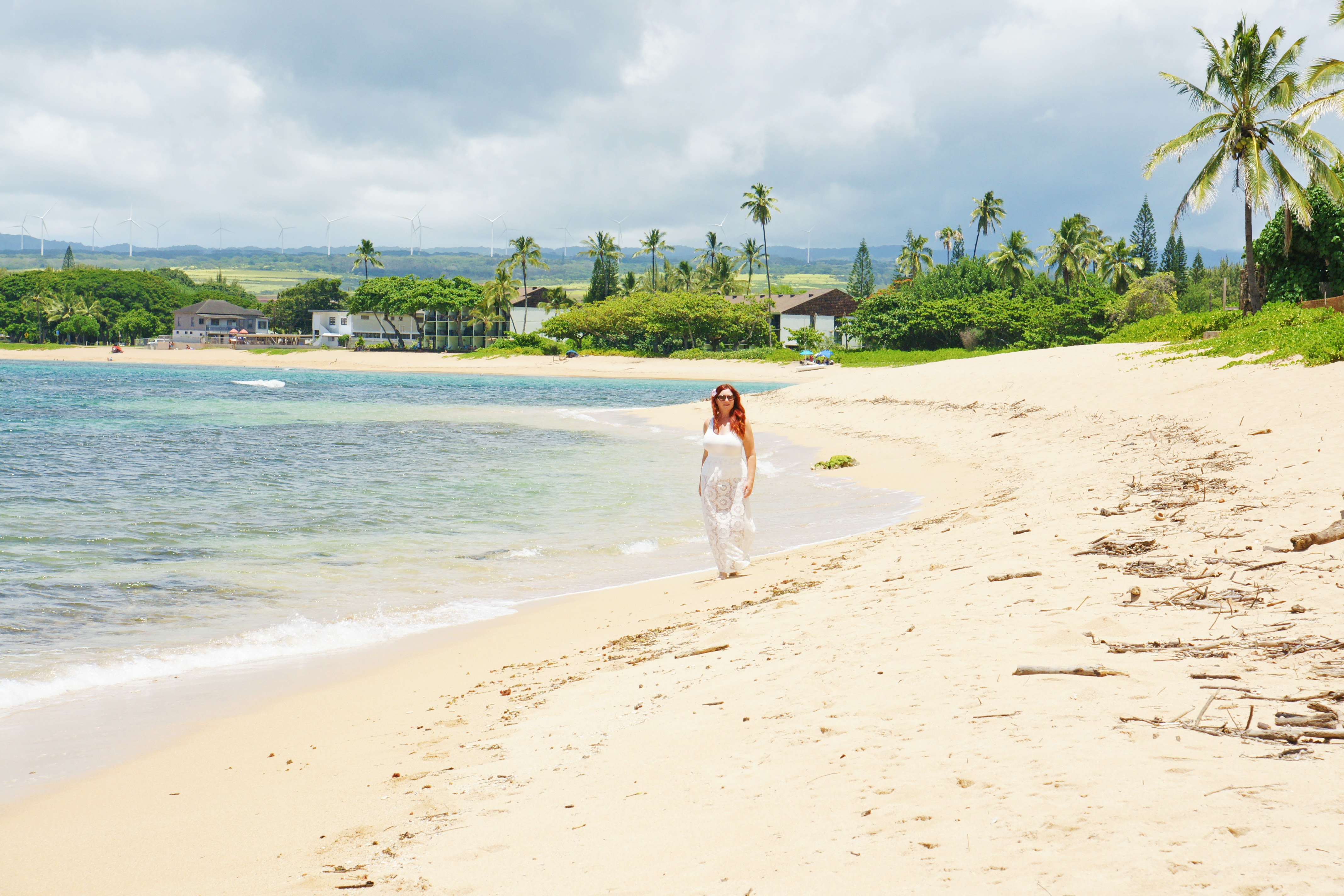
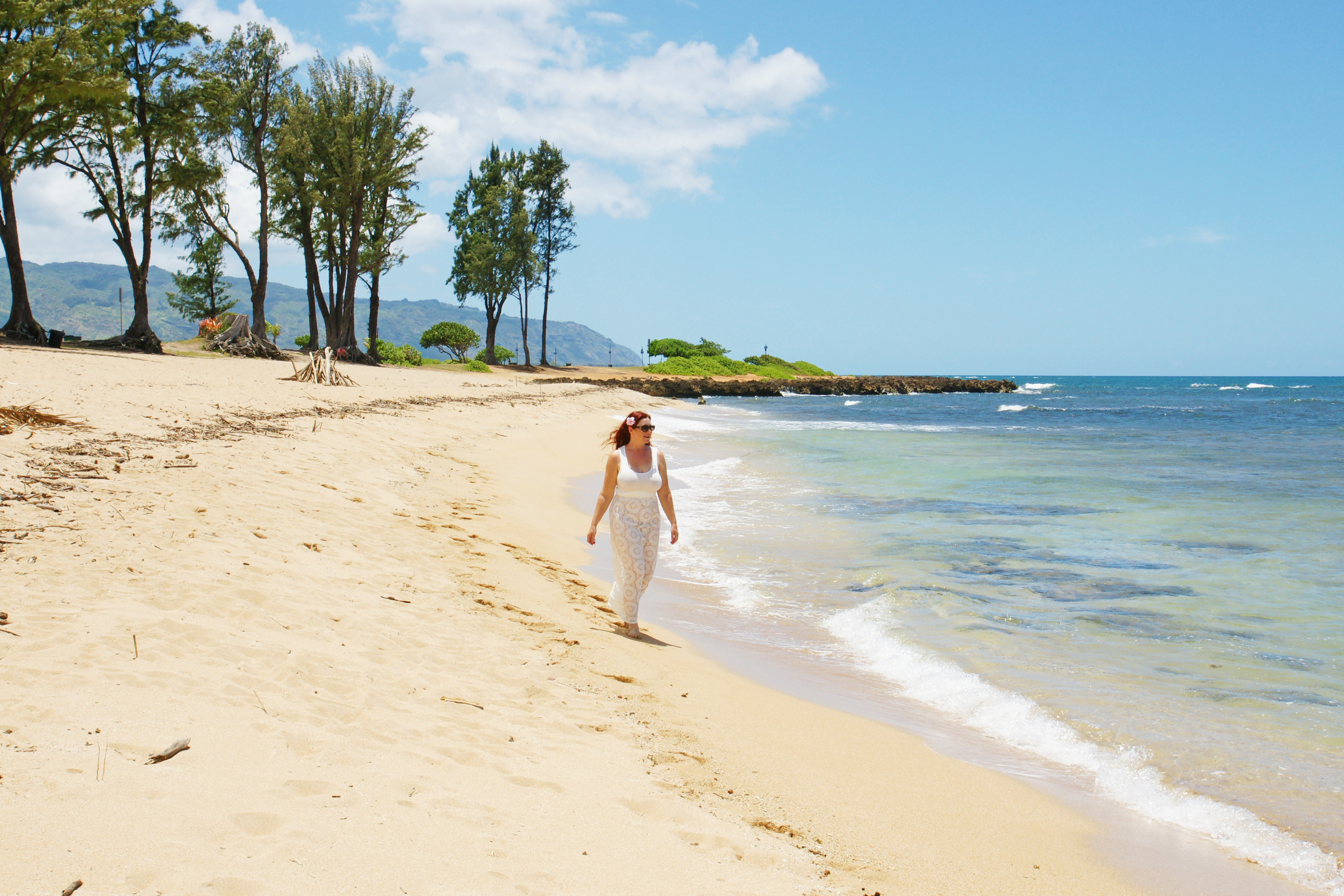
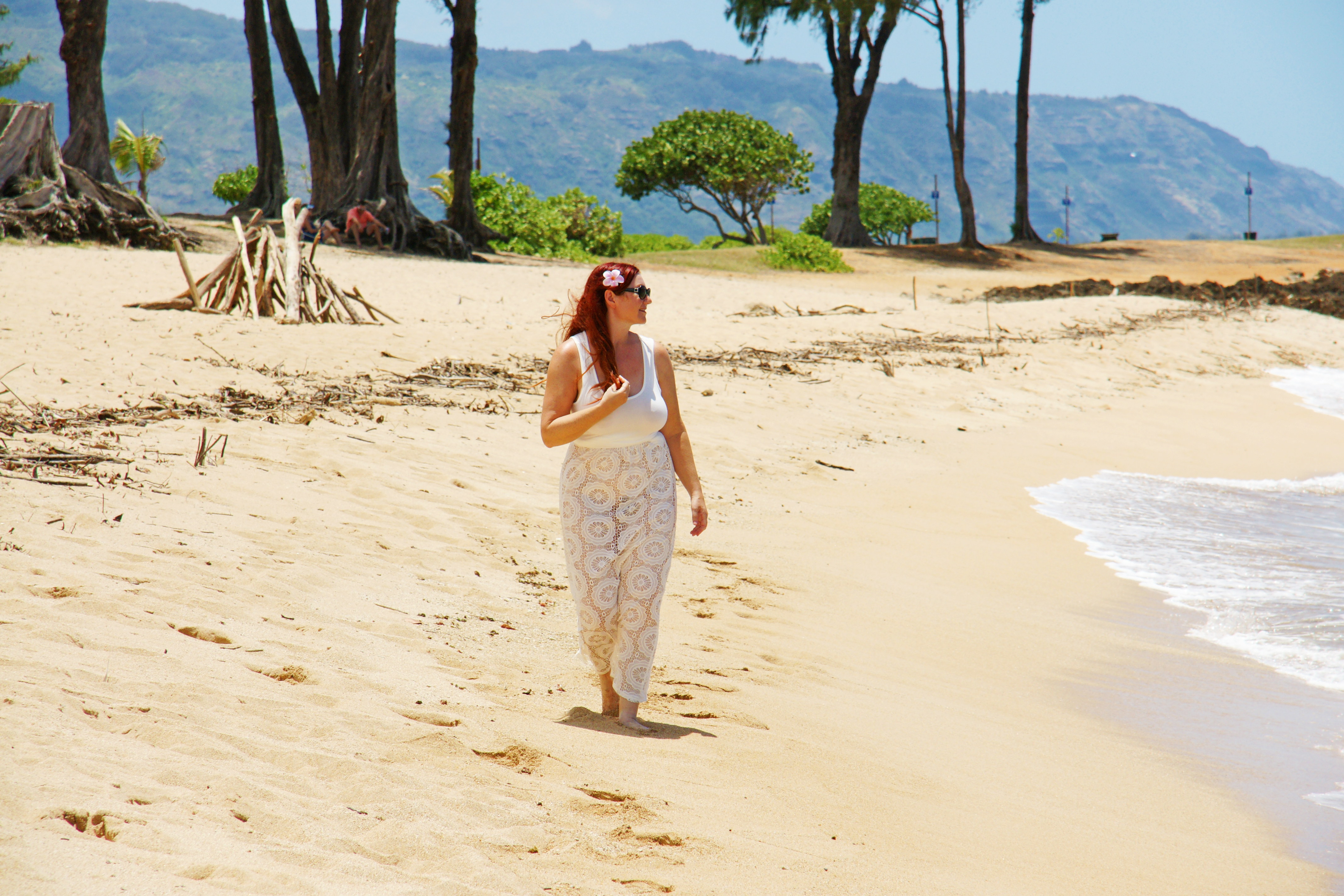
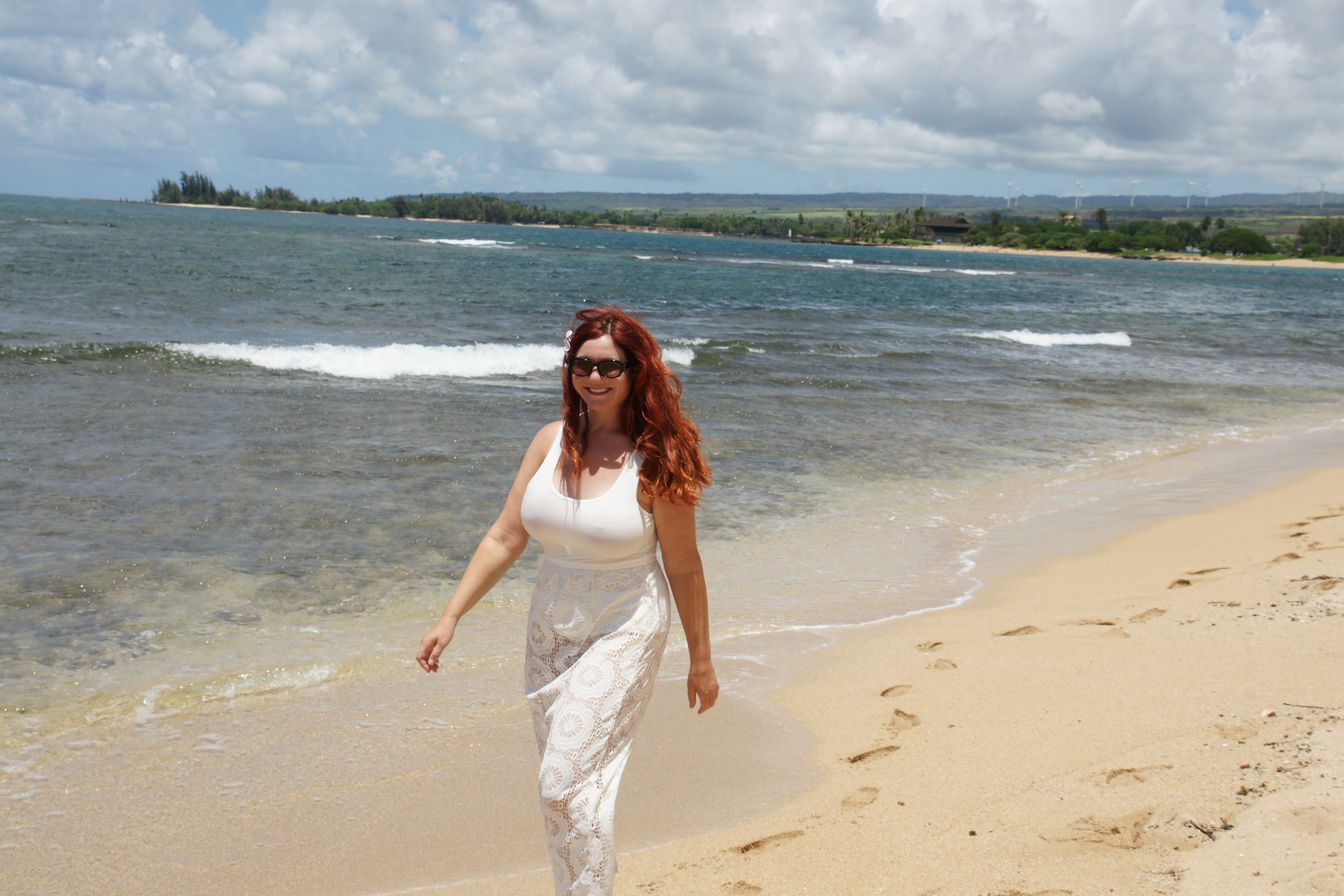
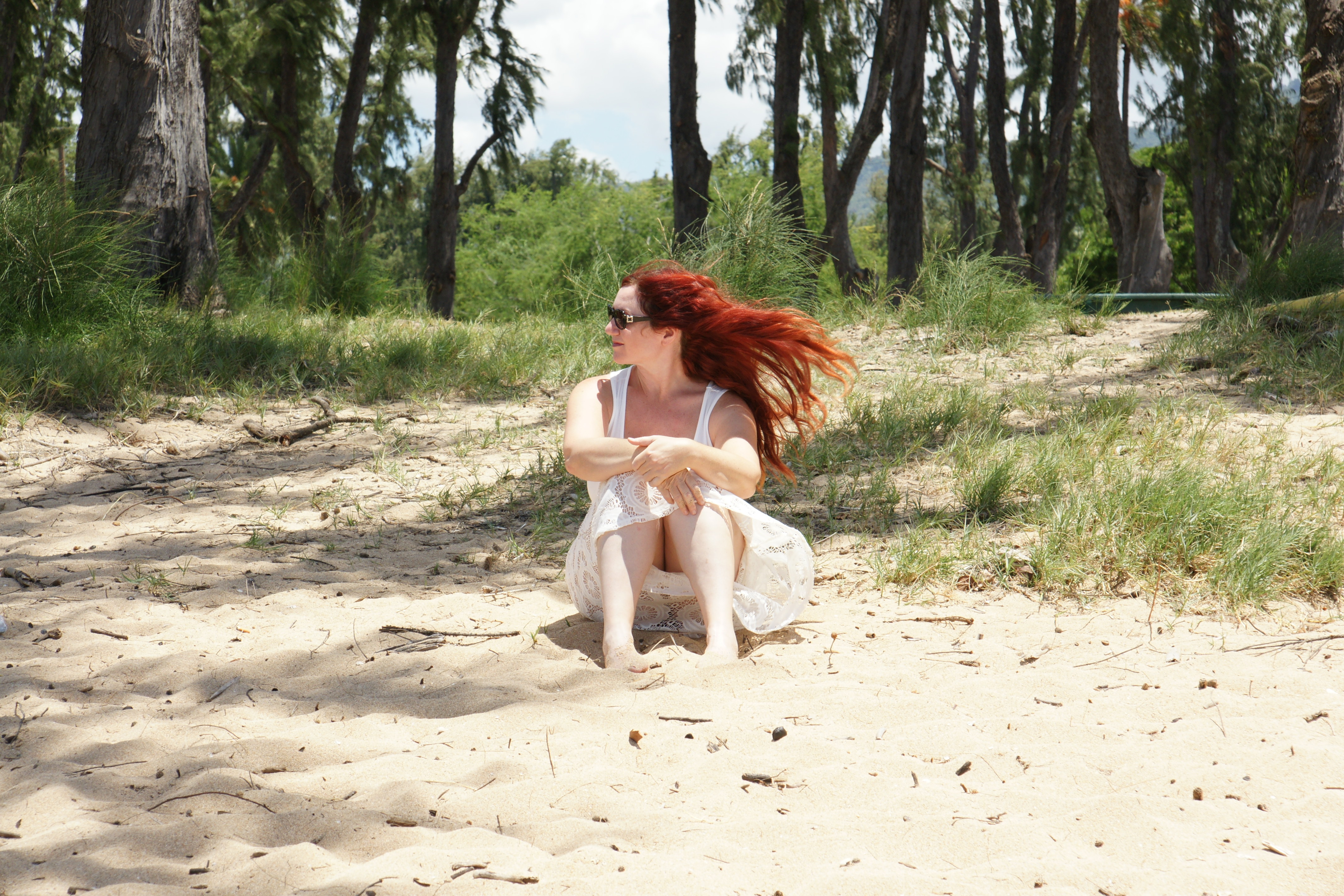
See? We are all alone on our Hawaiian beach.
Keep Out!
We have been to four (so far) islands in Hawai’i, and most people embrace the Aloha Spirit. But not everyone.
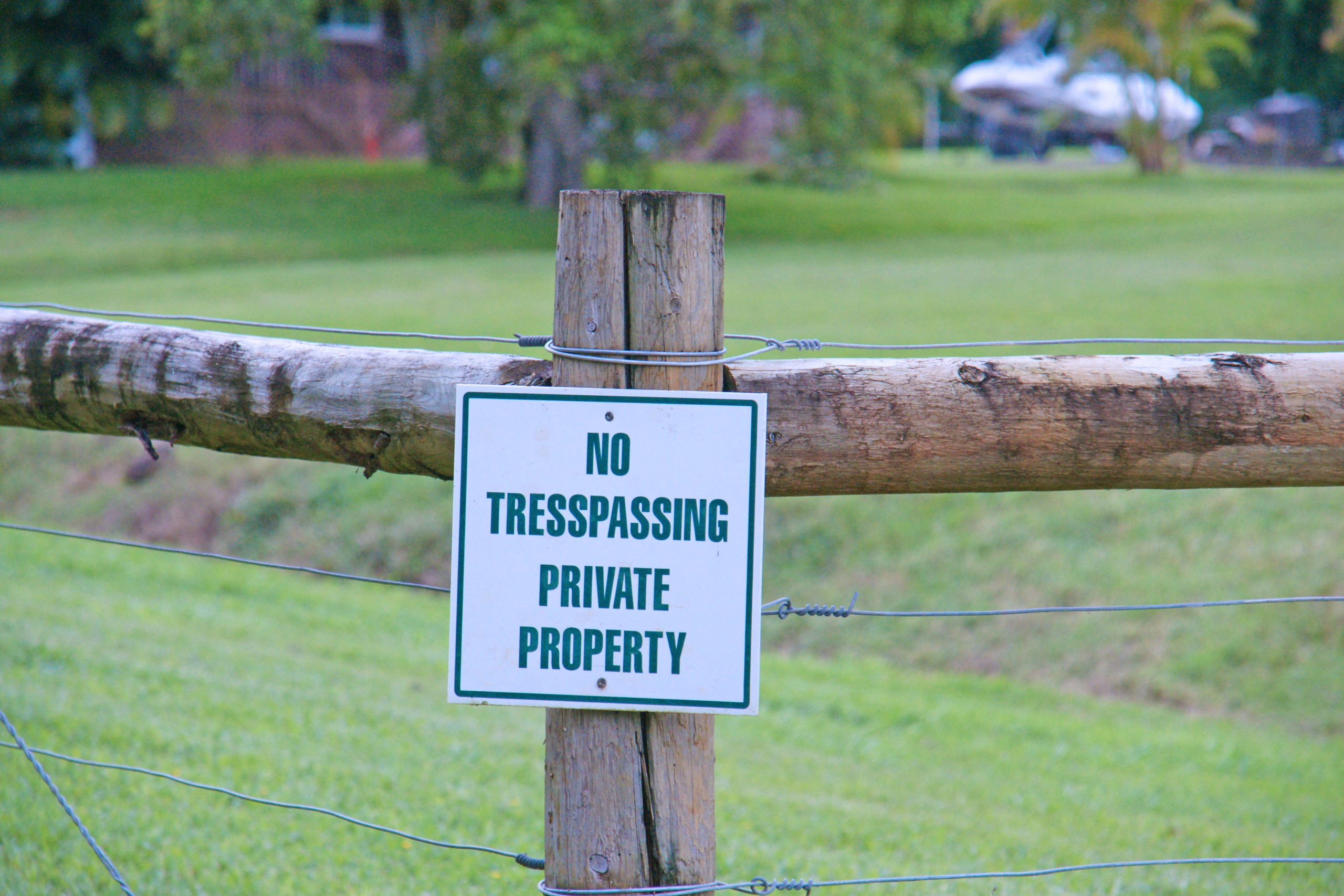
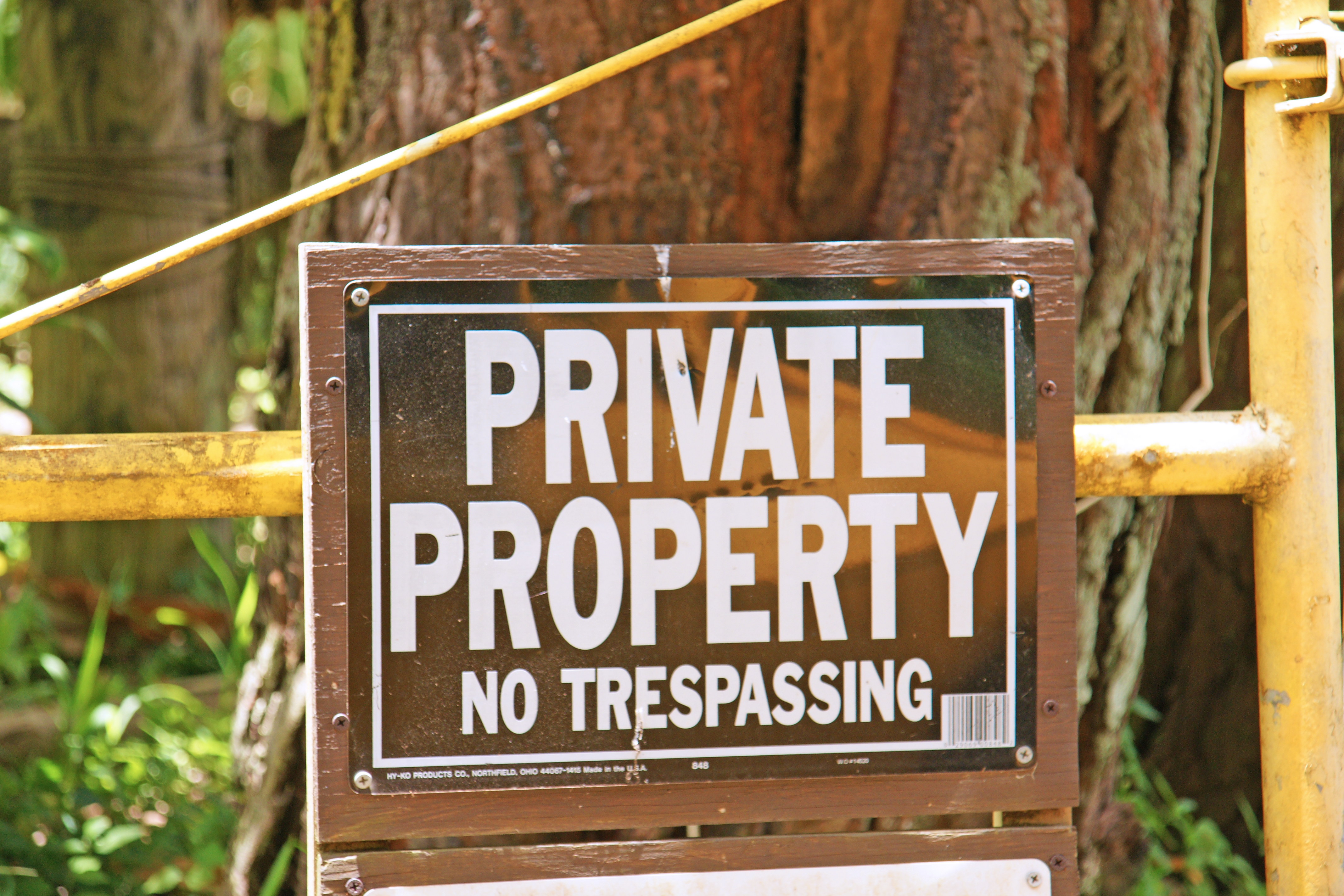
Just what are you trying to say?
I understand “Private Property”; however, “tresspassing” is not a word, so we are not quite sure what is happening. “Tress” is a long lock of a woman’s hair, so perhaps they are discouraging giving such hair to other people. Alas, we shall never know.
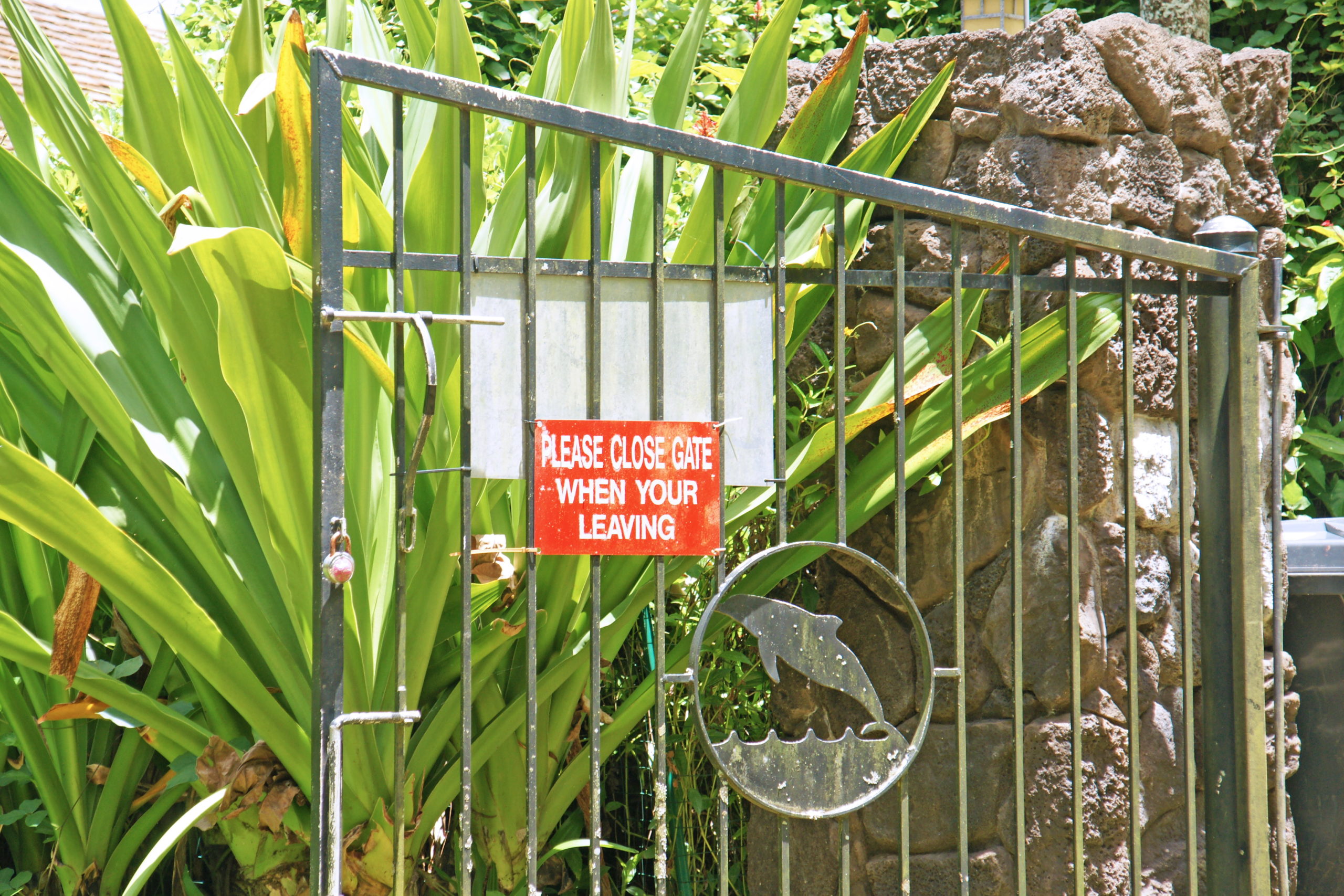
My what is leaving?
I would close the gate, but I’m not sure what has to leave before I do.
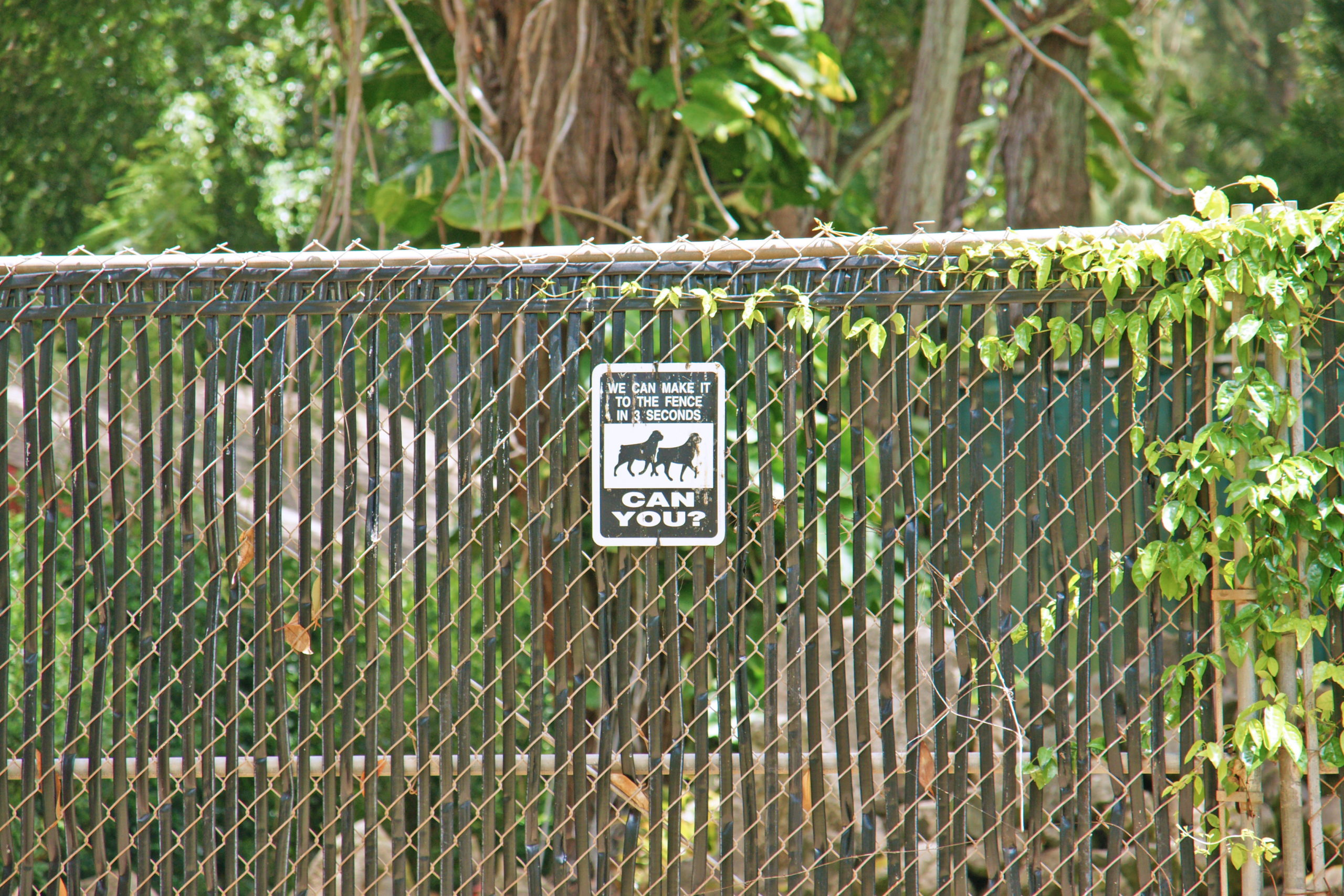
Is this really necessary?
So, what prompted this? Did someone climb the fence and this guy’s dogs chased them out, but the dogs were wiener dogs and ran too slowly, so he got bigger dogs with longer legs and timed them from one side of the yard to the other? Or did he buy the sign, then have to get just the right dog so there would be truth in advertising?
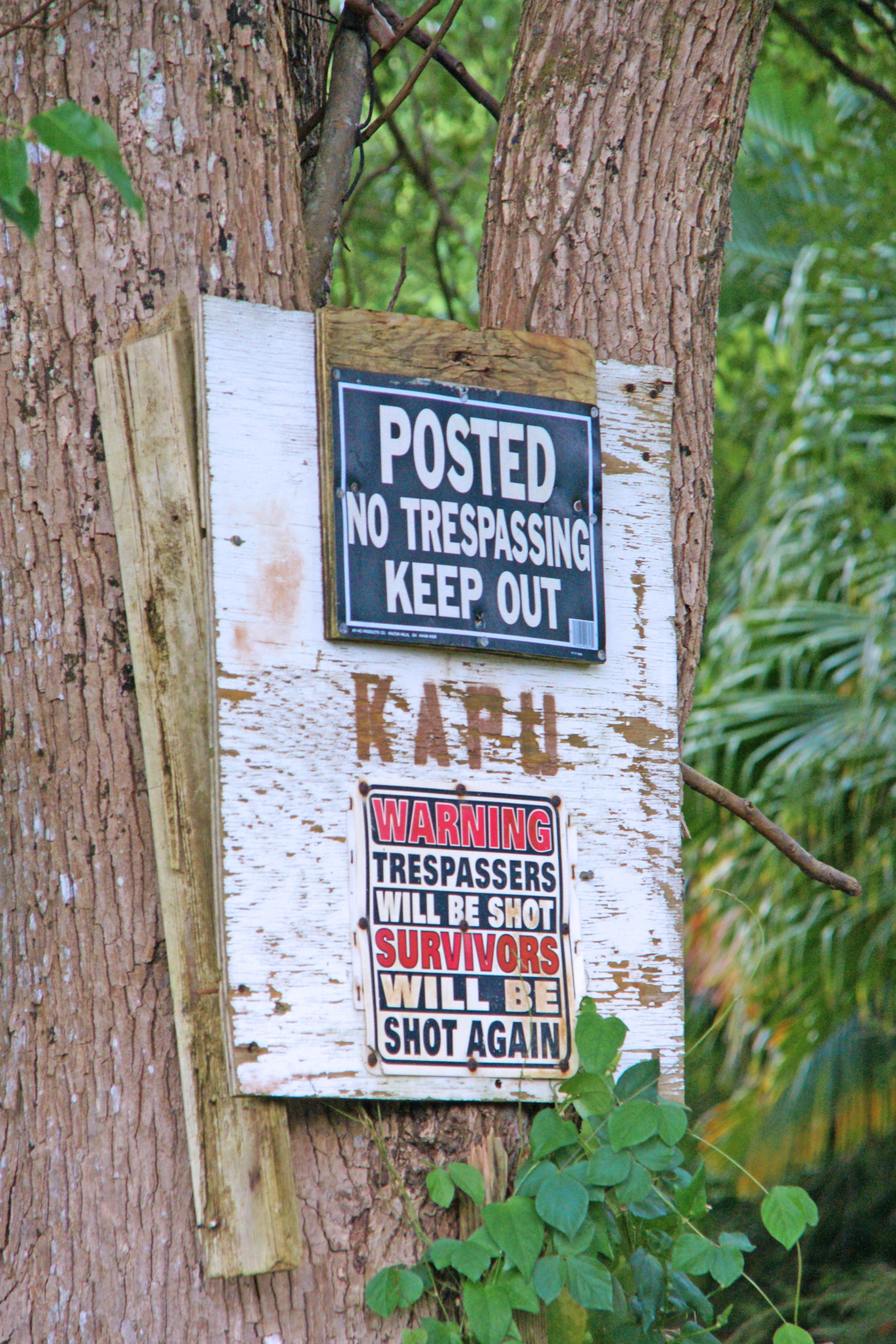
Chill, dude.
From what I understand, Hawaiians are not allowed to shoot someone for simple trespassing. And shooting twice is murder. Isn’t murder just a bit more egregious than trespassing? Not in O’ahu, apparently.
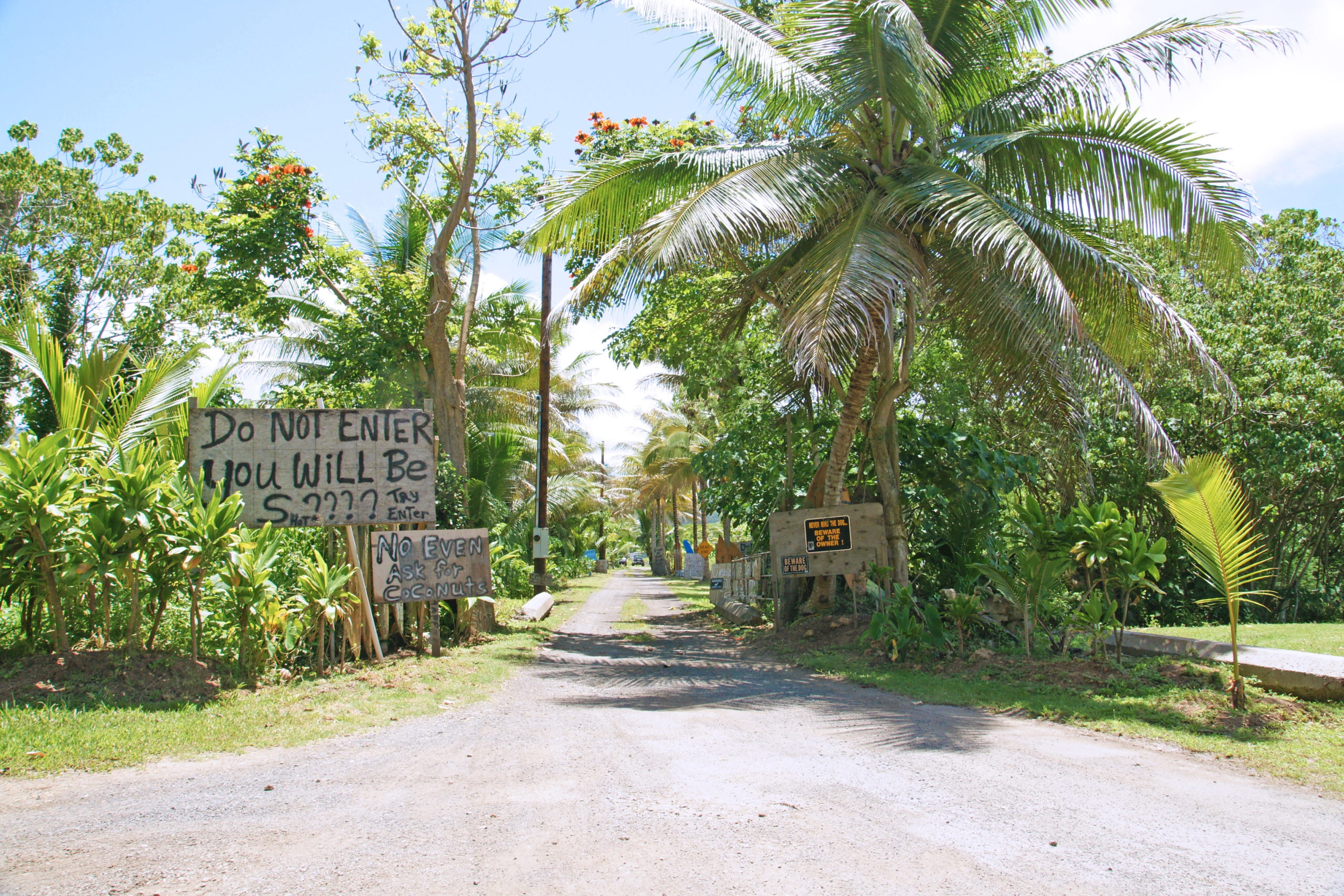
The winner and champion!
This one speaks for itself. Let’s take a closer look, shall we?
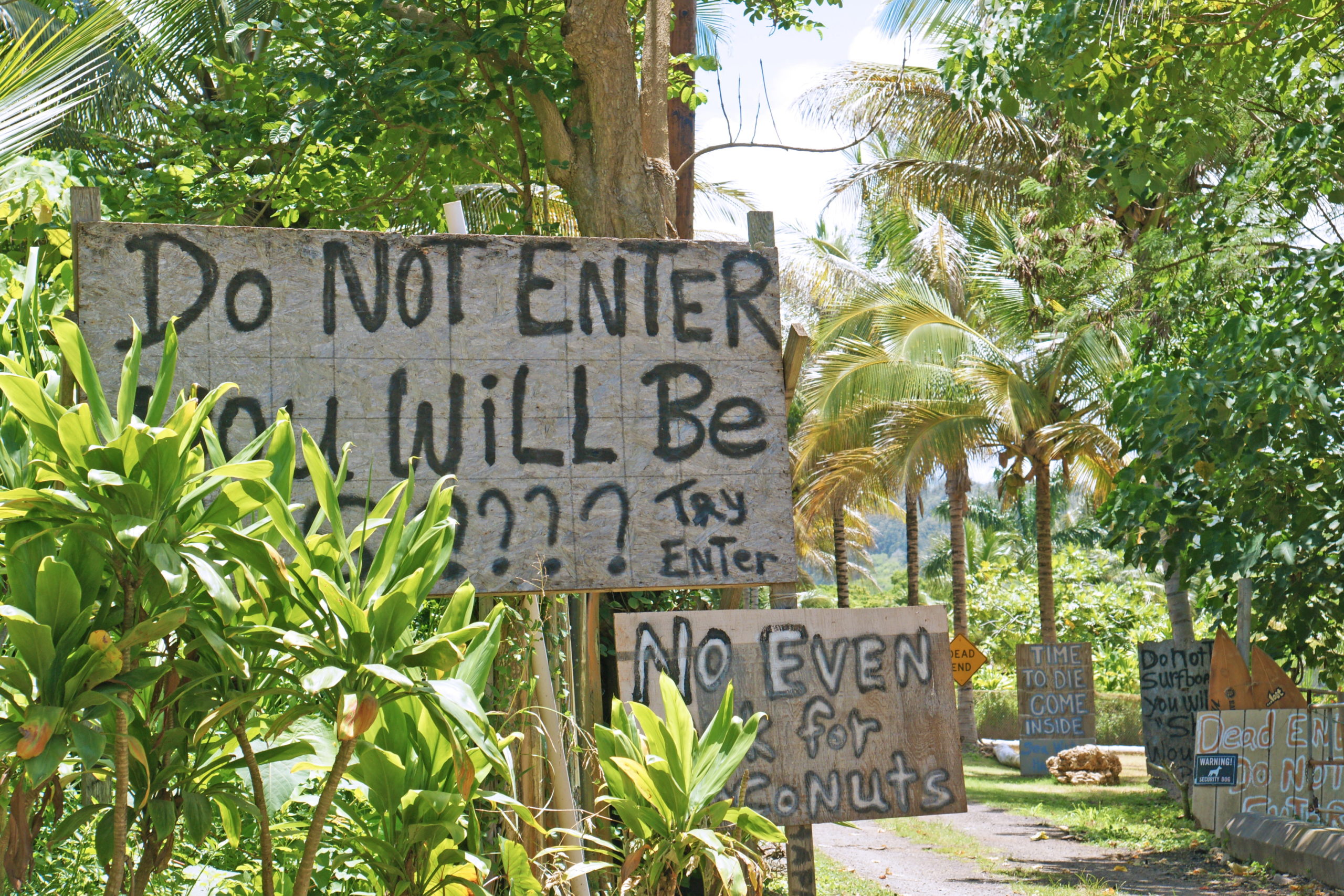
It’s a question, I guess.
It says, “You will be shot????”, but he wrote “hot” very, very small. I guess he need more space for the question marks.
And is it really a problem in O’ahu that people come onto your land for coconuts? Like, he needs a special warning just for them.
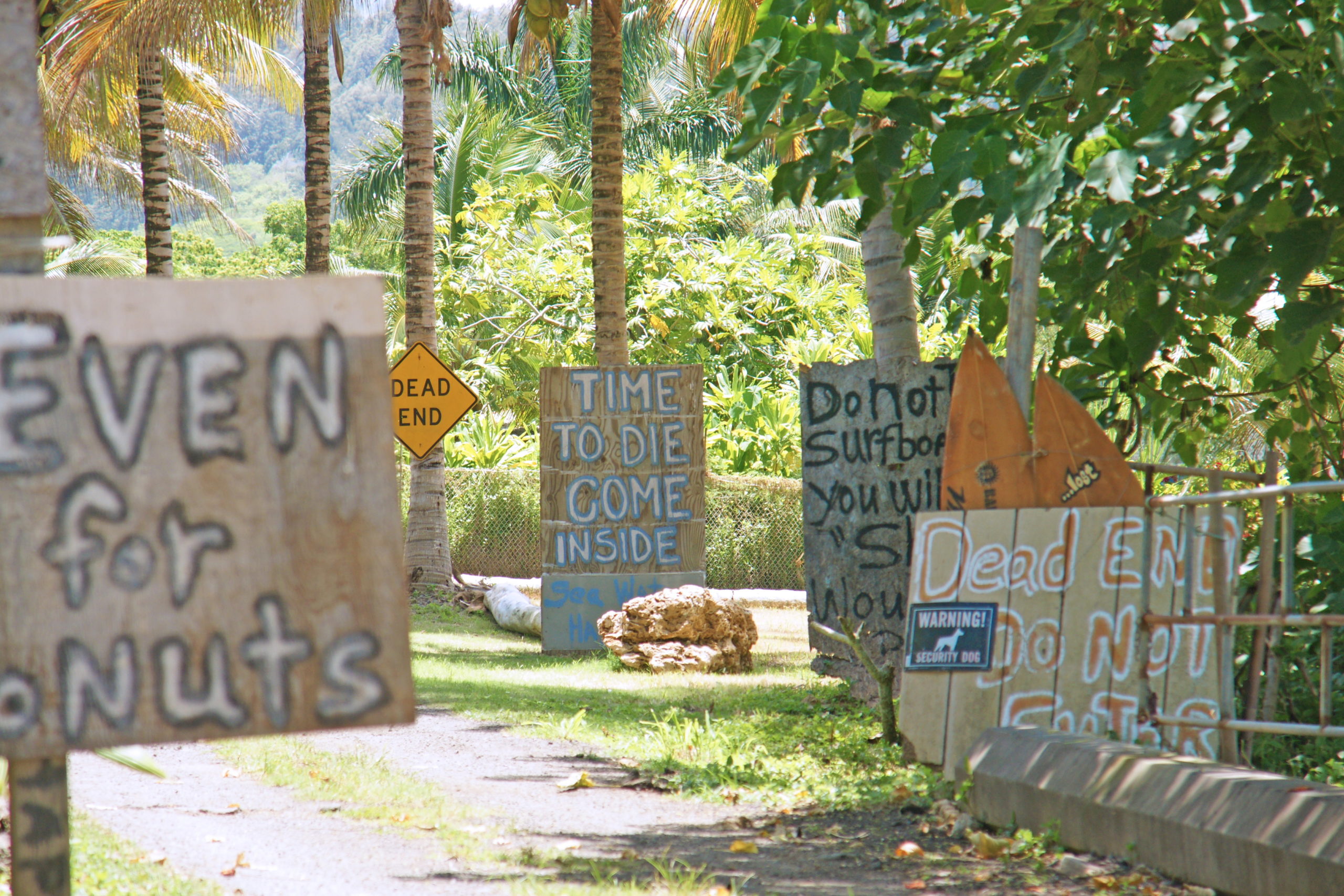
Does he know he’s quoting Blade Runner?
What causes this fellow to hide behind these warnings? Who threatens people with death for something so trivial except someone very afraid?
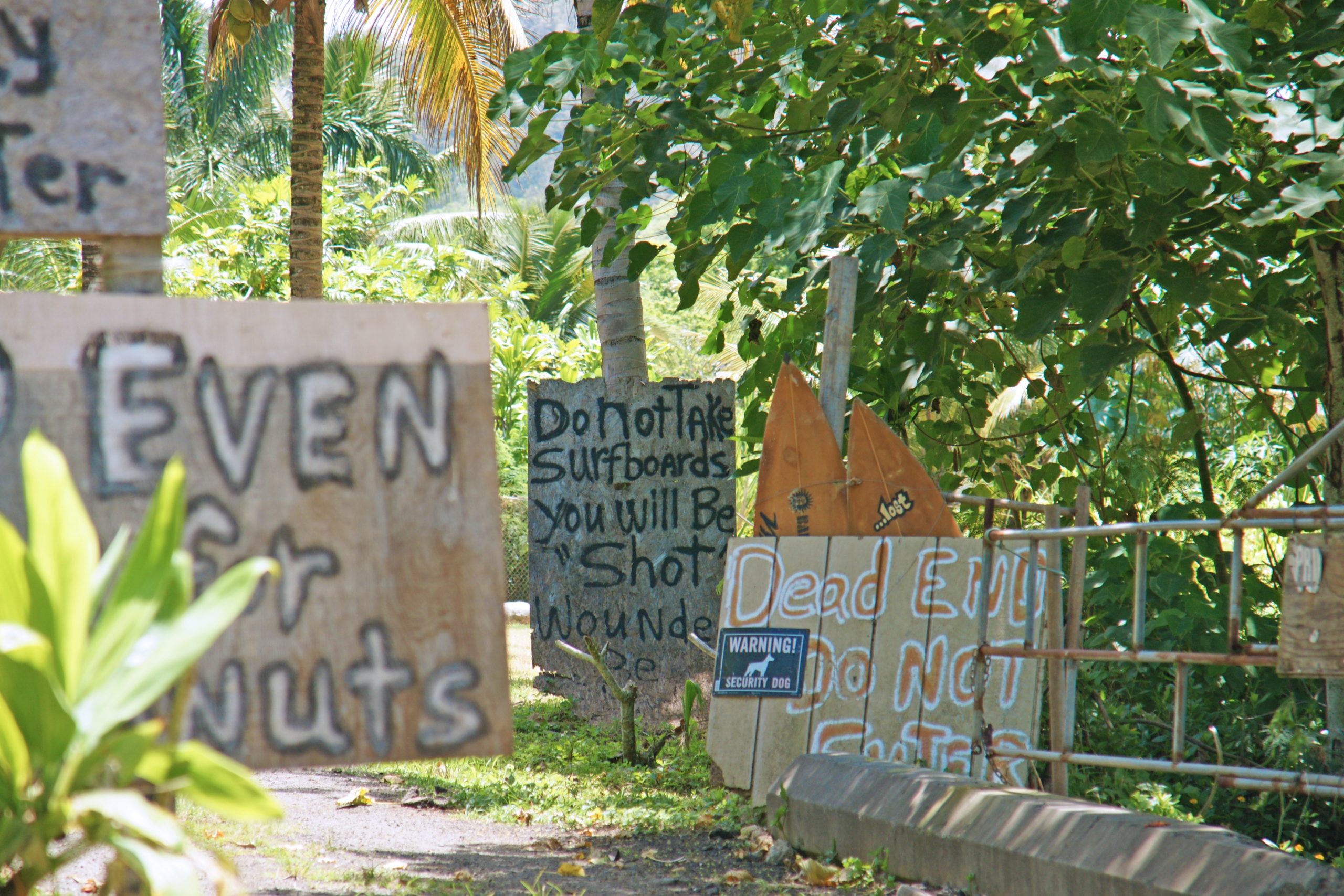
Man, he is really attached to those surfboards!
Since the surfboards are just props, couldn’t he chain them to something? Then no one would have to be “shot”.
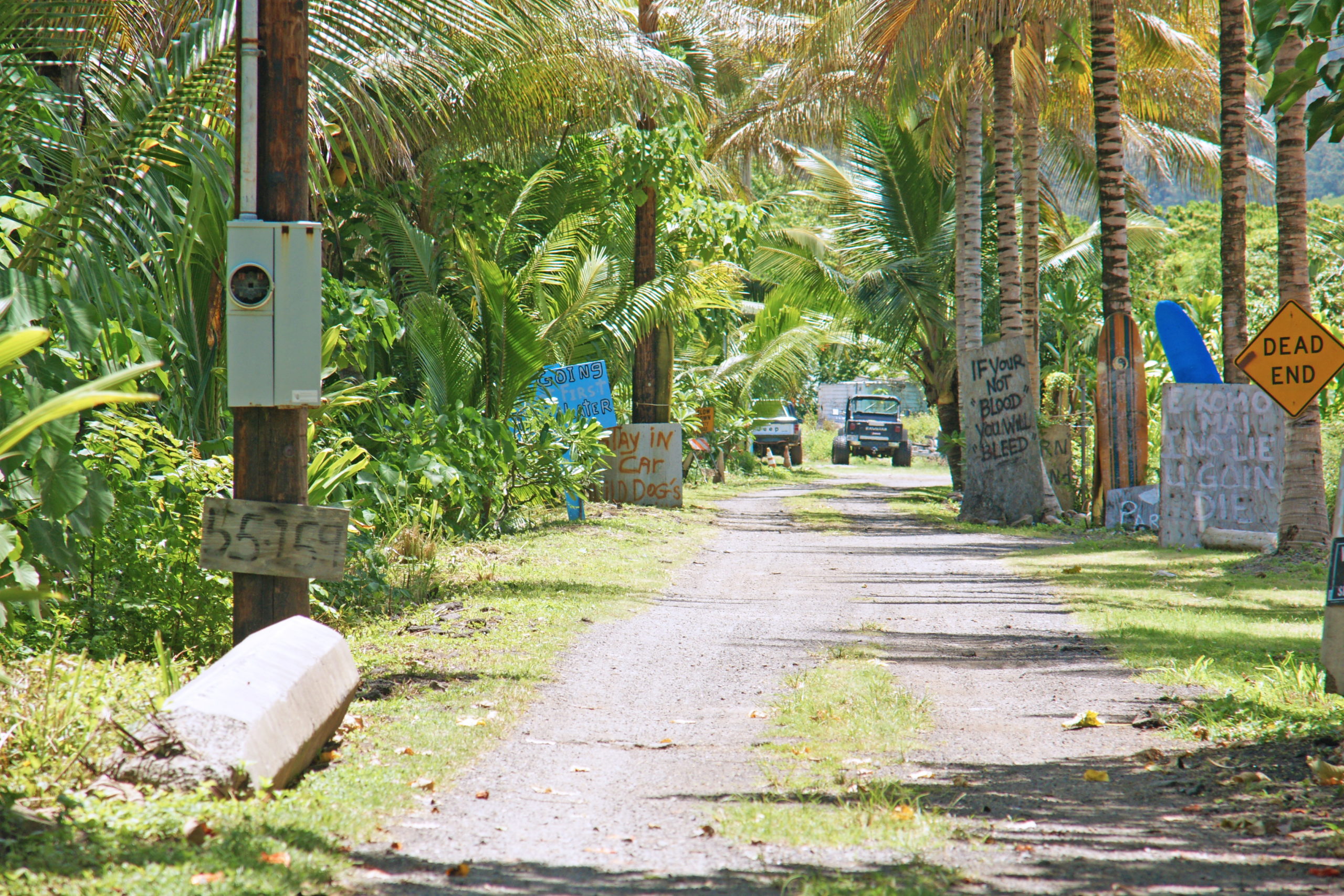
These people and there grammar!
Well, we just hope this fellow never needs an ambulance or fire truck, because he’s made it clear that he is a nut job and those public servants would be foolish to offer any assistance.
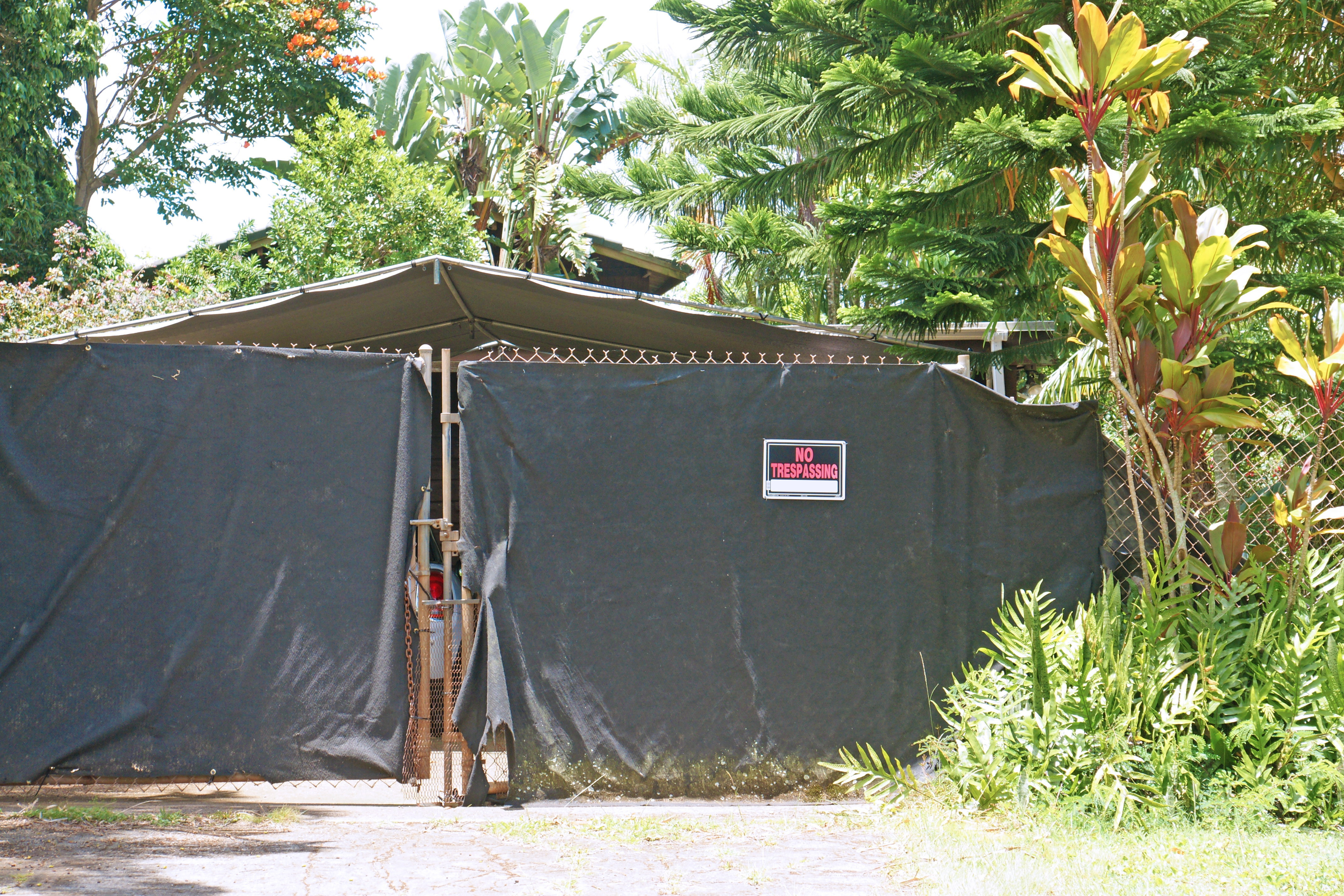


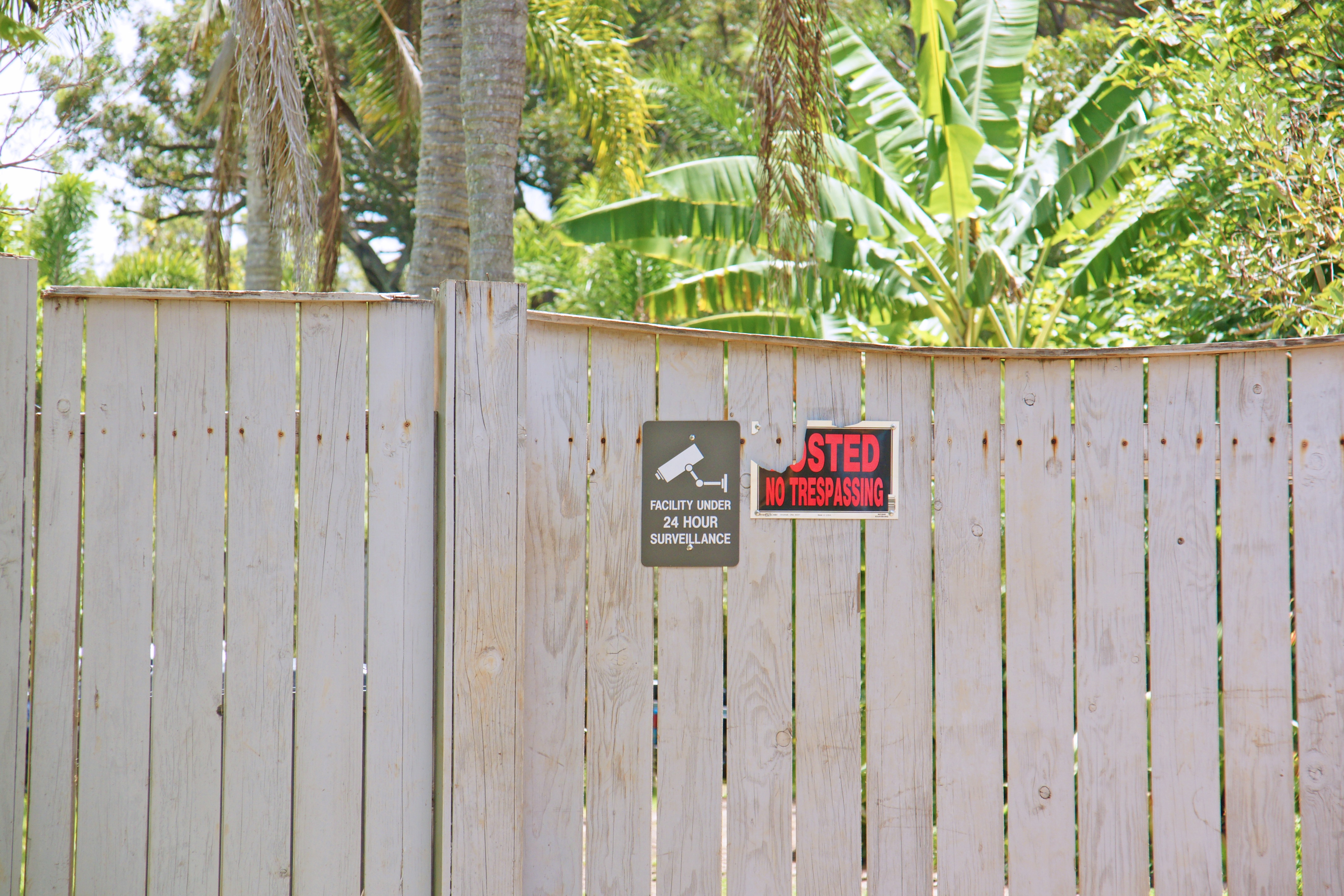


But wait! There’s more!
Anyway, we digress…. ?
Mahalo
“Mahalo” means thanks, gratitude, admiration, praise, esteem, regards, or respects.
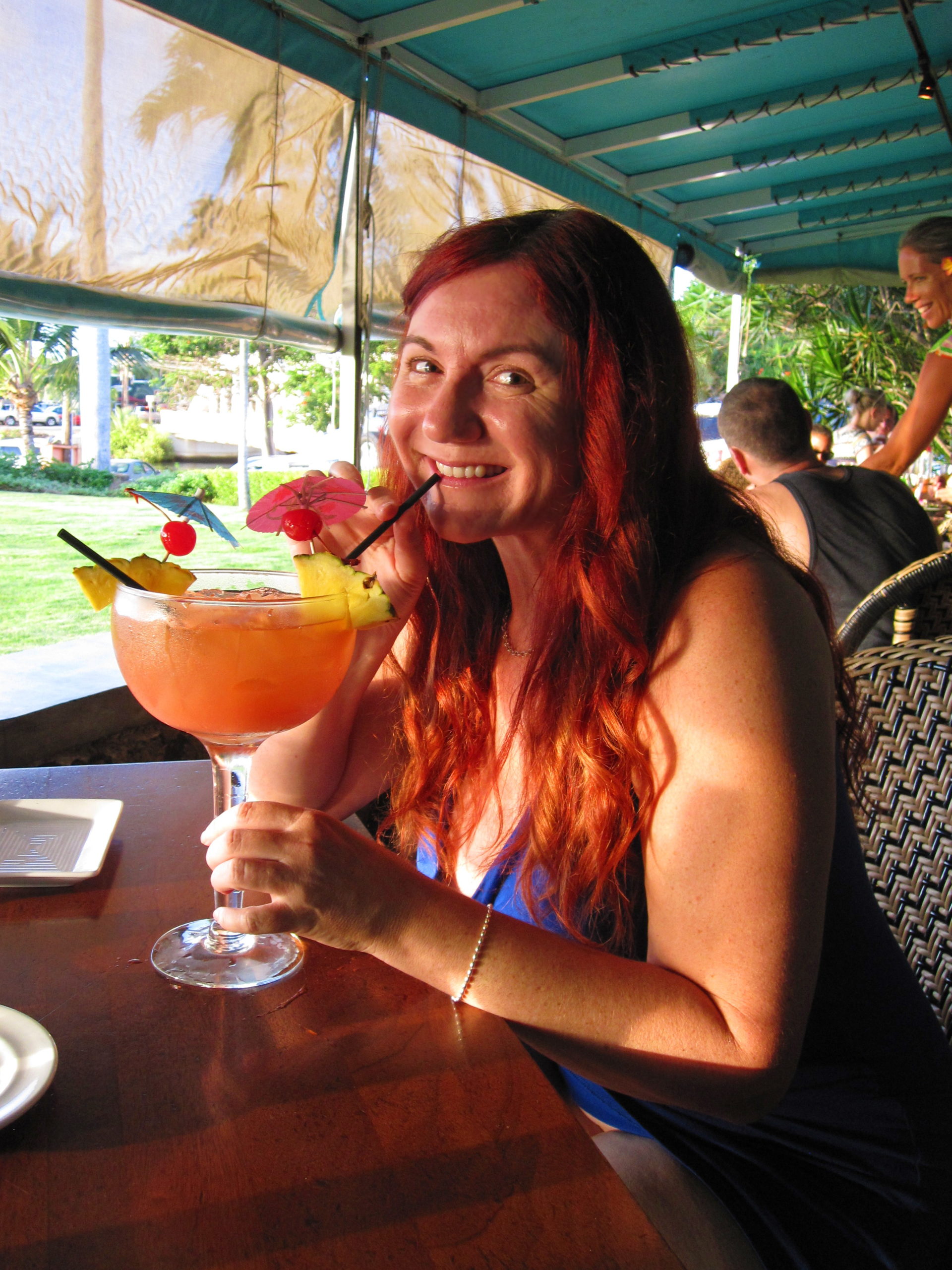
The true spirit of the islands. Well, at least one of them.
Until next time, makani ‘olu’olu e kai malie!