
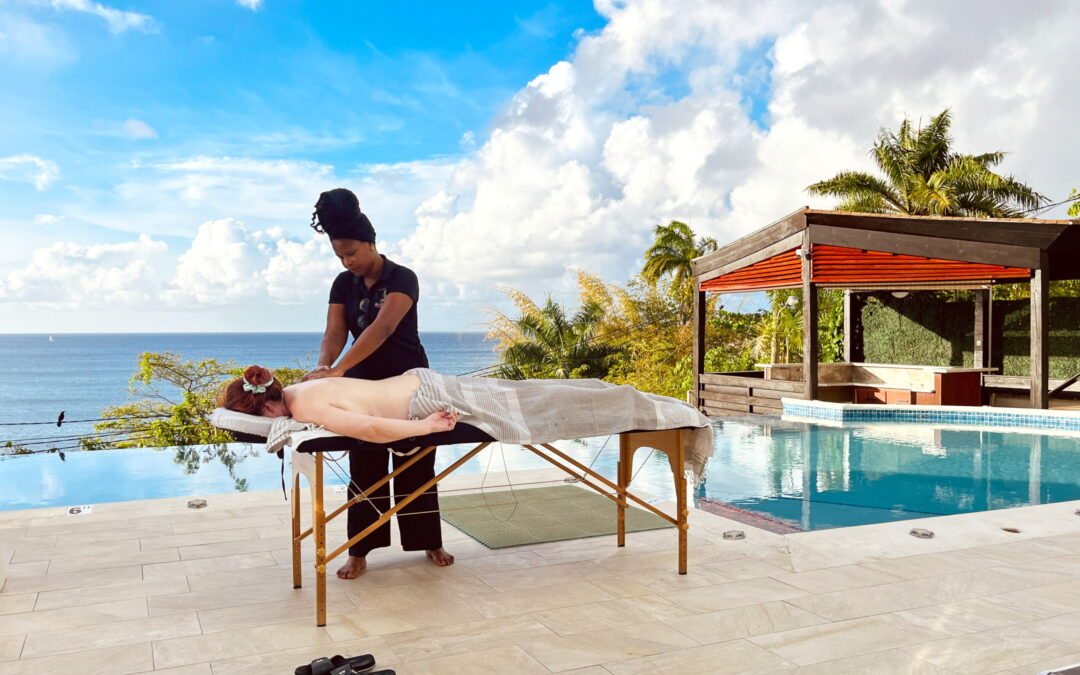
As you may recall, we visited St. Lucia many years ago. Well, we’re back! We are escaping the gloomy Southern California weather and spending eleven days in a Caribbean paradise. Let’s see what we can see!
Well, first we have to get here.
We are taking a red-eye from San Diego to Charlotte, North Carolina (for some reason), with a five hour layover.
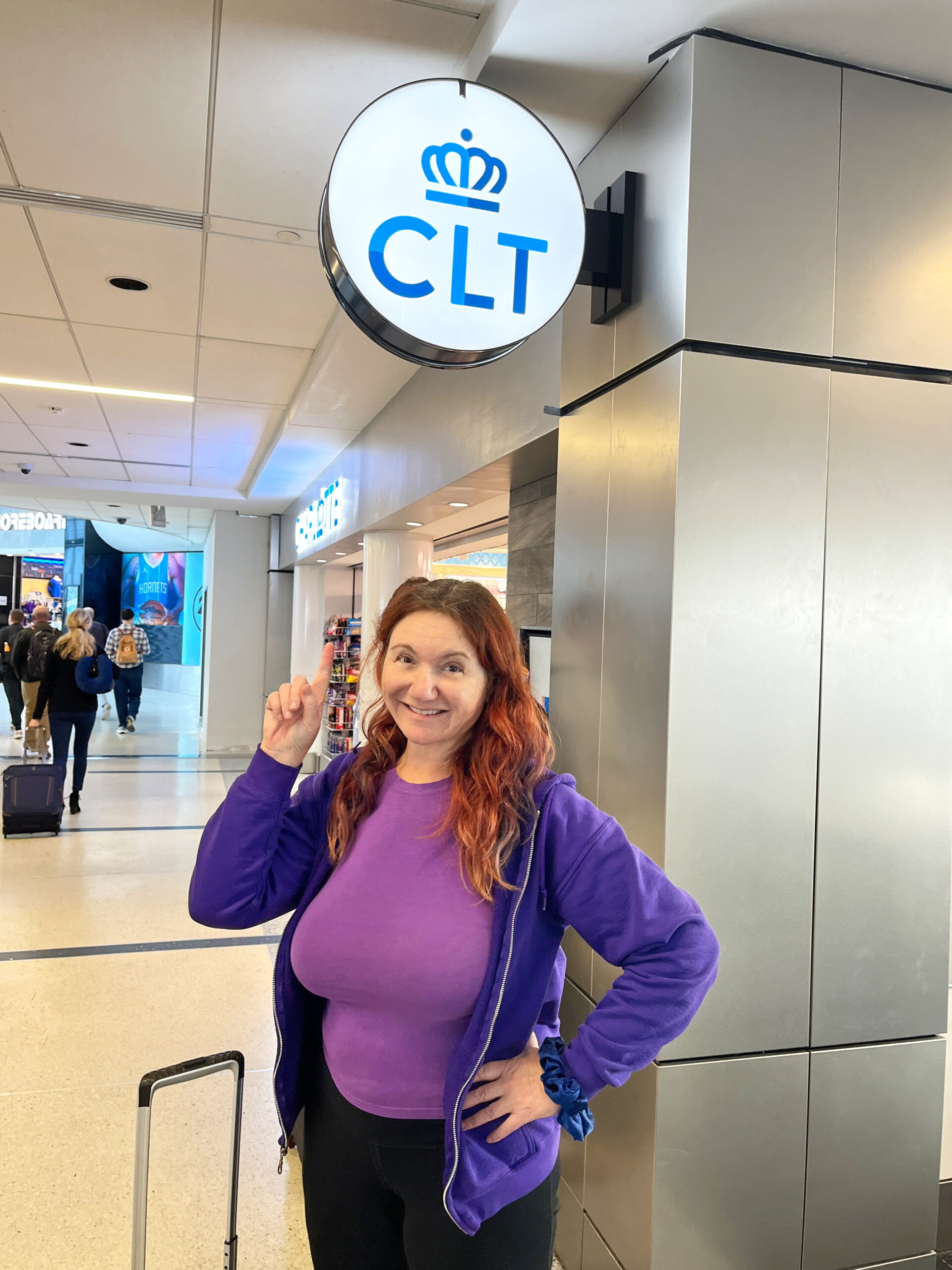
It’s pronounced “Clit”.
Charlotte is about 700 miles north of Miami, Florida, where you’d expect the plane to land. Flying to Miami would be more direct and use less fuel…but what do we know?
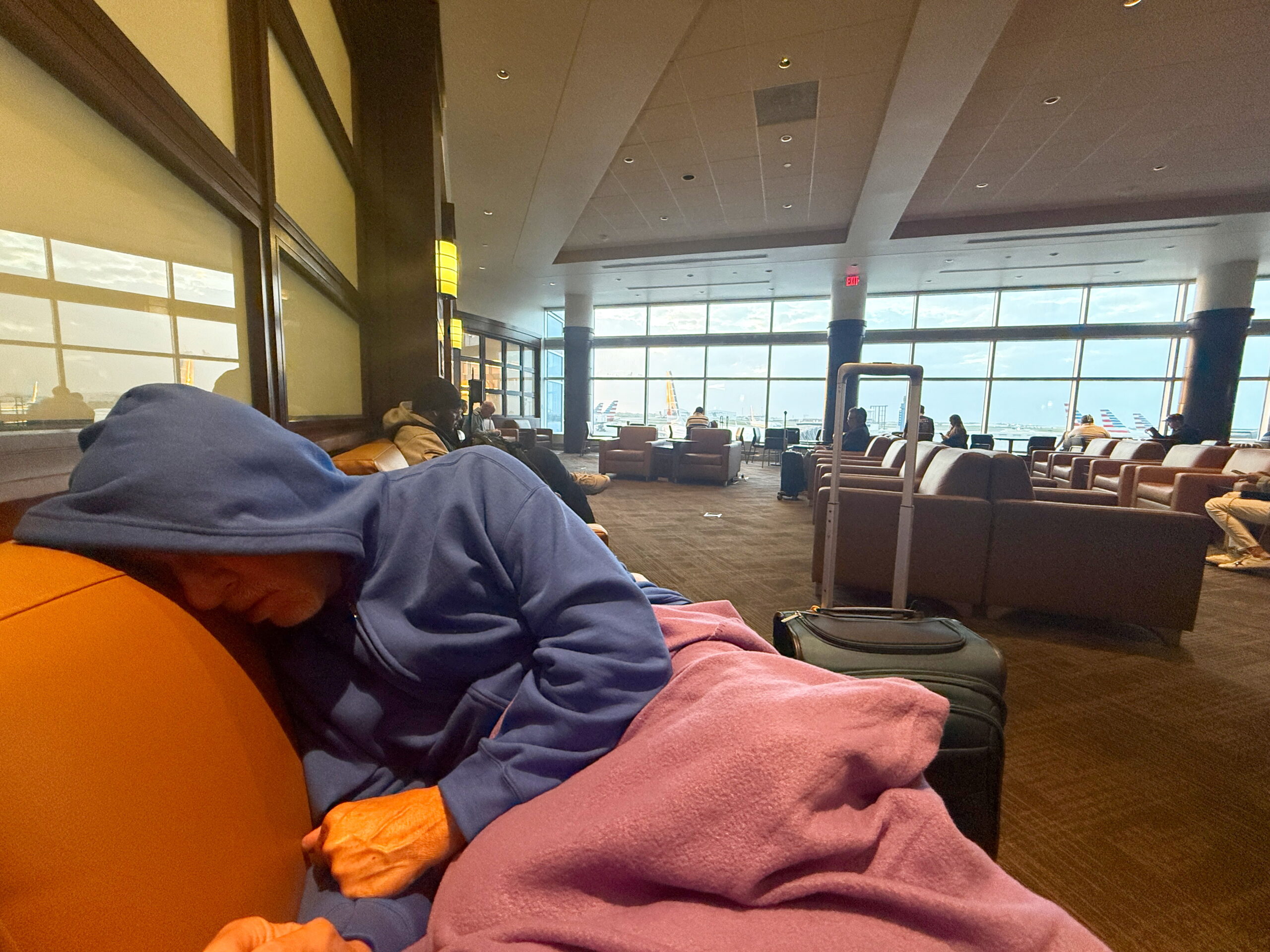
Sleepy time.
Anyway, we are here long enough to take a nap.
St. Lucia
Then it’s back in the air.
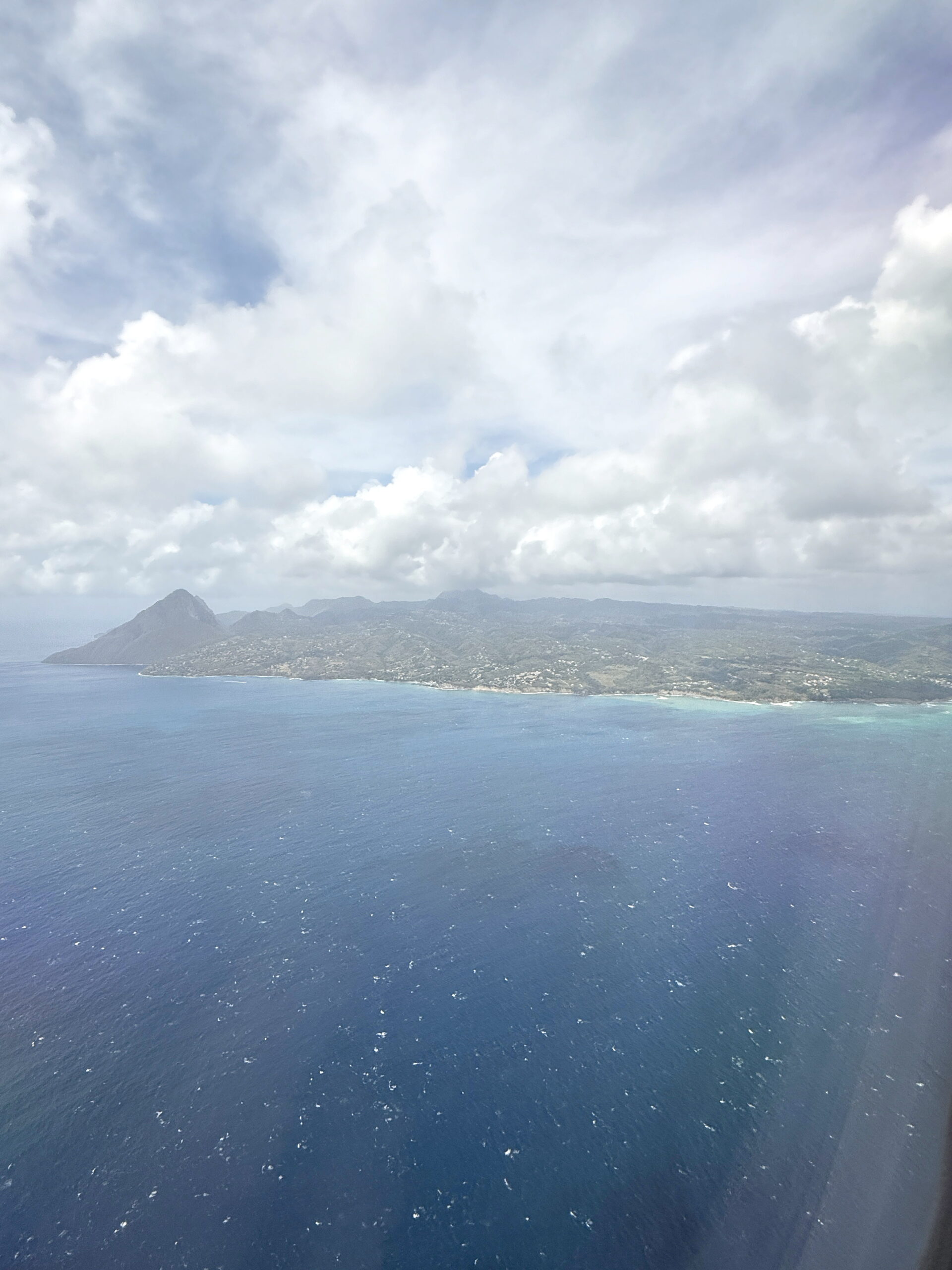
It looks like there’s a volcano in the distance, but there isn’t.
Last time we flew here, the aircraft was a Boeing 777, twin aisle, with 180 degree layback seats. Now all the aircraft are crappy Boeing 737s and Airbus A321. Note that the tiny bathrooms in coach class are 5 inches wider than the tiny bathrooms in business class, with the widest part being just 19 inches across. Jeez, I know girls with booty bigger than that! But, I digress…
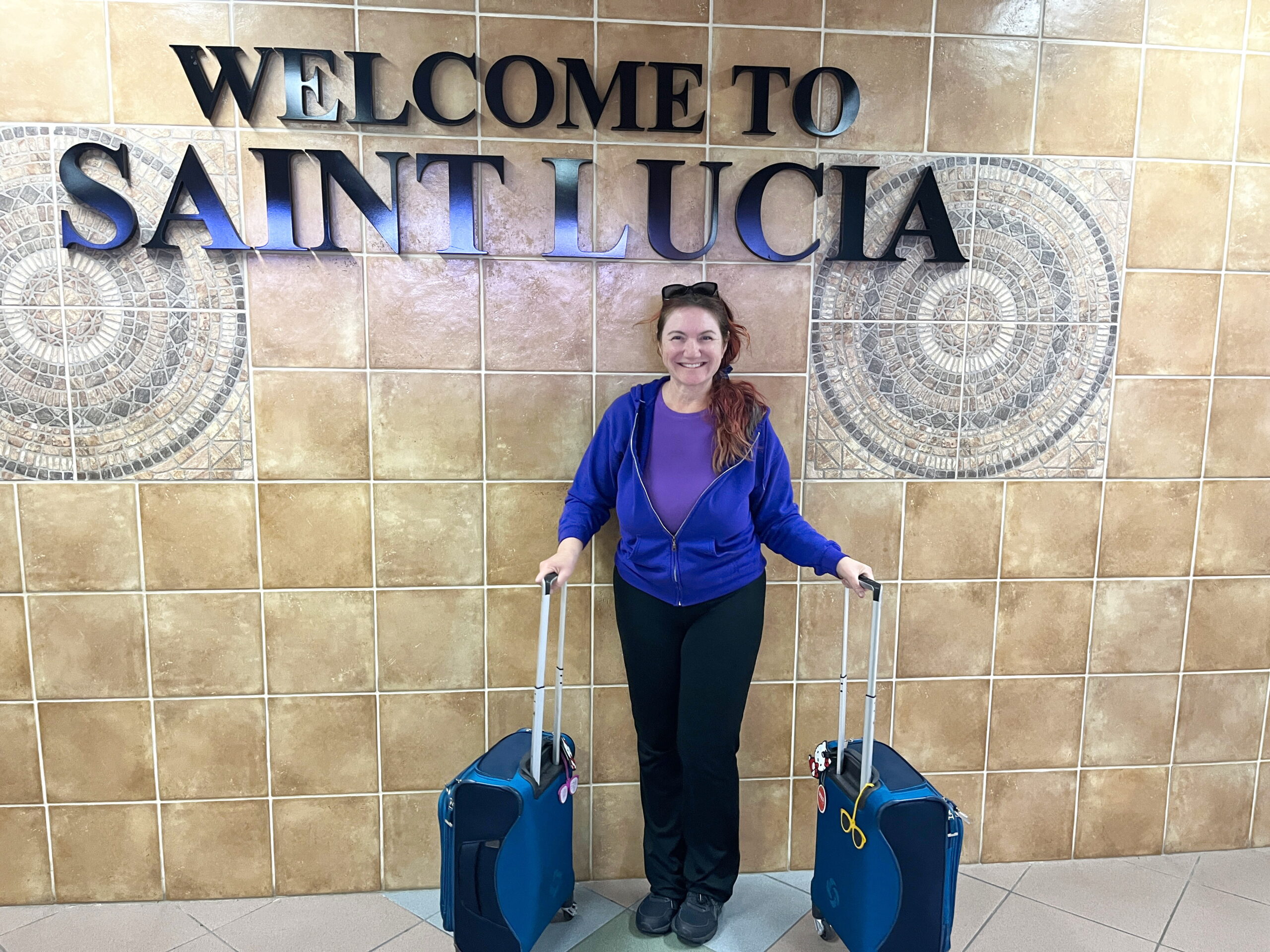
We made it!
Finally, we land. Customs and security are simple. We head out to find our rental car. There are, of course, many rental car representatives, taxi representatives, and other representatives, all holding signs, but nothing with ours, Vacay Carz Rental. However, one of the representatives points us to a fellow parked on the grass island in the parking lot, and we conduct our business in his office (the trunk of his car). Yes, it may sound a bit shady, but it’s not. It’s island.
We sign the papers and drive away, on the left side of the road, on an island were almost nothing is straight. Now I wish I had had more sleep. Anyway…
It’s Sunday, and St. Lucia is a Catholic island, so most stores are closed. We find one that is open, not much more than a 7-11, but with enough food to let us secure provisions (water, soap, etc.). We hit the road and, after about two hours of tedious and sometimes scary driving, we arrive at our Airbnb!
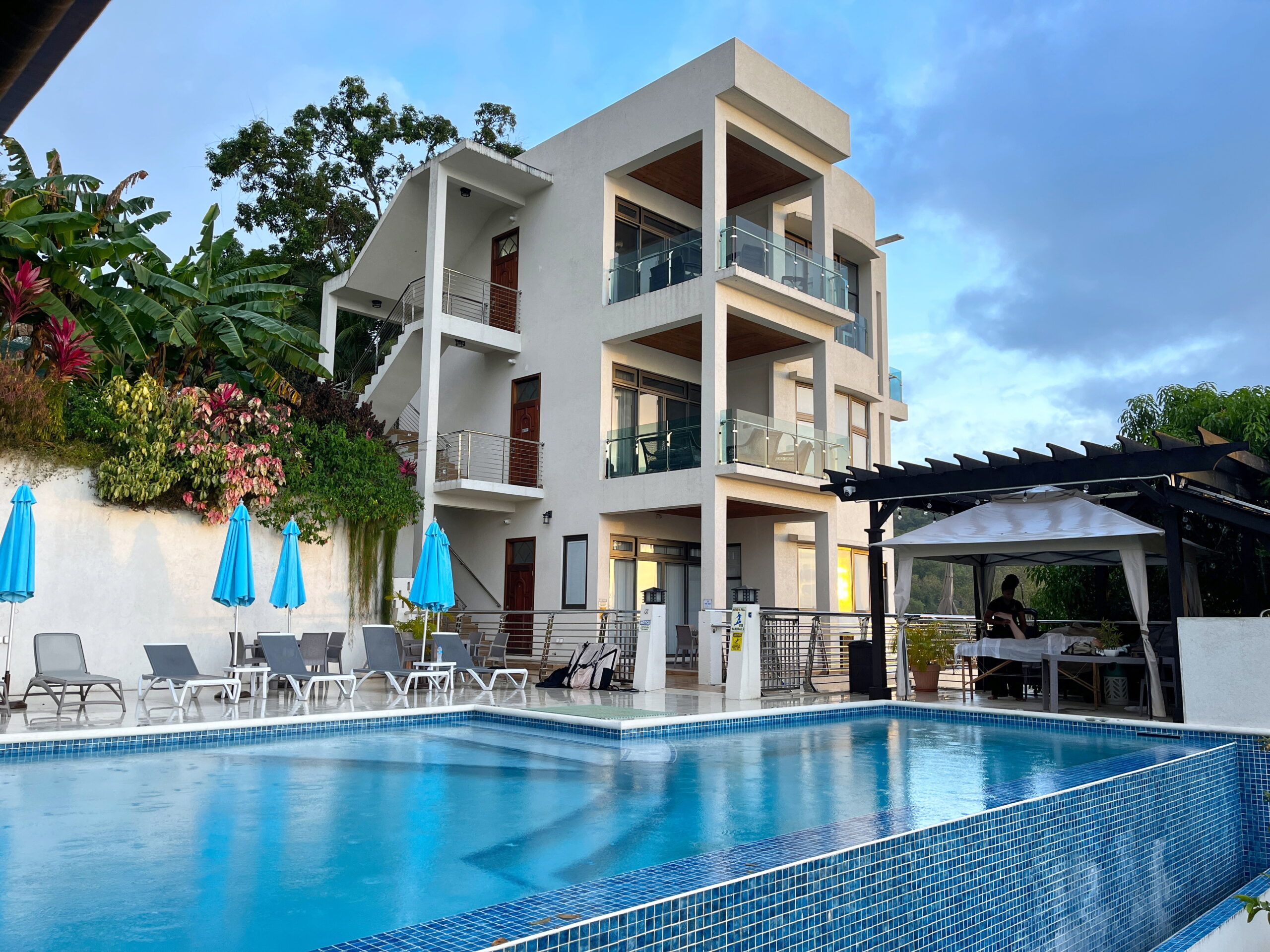
Our accommodations.
When we arrive, there are other people staying at this residence, but they leave the next day and we have the place to ourselves. Nice.
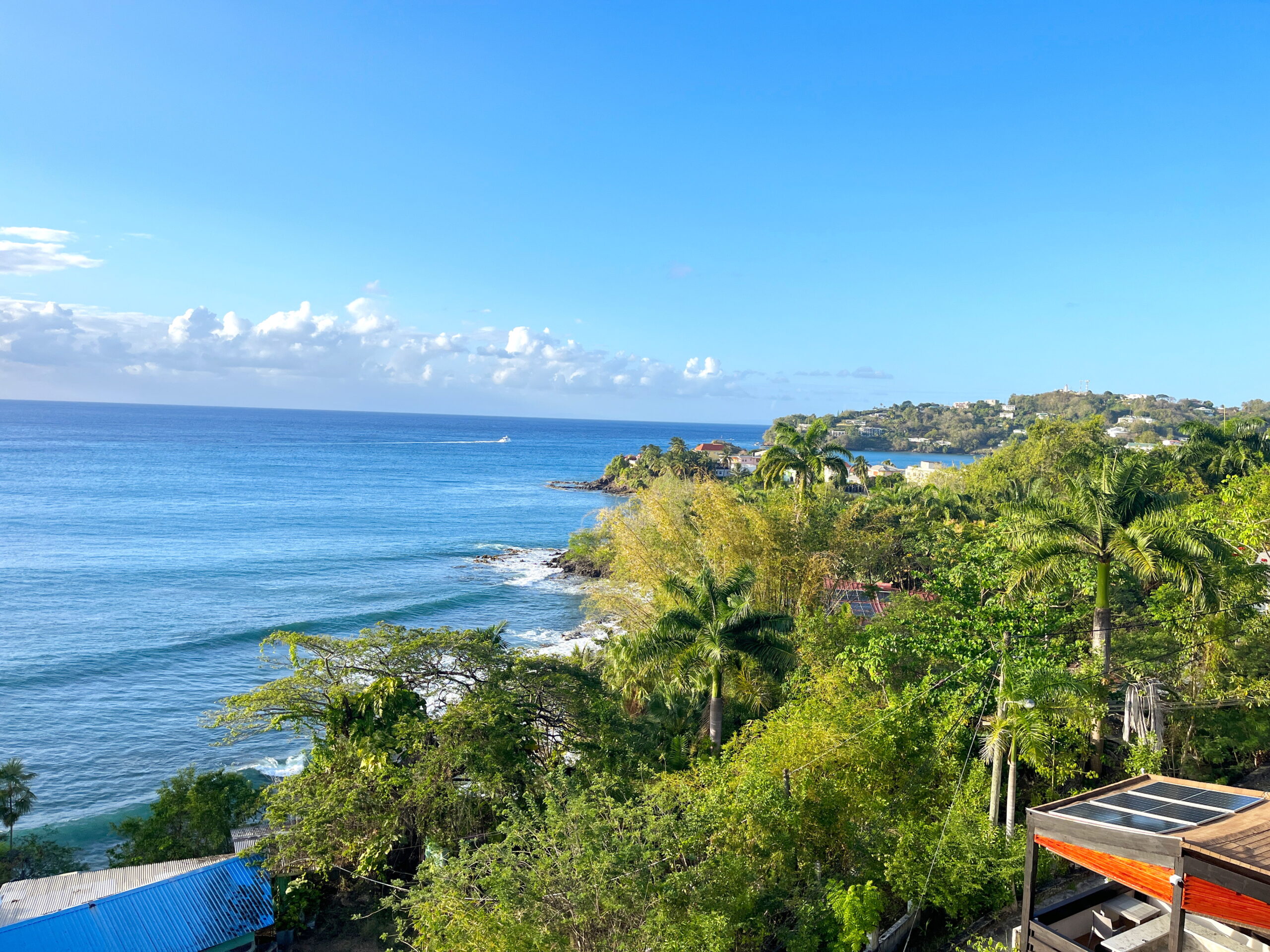
A room with a view.
From our balcony on the top floor, this is our view to the north.
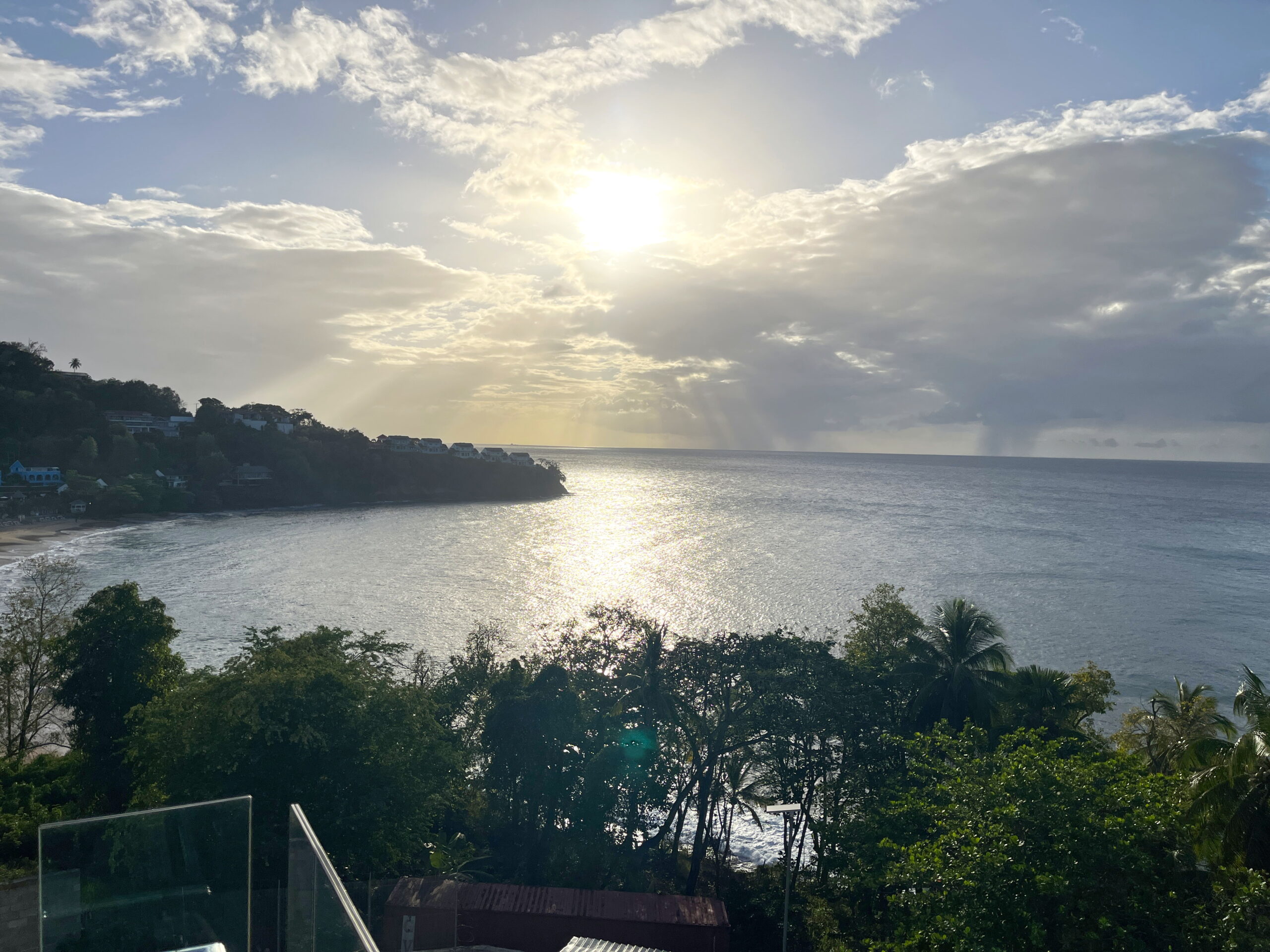
The same room with a different view.
And this is the view looking south. On the left, you can see buildings. When we selected this residence, we looked at the map and saw that there were many restaurants available, and planned to walk to them for romantic dinners. Nope. The whole mess is a Sandals Resort, and the facilities are available only to people who pay a lot of money for all-you-can-whatever experiences. Which is a problem because, it’s the first night here and we don’t have food.
However, our Airbnb host, Alex, offers to drive into town and get a Domino’s pizza for us. (It’s dark already, and the roads are twisty with sharp drop-offs. Tourists are cautioned to avoid driving at night, and for good reasons.) So, our first dinner on the tropic paradise is crappy pizza. Still, we’re here, and we are having fun!
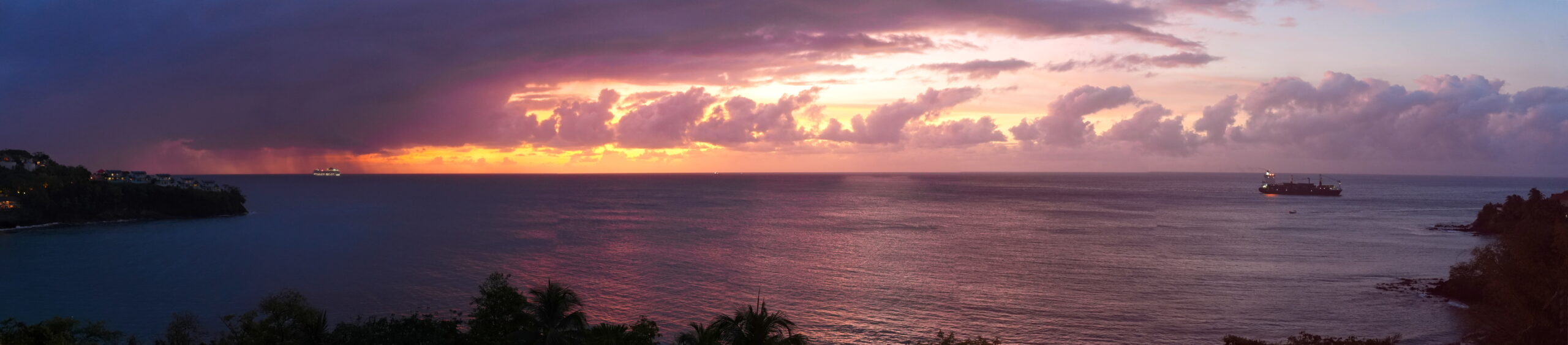
Just another day in paradise.
It rains somewhere on the island daily while we are here. Typically, not on us, which is good. See those big ships out there? Those are cruise ships, cruising. Some of the cruises last for months, up to 274-nights. Not our thing, but if you just like to sit, watch the world go by, and pretend you know about the world’s cultures because you spent a few hours in a tourist trap, then it sounds like the perfect adventure!
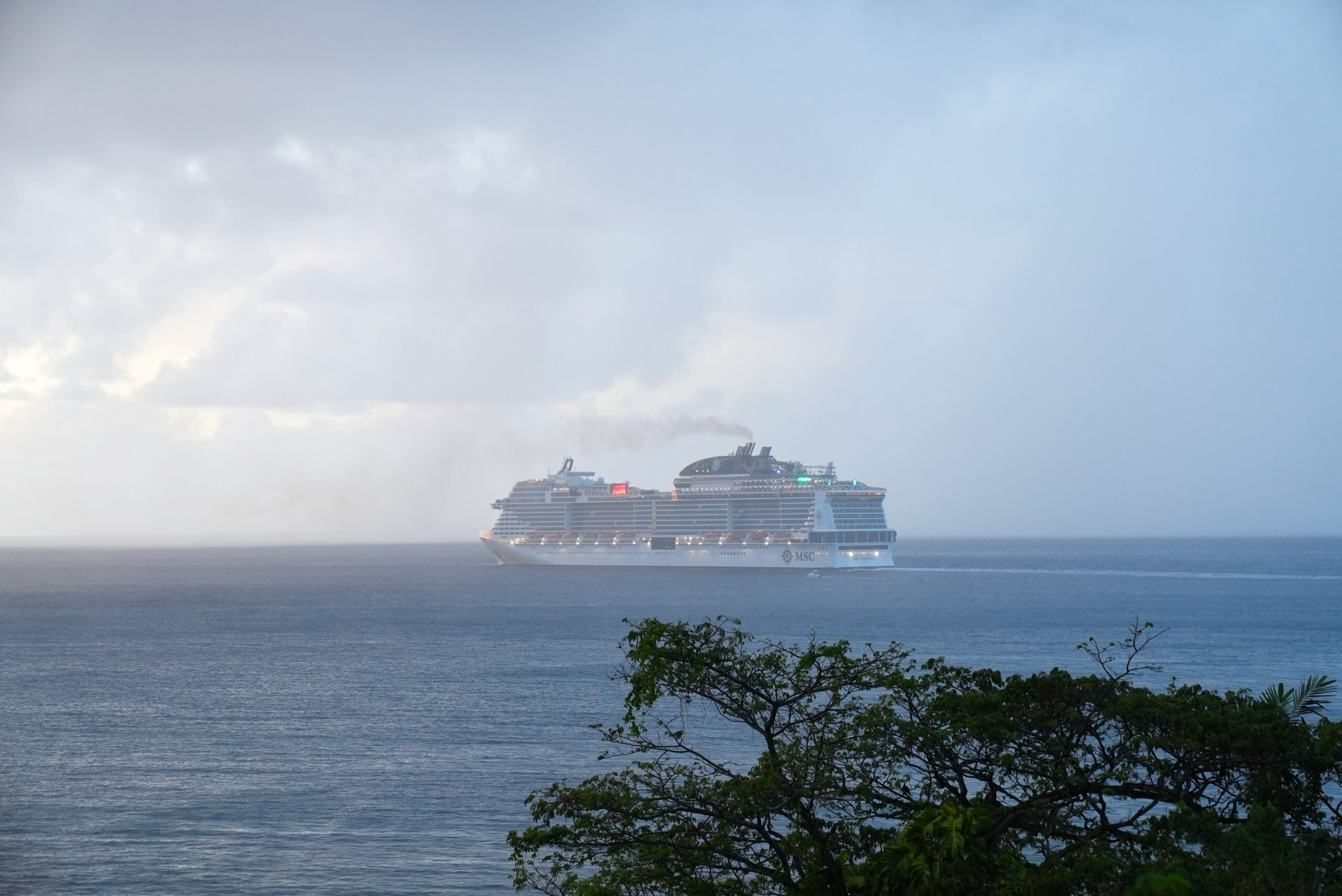
Yikes!
The largest of these ships hold about 6,000 passengers. You might look at this and think, “That’s where I want to be.” Sorry, but I see a floating ghetto.
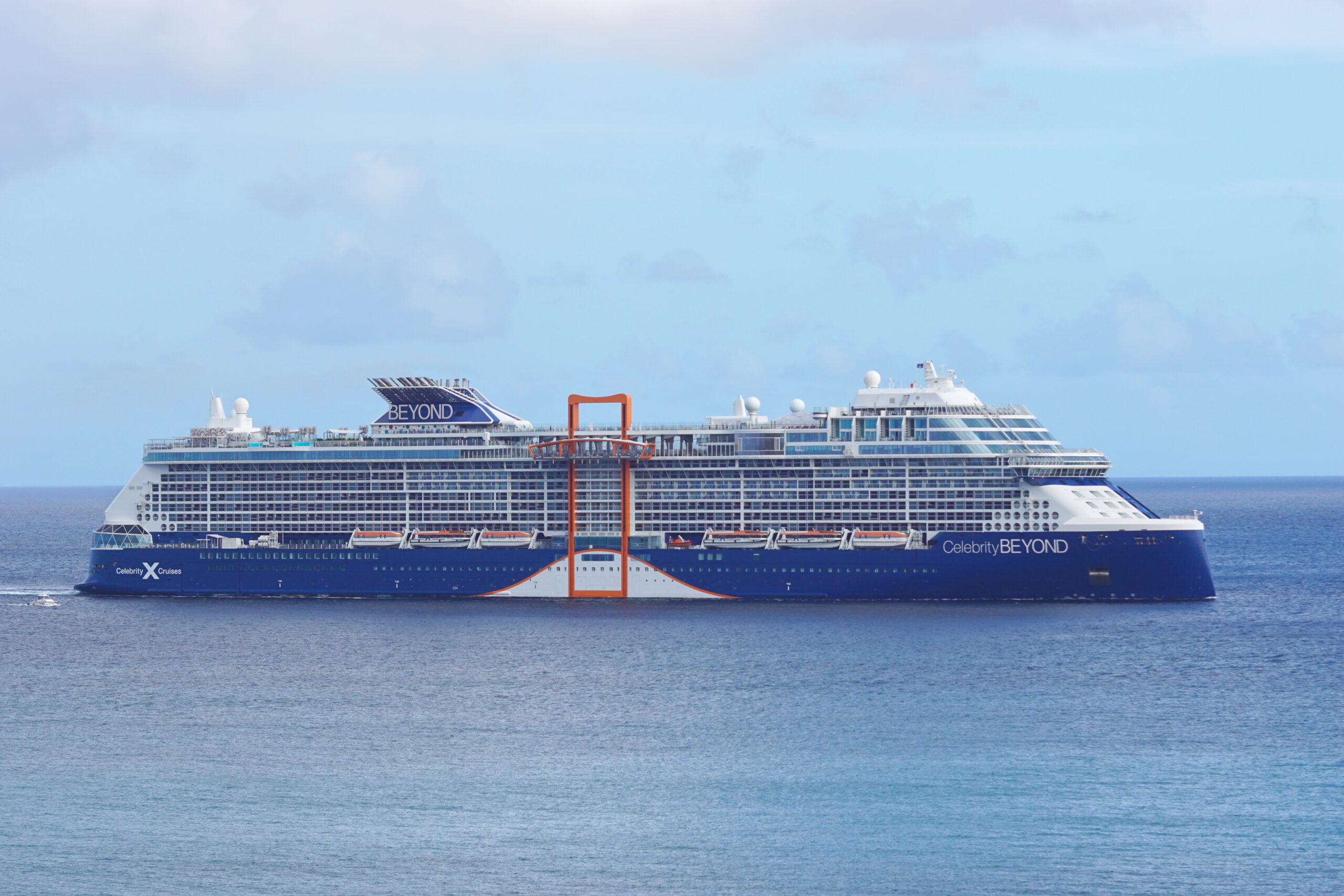
Beyond what?
To appreciate the size, notice the normal-sized craft on the far left.
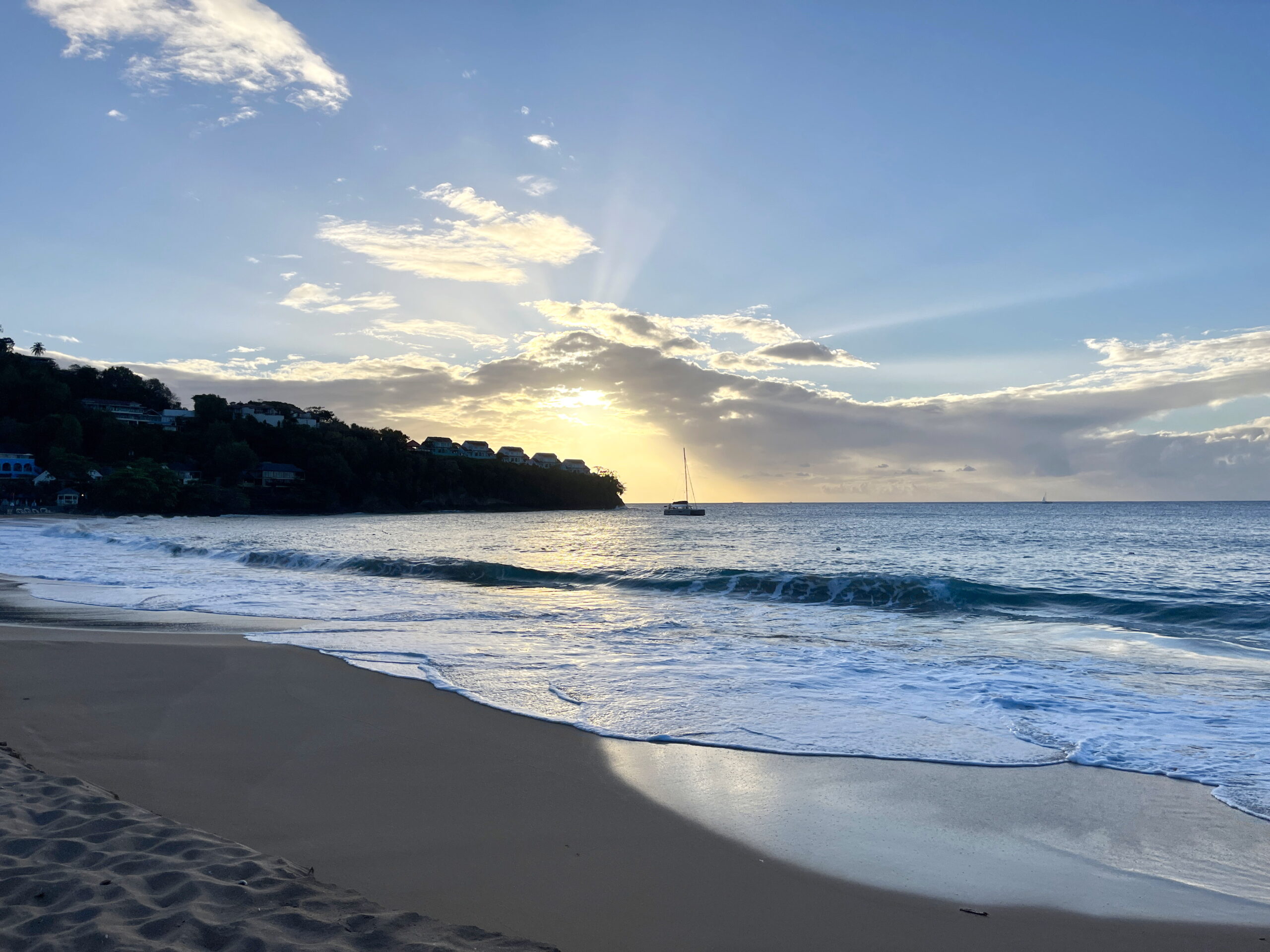
This is what I’m talkin’ about.
We’ll have more on boat experiences in a future article. 🙂
On our first full day here, we visit the town of Castries. Castries is a bit of a mess because the town was built with island sensibilities in mind, then opened the port to cruise ships. So, almost every day, thousands of tourists disgorge from ships, invade the area near the port, then leave. Thus, the area near the port is converted to booths selling mass-produced “souvenirs”, with little differentiation between the booths. It has less a feeling of a bazaar and more of a popup flea market.
Well, I shouldn’t complain, should I. There are trade-offs for everything (which we will examine more in a future article). Tourists arrive, give you their money, then leave. Without tourist, islands typically turn to extractive industry to create an economy, which is worse.
So, we wander the streets, seeing what there is to see.
Castries
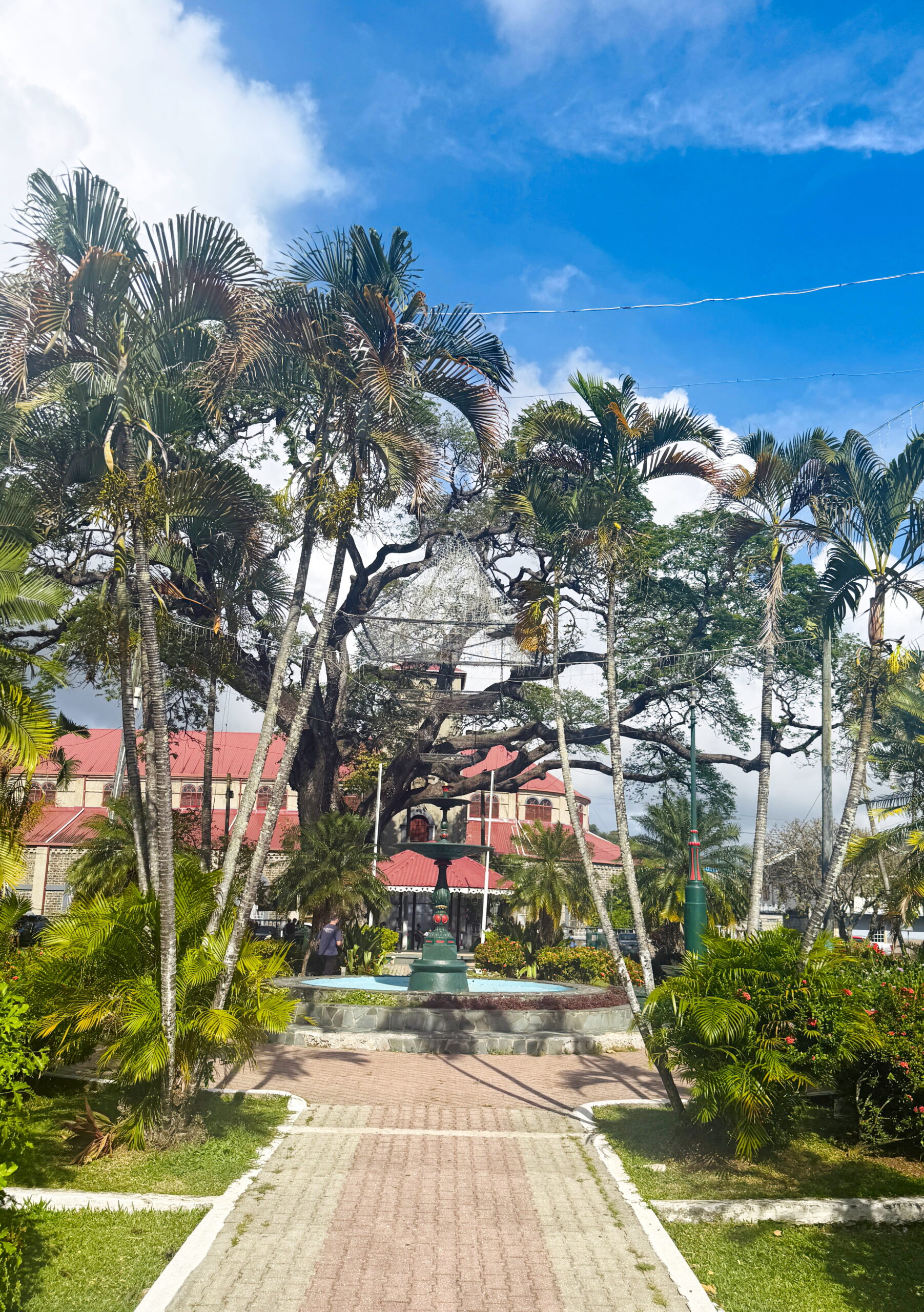
A small park in the city.
Castries has bustling streets crowded with cars and people, but it also has quiet parks with flowers, birds, and trees. Ahhhhh…
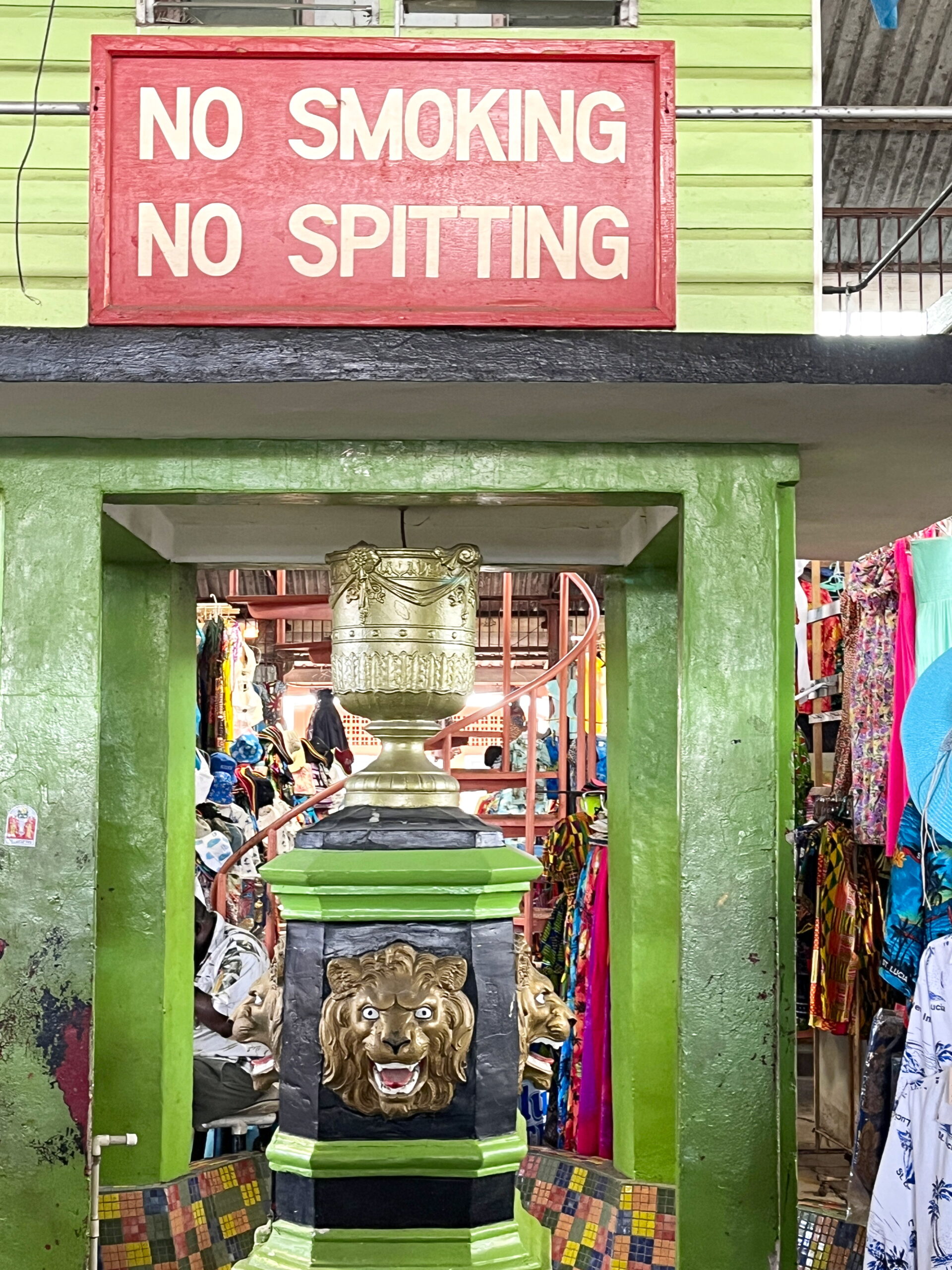
This is a thing.
By law, there is no smoking in public buildings in St. Lucia, and fines for smoking in hotel rooms are about $200 per day. In fact, the whole time we are here, we see only two people smoking, and they are tourists. Okay, but spitting? Spitting is so prevalent that they need a large sign to discourage it inside a bazaar? Alrighty then!
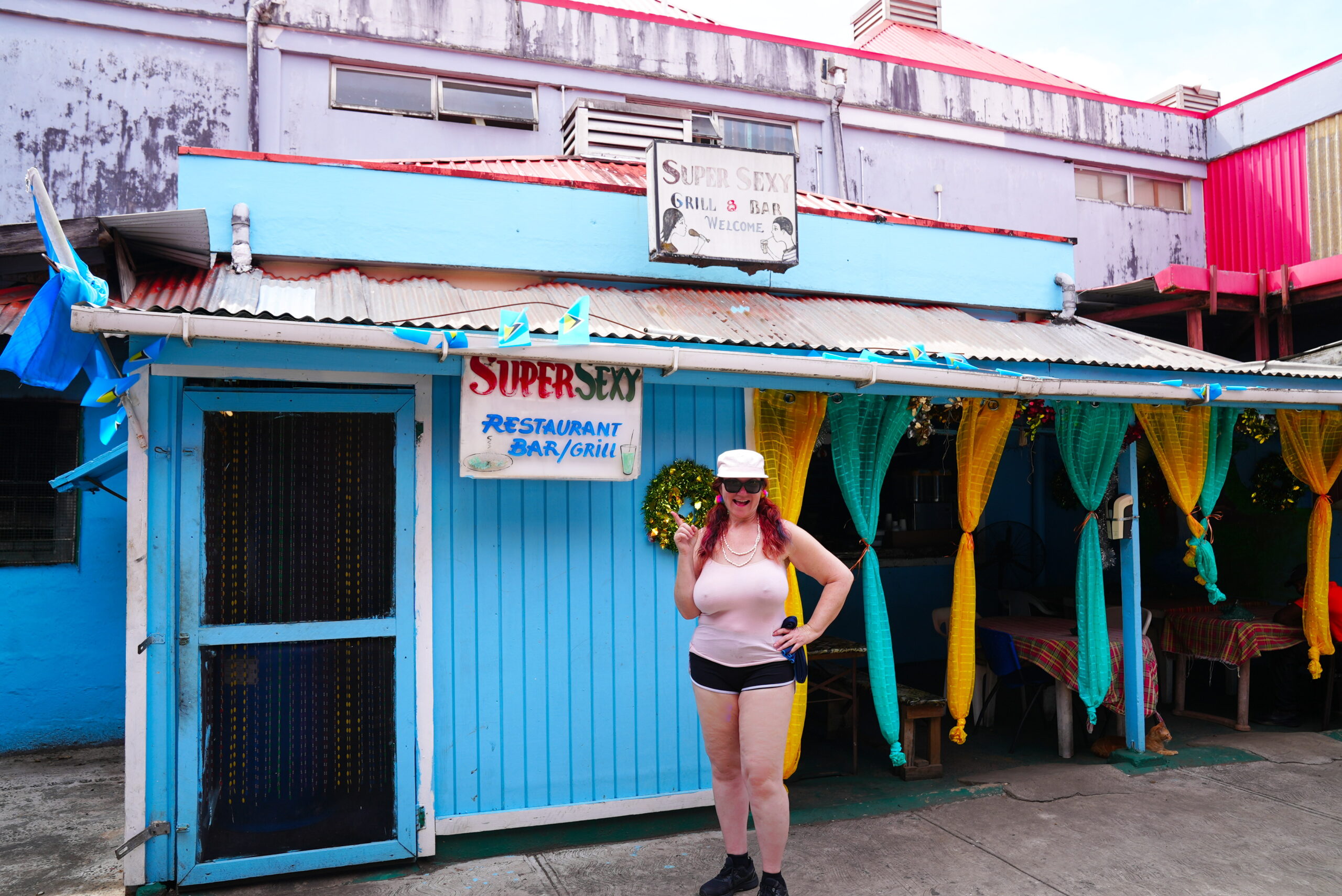
Not just normal sexy, but SUPER sexy!
Here we see the Super Sexy Bar and Grill. We are both hungry and thirsty, but, sadly, we are feeling only regular sexy, and realize they are not going to serve us. <Sigh>
Geninatals
My husband and I frequently pick out each other’s clothes, especially when we travel. So, I dress my husband in (what I call) boy shorts. I dress him in boy short when we go to the beach, dancing in clubs, and just for fun. They show off his cute butt.
So, we are walking around Castries and I notice that women are staring at my husband’s boy shorts. Not the back, but the front. And when I say “women”, I mean everything from schoolgirls in schoolgirl uniforms to old ladies in old lady clothes.
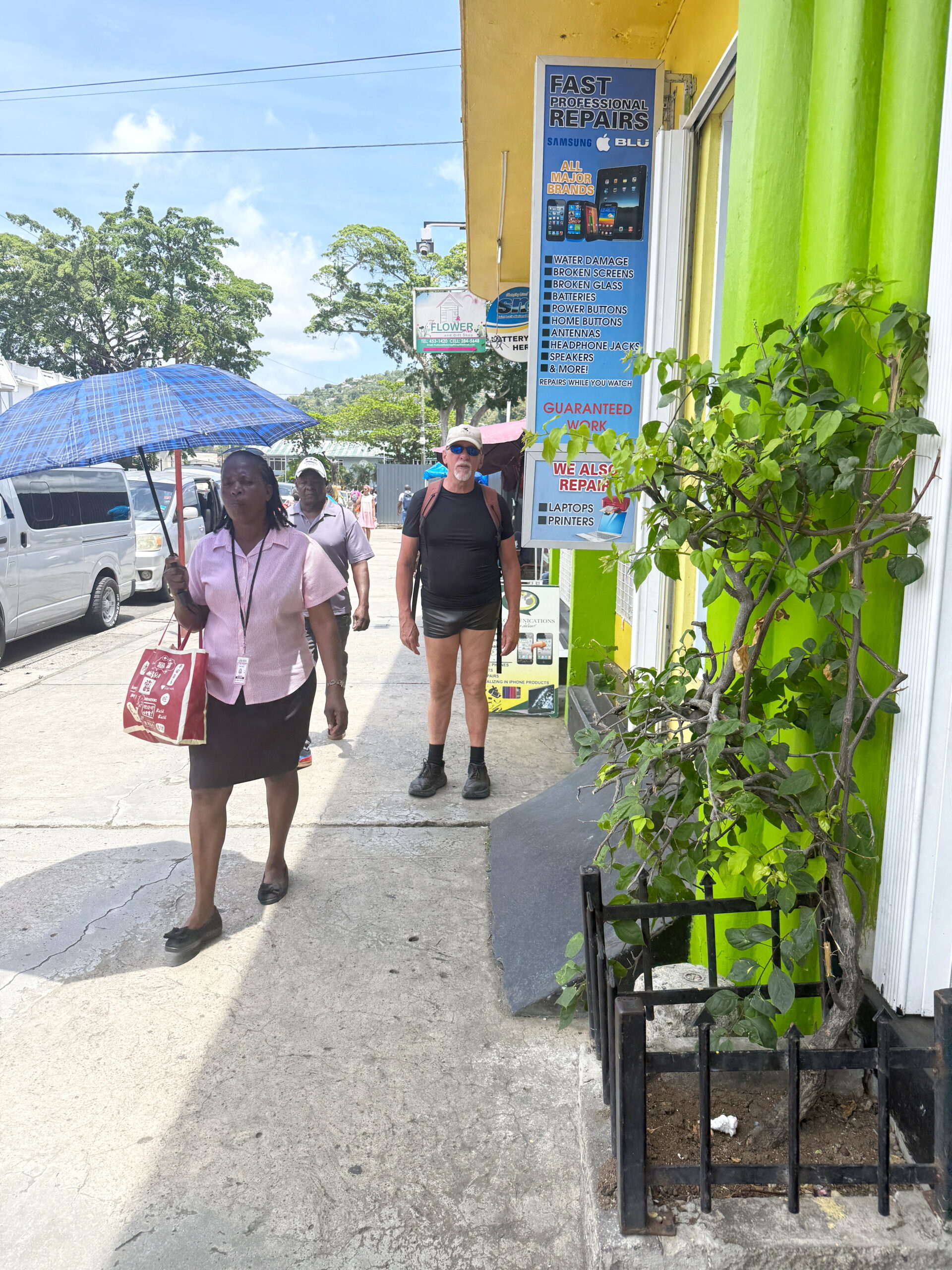
What’s the big deal?
So I tell him to stop, and I walk ahead to take a photograph with my phone.
Then I hear a woman say, “I can see his geninatals,” as if she had never heard the word “genitals” before.
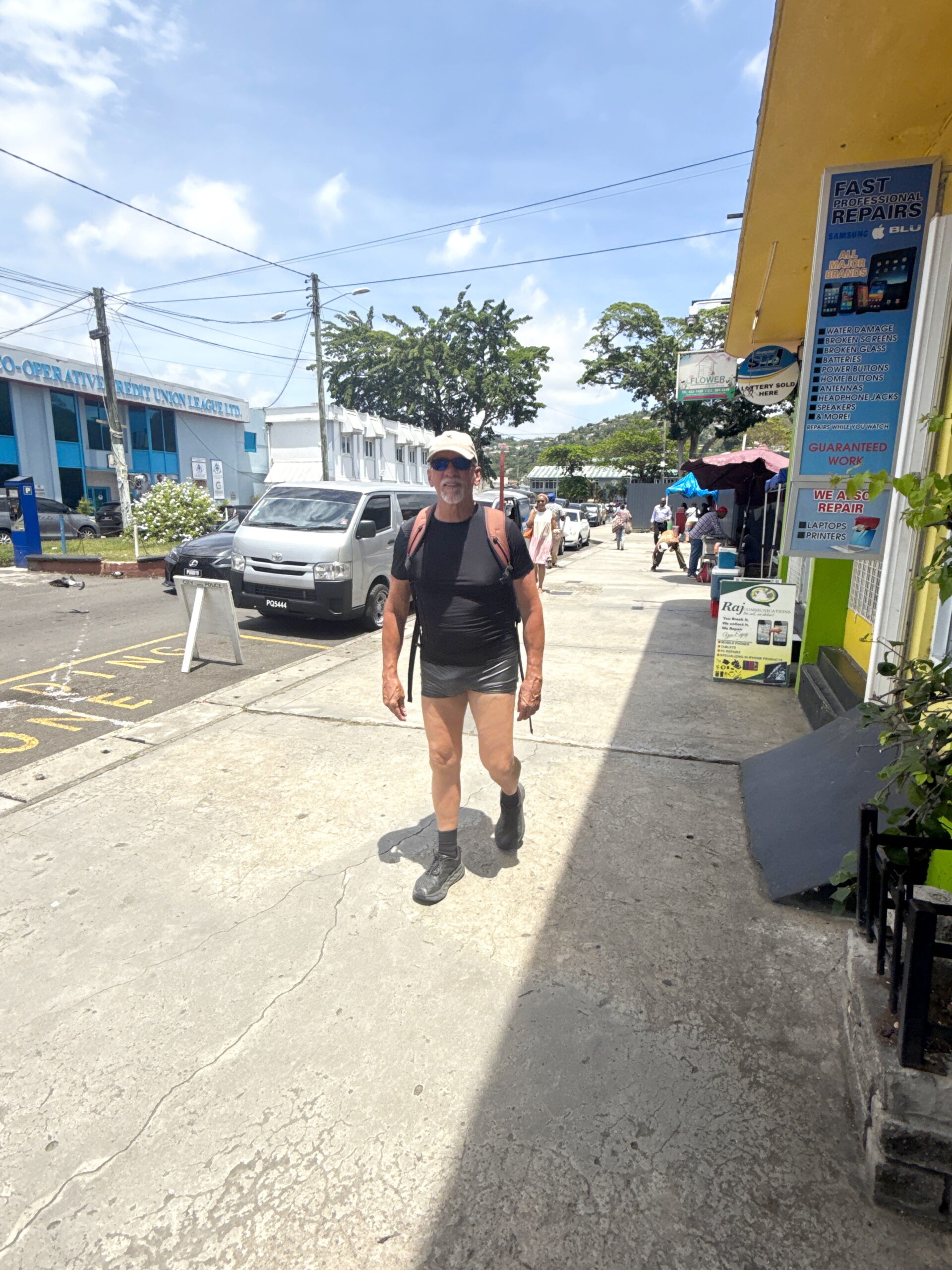
How to meet women in St. Lucia.
We look around and realize that ALL the men are wearing loose-fitting pants. They could be Ken dolls, for all we know.
This is like when you see a small lump on a woman’s shirt where her breast is, you’ll say, “You can see her nipple,” when in fact you can see only a small bump in her clothing.
I ask my husband what it feels like, and he says, “Men are invisible. Women never notice us. THIS FEELS GREAT!”
A Female Pedestrian stops and asks, casually:
FEMALE PEDESTRIAN
Excuse me, sir, do you have the time?
KEN (stunned):
You respect me!
FEMALE PEDESTRIAN
Um, do you know what time it is?
KEN:
No, I do not!
FEMALE PEDESTRIAN
Okay…?
Ken feels like he was just declared king.
Rum
Rum is a liquor made by fermenting and then distilling sugarcane molasses or sugarcane juice. The distillate, a clear liquid, is often aged in barrels of oak. Rum originated in the Caribbean in the 17th century, but today it is produced in nearly every major sugar-producing region of the world. And, as you might expect, St. Lucia is a major sugar-producing region.
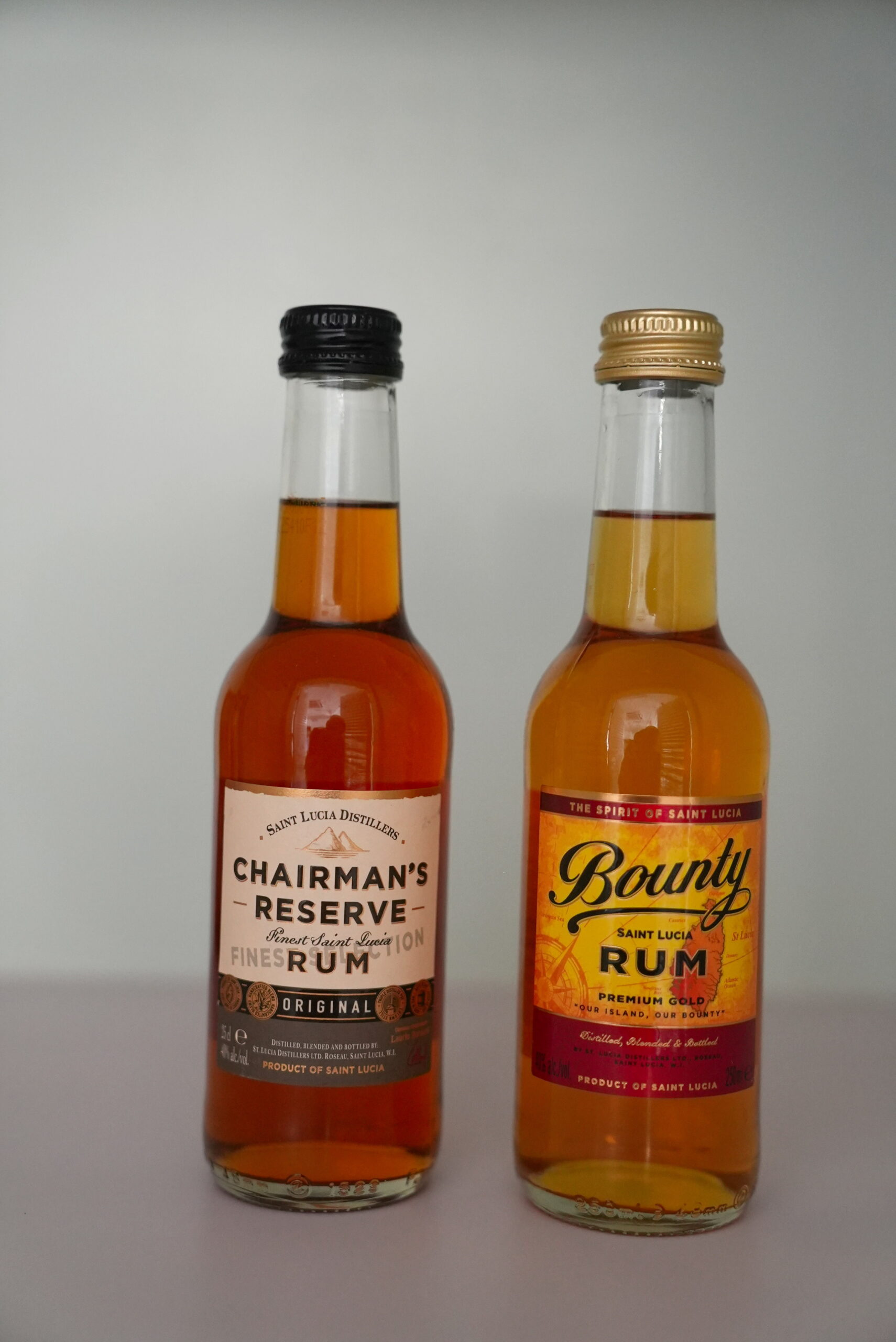
Rum. You can’t visit the Caribbean without drinking it.
These are, so far, our two favorite rums distilled on St. Lucia.
Yes, we are in St. Lucia.
We want to take a photograph of the sign on the gate, but the gate is open, so it has to be two photographs. <sigh>
Distillers!
Okay, this is where we are: St. Lucia Distillers. “St Lucia Distillers located in the Roseau Valley on the west coast of Saint Lucia produces world-class rums and liqueurs. The tour of the distillery is for people who enjoy rum and want to gain a better understanding of rum. St. Lucia distillers are known for the art of blending and we are pleased to share our knowledge with you.”
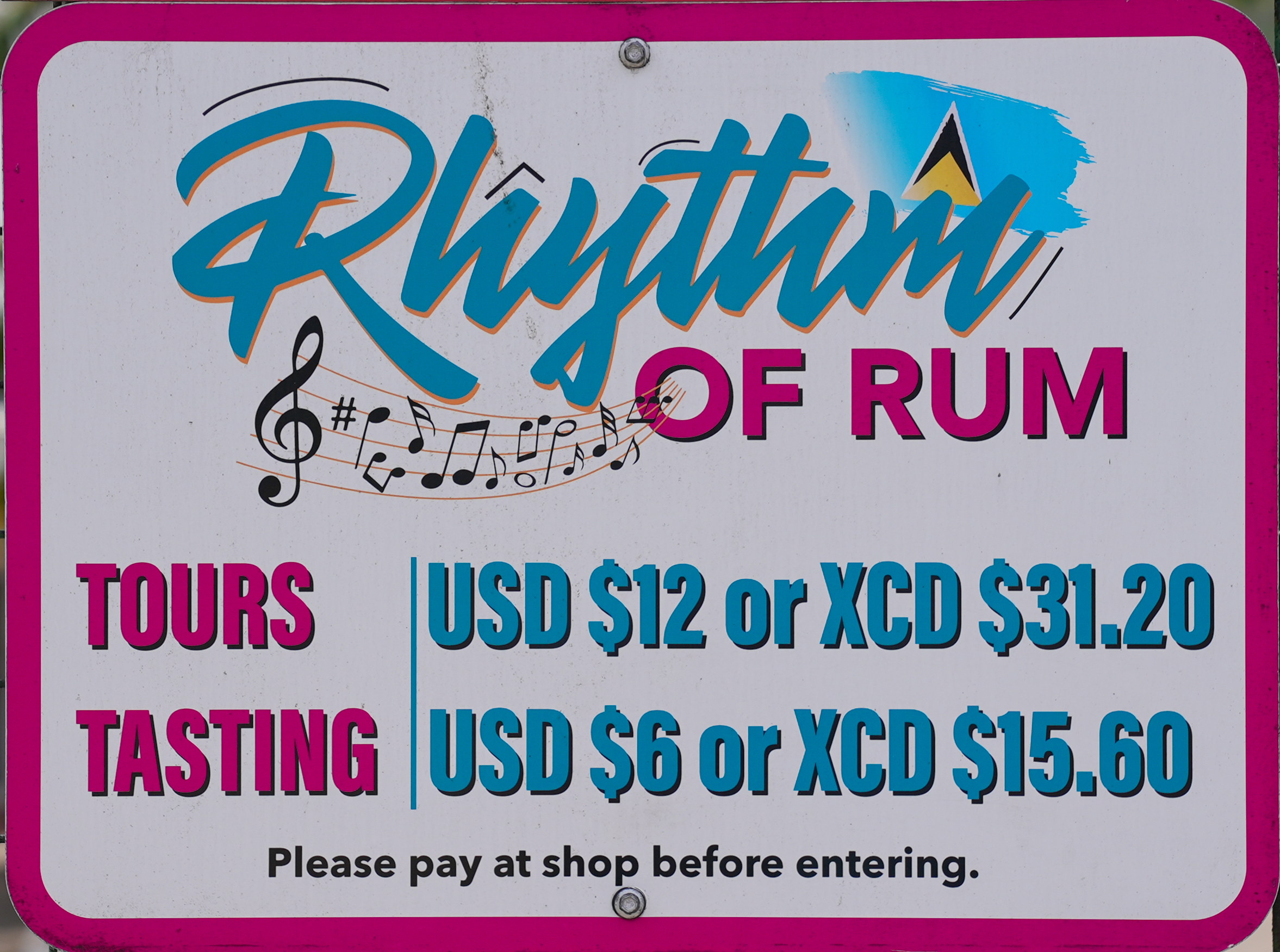
Yes, rum has a rhythm.
For St. Lucia, this is pretty inexpensive for a tour. “The Rhythm of Rum Tour is open for pre-booked groups (minimum 14 pax) 7 days a week and individual visitors 5 days a week (Monday to Fridays, except public holidays). A complete guided tour will take about an hour to complete. The first tour is scheduled to commence at 9.00 a.m. and the last at 3.00 p.m.”
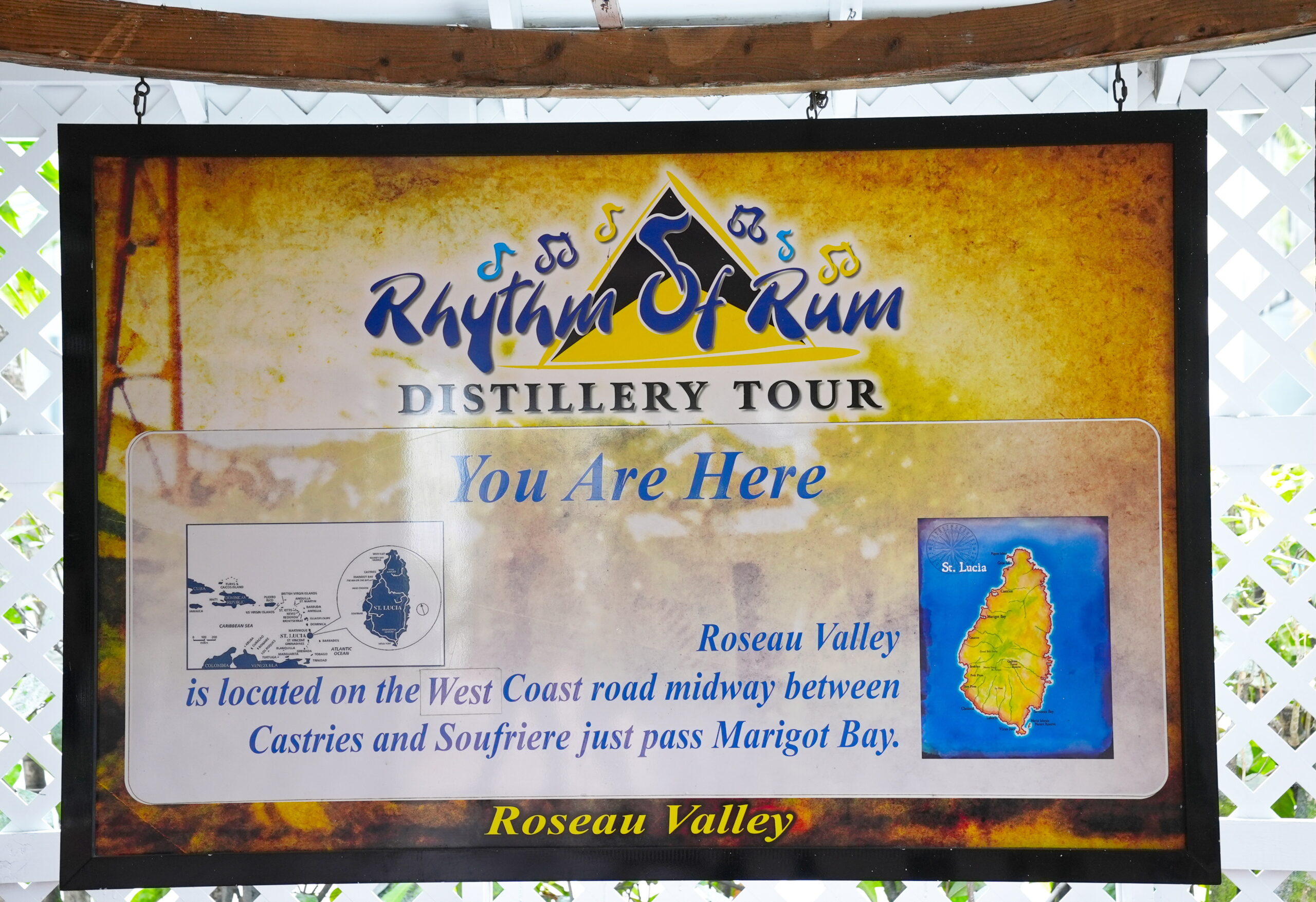
Here you are: here.
I think they mean, “just past.”
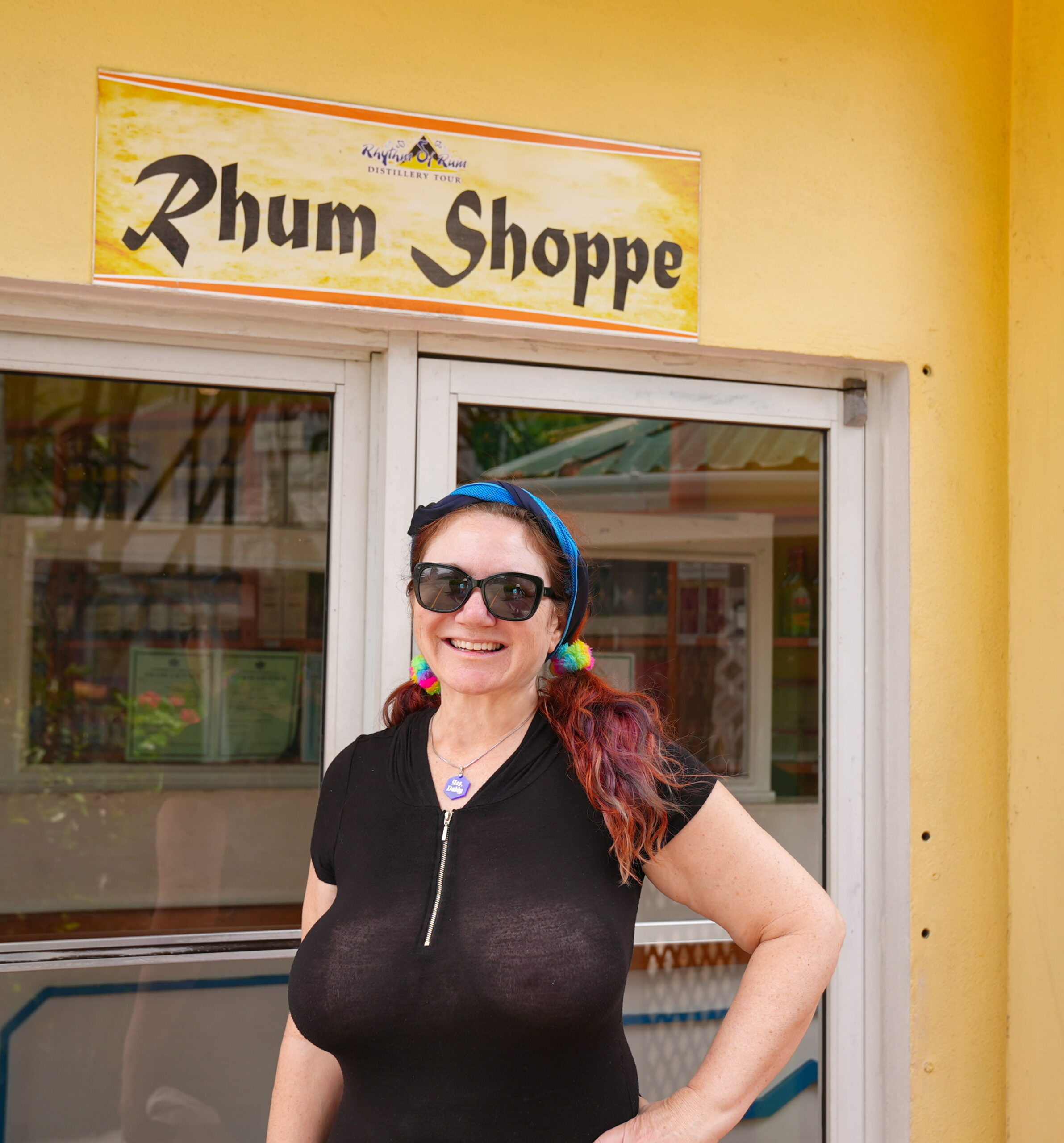
Ye olde Rhum Shoppe.
So we pay our $12 each, and head into the rum shop, to see what’s what.
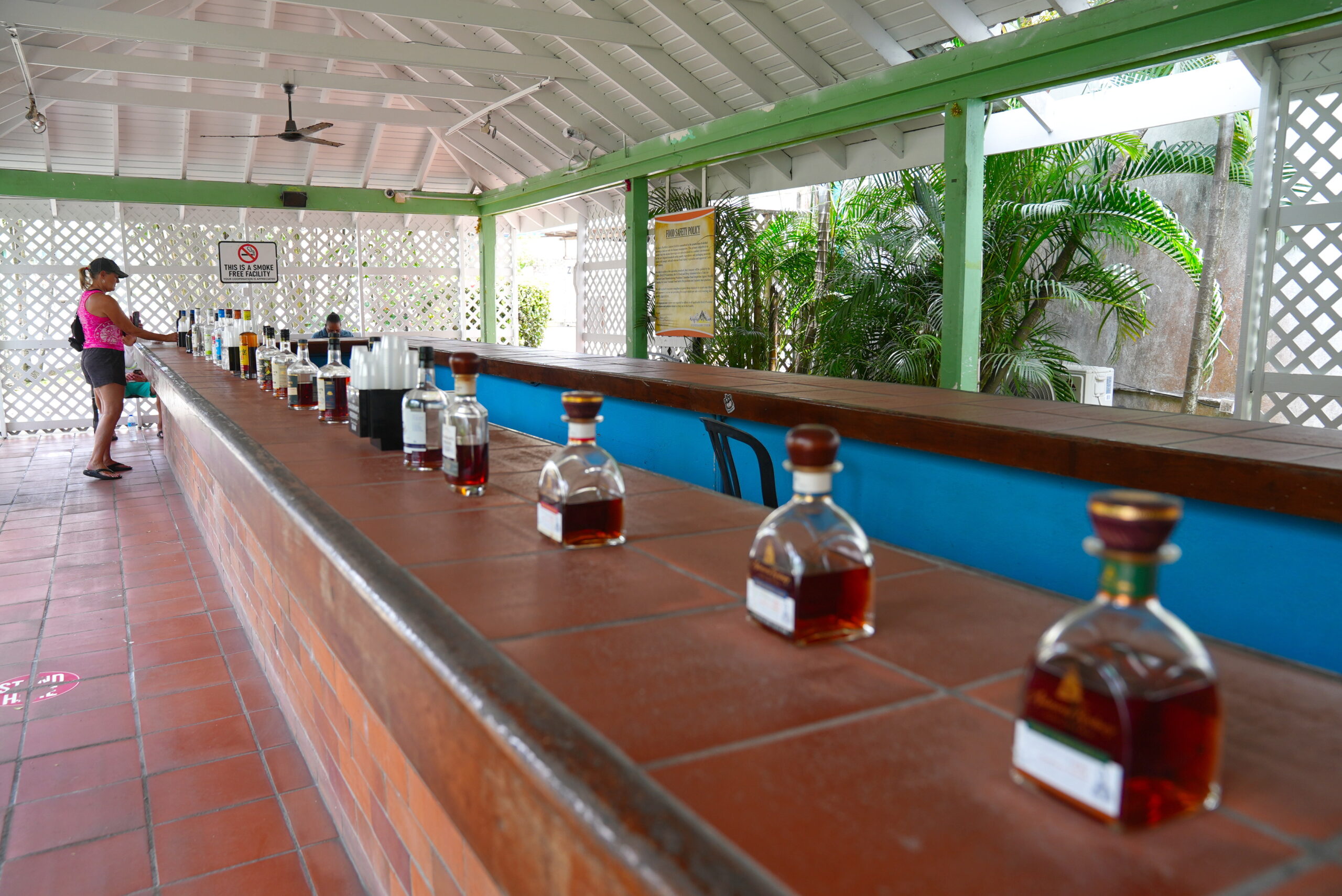
All the rums of St. Lucia.
There is a bar with a line of rums. However, the tour guide is with another group, so we have to wait.
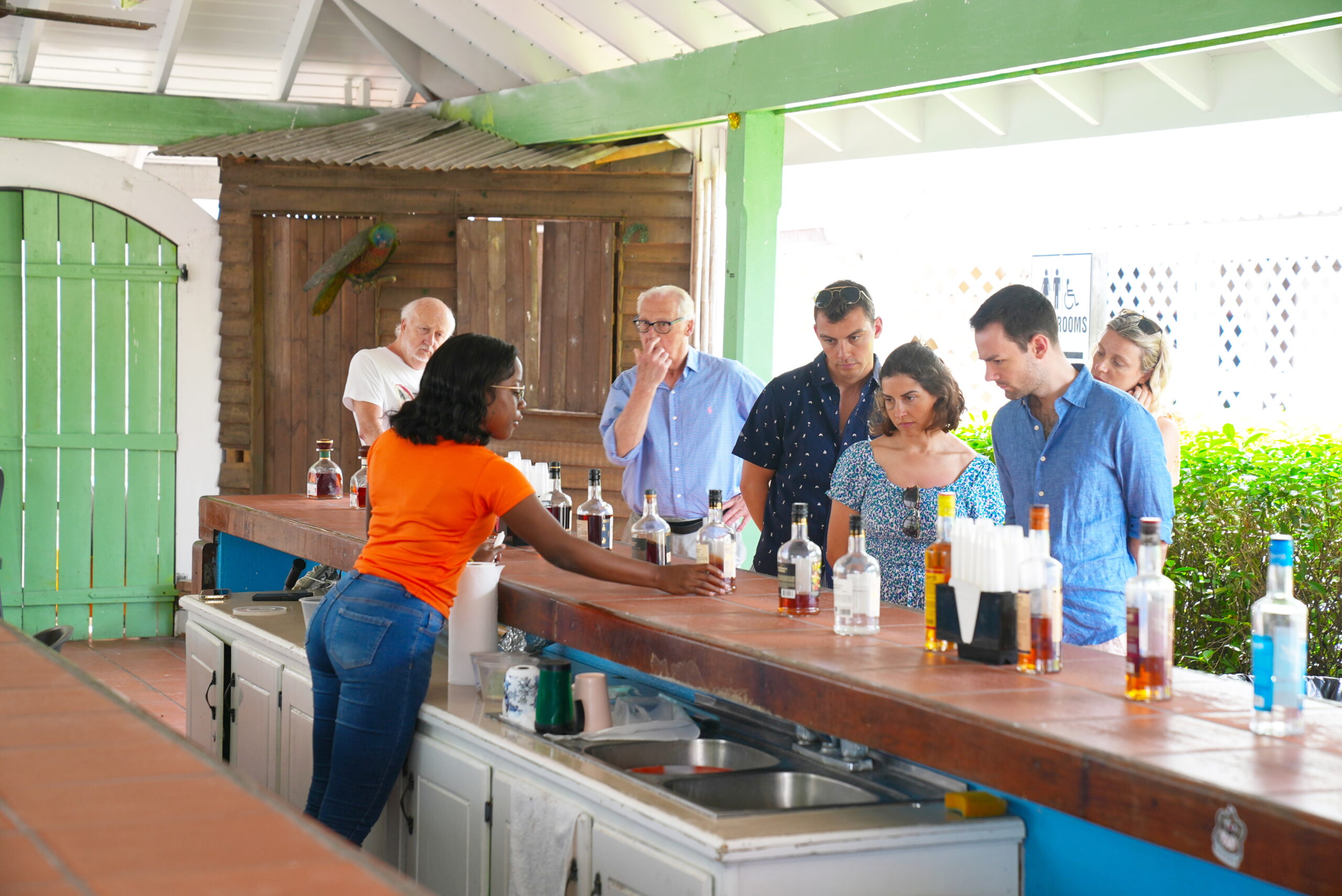
Our tour guide.
The girl in orange is our tour guide. We listen as she explains the different types of rum to the guests.
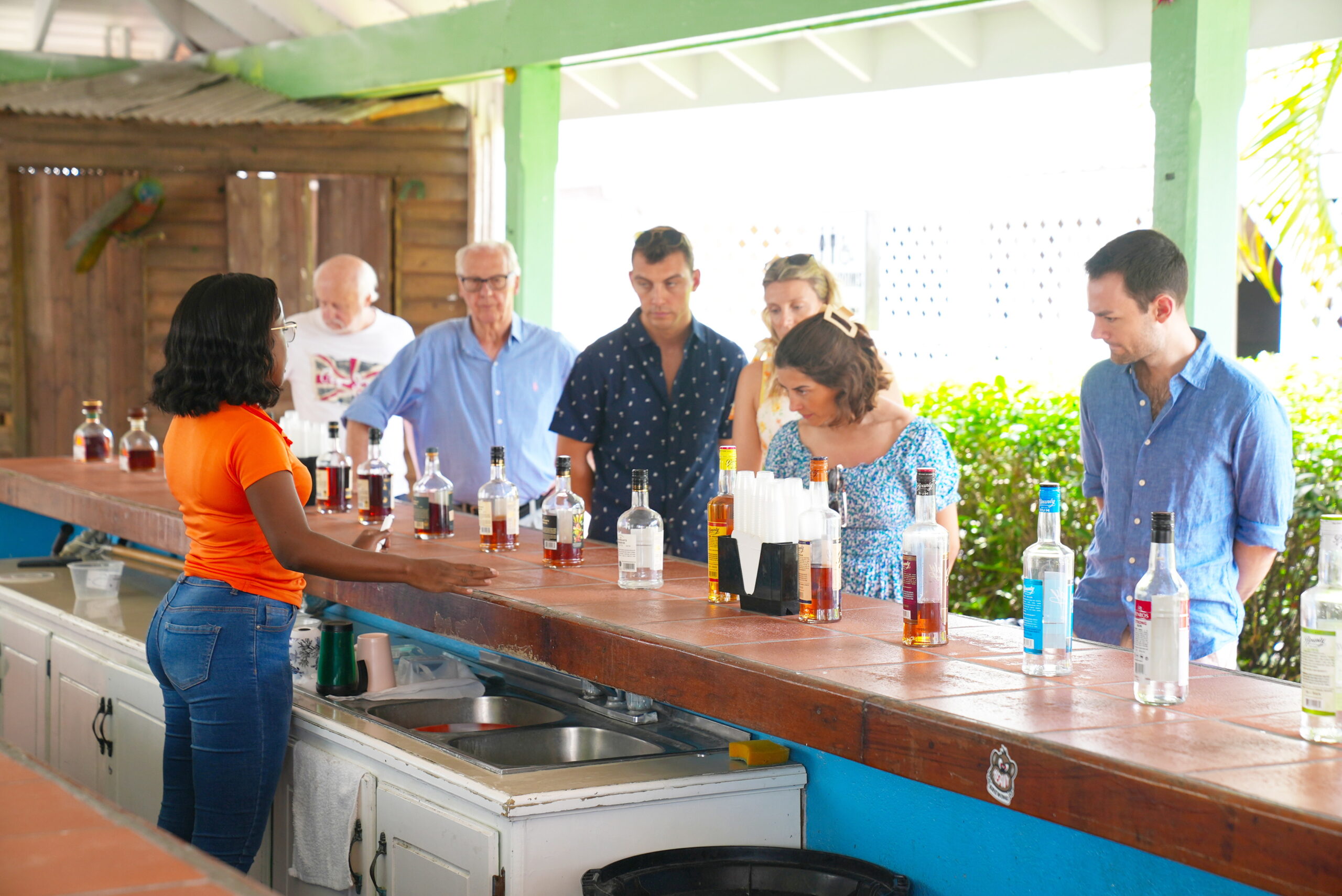
More of our tour guide.
We continue to listen as she continues to explain the different types of rum to the guests.
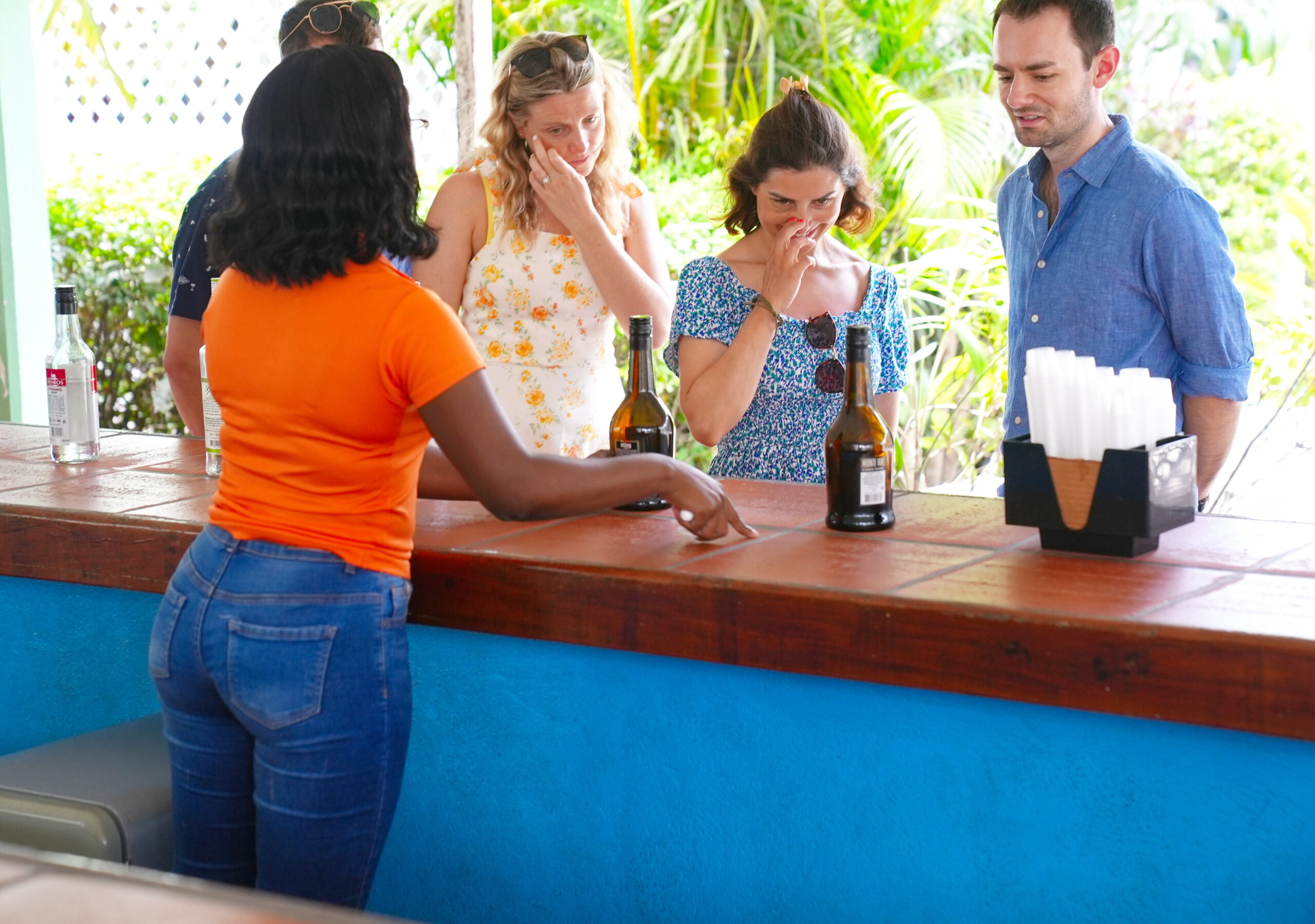
Even more of our tour guide.
We continue continuing to listen, and, finally, she finishes and our tour begins.
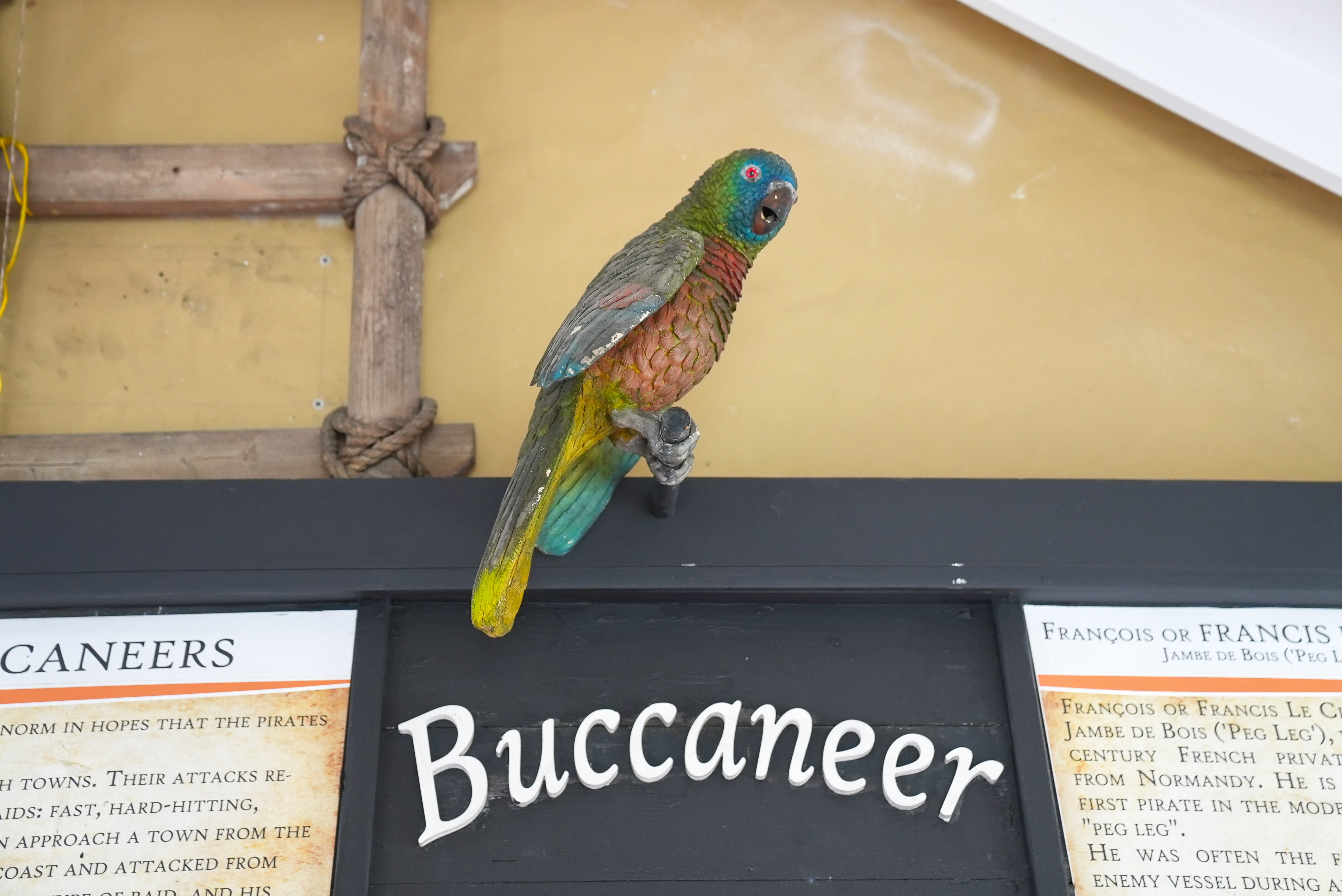
I’m pretty sure this is the parrot from the Dead Parrot sketch.
We are first led to the Buccaneer room to watch a short video. The best thing about it is that the room is air-conditioned.
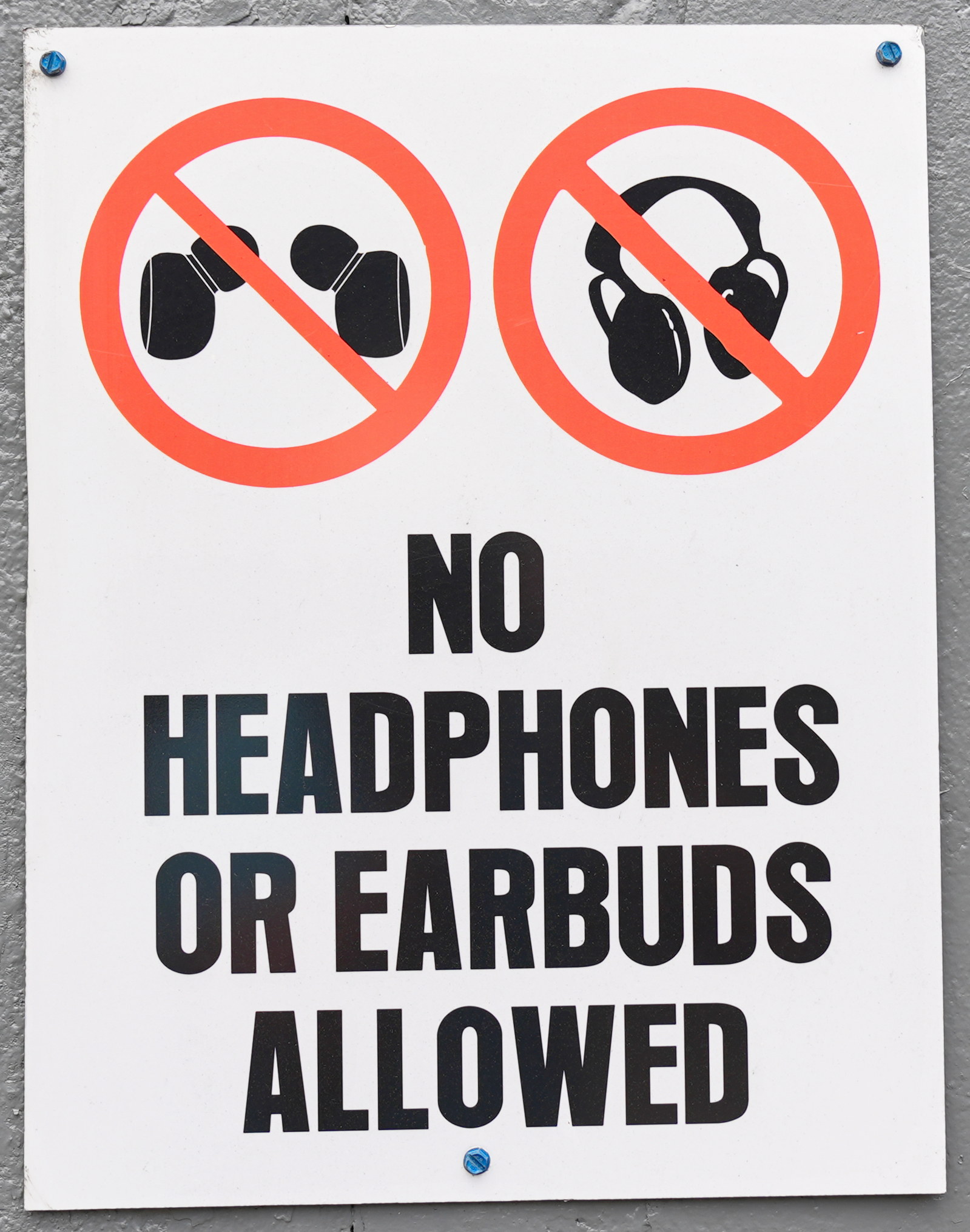
This sign is for dumb people.
This is to remind people that headphones and earbuds are NOT ear protection, and, in fact, will distract you and you will injure or kill yourself.
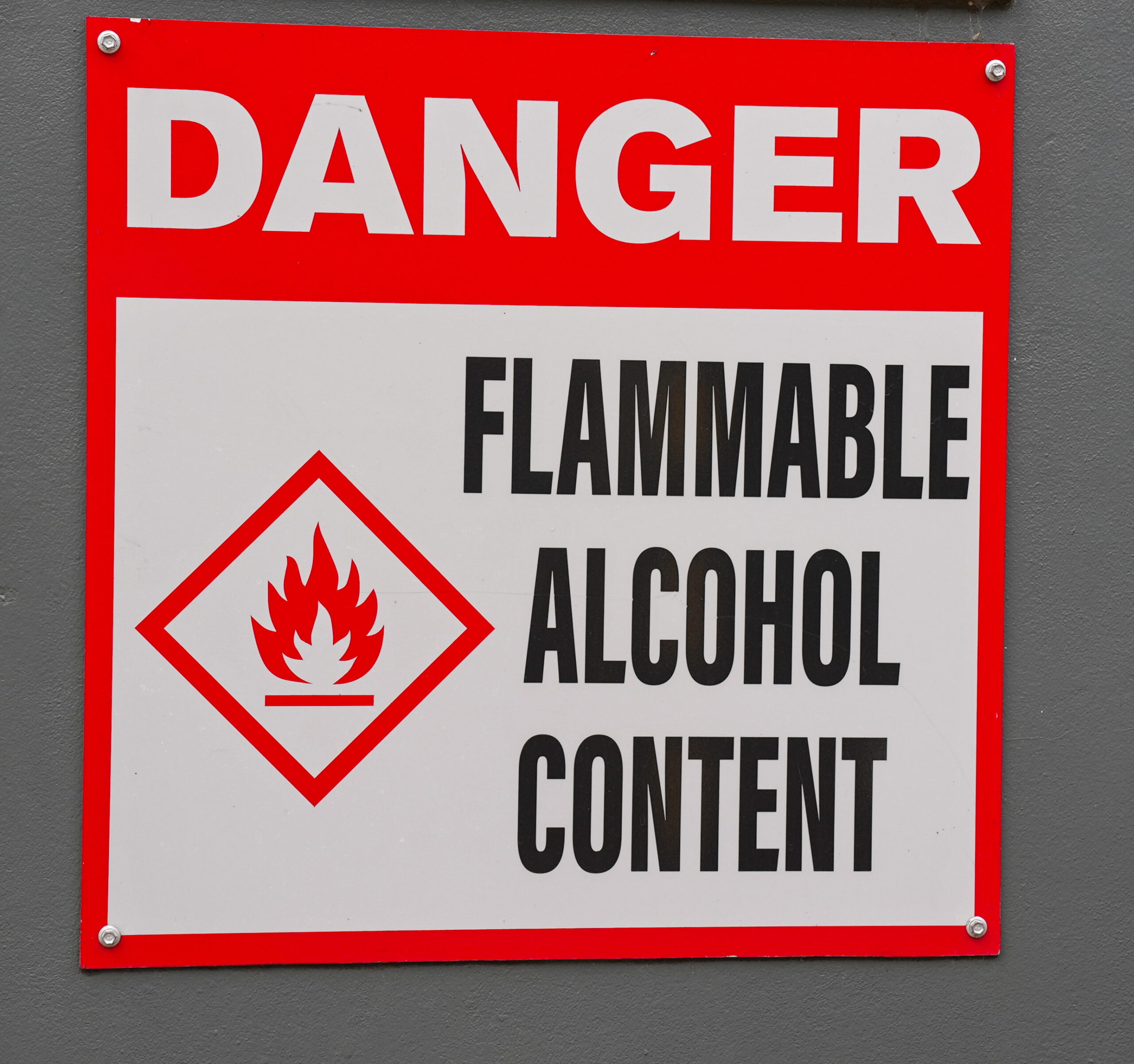
Now we’re talking!
Just a reminder that rum contains alcohol and alcohol is flammable.
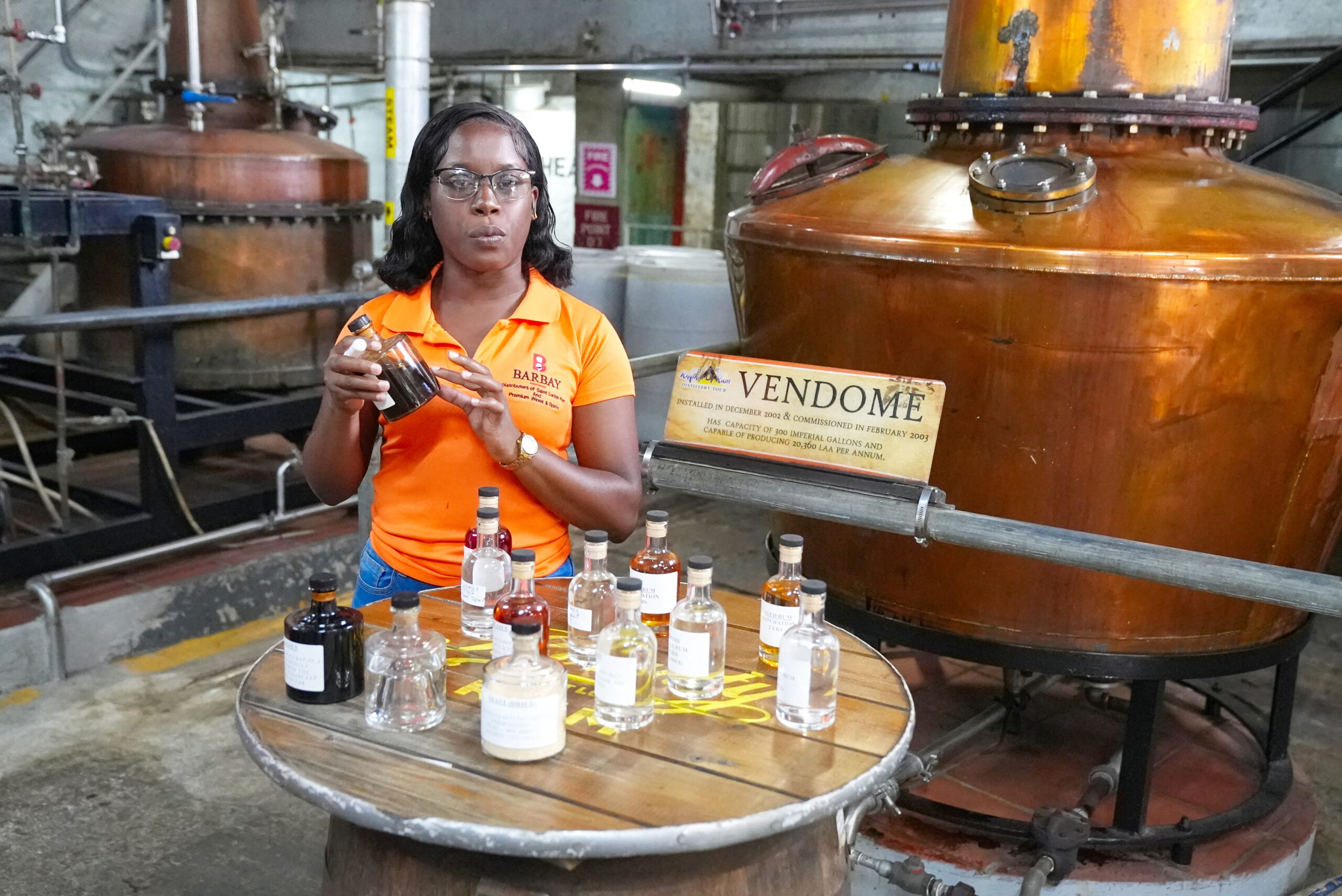
The real tour begins!
Basically…
Sugarcane is harvested. It is composed of around 63% to 73% water, 12% to 16% soluble sugar, 2% to 3% non-sugars, and 11% to 16% fiber. To extract the water and sugar juice, the harvested cane is cleaned, sliced into small lengths, and milled (pressed).
It is then made into sugarcane juice and molasses.
Most rum is produced from molasses. A rum’s quality is dependent on the quality and variety of the sugar cane that was used to create it. The sugar cane’s quality depends on the soil type and climate that it was grown in.
Yeast and water are added to the base ingredient to start the fermentation process. While some rum producers allow wild yeasts to perform the fermentation, most use specific strains of yeast to help provide a consistent taste and predictable fermentation time.
Fermentation products like 2-ethyl-3-methyl butyric acid and esters like ethyl butyrate and ethyl hexanoate give rise to the sweetness and fruitiness of rum.
The fermented product is then distilled. As with all other aspects of rum production, no standard method is used for distillation. While some producers work in batches using pot stills, most rum production is done using column still distillation. Pot still output contains more congeners than the output from column stills, so produces fuller-tasting rums.
Many countries require rum to be aged for at least one year. This ageing is commonly performed in used bourbon casks, but may also be performed in other types of wooden casks or stainless-steel tanks. The ageing process determines the color of the rum. When aged in oak casks, it becomes dark, whereas rum aged in stainless steel tanks remains virtually colorless.
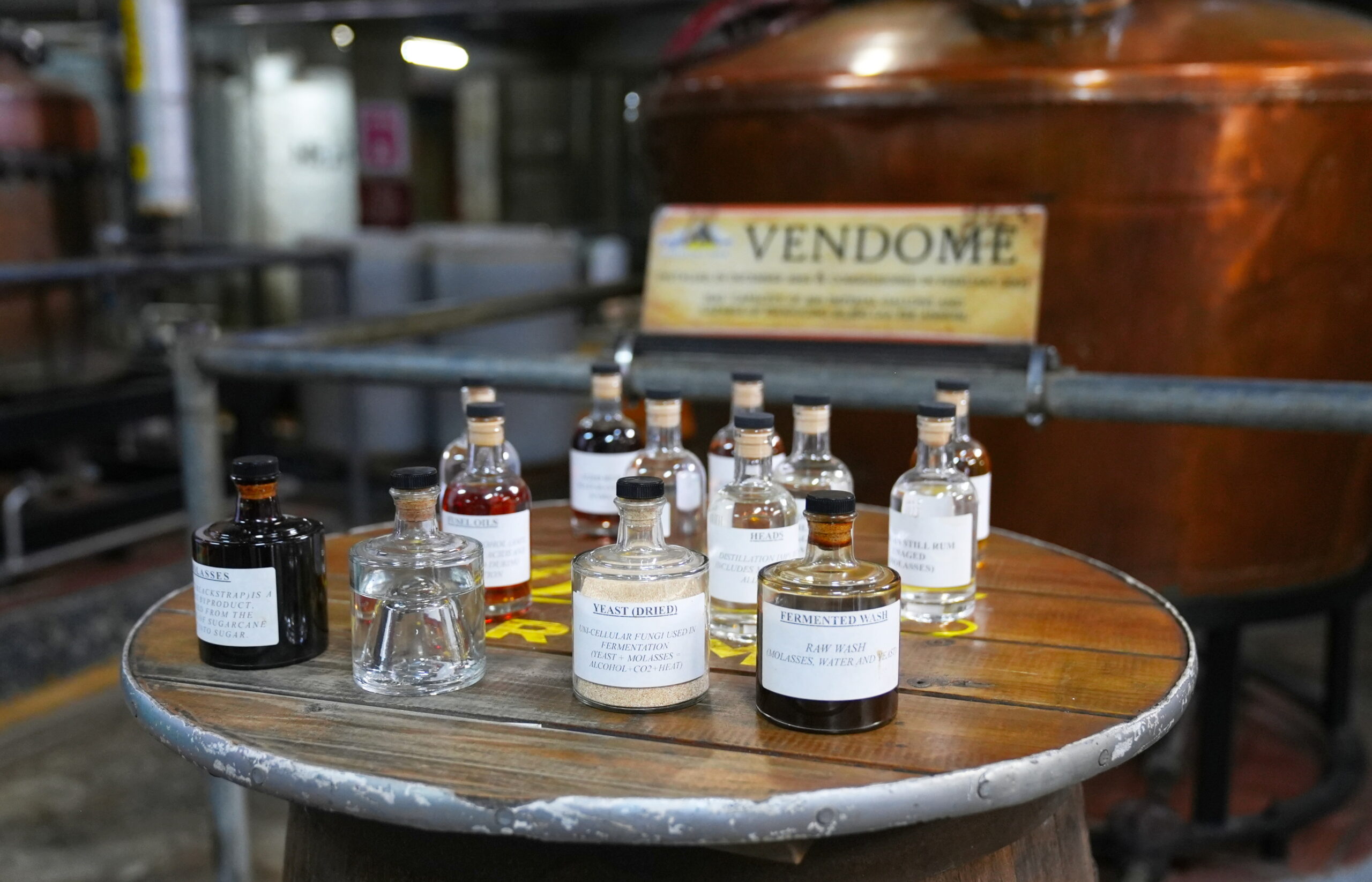
It’s like chemistry. Wait. It IS chemistry.
It looks cool, but we aren’t allowed to open and taste them. Sad.
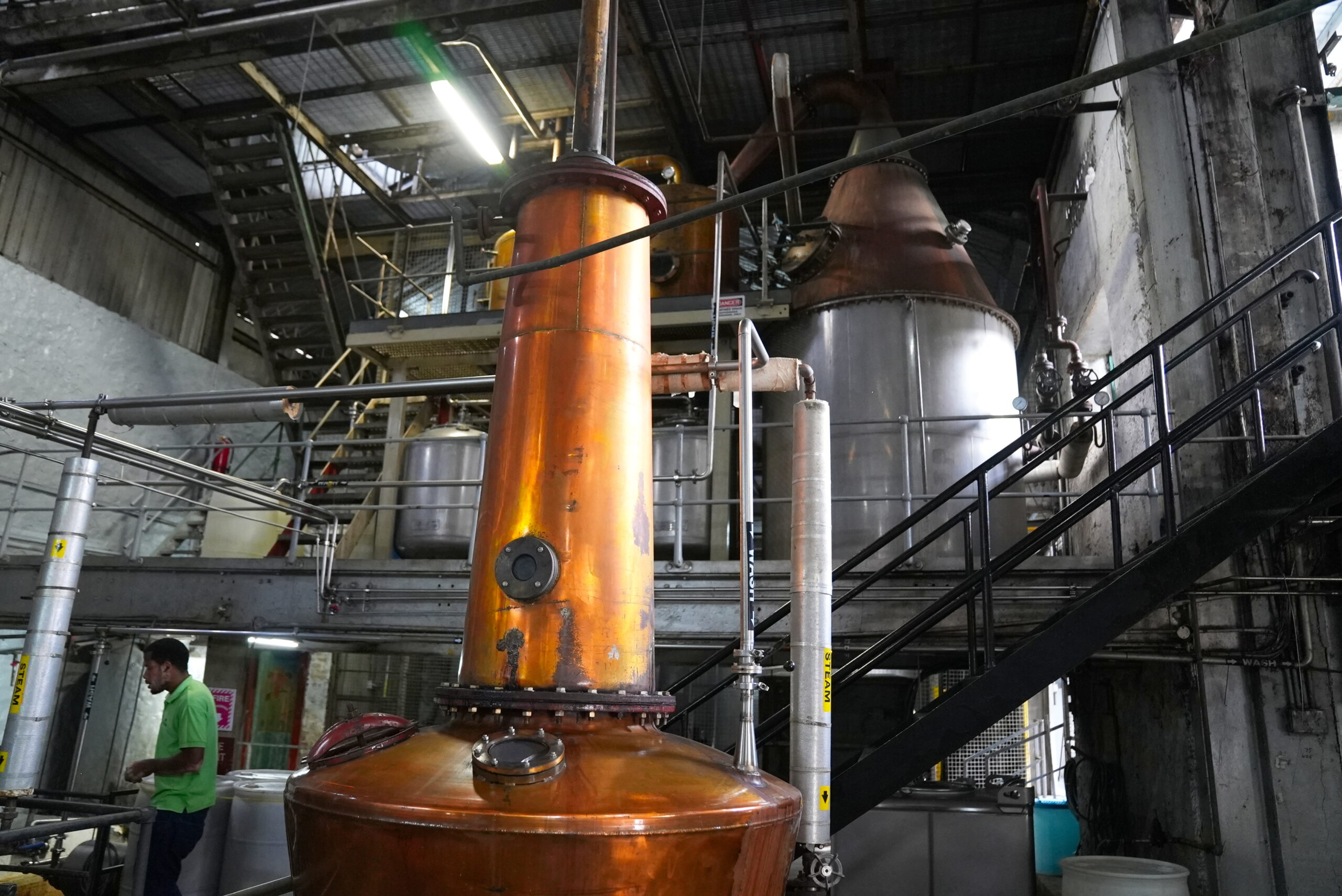
Making rum the old fashioned way.
The distillation process consists of transferring fermented wash to a still (in this case, a big copper pot) and heating it until ethanol begins to boil out of solution. It’s then turned back into a liquid in a condenser and drips out of a still into a collection vessel.
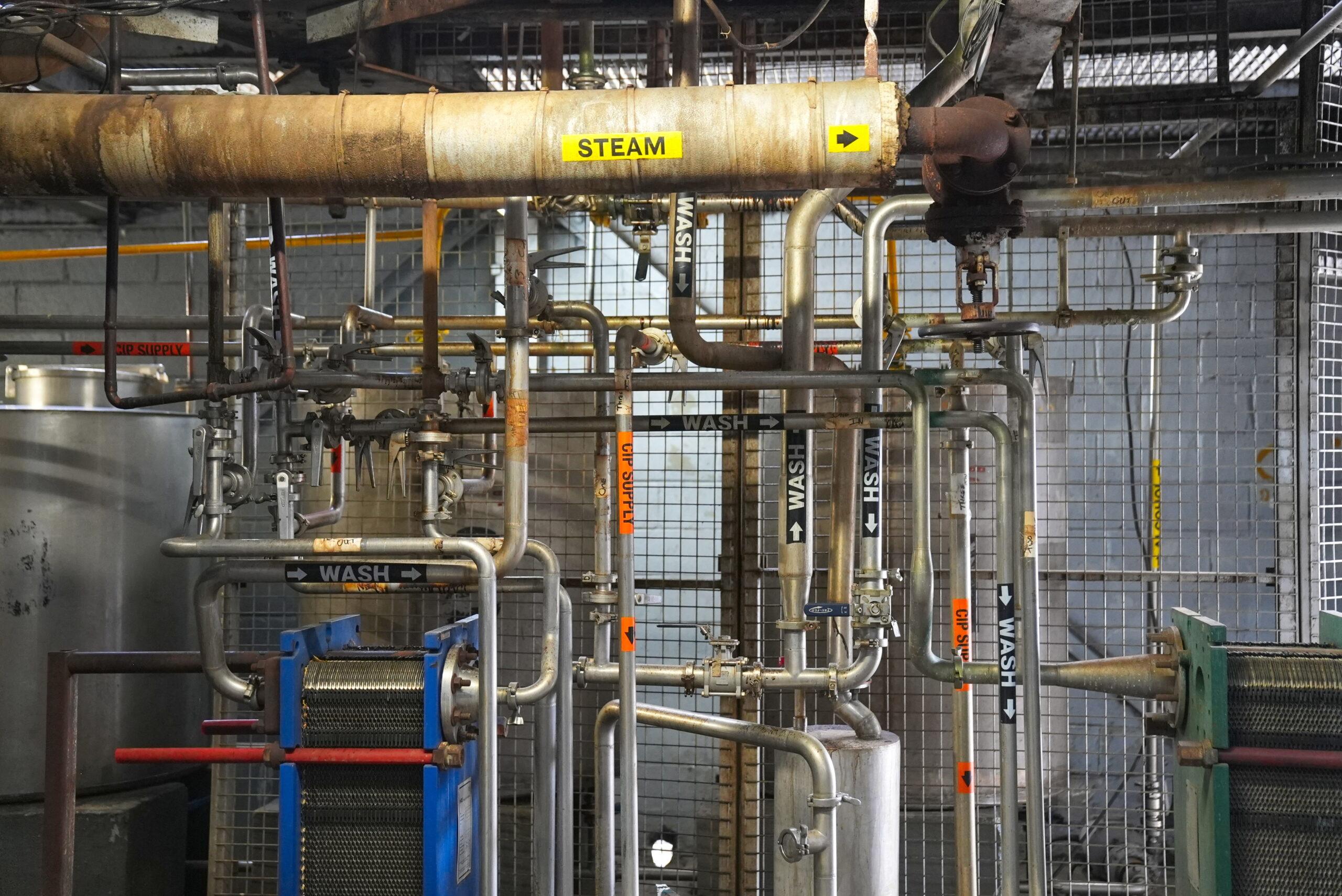
Breaking good.
Pipes that contain steam are heavily insulated. Do you know why? It’s because steam is hot. Fact!
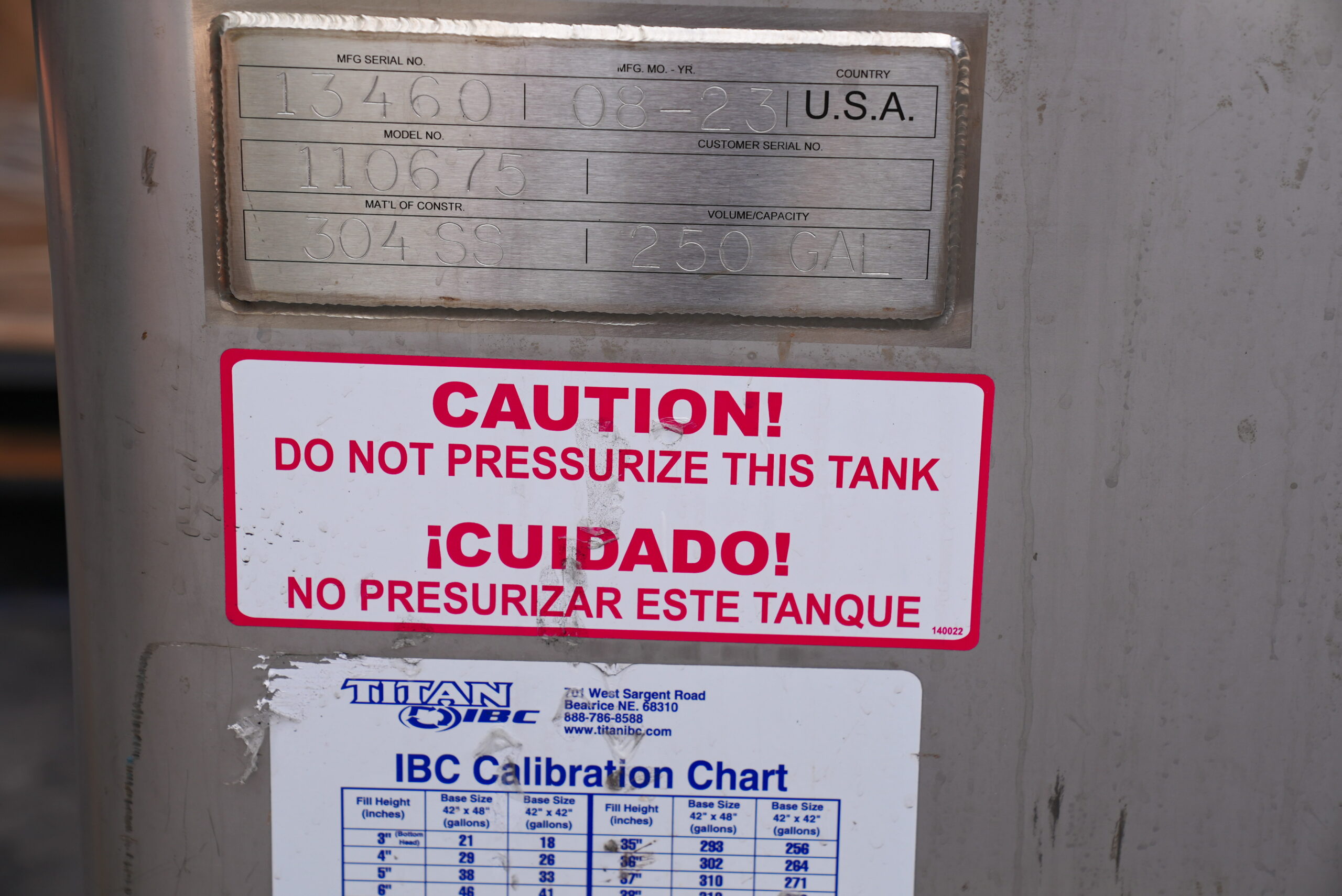
Qué?
English is the official language of St. Lucia, although many St. Lucians speak a French patois. So, naturally, important signs are written in English and Spanish.
Wait. We just left the distillery.
We learn the basics of rum making, then go to another building where they store the barrels of rum. Buildings where rum is stored are typically called cellars, warehouses, or distillery storage facilities. For some reason, the building where they store barrels of rum at St. Lucia Distillers is called the Distillery.
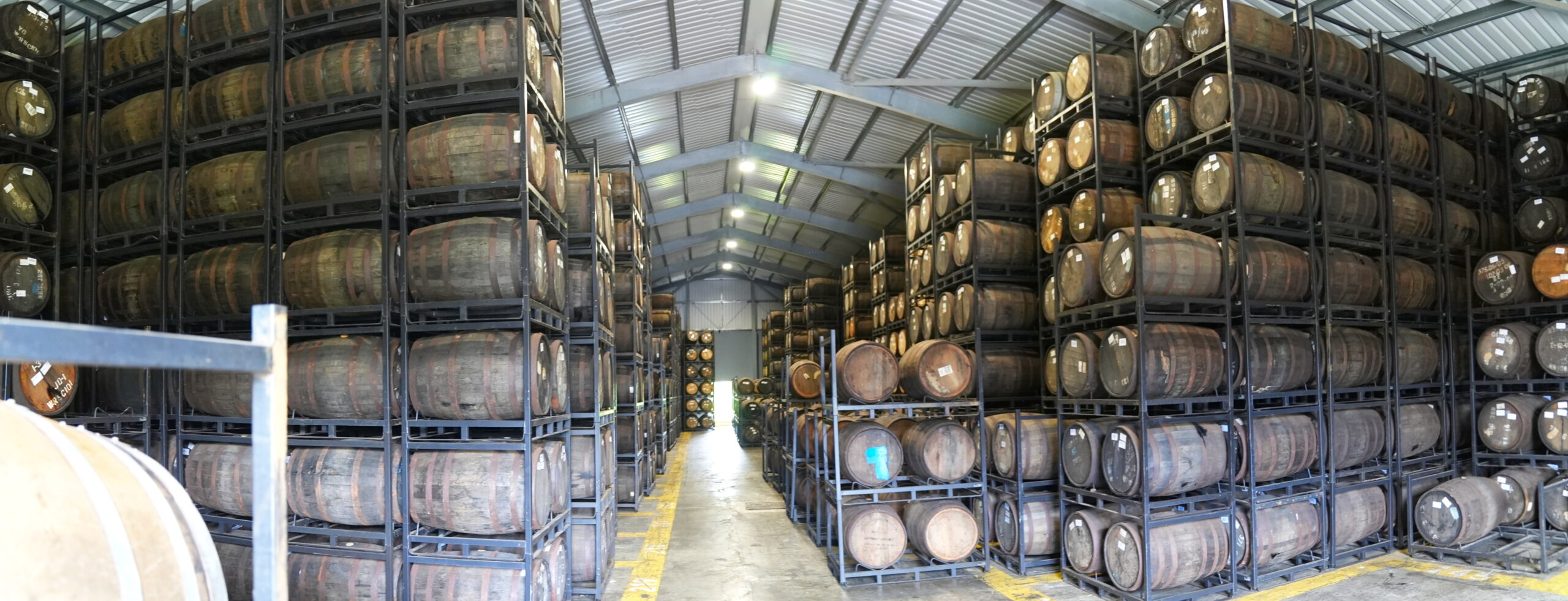
I’m in love.
Still, a cellar by any other name still smells as sweet. This is where we will meet when da man drops da’ bom.
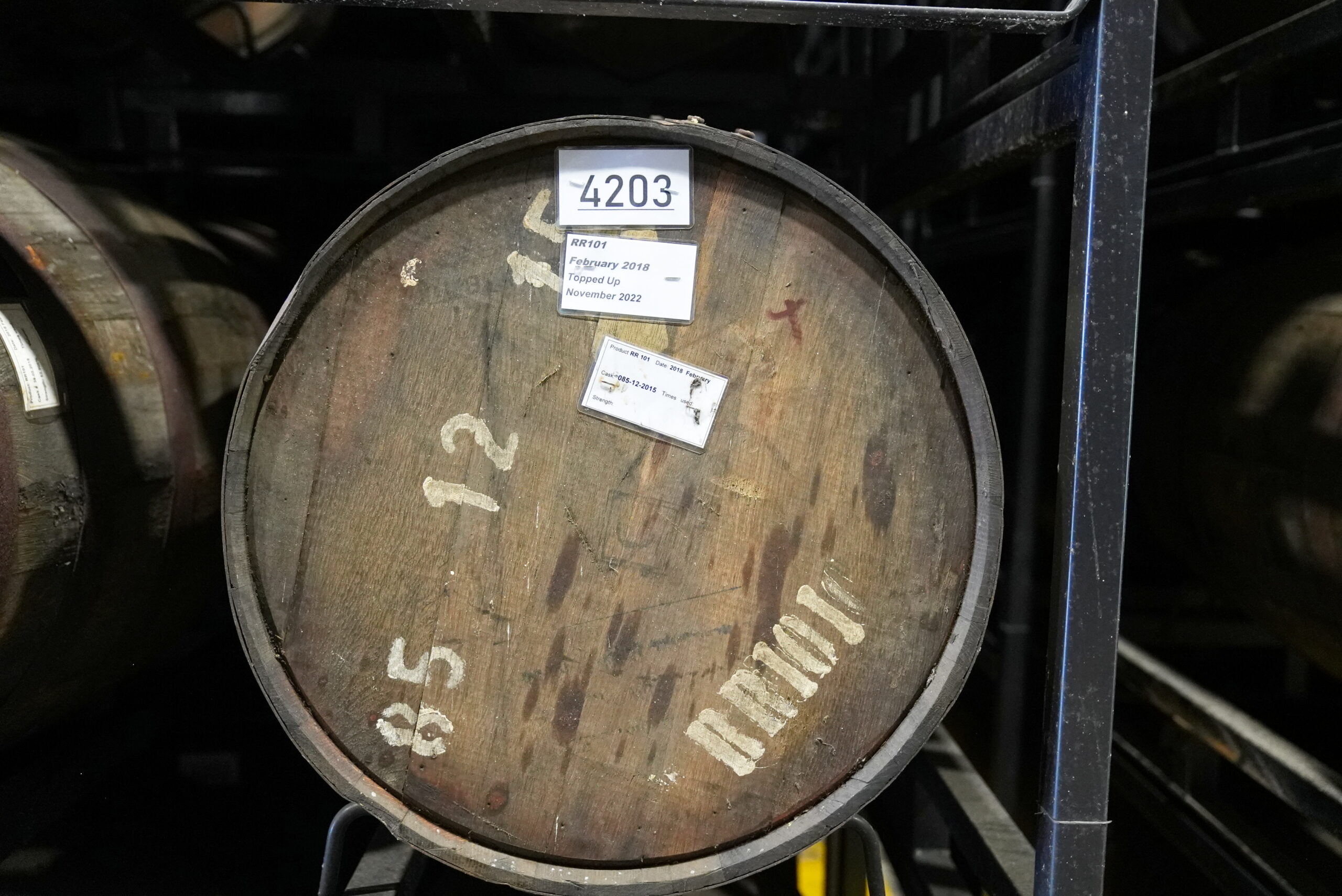
This is why it is important to take care of our forests.
These barrels are made from oak trees. Oak barrels contribute to aging in three fundamental ways:
- Maturation – The spirit absorbs compounds from the wood, adding complexity.
- Evaporation – Some alcohol and water escape through the wood, concentrating flavors.
- Oxidation – Slow exposure to oxygen refines and mellows the spirit’s taste.
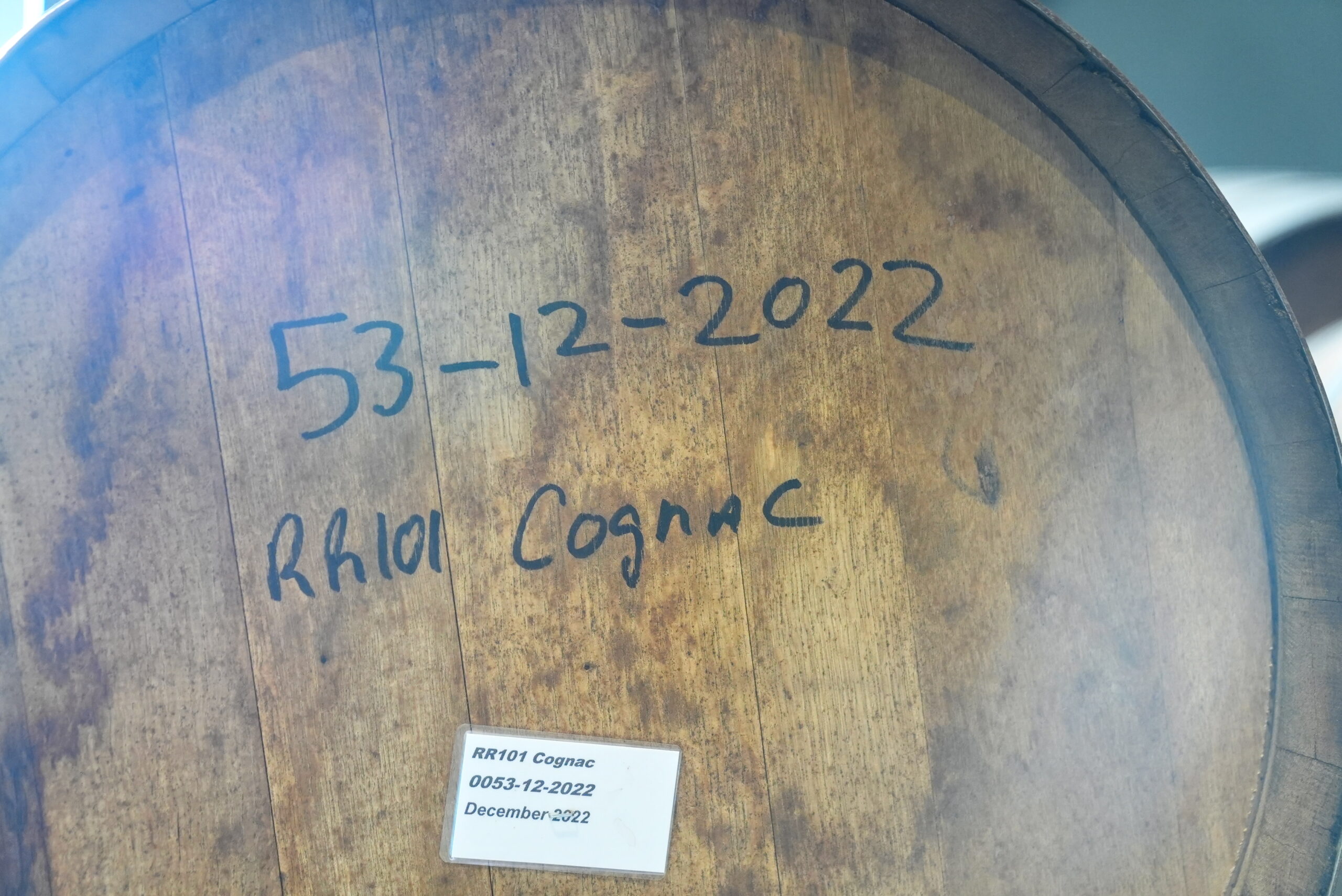
Plus cognac!
Larger, light colored barrels are fermenting cognac. Yum.
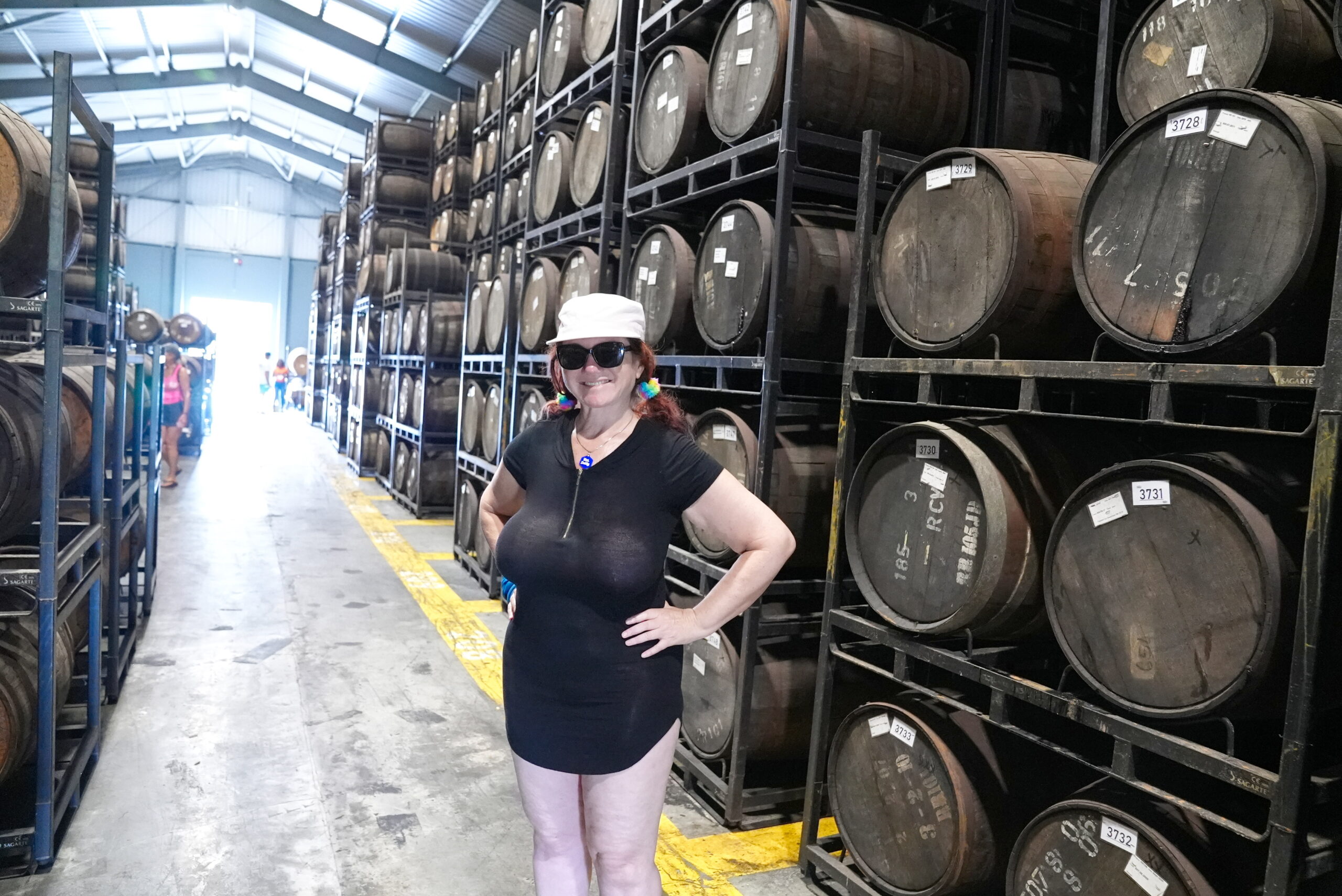
Rum makes people happy.
Oak barrels are not just containers—they are active participants in the creation of rum. Without oak barrels, rum would lack the depth, complexity, and character that defines it.
We leave this building and walk to the next one in our tour.
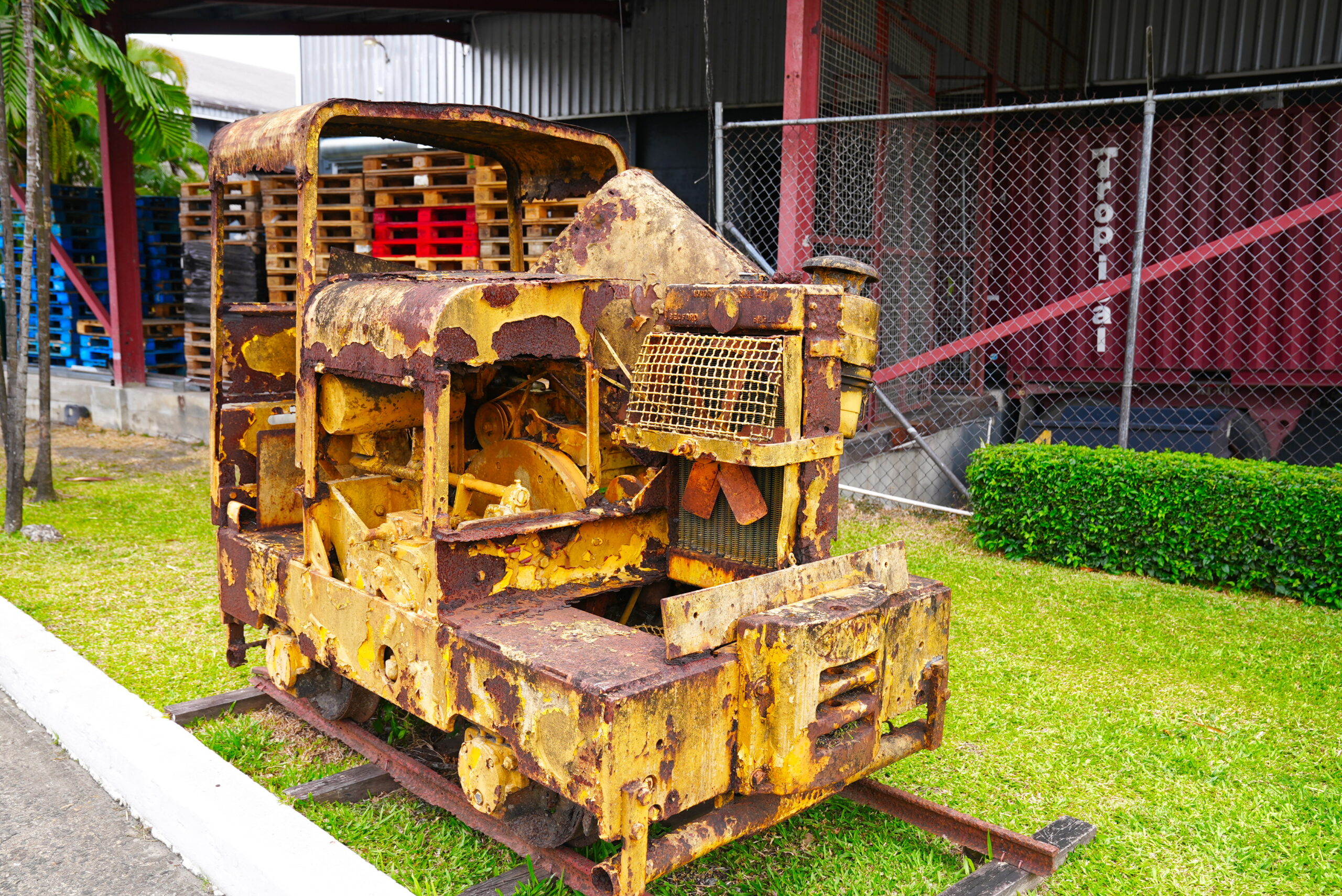
Old-timey stuff.
On the grounds are some worn-out machinery. The distillery provides no clue as to what it was used for. I think this was a steam-powered forklift. I’m probably wrong, but that’s what I think it is.
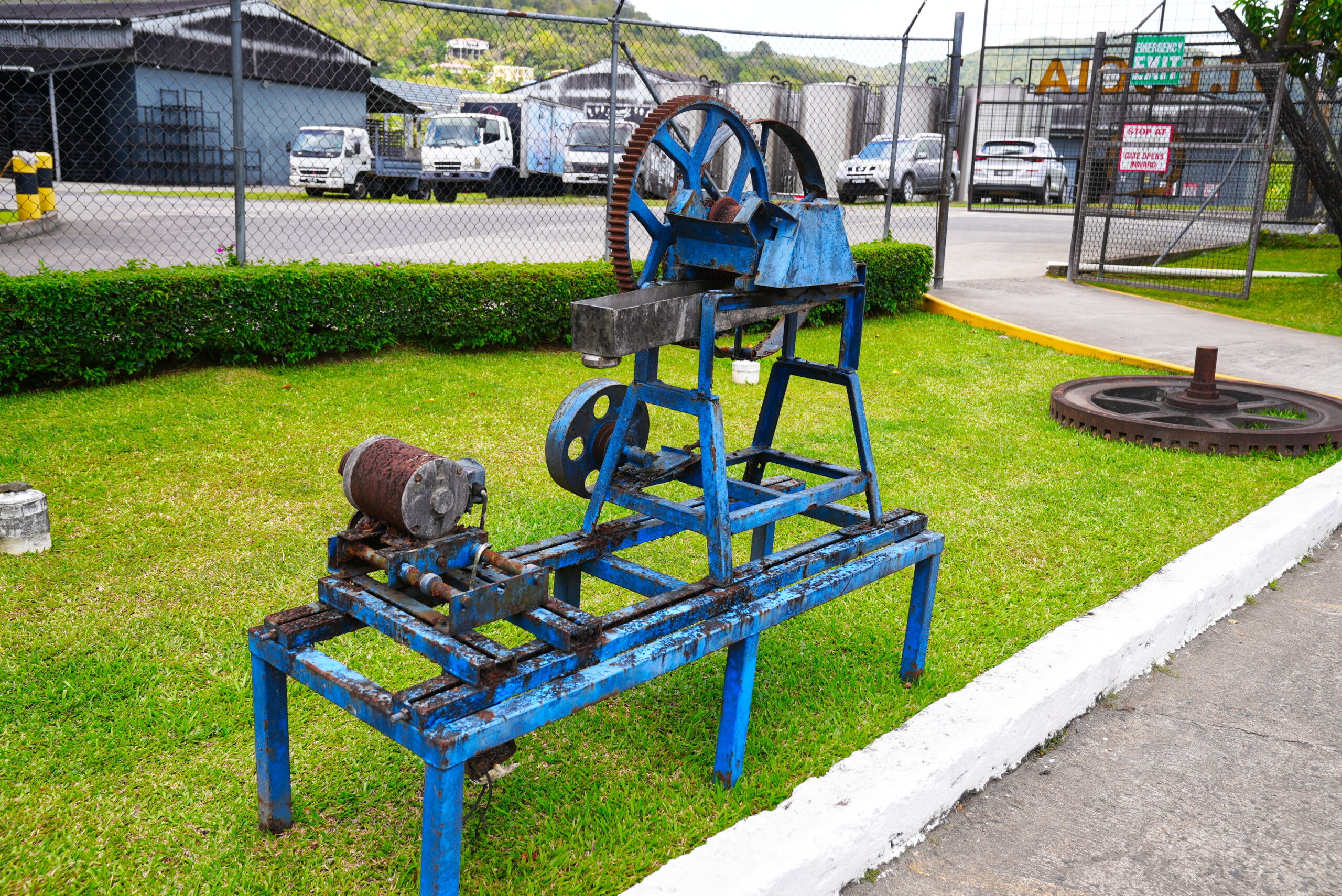
More old-timey stuff.
This probably was used to squeeze the sugar cane. Or, not.
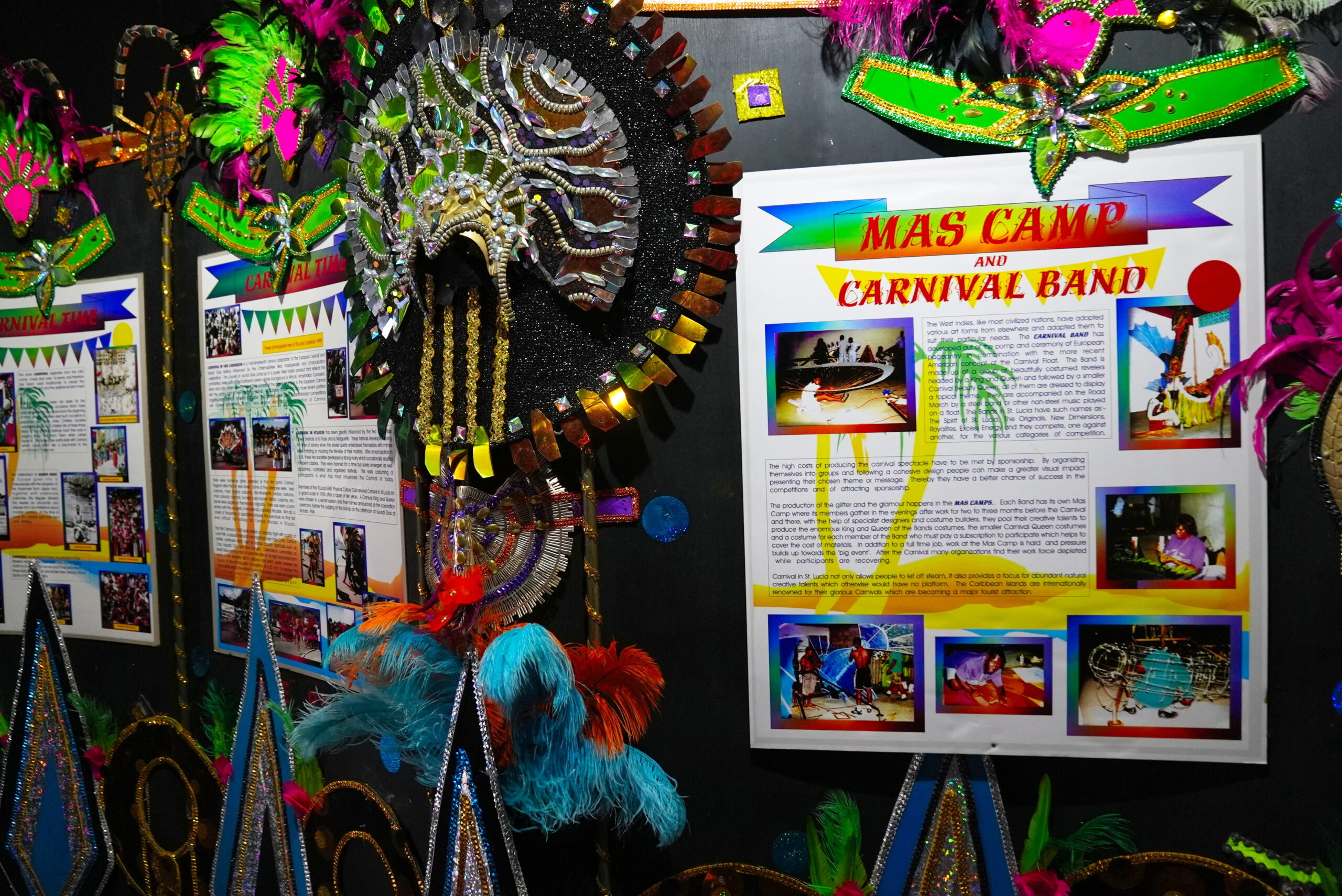
Oh, and this one time, at Carnival Band camp…
This next building is a replica of life on the island, with all the wonderful things that happen here!
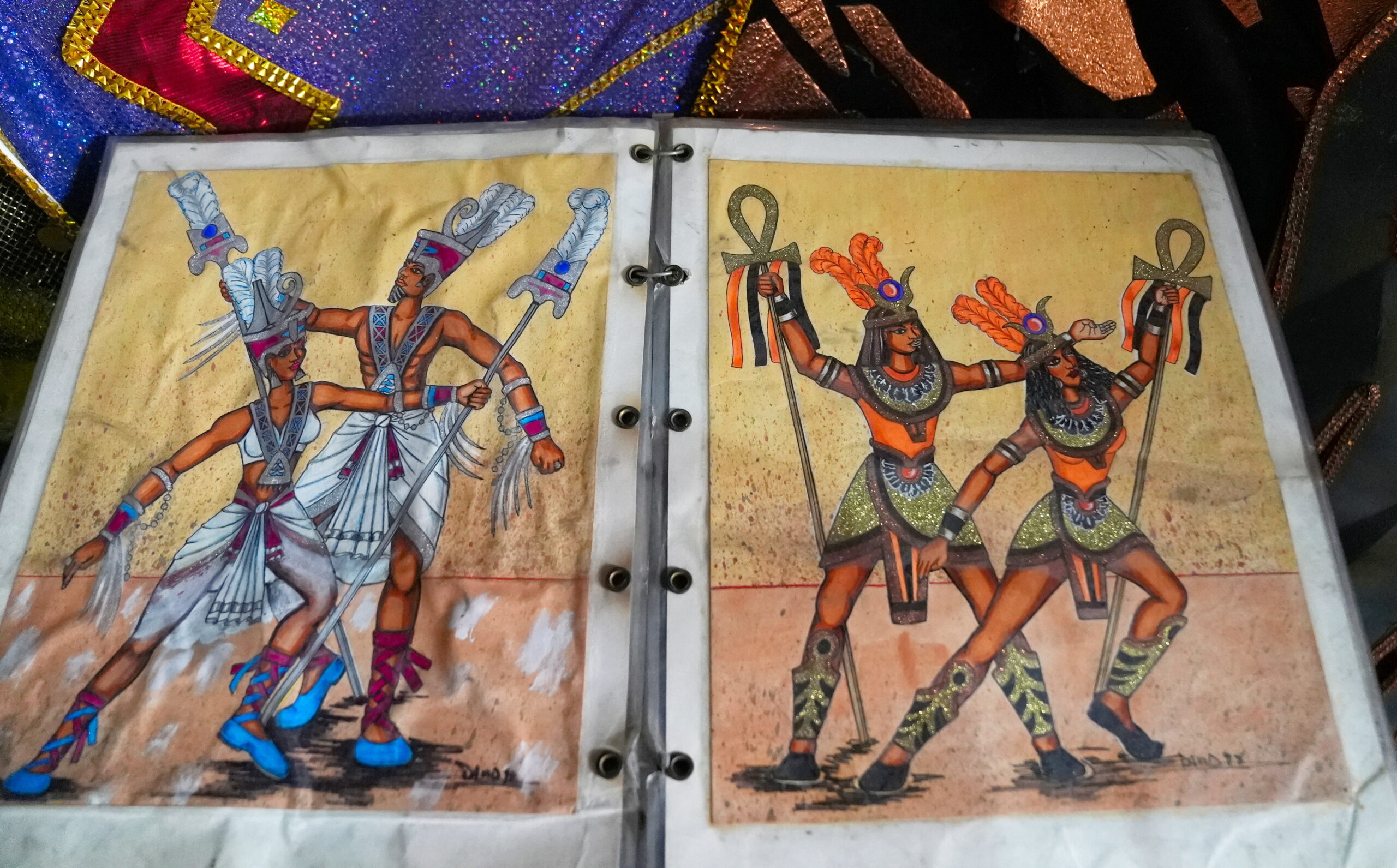
Some of this seems conjectural.
On each page of the book are drawings of two people. Based on breasts, one of the people is male and one female. The female on the left page is wearing a sports bra. The placement of the female’s hand on the right page indicates a potential handjob. At least, that’s the way I read it.
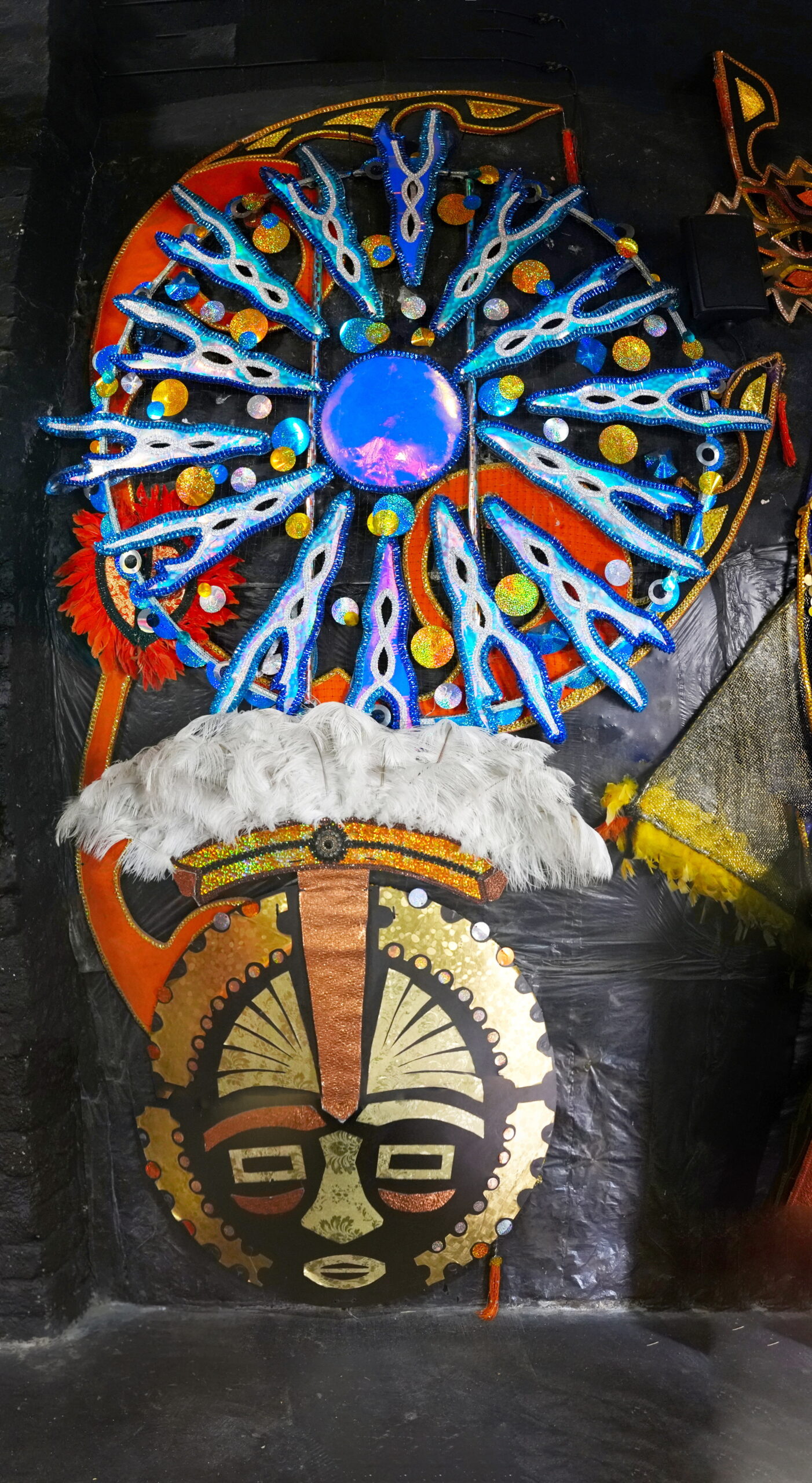
An early plasma lamp.
A plasma ball, plasma globe, or plasma lamp is a clear glass container filled with noble gases, usually a mixture of neon, krypton, and xenon, that has a high-voltage electrode in the center of the container. When voltage is applied, a plasma is formed within the container. Plasma filaments extend from the inner electrode to the outer glass insulator, giving the appearance of multiple constant beams of colored light.
The plasma lamp was invented by Nikola Tesla, during his experimentation with high-frequency currents in an evacuated glass tube for the purpose of studying high voltage phenomena. Tesla called his invention an “inert gas discharge tube”.
Underneath the plasma lamp is a mask for someone with a very high forehead.
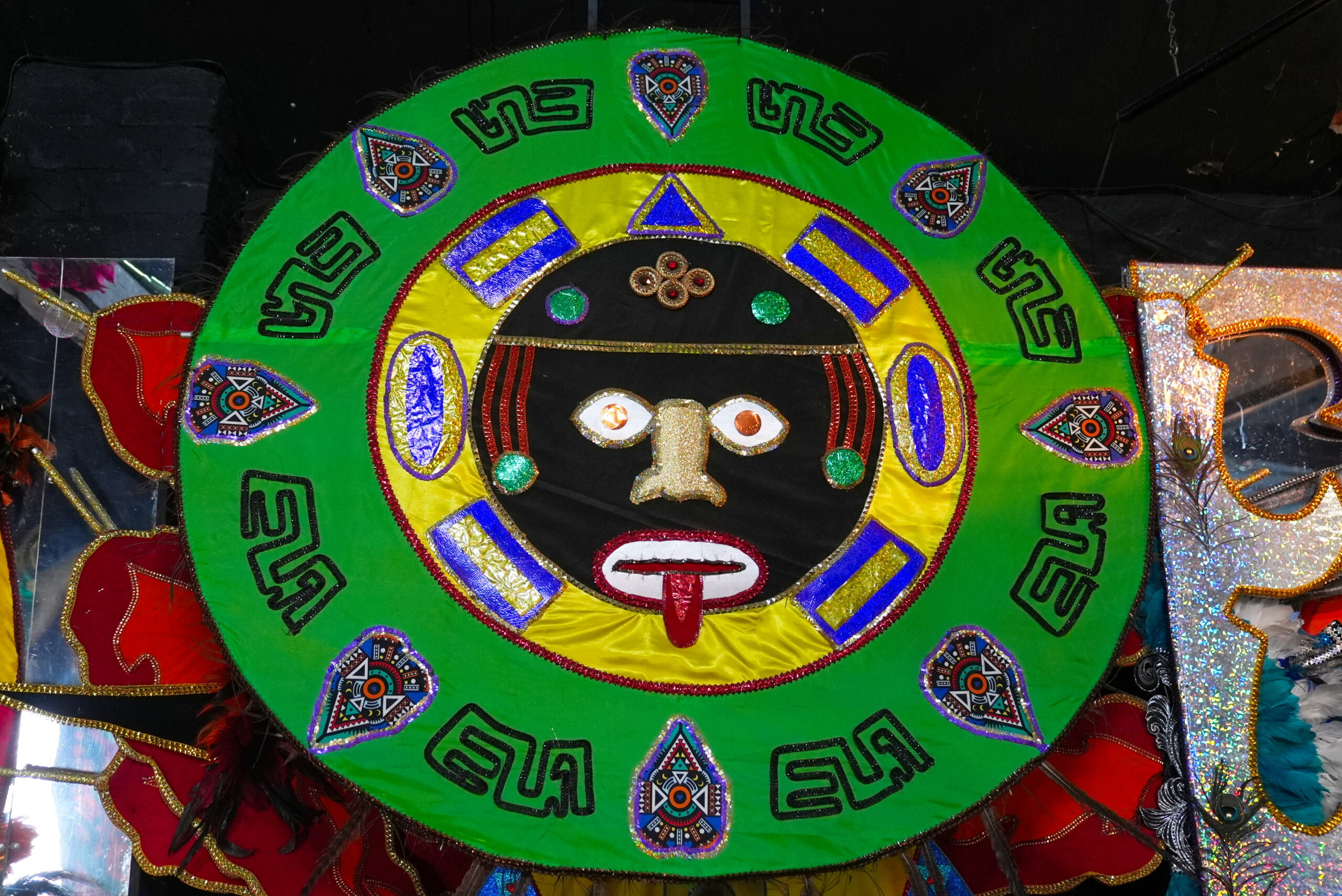
It’s not polite to stick out your tongue.
This design is based on the flag of Brazil. Other than that, I don’t know anything about it.
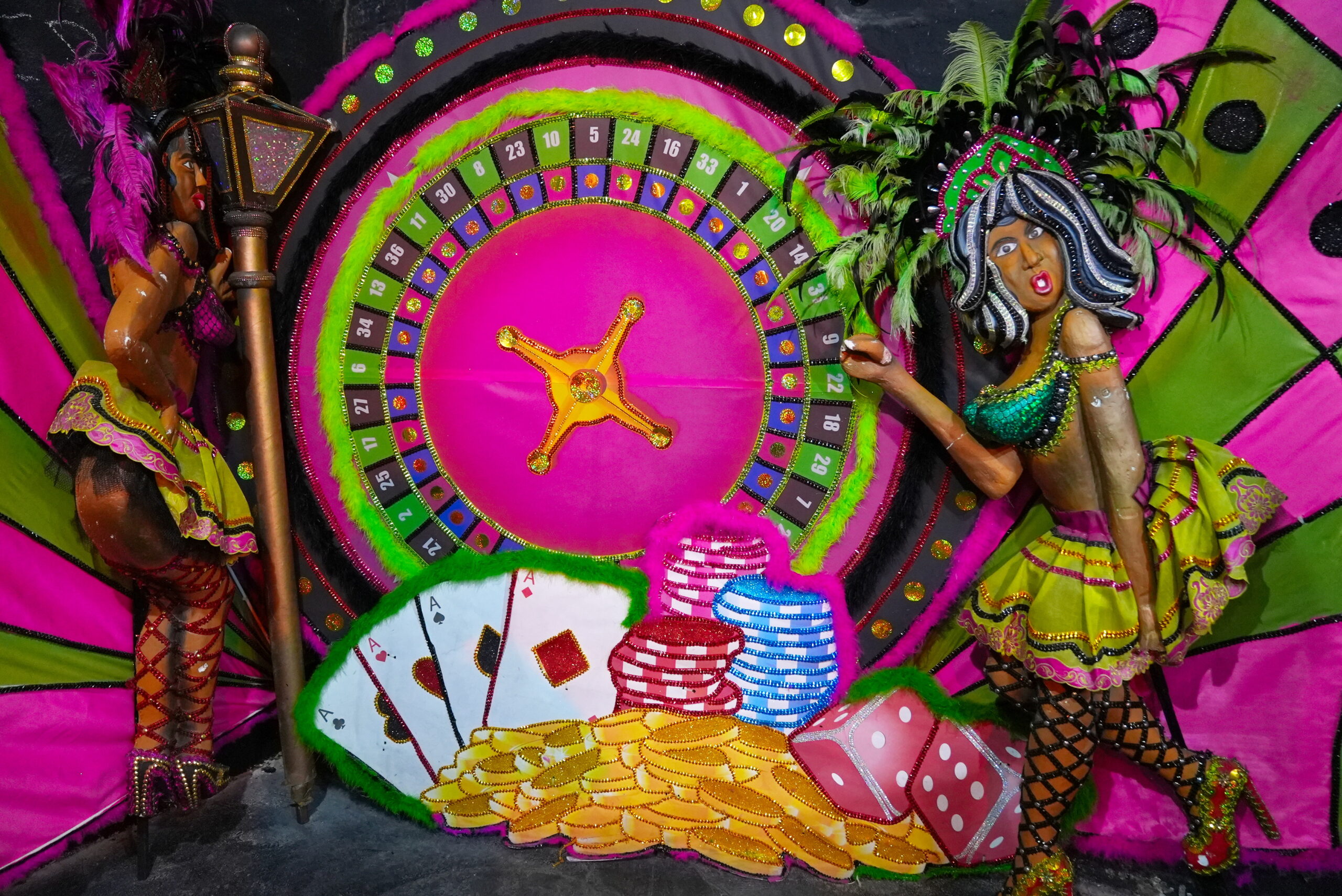
Gambling, island style.
This represents gambling. I don’t know why it is here. But, more importantly, what is being conveyed by the doll’s expression? I could guess, but I’m not going to.
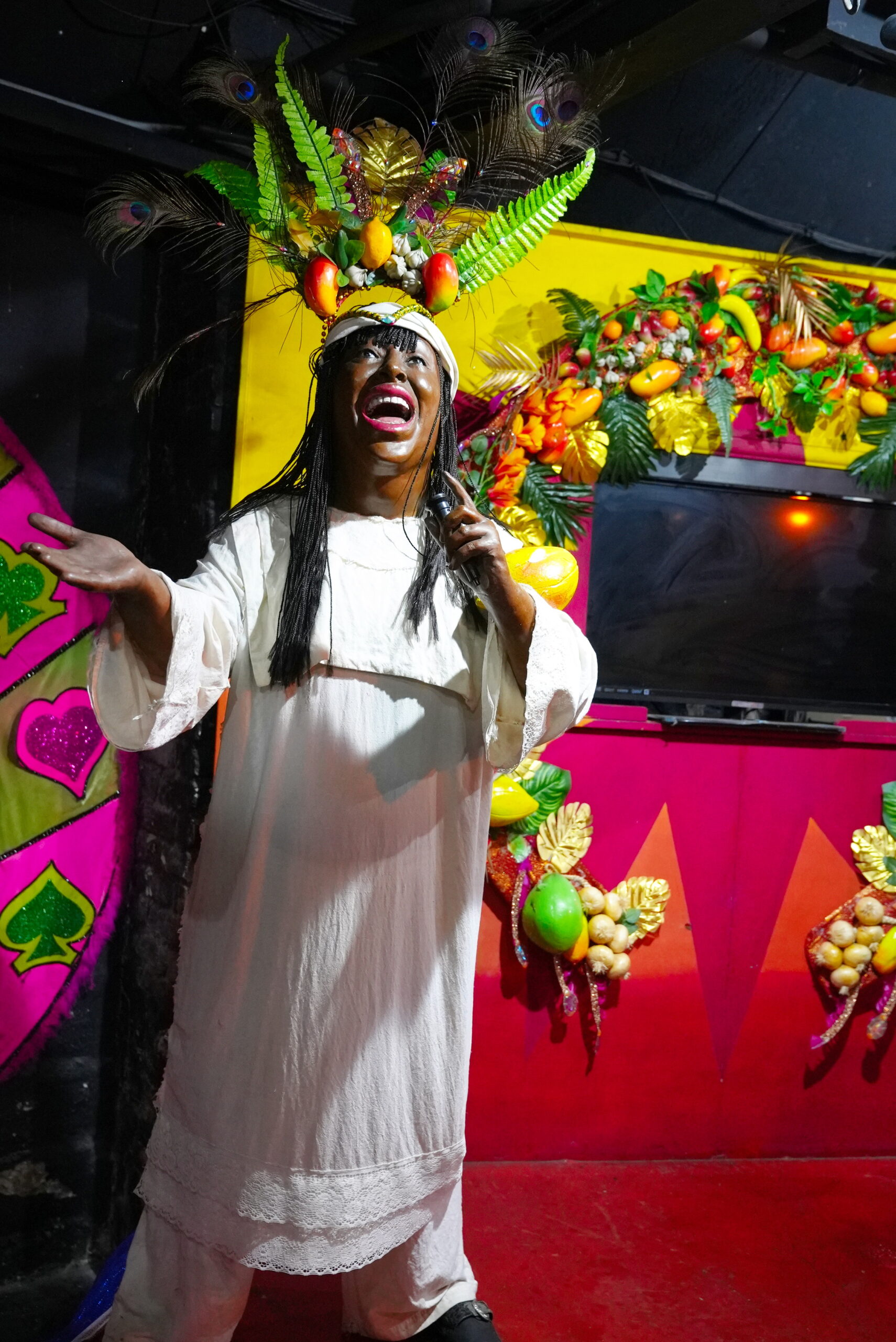
Nice hat.
The doll might be singing, screaming, or just taking a deep breath. We don’t know.
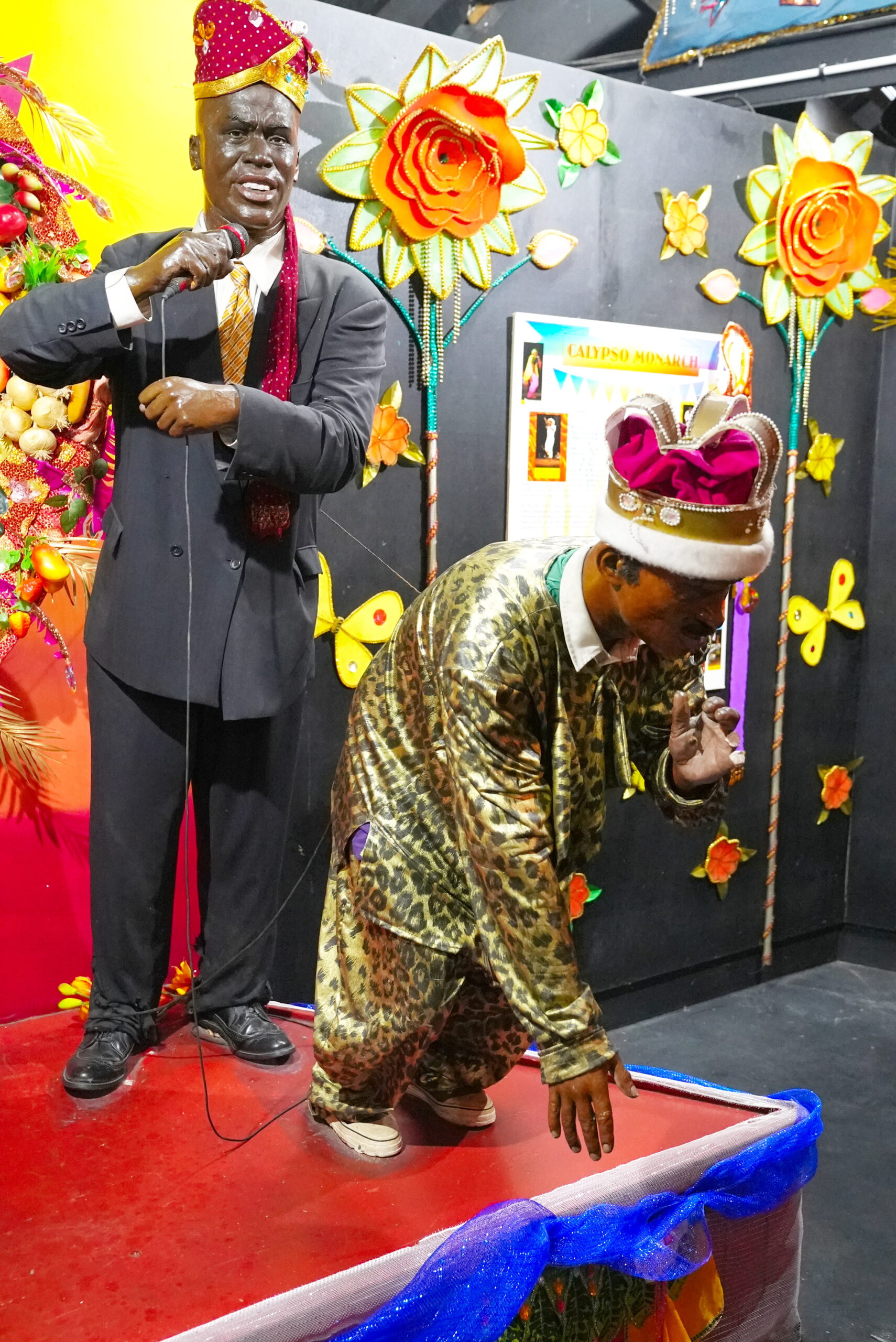
“I dropped a quarter!”
The little fellow in front, who might represent a king or might represent a rapper, is leaning waaaaay forward. We don’t know why. He is missing his little finger, so he might be Yakuza. Again, we don’t know.
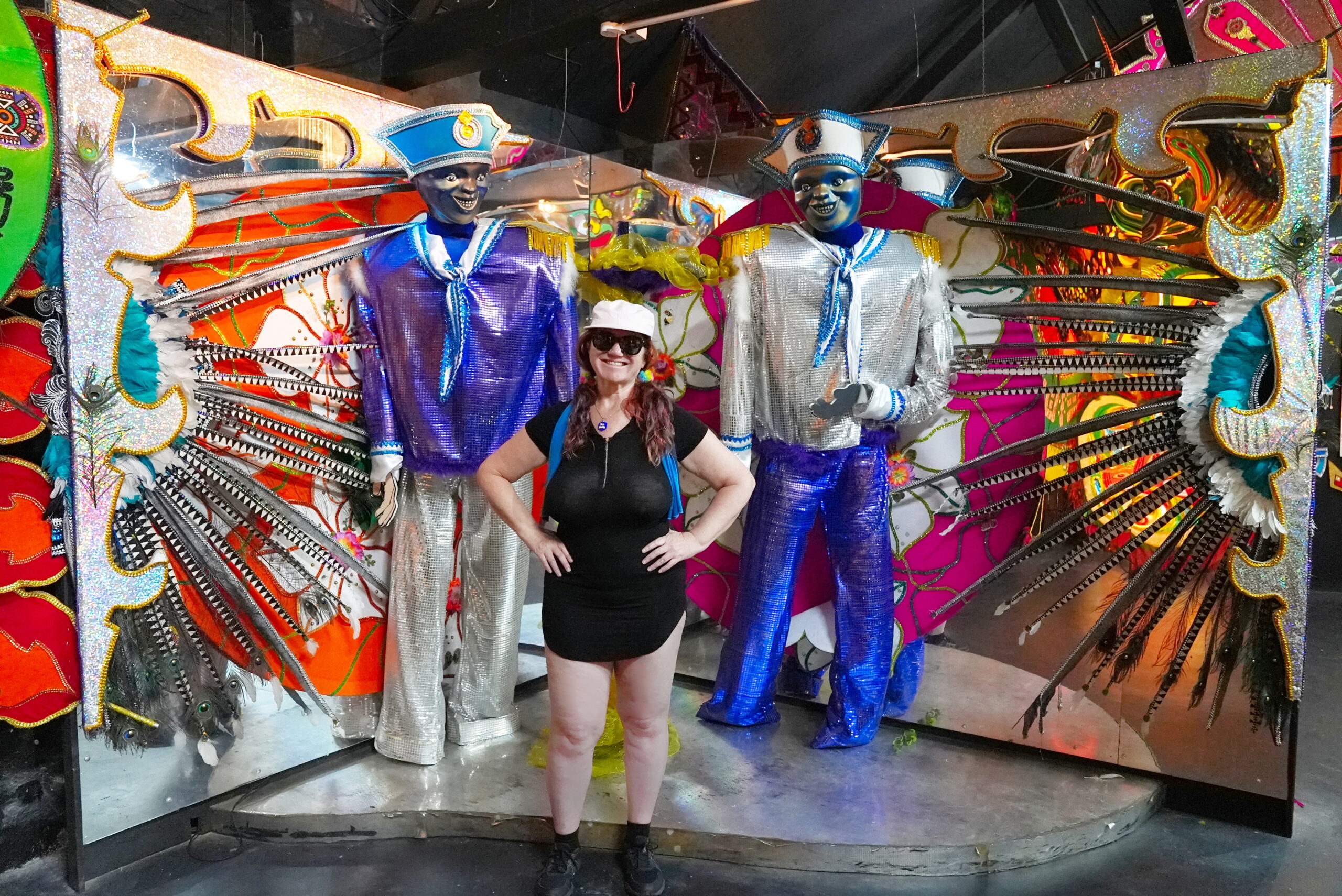
Cracker Jack sailors.
These two dolls are sequined sailors. Is this a thing on the island? St. Lucia is a catholic island so it’s a sin to be gay, so…who else would dress like this? It’s a mystery!
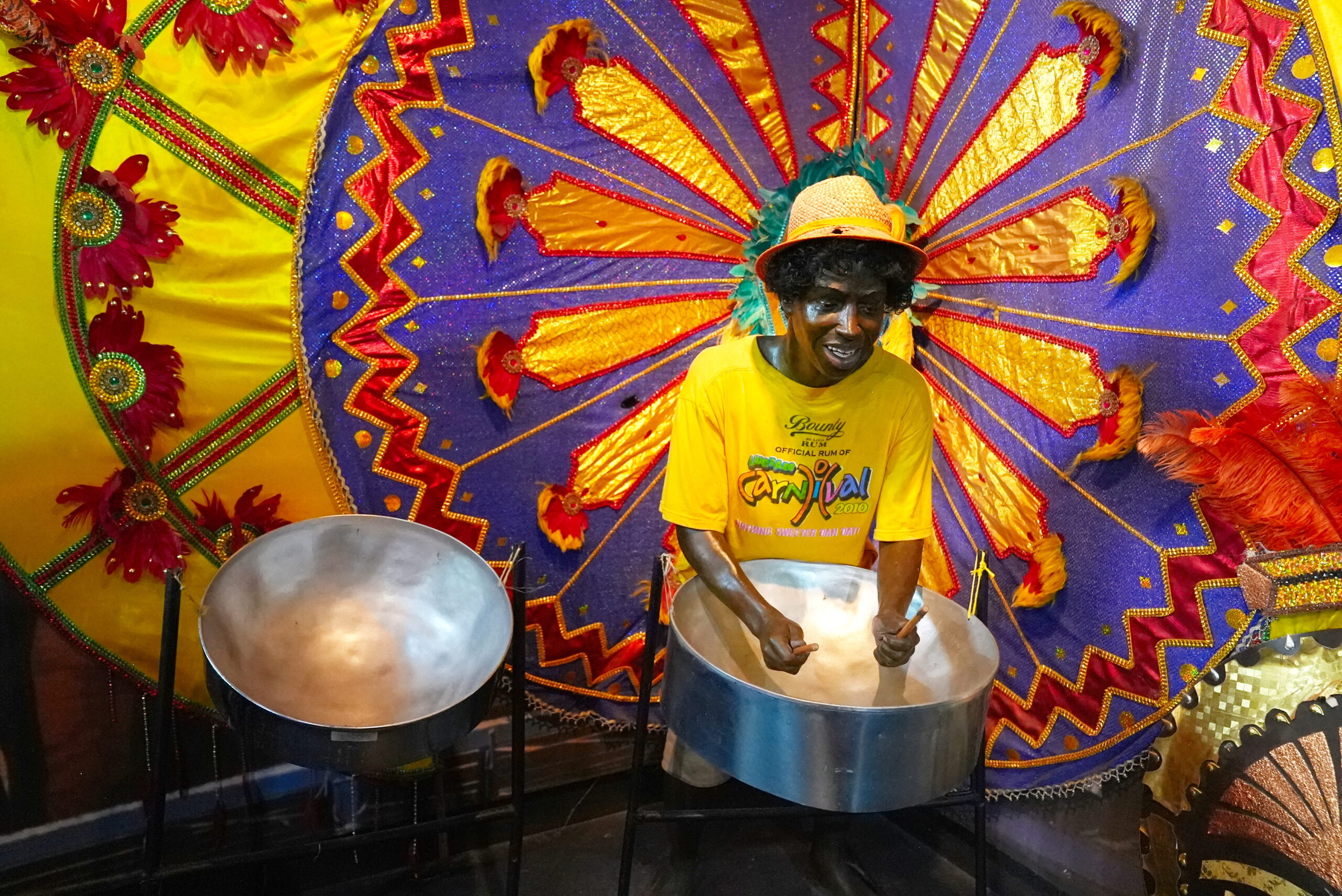
Beat it!
This doll represents a rasta, perhaps, playing a steelpan drum. As you probably know, in 2023, the United Nations General Assembly declared August 11 as World Steelpan Day. The following year, the Parliament of Trinidad and Tobago officially recognized the steelpan as the country’s national instrument.
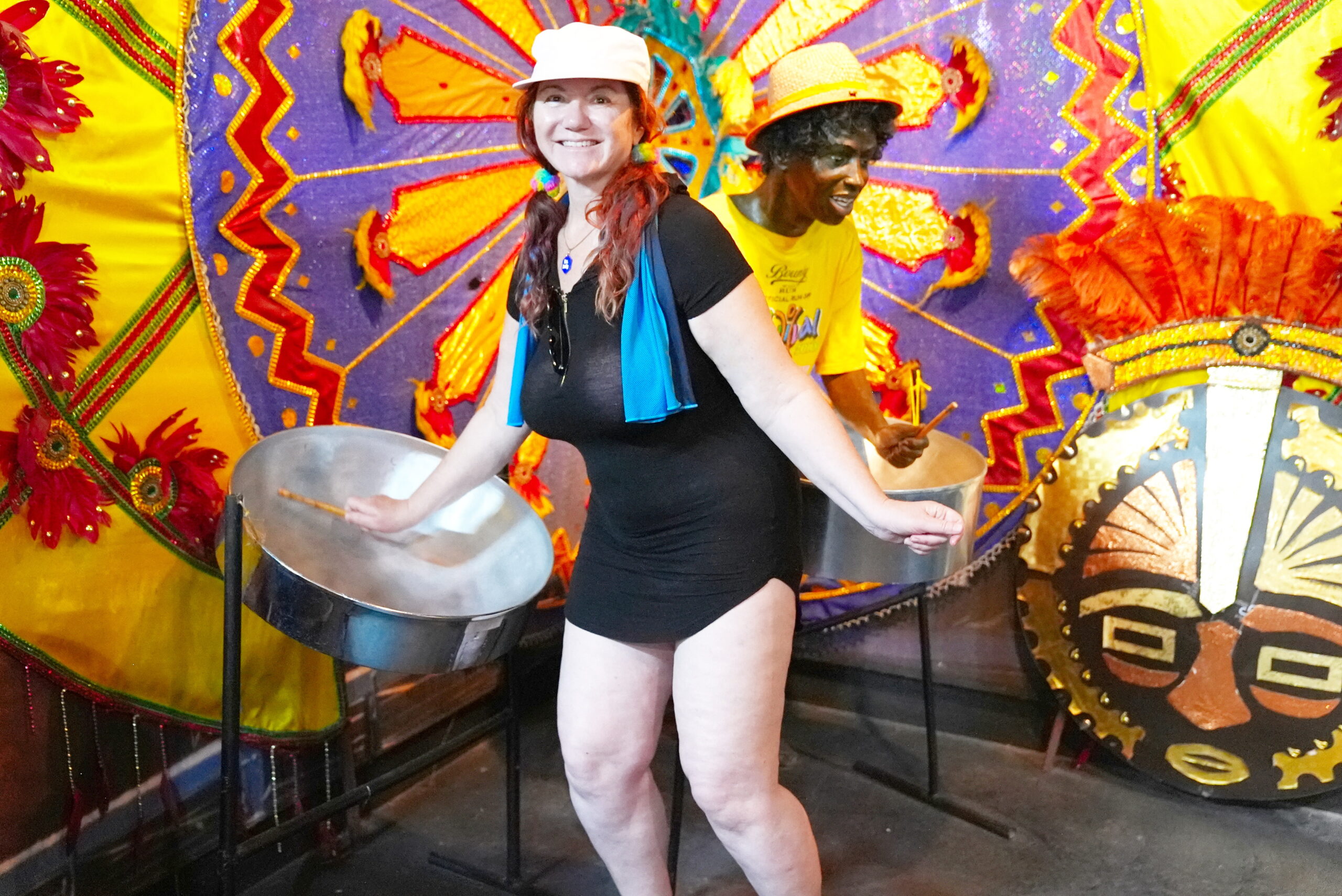
Look at me. I’m a rasta!
I make an attempt to play the drum. It’s easy to make sounds, it’s very difficult to make a melody. I guess I need more practice…
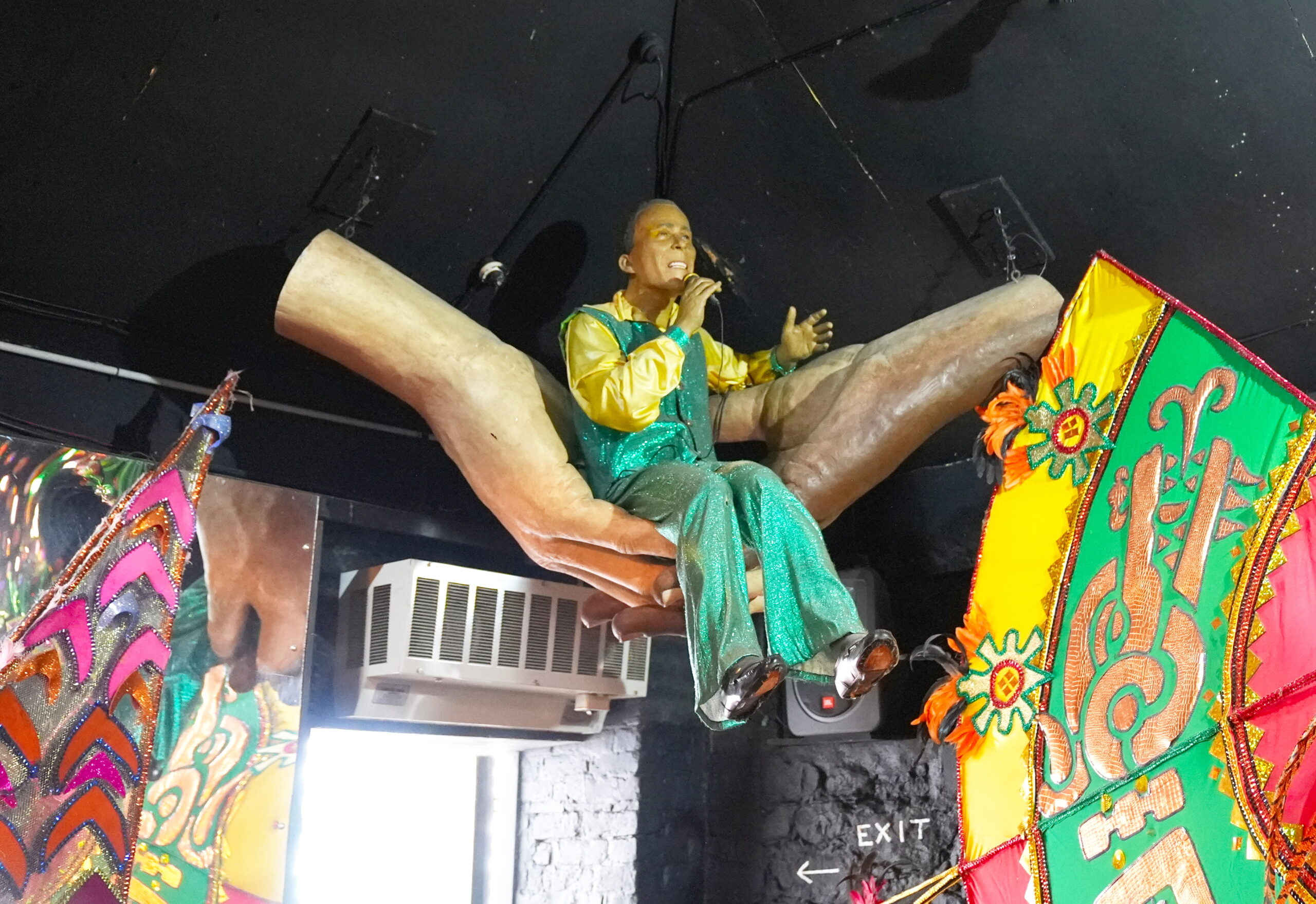
This guy is from St. Lucia?
Gilbert Gottfried is apparently a folk-legend on Saint Lucia. Who would have guessed?
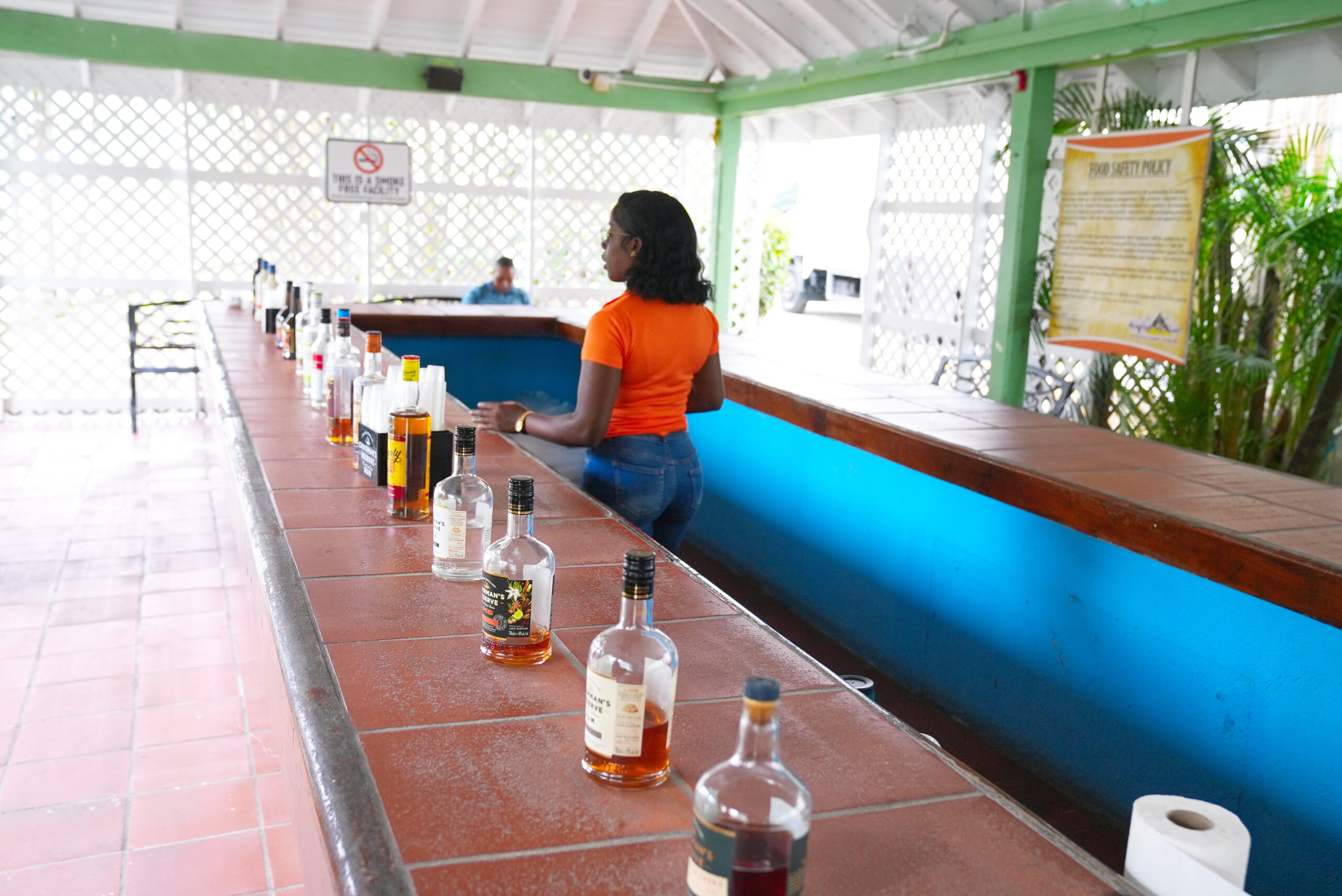
A fitting end to our tour.
Finally, we exit the cultural information part of the tour and return to the rum part of the tour, where we taste each one. As you’d expect, the more expensive rums taste better than the less expensive rums.
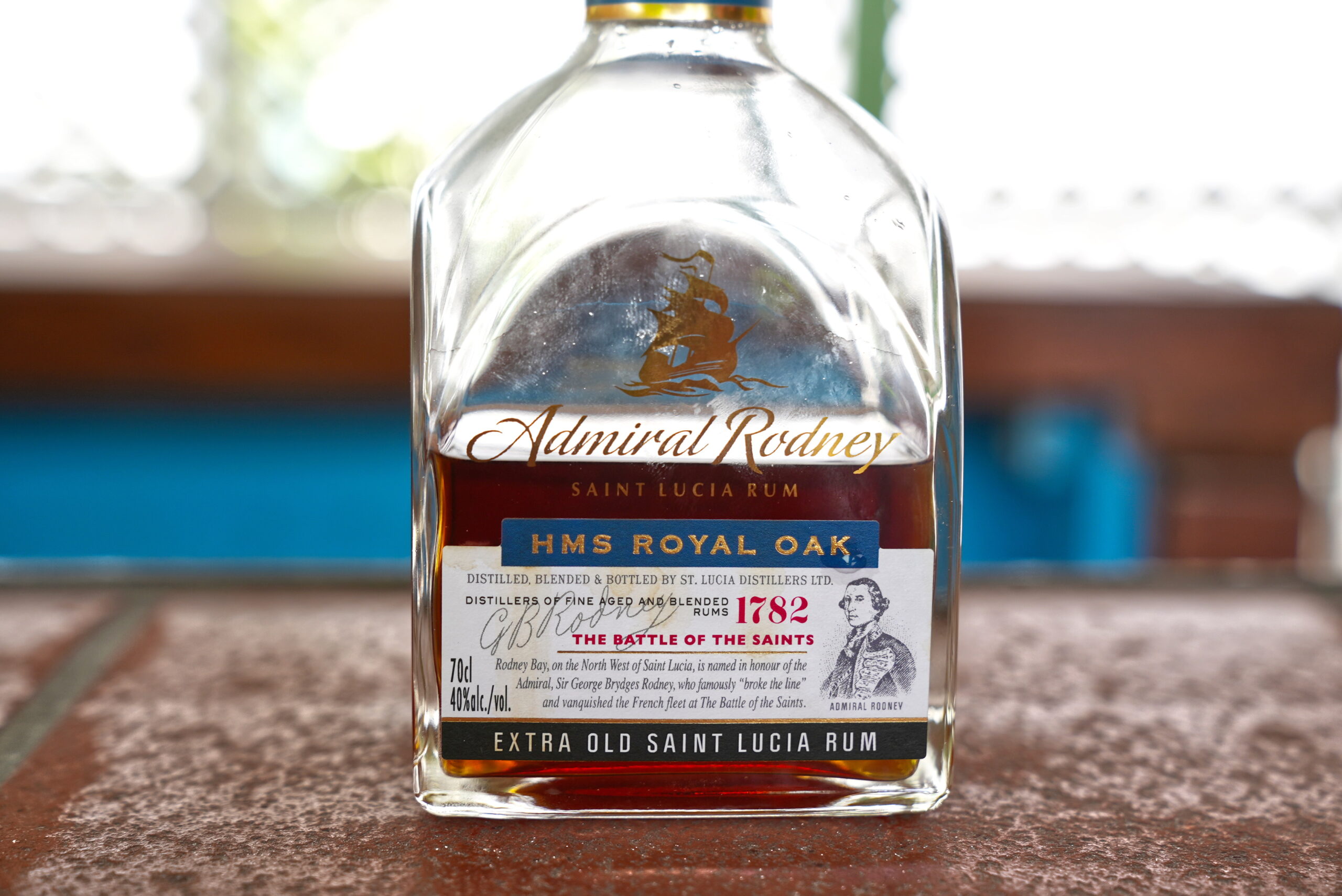
The best rum on St. Lucia.
We all agree that Admiral Rodney HMS Royal Oak rum is our favorite. Yum.
Okay, let’s head back to the property to relax by the pool.
The Salt-Water Pool
The property has a salt-water pool!
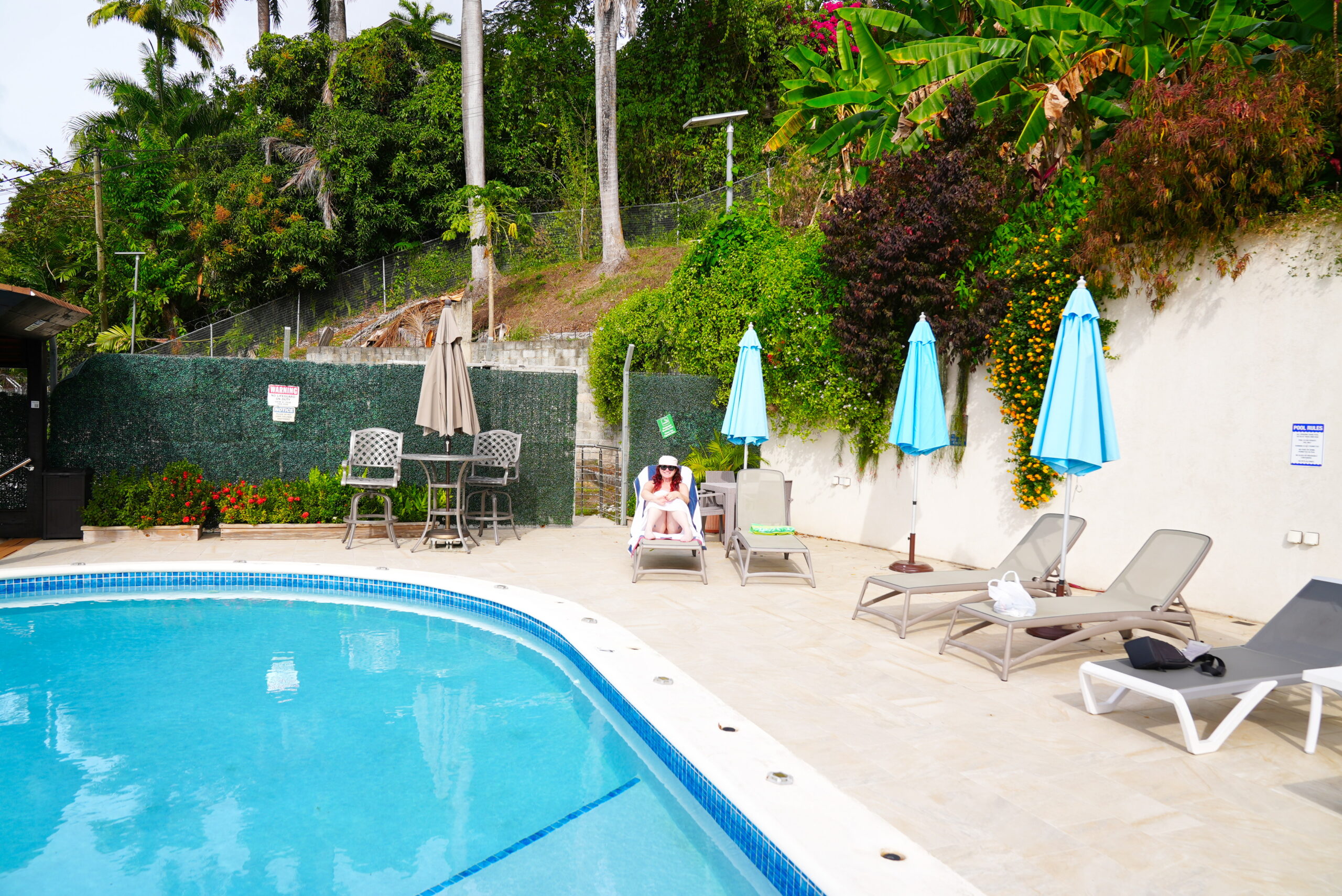
Relaxing by the pool
There are chairs for many people. However, as usual, we are the only residents, so we get to enjoy the privacy.
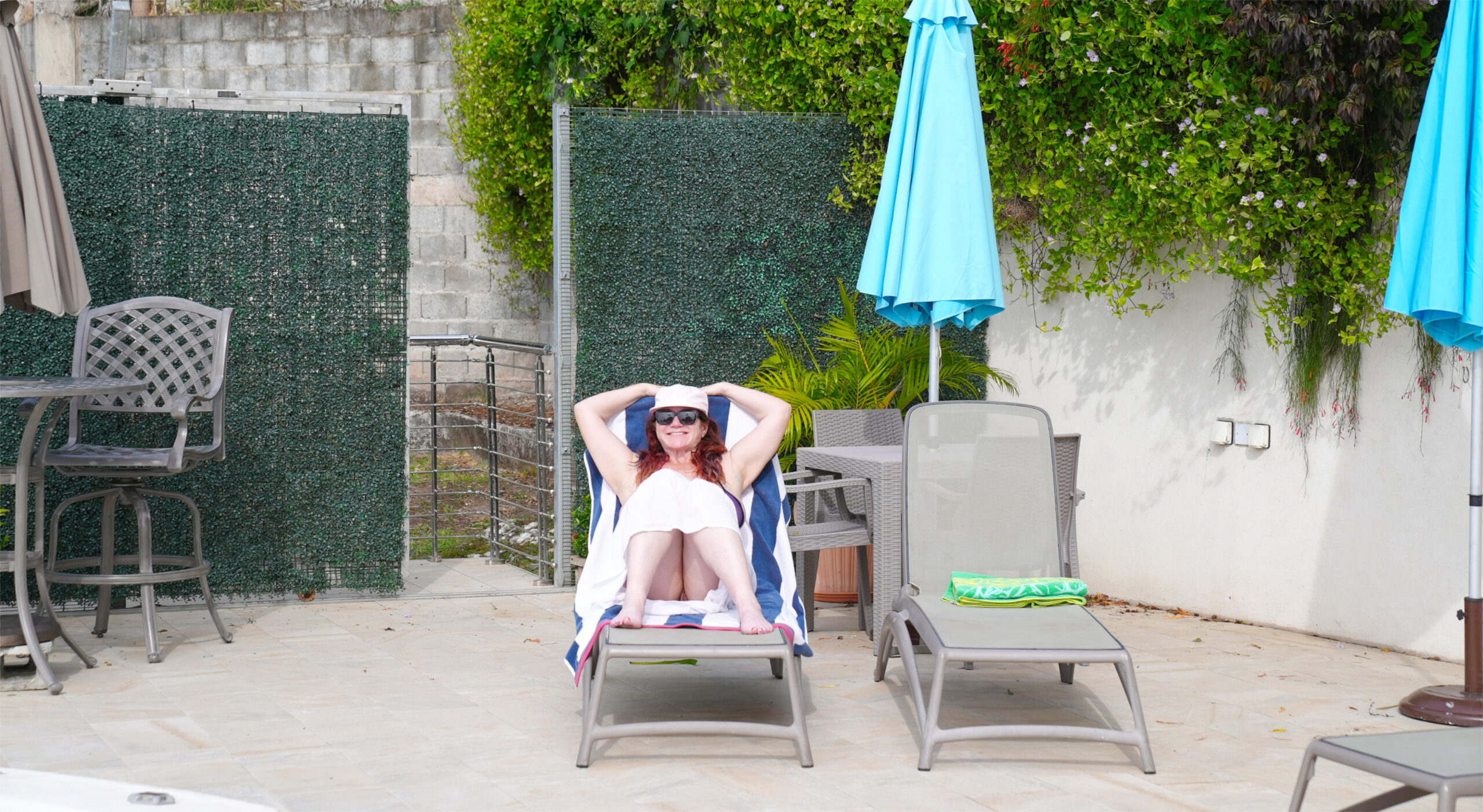
A better view.
There is a lot of background clutter (the place is still a bit under construction), so this photograph gives a better idea of how nice it is here. Smile!
Well, let’s go swimming.
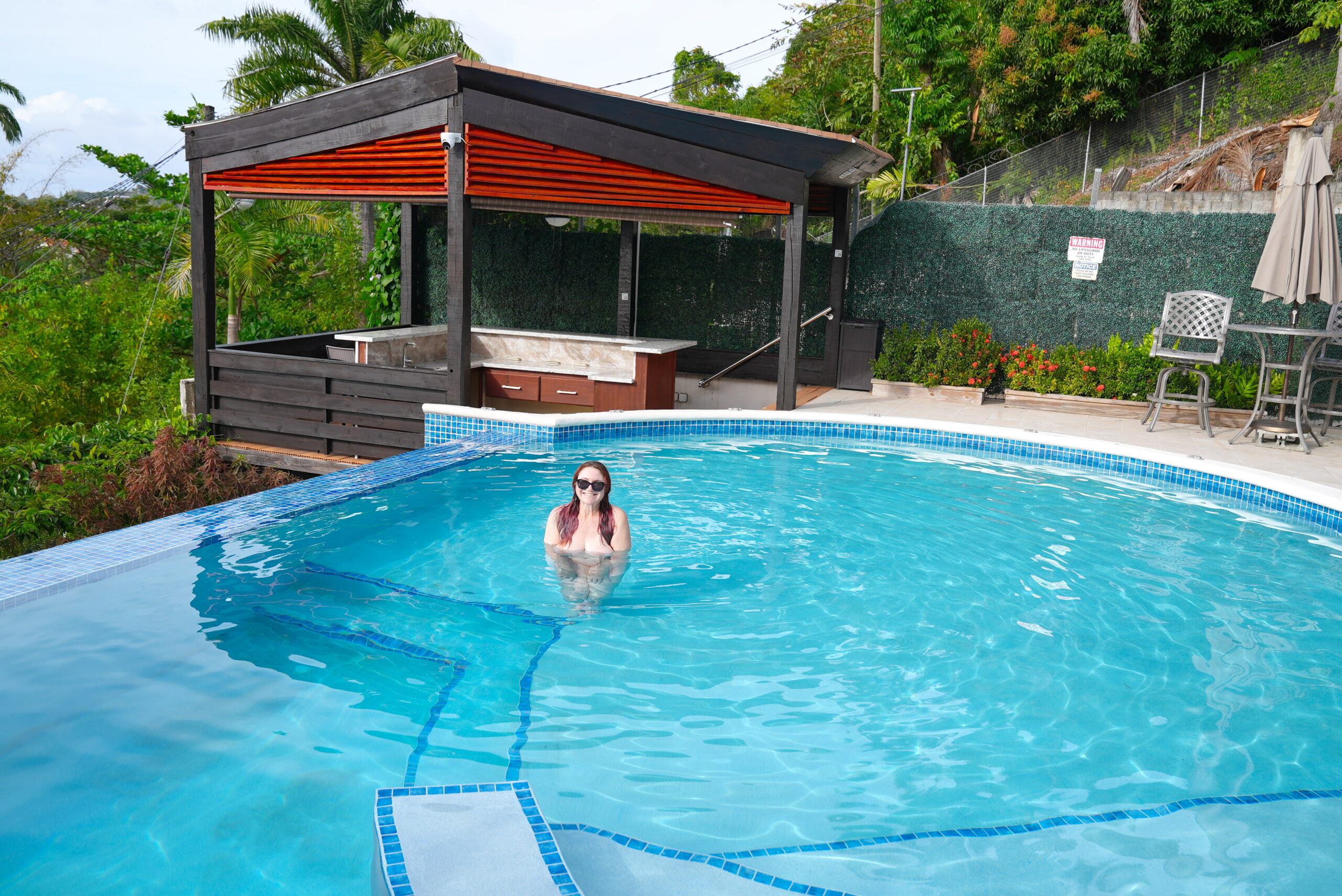
Swimming in the jungle.
The water is warm and feels “soft”. Chlorinated water is harsh and dries your skin. This water feels rejuvenating.
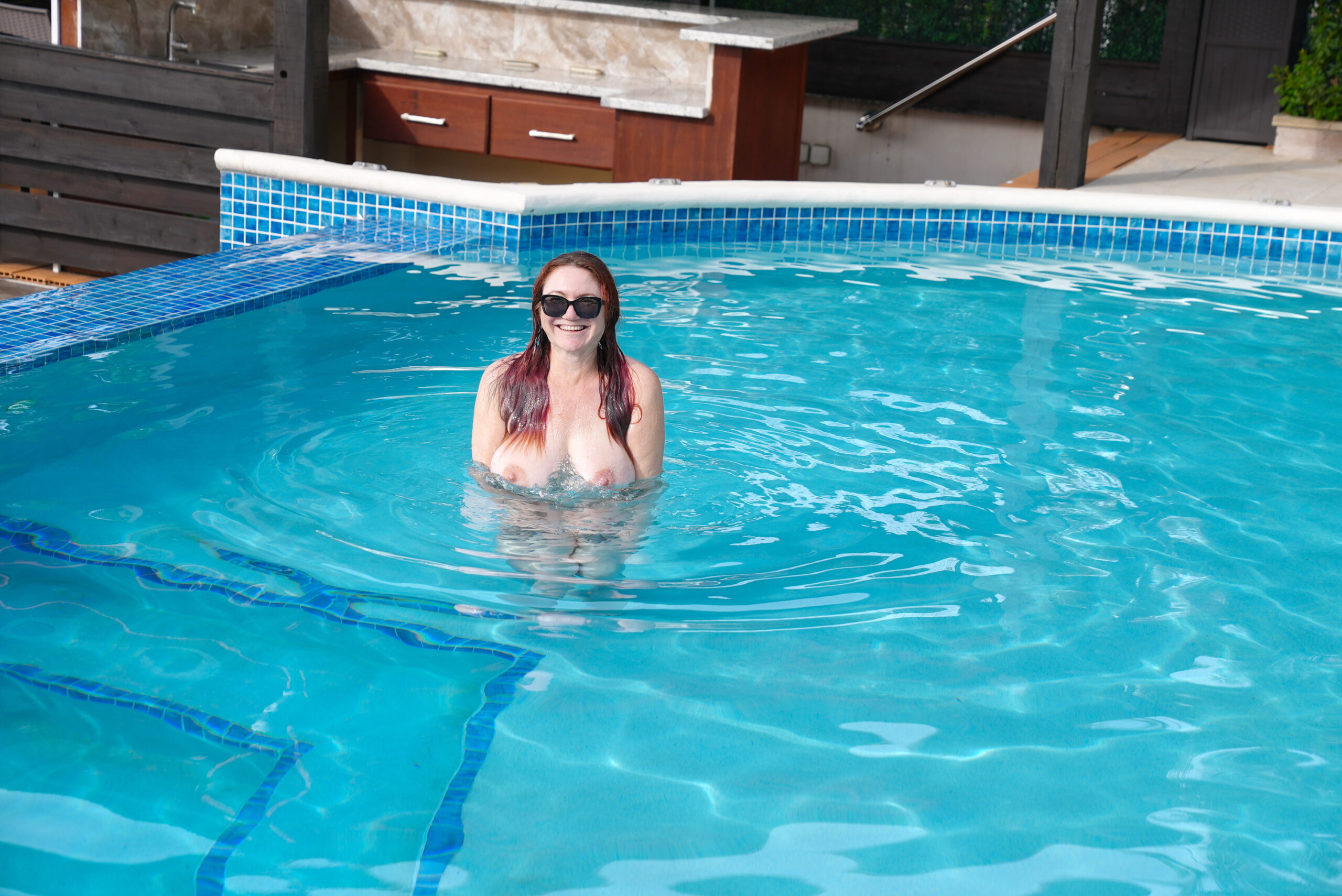
I might have misspoken.
Okay, I take it back. It is a bit cool here in the pool.
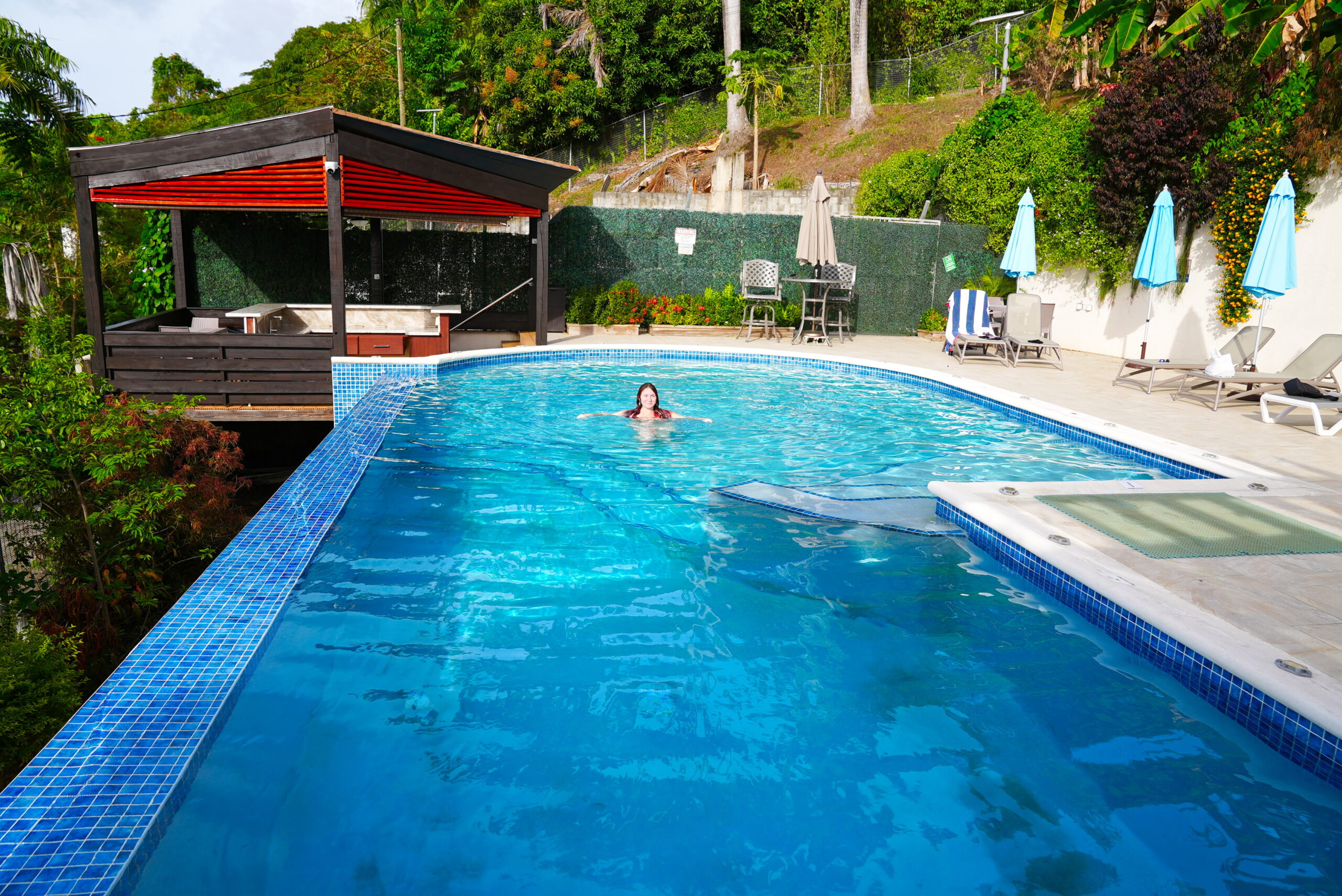
The whole pool.
This is pretty much the entire pool. I can swim from one end to the other in one breath.
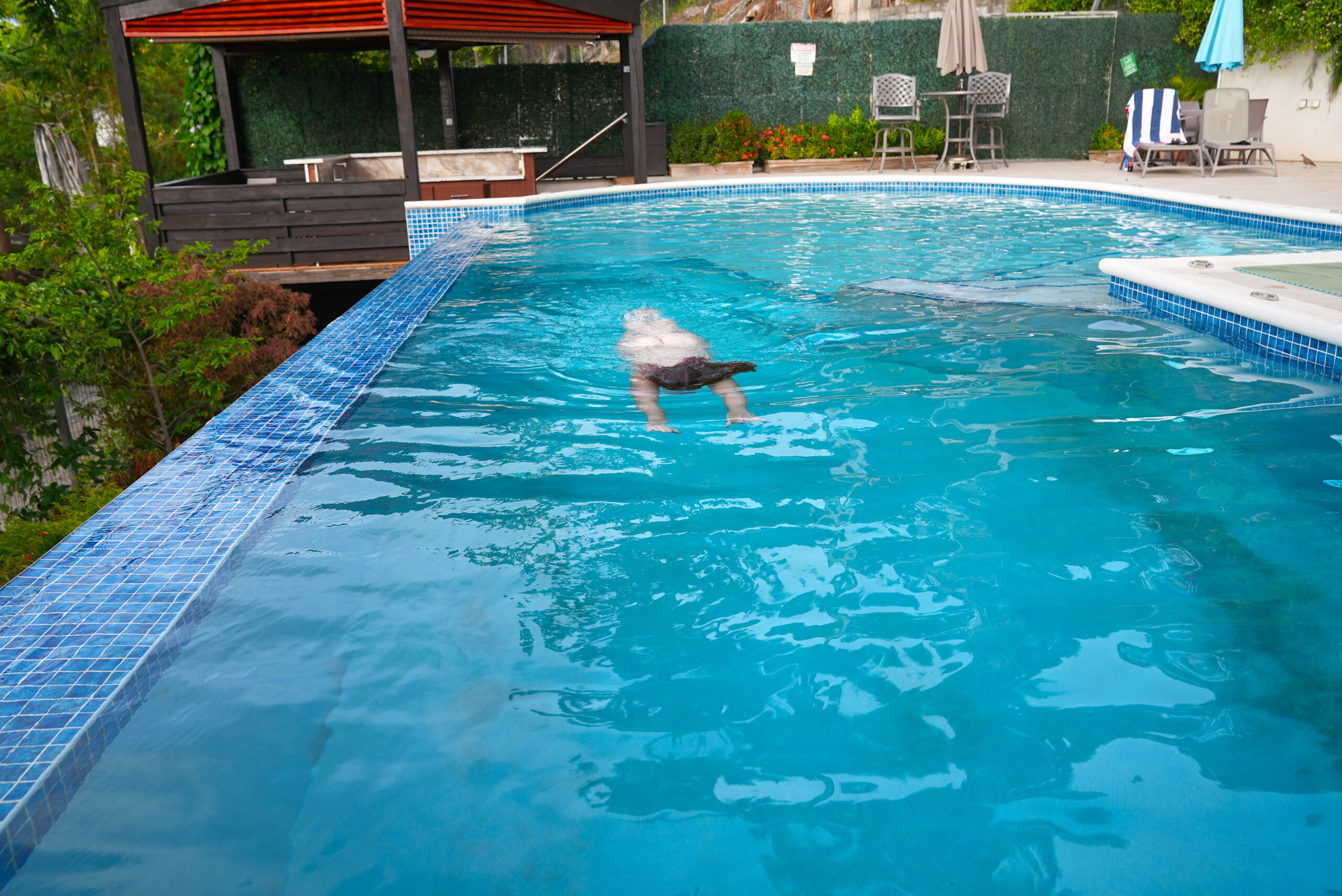
My Supergirl pose.
Whee! It’s like I’m flying!
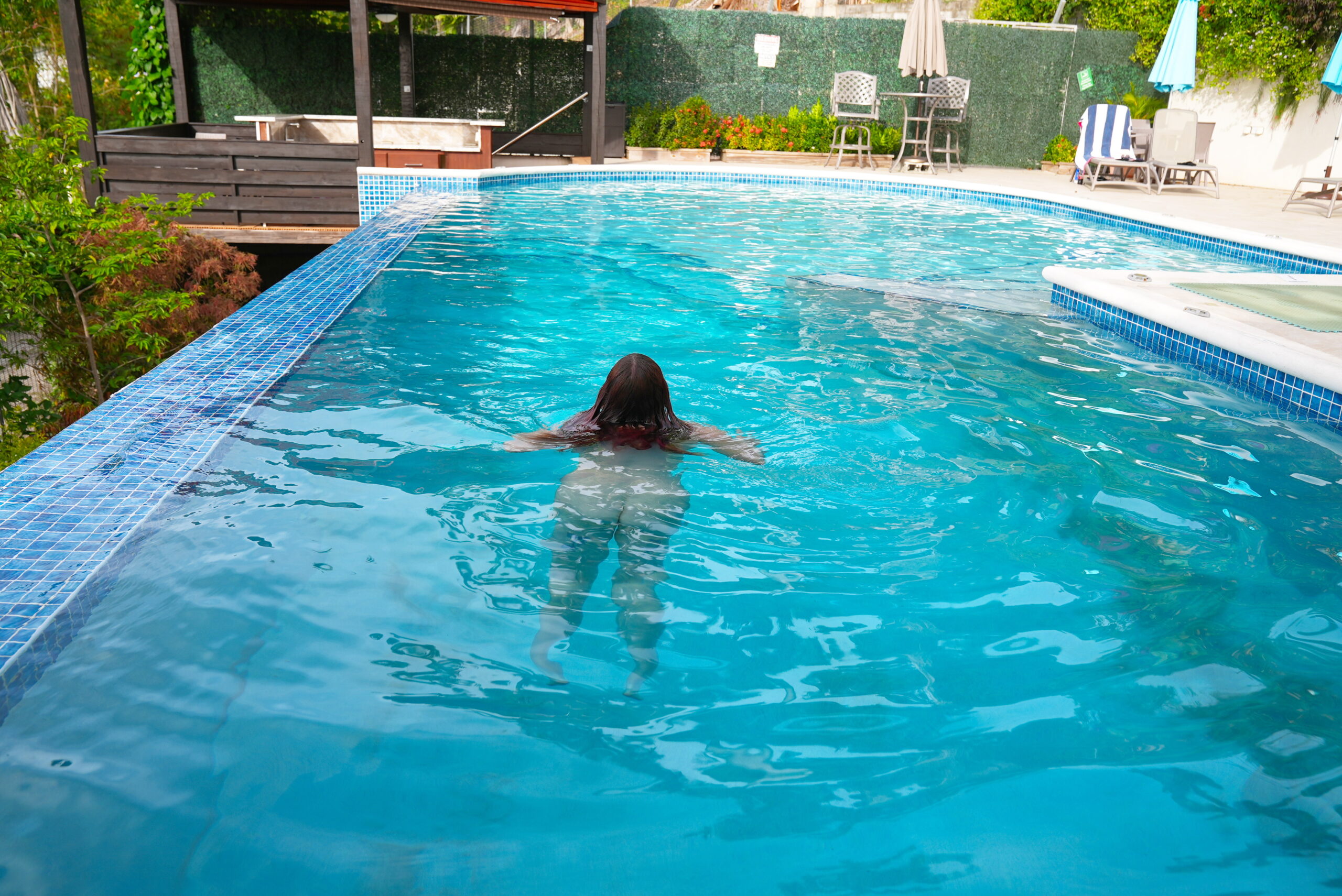
Floatin’.
This is the deep end. We aren’t supposed to dive but, if I wanted to, it would be deep enough.
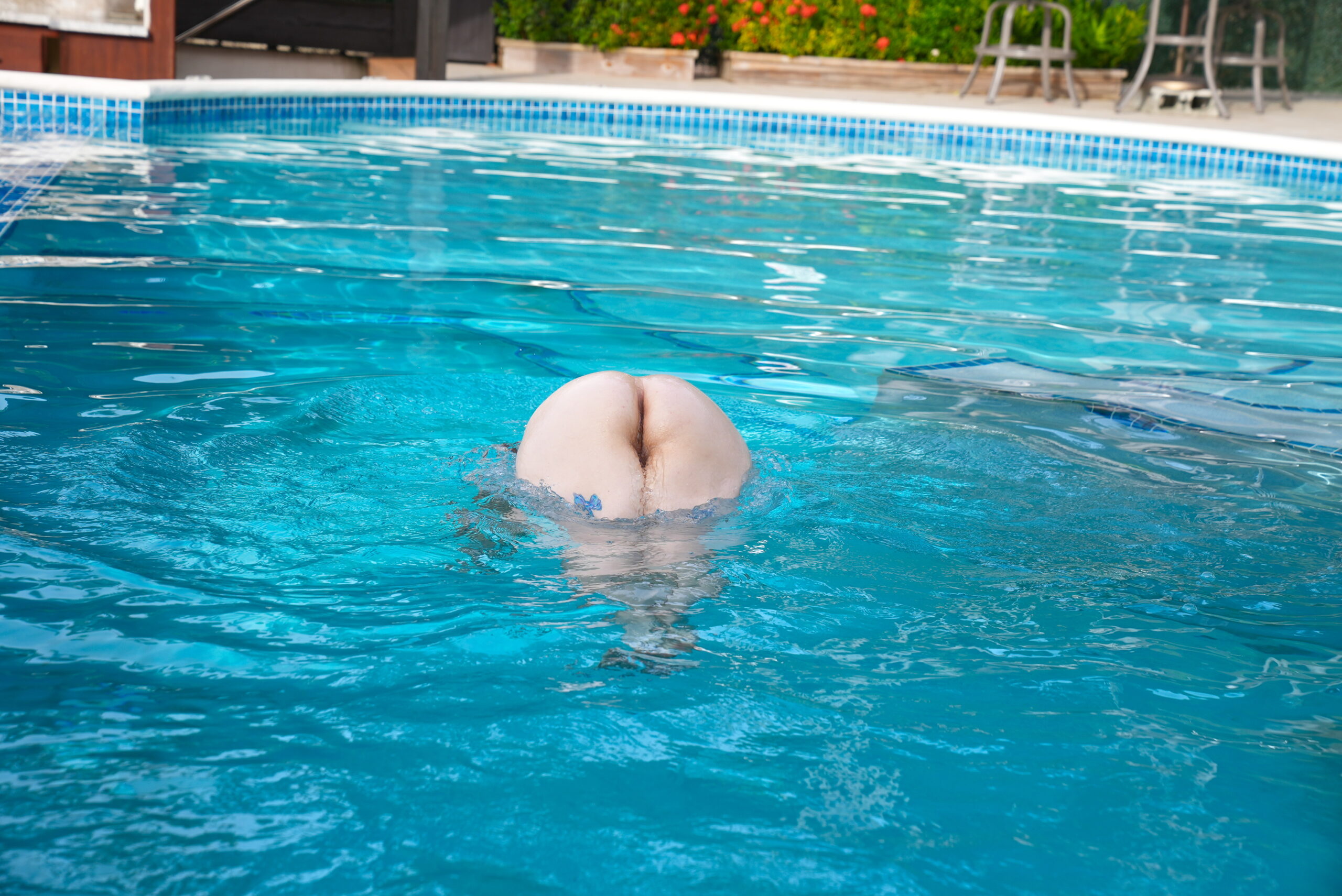
Going down! Bottom’s up!
Wanna see me swim down and touch the bottom? Of course you do!
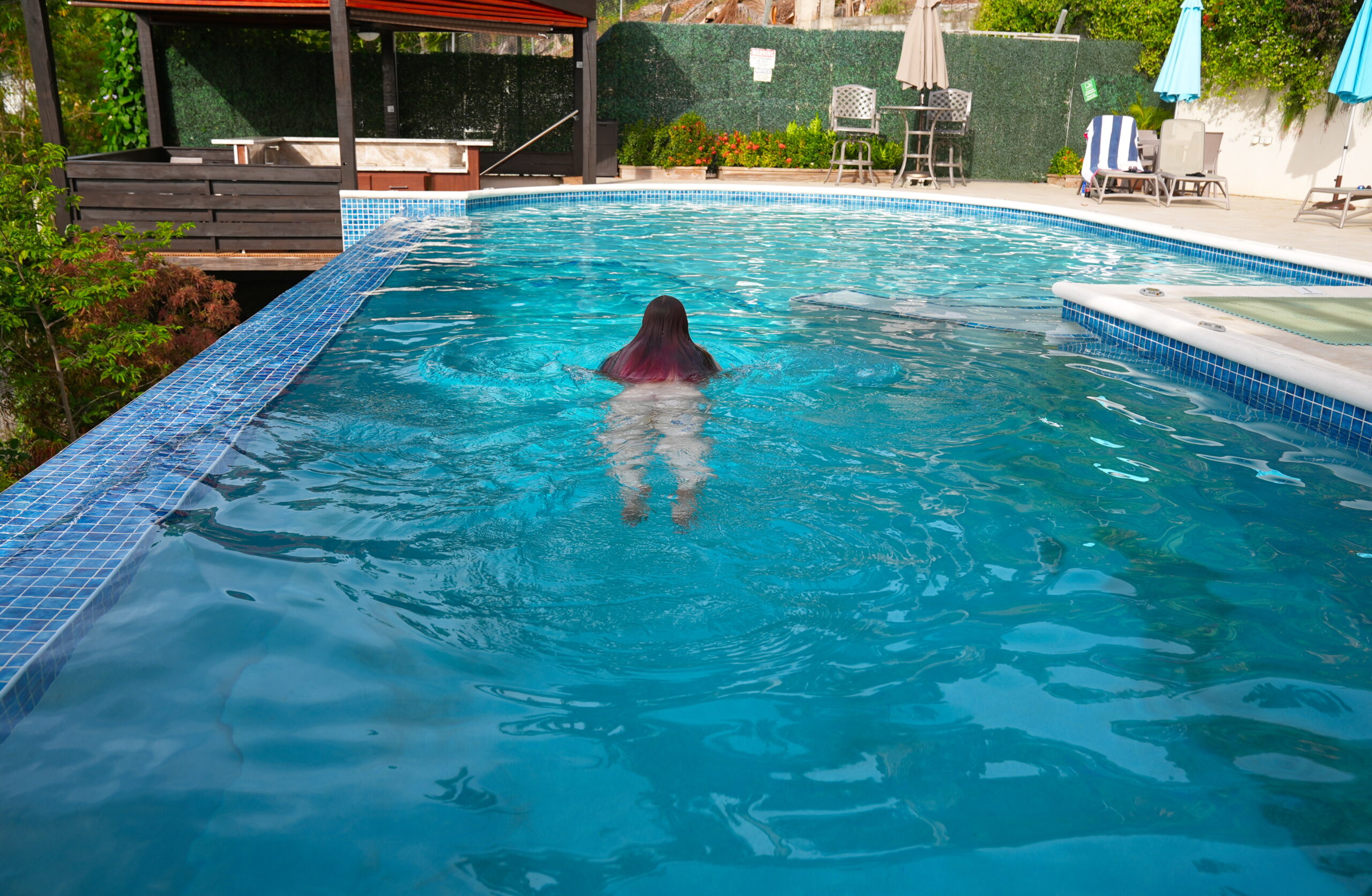
Nice hair, eh.
I included this photograph just because my hair looks so good.
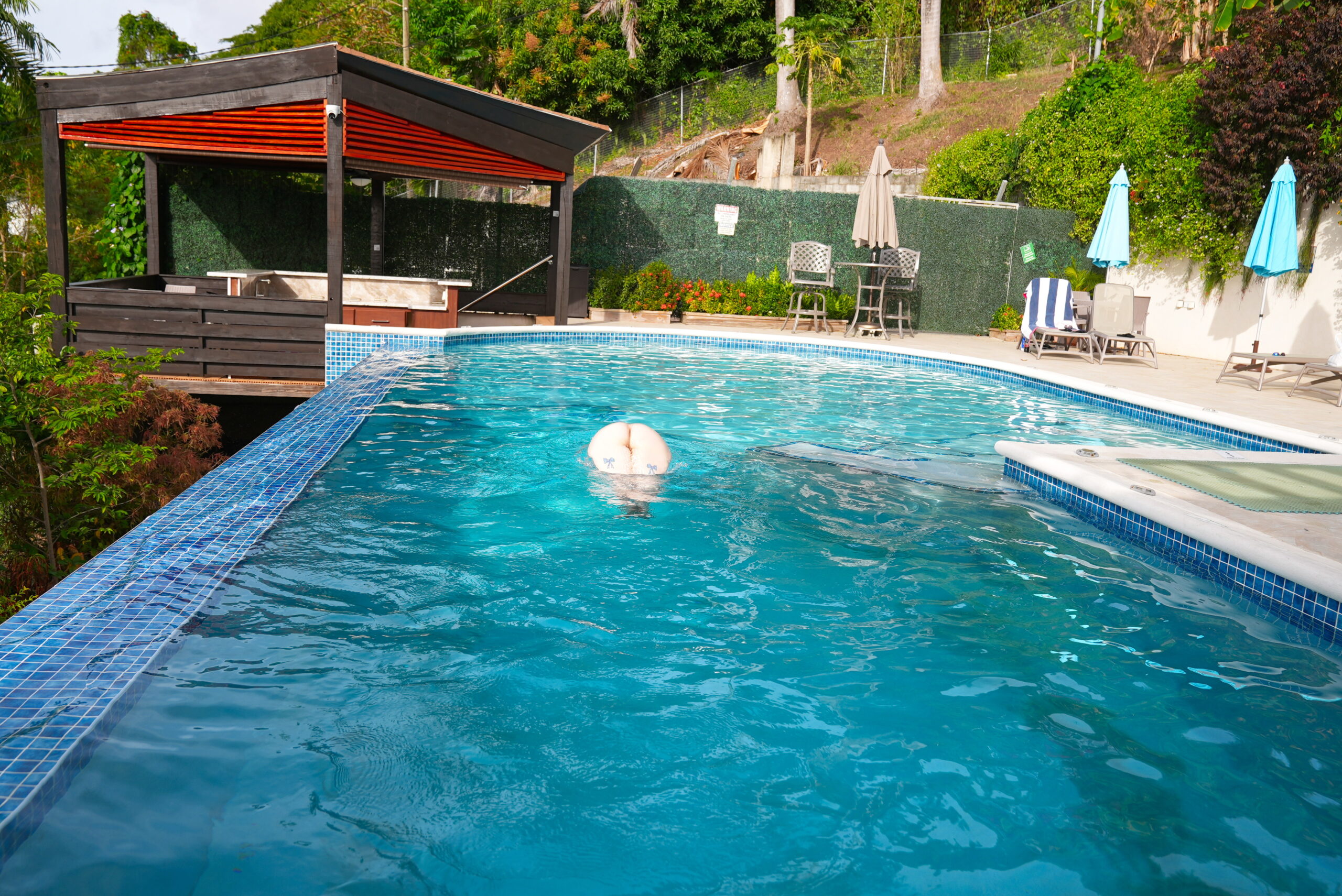
Touching the bottom again!
You probably wish you could touch the bottom, don’t you!
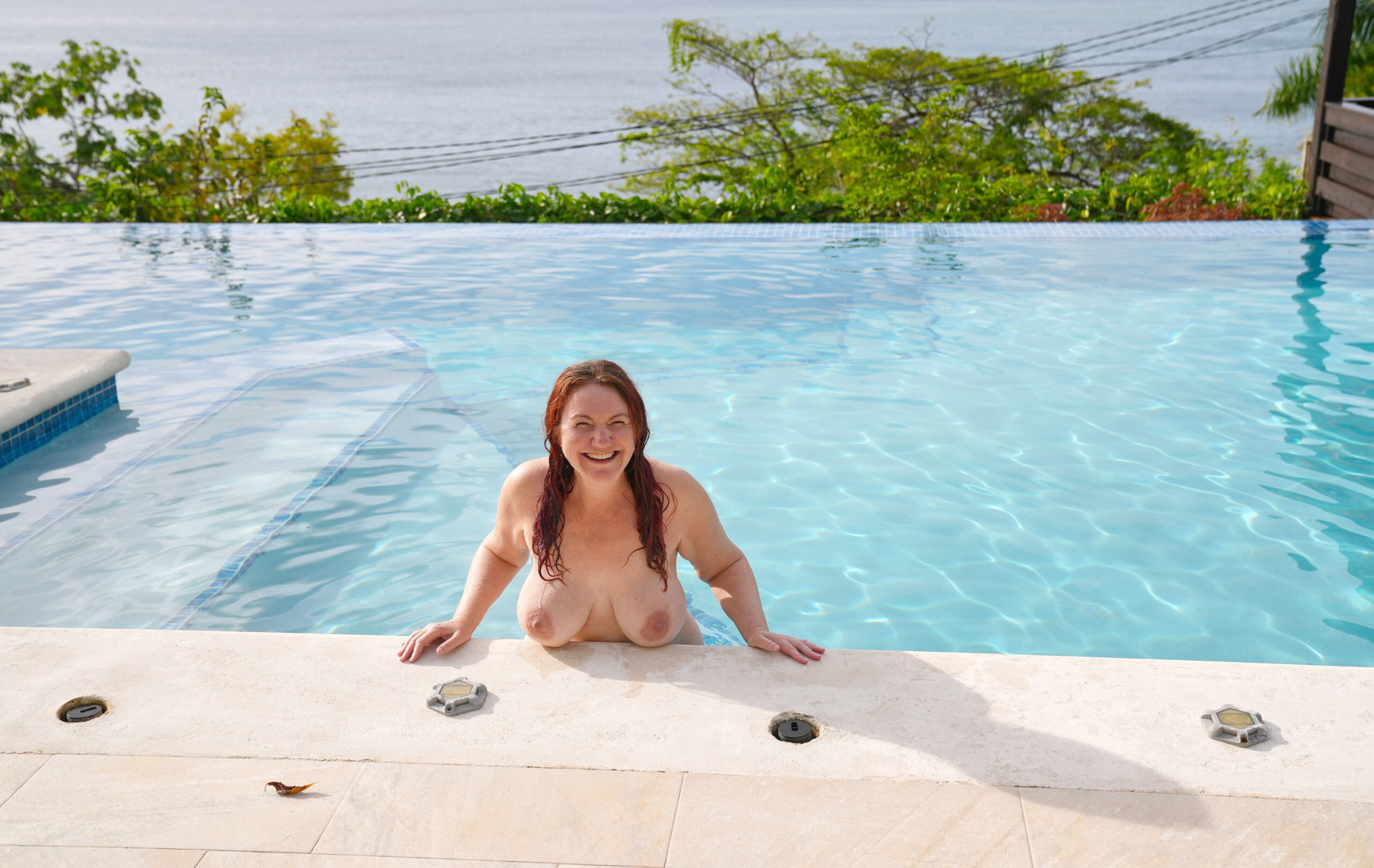
Catching my breath.
Swimming is a great way to stay healthy. I look pretty healthy, don’t I?
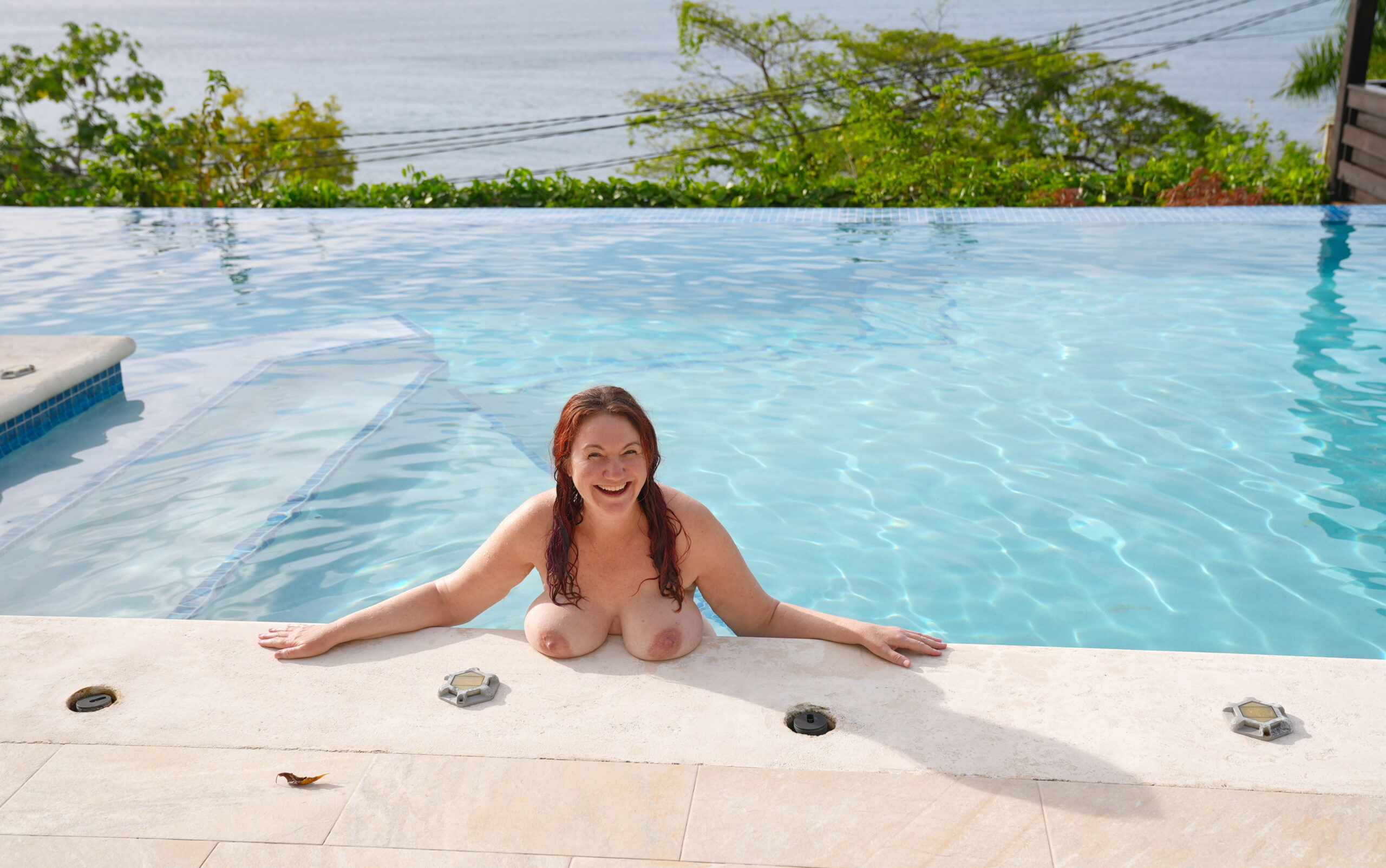
Letting the girls rest for a while.
Breasts weigh a lot. And this is surprisingly comfortable.
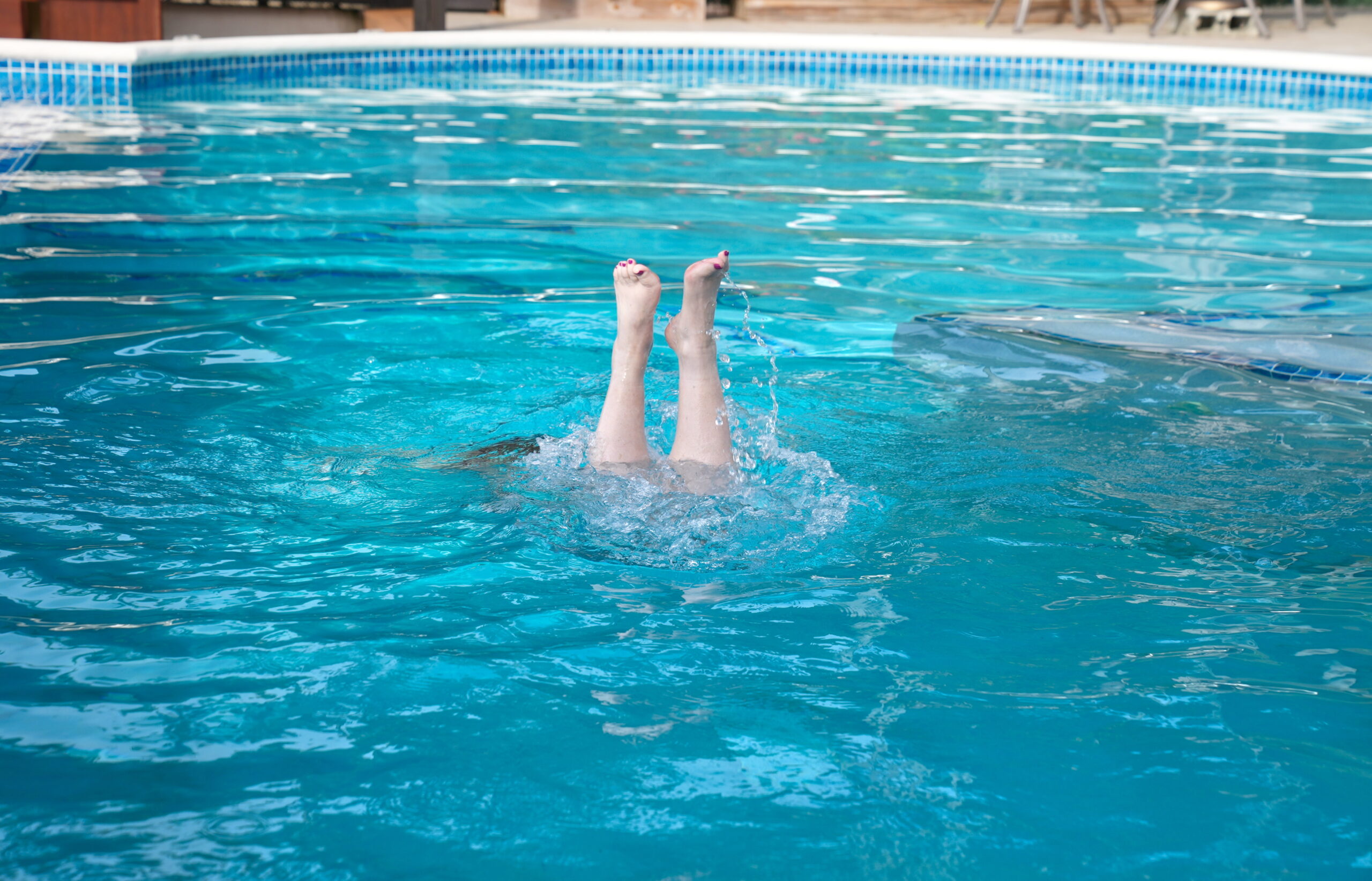
Trying to do a handstand underwater.
I am trying to do gymnastics underwater, but I am too buoyant in the salt water. Oh, well…
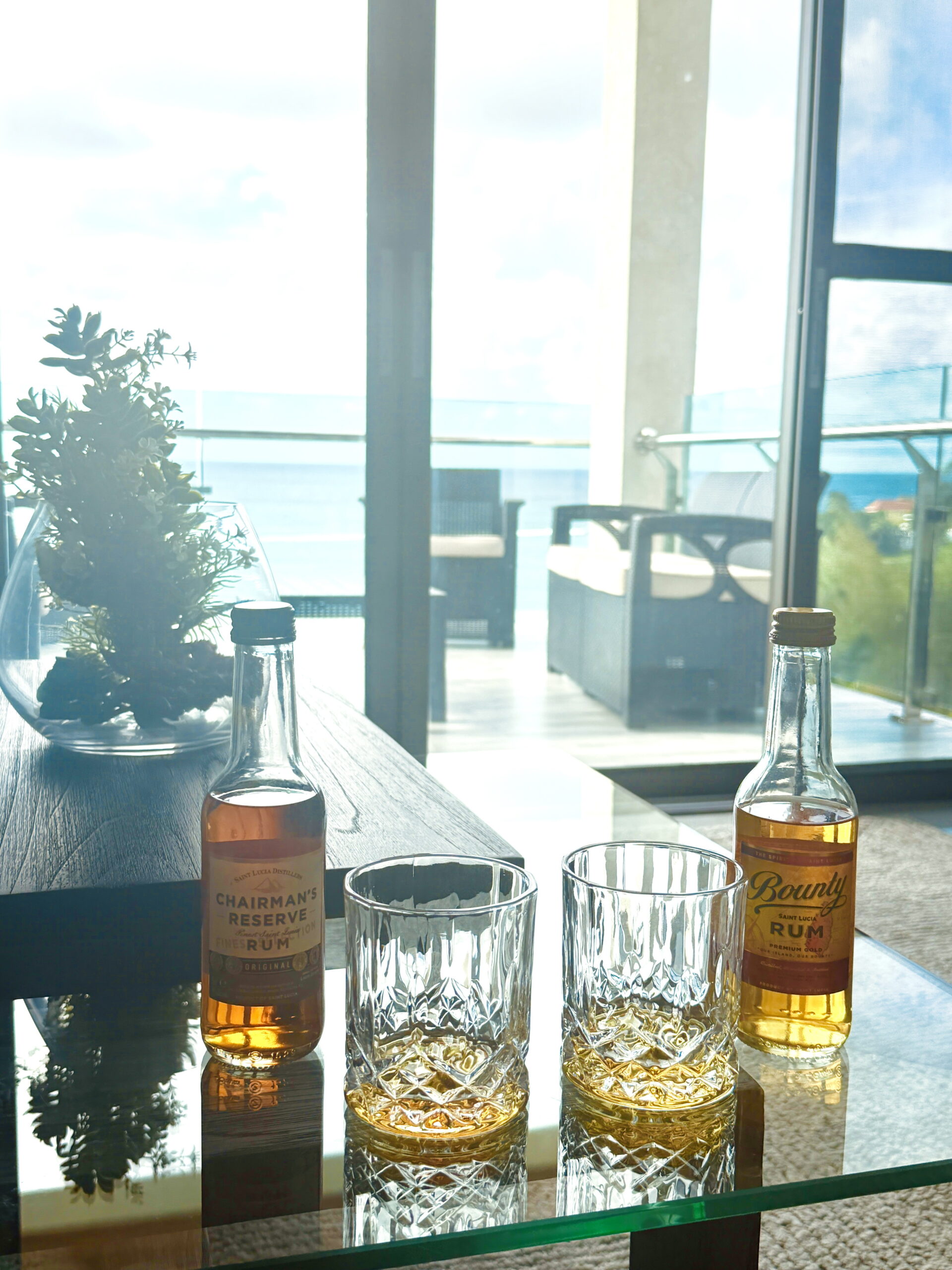
Here’s to island living.
So we come to the end of the first part of our Loving Saint Lucia series. Come back next time when we’ll explore agrotourism, an almost-chocolate class, and the beach by Sandals Resort!